

Views: 217 Author: Sunmoon Publish Time: 2026-07-04 Origin: Site


Content Menu
● What Is a Fracturing Water Transfer Hose?
● Burst Pressure vs. Operating Pressure: Core Definitions
>> Operating Pressure (Working Pressure)
● Key Differences That Impact Real-World Performance
● Why the Safety Factor Matters in Oilfield Applications
● Industry Insight: Common Mistakes Buyers Make
>> 1. Over-reliance on Burst Pressure
>> 2. Ignoring Pressure Spikes
>> 3. Underestimating Environmental Factors
● Engineering Perspective: Material and Construction Influence
● Practical Selection Guide for Buyers
● Case Study: Field Failure Due to Misinterpretation
● Latest Industry Trends in Frac Hose Design
>> 2. Smart Monitoring Integration
>> 3. Lightweight High-Strength Materials
● How Sunmoon Supports Global Oilfield Clients
● Expert Tip: Always Design for the Worst Case Scenario
● FAQ
In oil and gas hydraulic fracturing operations, frac water transfer hoses play a critical role in ensuring safe, continuous, and high-volume fluid movement. Yet, one of the most misunderstood aspects among buyers and even some engineers is the difference between burst pressure vs. operating pressure. From my experience working closely with global OEM clients and industrial distributors, misunderstanding these two metrics often leads to premature hose failure, safety risks, and unnecessary costs.
This article breaks down these two essential parameters from both an engineering and procurement perspective, helping you make smarter, safer sourcing decisions—especially when selecting flat lay hoses for oilfield applications.
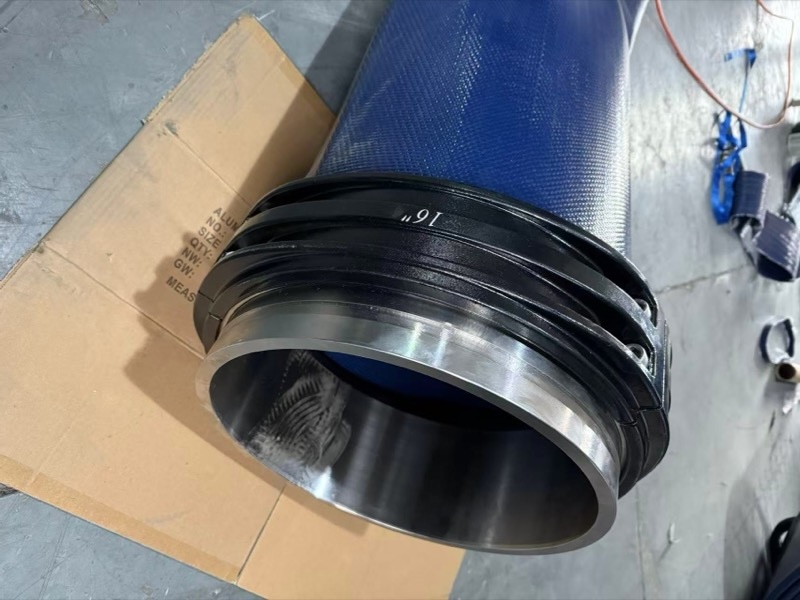
A frac water transfer hose is a large-diameter, high-flow, flexible pipeline designed to transport water, slurry, or chemicals across long distances in hydraulic fracturing operations.
Key characteristics include:
- Flat lay construction for easy transport and deployment
- High abrasion resistance for harsh terrain
- UV and weather resistance for outdoor use
- High pressure tolerance for demanding pumping systems
At Sunmoon, for example, these hoses are engineered with reinforced polyester jackets and advanced TPU or PVC linings, ensuring both flexibility and strength under extreme conditions.
Understanding the distinction between these two terms is essential.
Burst pressure is the maximum internal pressure a hose can withstand before it fails or ruptures.
- Measured under controlled lab conditions
- Represents a theoretical limit, not a safe working condition
- Typically 3x to 4x higher than operating pressure
Operating pressure refers to the maximum pressure at which the hose can safely function during normal use.
- Includes a safety margin
- Accounts for pressure surges, wear, and environmental factors
- Defined by manufacturers based on industry standards
Understanding the gap between burst and operating pressure is not just technical—it directly impacts safety and cost.
Primary differences:
- Purpose
- Burst pressure = failure threshold
- Operating pressure = safe usage limit
- Safety Factor
- Operating pressure incorporates a safety factor (usually 3:1 or 4:1)
- Burst pressure does not
- Application Relevance
- Engineers use burst pressure for design validation
- Buyers should prioritize operating pressure for procurement
In hydraulic fracturing, pressure conditions are rarely stable. Sudden surges can occur due to:
- Pump start/stop cycles
- Valve closures
- Elevation changes
- Fluid hammer effects
A typical safety factor formula:
Operating Pressure = Burst Pressure ÷ Safety Factor
For example:
- Burst pressure: 900 psi
- Safety factor: 3:1
- Operating pressure: 300 psi
Ignoring this ratio can result in catastrophic hose failure.
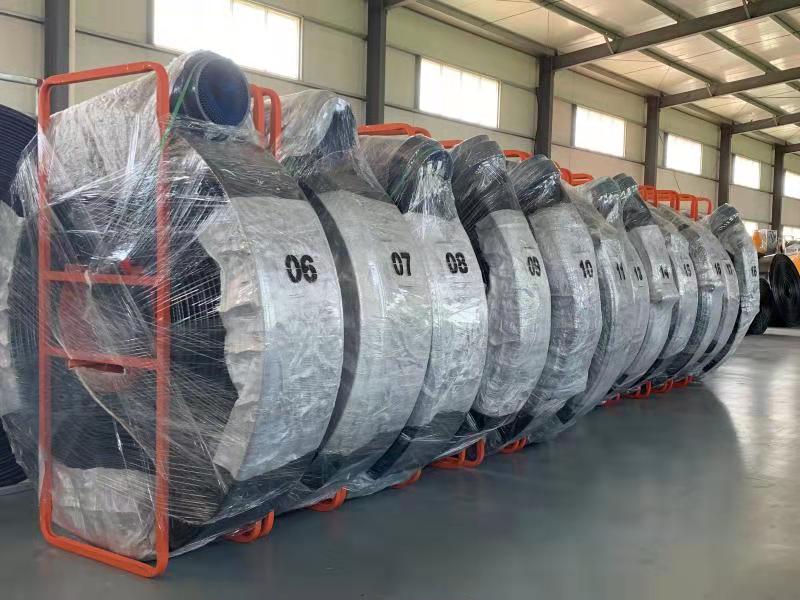
From years of working with international buyers in the oil and gas sector, several recurring issues stand out:
Many buyers assume higher burst pressure equals better performance. In reality:
- It does not guarantee durability
- It does not reflect real operating conditions
Transient pressure spikes can exceed operating pressure even if average pressure is low.
Temperature, UV exposure, and abrasion can reduce effective pressure capacity over time.
The relationship between burst and operating pressure is heavily influenced by hose design.
- High-tenacity polyester yarn increases pressure tolerance
- Multi-layer weaving improves structural integrity
- TPU (Thermoplastic Polyurethane): Higher pressure resistance, better for oilfield use
- PVC: Cost-effective but lower pressure tolerance
Larger diameter hoses typically have:
- Lower pressure ratings
- Higher flow capacity
This trade-off must be carefully balanced.
When sourcing a frac water transfer hose, focus on operating pressure first, not burst pressure.
1. Determine actual working pressure
- Include pump pressure + elevation head + friction loss
2. Add surge margin
- Typically +20% to +30%
3. Select appropriate safety factor
- Oilfield standard: 3:1 or higher
4. Verify manufacturer specifications
- Ensure compliance with ISO or API-related standards
5. Request test reports
- Burst test
- Pressure cycle test
- Material certification
A Middle East contractor selected hoses based solely on 800 psi burst pressure, assuming suitability for a 300 psi system.
However:
- Actual surge pressure reached 350 psi
- Safety factor effectively dropped below 2:1
- Result: hose rupture within 3 weeks
After switching to hoses with:
- 1200 psi burst pressure
- 400 psi operating pressure
They achieved:
- 40% longer service life
- Zero failure incidents over 6 months
Manufacturers are now offering 4:1 safety factor hoses for critical applications.
Some advanced systems include:
- Pressure sensors
- Real-time monitoring
New polymer blends reduce weight while maintaining pressure resistance.
As a specialized Chinese manufacturer of flat lay hoses, Sunmoon focuses on balancing performance, customization, and cost-efficiency.
Key advantages include:
- Custom pressure ratings tailored to project needs
- OEM/ODM support for branding and specifications
- Strict quality control with full test documentation
- Global export experience across oil & gas regions
Our engineering team works directly with clients to ensure the selected hose meets actual operating conditions—not just theoretical specs.
From both engineering and procurement perspectives, the safest approach is:
- Assume pressure fluctuations will occur
- Factor in environmental degradation
- Choose hoses with higher operating pressure than required
This reduces long-term costs by:
- Minimizing downtime
- Avoiding replacements
- Improving operational safety
If you are sourcing frac water transfer hoses for oil and gas operations, do not rely solely on catalog data.
Contact Sunmoon today to:
- Get a custom pressure evaluation
- Request technical datasheets and test reports
- Receive expert recommendations tailored to your project
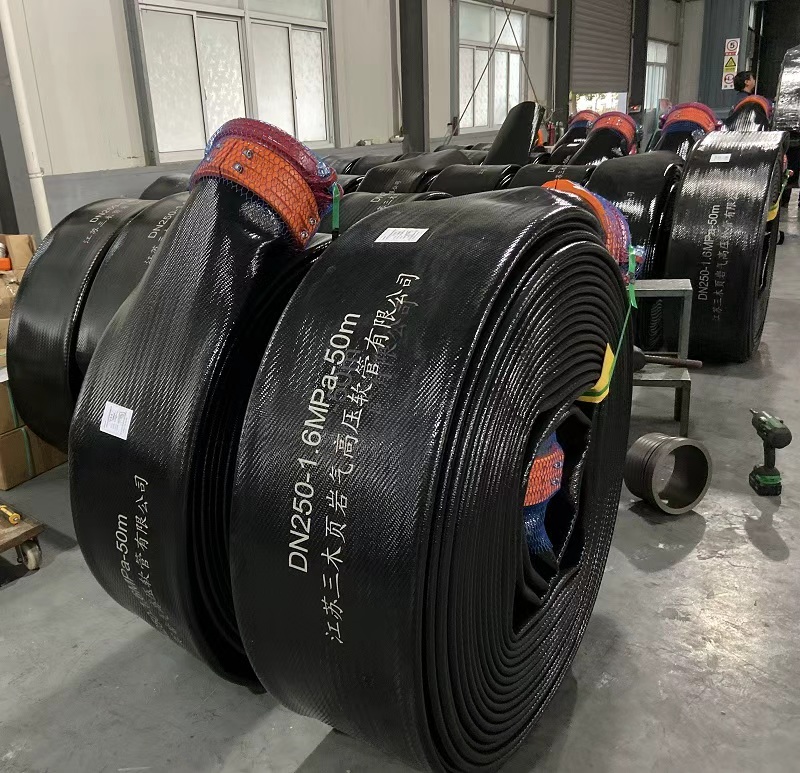
1. What is the ideal safety factor for frac hoses?
A safety factor of 3:1 is standard, but 4:1 is recommended for critical or high-risk operations.
2. Can I use burst pressure as a selection criterion?
No. Burst pressure is only a failure threshold. Always base decisions on operating pressure.
3. How do pressure surges affect hose lifespan?
Frequent surges can accelerate fatigue, leading to early failure even if average pressure is within limits.
4. Does hose diameter affect pressure rating?
Yes. Larger diameters generally result in lower pressure capacity but higher flow rates.
5. Which material is better for oilfield hoses: TPU or PVC?
TPU is superior for high-pressure and harsh environments, while PVC is suitable for lower-cost, less demanding applications.
1. ePropulsion – "Short Shaft Outboard Motors: Everything You Need to Know" https://www.epropulsion.com/news-media/electric-boating-blog/short-shaft-outboard-motors
2. Yamabisi – "Outboard Shaft Lengths Explained: Short vs. Long" https://yamabisioutboard.com/outboard-shaft-lengths-explained-short-vs-long/
3. Southcentral Outboards – "How to Find Your Shaft Length" https://www.southcentraloutboards.com/pages/how-to-find-your-shaft-length/
4. Great Lakes Skipper – "How to Measure an Outboard Motor Shaft Size" https://www.greatlakesskipper.com/blog/post/how-to-measure-an-outboard-motor-shaft-size-a-step-by-step-guide-for-all-outboard-en
5. Leeroy's Ramblings – "Outboard Motor Shaft Length" https://www.leeroysramblings.com/OB_shaft_length.htm
6. Minn Kota – "Motor Selection Guide / Boat Size Chart" (PDF) https://minnkota.johnsonoutdoors.com/sites/default/files/2023-02/min_productmanual_motor-select-guide.pdf
7. Oreate AI Blog – "How Long Is a Short Shaft Outboard" https://www.oreateai.com/blog/how-long-is-a-short-shaft-outboard/913b7baad8c339ee44c0e8cb97f77430
8. Great Lakes Skipper – "How to Measure the Shaft of an Outboard Motor Accurately" https://www.greatlakesskipper.com/blog/post/how-to-measure-an-outboard-motor-shaft-size-a-step-by-step-guide-for-all-outboard-en
9. YouTube – "What Shaft Length Do I Need?" https://www.youtube.com/watch?v=gATD8c4mAsI
10. Ningbo Gill Transmission Parts Co., Ltd. – Official Website https://www.gilltransmission.com/


