

Views: 222 Author: Loretta Publish Time: 2026-01-16 Origin: Site


Content Menu
● Overview of the Parker Hannifin–Curtis Instruments Acquisition
>> Parker Hannifin's Motion and Control Technologies
>> Curtis Instruments' Motor Controllers and Power Electronics
● Strategic Rationale Behind the Acquisition
>> Electrification Strategy and Market Expansion
>> Product and Market Synergies in Motion Control
● Impact on OEMs and System Integrators
>> Integrated Electrified Powertrain Solutions
>> Design, Integration and Lifecycle Support Benefits
● How Advanced TPU Lay‑Flat Hoses Enhance Electrified Systems
>> Fluid and Thermal Management in Electric Powertrains
>> Application Scenarios for TPU Lay‑Flat Hoses
● Parker Hannifin and Curtis Instruments Focus Areas
● Take the Next Step for Your Electrified Equipment
● Frequently Asked Questions (FAQ)
>> Q1. Why did Parker Hannifin decide to acquire Curtis Instruments?
>> Q2. When is the acquisition expected to be completed?
>> Q3. What does Curtis Instruments contribute to electrified systems?
>> Q4. How will OEMs and system integrators benefit from the transaction?
>> Q5. Why are TPU lay‑flat hoses relevant to electrified powertrains?
Parker Hannifin's $1 billion acquisition of Curtis Instruments marks a major step in the global shift toward electrified powertrains, advanced motion control and smarter mobile machinery. The combined capabilities in motors, hydraulics, controllers and power electronics are set to reshape how OEMs design and support next‑generation electric and hybrid equipment.[1][2][3]
Parker Hannifin Corporation has agreed to acquire Curtis Instruments from Rehlko in an all‑cash transaction valued at approximately $1 billion. The deal is subject to customary regulatory approvals and is expected to close by the end of calendar year 2025.[4][5][1]
Curtis anticipates around $320 million in sales for calendar year 2025, reflecting its established position in electric vehicle and industrial control markets. After completion, Curtis will be integrated into Parker's Motion Systems Group, broadening Parker's presence in mobile electrification and off‑highway applications.[2][3][1][4]
Parker Hannifin is a global leader in motion and control technologies, serving industrial and mobile applications across multiple sectors. Its portfolio includes hydraulic hoses, connectors, pumps, valves, cylinders, pneumatic systems, filtration, seals and an expanding range of electrification solutions.[6][7][1]
The company has been pushing into electrification with high‑voltage mobile motors, vehicle inverters and integrated drive systems for off‑road machinery and transport equipment. Initiatives such as the Mobile Electrification Technology Center (METC) support OEMs in migrating from diesel to electric platforms while meeting efficiency and emissions targets.[7][8][6]

Curtis Instruments specializes in motor speed controllers, instrumentation, power conversion equipment and input devices for battery‑electric and hybrid vehicles. Its products are widely used in material handling equipment, low‑speed electric vehicles, mobility solutions and industrial machinery.[9][1][2][4]
Curtis controllers support AC induction, PMAC and BLDC motors, providing accurate speed and torque control under varying loads and terrain. Features such as advanced speed regulation, anti‑rollback, thermal protection and multi‑mode operation help OEMs deliver smooth, safe and customizable driving experiences.[10][11][9]
The acquisition is aligned with long‑term global electrification trends, as manufacturers seek cleaner, quieter and more efficient equipment. By combining power electronics and control software from Curtis with Parker's electric motors and hydraulic hardware, the transaction strengthens Parker's position in high‑growth electrified markets.[5][1][2]
Parker's leadership has emphasized that the deal meets internal financial criteria for value‑creating acquisitions, aiming to shift the company's sales mix toward higher‑growth applications. This includes off‑highway machinery, industrial vehicles and other segments where electrification is accelerating due to regulations and customer expectations.[12][1][4][6]
Curtis' motor speed controllers and power conversion products provide the control layer that complements Parker's motors, hydraulics and pneumatics. Together, they can offer more complete electrified powertrain systems that integrate traction, steering and auxiliary functions from a single technology base.[1][2][6][9]
The combination also creates cross‑selling opportunities by pairing Parker's global reach and system engineering expertise with Curtis' established presence in material handling, mobility and electric vehicle niches. This should enable more standardized architectures and shared platforms across multiple OEM programs.[8][4][6][9]
OEMs gain access to integrated solutions that combine electric motors, hydraulic components, controllers and power electronics designed to work together. This can simplify system design, reduce interface risk and support higher overall efficiency and performance.[2][6][8][1]
Pre‑validated electric and hybrid architectures help accelerate product development by providing proven combinations of drives, controllers and auxiliary systems. For many manufacturers, this reduces time‑to‑market and engineering workload for new or upgraded electrified platforms.[6][7][8]
Working with a single group across hardware and control electronics can streamline communication for design teams responsible for traction, hydraulics and thermal management. Coordinated application engineering helps optimize power distribution, safety functions and functional diagnostics across the machine.[7][8][6]
Over the equipment lifecycle, consolidated service networks and software support are likely to simplify maintenance and upgrades for fleets and end users. This can lead to more consistent performance, better uptime and longer system lifetimes in demanding environments.[3][4][6]
Electrified powertrains still depend on reliable fluid and thermal management for motors, inverters, controllers and, in many cases, hydraulic subsystems. Cooling circuits and hydraulic lines must be compact, robust and easy to route through constrained chassis spaces.[6][7]
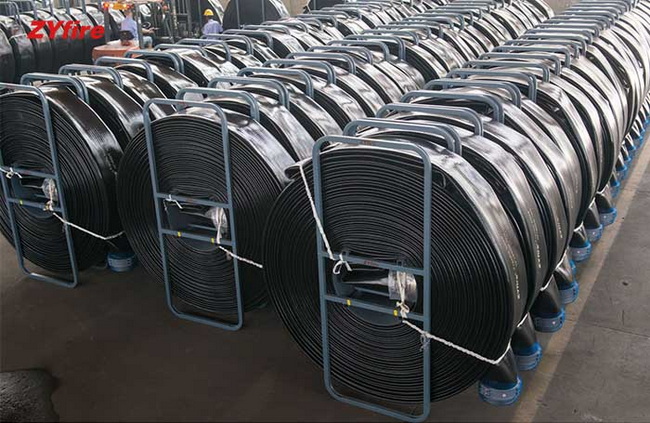
High‑performance TPU lay‑flat hoses support these requirements by offering flexibility, abrasion resistance and light weight compared with traditional rigid piping. This makes them suited to cooling loops and auxiliary hydraulic lines in compact or modular electric machinery designs.
In electric or hybrid equipment using advanced motors and controllers, TPU lay‑flat hoses can be applied to coolant routing around inverter and motor assemblies, where flexible routing and quick installation are essential. They can also be used for auxiliary circuits that must be deployed or reconfigured during retrofits or platform updates.
For OEMs and system integrators, specifying TPU lay‑flat hoses in early design phases supports cleaner layouts, easier maintenance access and reduced overall weight. This approach complements integrated electrified powertrains by improving reliability and serviceability at the fluid system level.
Aspect | Parker Hannifin focus | Curtis Instruments focus |
Core business | Motion and control technologies for industrial and mobile applications | Motor speed controllers, instrumentation and power electronics for electric and hybrid equipment |
Key products | Motors, hydraulic systems, pneumatics, filtration, seals and inverters | AC and DC motor controllers, vehicle controllers, HMIs and power conversion devices |
Electrification role | Drivetrain hardware, hydraulics and system integration for electric platforms | Control algorithms, safety functions and power management for electric machines |
Market presence | Global, Fortune 250, broad industrial and mobile coverage | Strong in material handling, low-speed EVs, mobility and industrial vehicles |
Contribution post-acquisition | Hardware platform, global distribution and system engineering resources | Intelligent control, diagnostics and user interface technologies |
For OEMs and engineering teams planning new electric or hybrid platforms, this is a strong moment to reassess fluid and thermal management alongside advances in motors, controllers and hydraulics. If your current or upcoming designs require compact routing, durable hoses and efficient cooling around high‑value electric components, consider how TPU lay‑flat hose solutions can enhance reliability and serviceability. Reach out to discuss your system layout, performance targets and environmental conditions so that a tailored TPU hose configuration can support your electrified machinery roadmap with robust, application‑specific fluid management.
Parker Hannifin pursued the acquisition to strengthen its electrification strategy with established motor controllers, instrumentation and power conversion technologies that align with its motion and control portfolio. This creates a more complete offering for OEMs targeting electric and hybrid platforms.[5][12][2][1][6]
The transaction is expected to close by the end of calendar year 2025, subject to regulatory approvals and other customary closing conditions. After completion, Curtis will become part of Parker's Motion Systems Group.[3][4][5][2][1]
Curtis adds advanced motor speed controllers, vehicle controllers and power conversion equipment designed for electric and hybrid vehicles and machinery. These technologies introduce intelligent control, safety and efficiency enhancements for electrified platforms.[10][2][9][1][6]
OEMs and system integrators can benefit from integrated electric and hydraulic solutions that combine hardware and controls under a single technology umbrella. This can reduce design complexity, improve system performance and simplify long‑term service and support.[3][4][8][6]
TPU lay‑flat hoses are relevant because electrified systems rely on compact, reliable fluid and thermal management circuits for motors, controllers and hydraulics. Their flexibility, reduced weight and durability support cleaner layouts and easier maintenance in modern electric and hybrid equipment.[7][6]
[1](https://www.strongflex.com/parker-acquires-curtis-instrument-corporation/)
[2](https://www.automotiveworld.com/news-releases/parker-completes-curtis-instruments-acquisition/)
[3](https://www.investing.com/news/company-news/parkerhannifin-completes-1-billion-acquisition-of-curtis-instruments-93CH-4244870)
[4](https://www.reuters.com/legal/transactional/parker-hannifin-acquire-curtis-instruments-1-billion-2025-06-30/)
[5](https://www.sustainabletruckvan.com/parker-curtis-acquisition-rehlko-group/)
[6](https://highways.today/2025/12/07/electric-powertrains-parker-nx8m/)
[7](https://www.parker.com/fr/en/solutions/electrification.html)
[8](https://www.mdm.com/news/operations/manufacturing/parker-hannifin-adds-mobile-electrification-technology-program/)
[9](http://curtisinstruments.com.cn/en/products)
[10](https://cdn.curtisinstruments.com/products/datasheets/1212_datasheet_en.pdf)
[11](https://www.e-kart.fr/images/stories/technique/curtis/curtis-controlers-1204.pdf)
[12](https://www.environmentenergyleader.com/stories/parker-hannifins-1b-curtis-acquisition-signals-electrification-strategy-shift,83324)


