

Views: 222 Author: Sunmoon Publish Time: 2026-05-15 Origin: Sunmoon Hose Manufacturing


Polyurethane flat hose generally delivers a significantly better weight‑to‑strength ratio than fabric reinforced rubber hose, making it ideal where long-distance deployment, rapid handling, and high working pressure matter. [kebinghose]
In projects where hose lines run hundreds of meters across fields, mines, or job sites, every extra kilogram quickly turns into higher labor costs, slower setup, and more equipment fatigue. From my work with engineering and procurement teams, the hoses that consistently deliver lower total cost of ownership are those with the best strength‑to‑weight ratio rather than just the lowest purchase price. Modern thermoplastic polyurethane (TPU) layflat hoses, like those Sunmoon manufactures, are designed exactly around this ratio: maximizing tensile and burst strength while minimizing wall thickness and weight per meter. [reportsanddata]
For context, polyurethane hoses typically achieve tensile strengths in the 20–40 MPa range, roughly double the 10–15 MPa range common for standard rubber hoses, while still being noticeably lighter to handle. Several industrial sources report that rubber hoses often weigh about twice as much as polyurethane hoses of comparable size, which directly affects how quickly a crew can deploy and retrieve them. [shotonhydraulic]
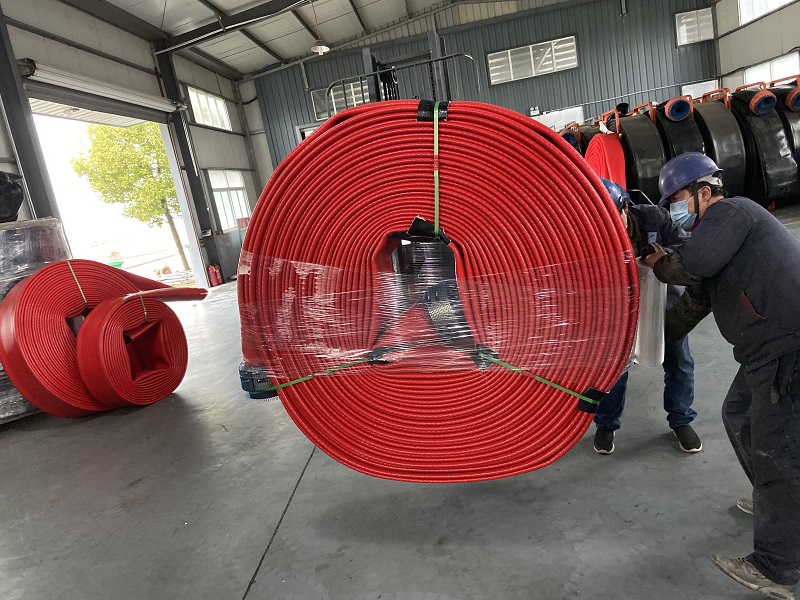
A TPU layflat hose typically uses a thermoplastic polyurethane inner and outer layer with a high‑strength circular woven polyester or polyamide reinforcement. This composite structure allows the hose wall to stay relatively thin while delivering high working pressure and excellent abrasion resistance. Fabric reinforced rubber hoses, by contrast, use an elastomer (such as nitrile or other rubber compounds) with woven fabric layers embedded in a thicker wall to achieve pressure resistance, which inherently increases weight. [rubber-pvc-hose]
From an engineering perspective, the TPU composite behaves like a lightweight laminate: the woven reinforcement carries the stress while the TPU protects it from chemicals, water, and abrasion. Rubber constructions rely more on bulk material and thicker covers, which is why their weight‑to‑strength performance typically lags behind TPU in long-length, high‑pressure layflat applications. [eleyhosereels]
Available industry data shows that polyurethane hoses usually offer tensile strengths in the 20–40 MPa range, while common rubber hoses fall around 10–15 MPa. In practice, that means a TPU layflat hose can sustain higher working pressures and more severe tensile loads (for example, when being dragged over rough ground or suspended from risers) for the same or lower wall thickness. This performance difference is one reason TPU layflat hoses are widely adopted in demanding sectors like firefighting, mining, and oil & gas. [sinohose]
Multiple sources note that a rubber hose commonly weighs about twice as much as a polyurethane hose of similar diameter and flow capacity. The extra mass comes from thicker rubber covers and heavier fabric reinforcement required to reach comparable pressure ratings. In contrast, TPU layflat hoses exploit the higher specific strength of polyurethane plus optimized woven reinforcement to keep overall weight significantly lower. [rubber-pvc-hose]
For job sites, this difference is not theoretical: a lighter hose reduces manual handling effort, allows longer lengths on a single reel, and can cut fuel consumption for vehicles transporting large volumes of hose. [rubber-pvc-hose]
The following table summarizes typical trends found across industrial hose data; actual specifications depend on exact construction, diameter, and manufacturer. [alibaba]
| Parameter | Polyurethane flat hose (TPU layflat) kebinghose | Fabric reinforced rubber hose kebinghose |
|---|---|---|
| Tensile strength (MPa) | 20–40 | 10–15 |
| Relative weight (same diameter) | About 50% of rubber hose rubber-pvc-hose | Roughly 2× polyurethane rubber-pvc-hose |
| Working pressure range | Up to around 160–200 psi for many models sinohose | Often around 150 psi in comparable classes rubber-pvc-hose |
| Abrasion resistance | High to very high kebinghose | Moderate to good kebinghose |
| Temperature range (typical) | Approx. -40 °C to 80–90 °C kebinghose | Approx. -30 °C to 80 °C kebinghose |
| Deployment length per reel | Longer lengths possible due to low weight reportsanddata | Shorter lengths, heavier reels rubber-pvc-hose |
| Typical applications | Agriculture, mining, oil & gas, firefighting, dewatering sinohose | General industrial water, air, some oil services kebinghose |
For visual clarity, a simple bar chart comparing "weight per meter" and "burst pressure" for a 6‑inch TPU layflat versus a rubber hose is very effective at a glance. [kebinghose]
In modern agriculture, TPU layflat hoses are widely used for mainlines and lateral lines in irrigation and fertigation systems because they can be supplied in long continuous lengths with relatively low weight. Farmers and contractors can deploy a single line over several hundred meters with fewer couplings, which reduces leak risk and setup time. Fabric reinforced rubber is generally more suitable for shorter, more stationary connections, where frequent moving and recoiling are not the main concern. [giiresearch]
For mine dewatering and construction site bypass lines, crews often need to drag hoses over rough terrain and lift them over obstacles. Here, the lightweight but high‑strength nature of TPU layflat allows for faster deployment, fewer workers per line, and reduced risk of kinking under tensile load. Rubber hoses can still handle demanding conditions, but their extra weight and thicker wall often translate into slower operations and higher handling fatigue. [hjsko]
Firefighting hoses are one of the most sensitive applications for weight‑to‑strength performance, since crews must advance charged lines quickly and safely. TPU layflat hoses reinforced with high‑strength textiles offer excellent burst pressure, abrasion resistance, and low weight, making them well suited for municipal, industrial, and wildland firefighting. Fabric reinforced rubber designs remain in use, but they are gradually being replaced in many high‑mobility scenarios where every kilogram counts. [linkedin]
Polyurethane hoses typically provide excellent flexibility combined with low coil memory, so they lay flat on the ground and roll up tightly without resisting the reel. Rubber hoses can also be flexible, but thicker walls and higher weight mean they sometimes retain more curvature and can be harder to straighten over long distances. From a UX standpoint on site, this translates into smoother hose handling, fewer tripping hazards, and a more predictable layout with TPU layflat. [shotonhydraulic]
Modern TPU formulations achieve high abrasion resistance and very good chemical resistance, especially for water, many oils, and a range of industrial fluids. Rubber compounds vary widely, but in many general‑purpose formulations they provide moderate abrasion resistance and can age faster under oil, ozone, and UV exposure. Patent literature and new TPU developments also focus on improving hydrolysis resistance, extending hose lifetime in hot, moist environments. [patents.google]
Industry reports show a growing shift toward TPU layflat hoses due to their durability and perceived environmental advantages. TPU is often seen as more recyclable and has lower mass per meter, which can reduce transport emissions over the full supply chain. When you factor in longer service life, less frequent replacement, and savings in labor, many operators find the total lifecycle cost of TPU layflat hoses is lower than that of heavier fabric reinforced rubber solutions. [reportsanddata]
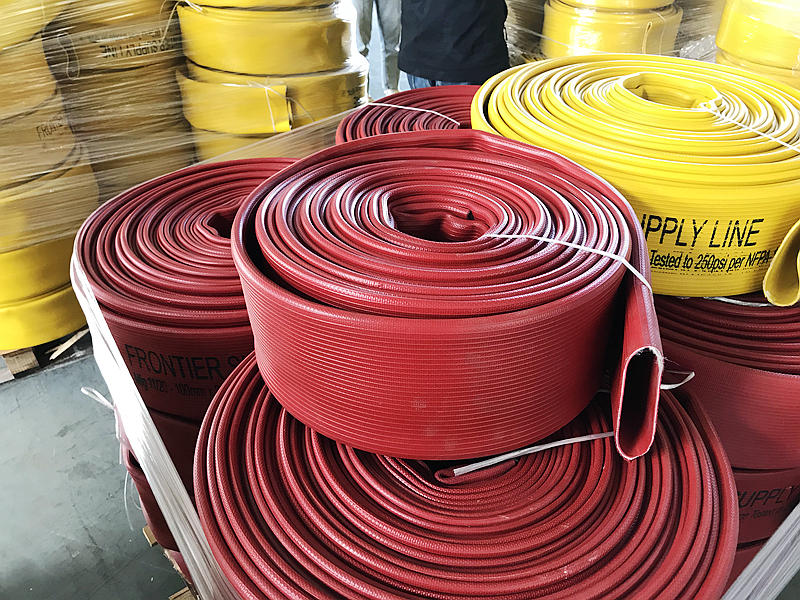
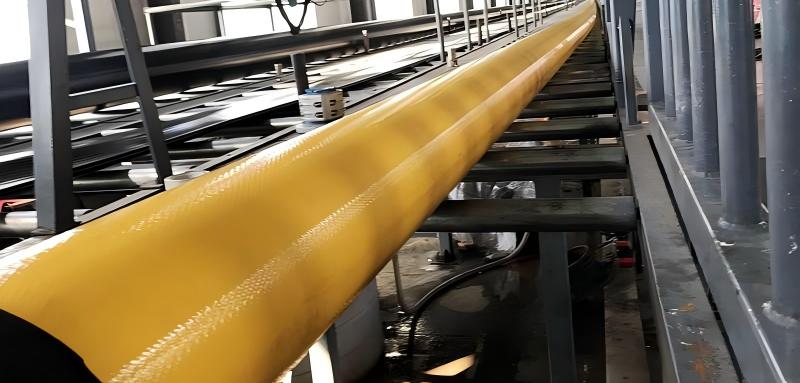
Sunmoon focuses on engineered layflat hoses—including TPU, nitrile rubber (NBR), and PVC—produced in a vertically controlled facility with advanced reinforcement weaving and extrusion lines. The factory operates multiple professional production lines, with ISO 9001, ISO 14001, and ISO 45001 certifications underpinning consistent quality and traceability. For buyers, that means each hose is built for stable wall thickness, reliable pressure ratings, and full‑length testing before shipment. [linkedin]
Sunmoon's TPU layflat hoses are available in a wide range of diameters, including large sizes such as 6‑inch, 10‑inch, and 12‑inch, with wall thicknesses in the 3–5 mm range and working pressures around 200 psi for certain models. The combination of large diameter and high pressure, while keeping the hose light enough for practical handling, showcases the weight‑to‑strength benefits of TPU construction. [alibaba]
Because Sunmoon controls the full manufacturing process, it can adjust reinforcement density, wall thickness, and TPU formulation to match specific project requirements. In practice, that allows your team to choose between lighter hoses for frequent redeployment and heavier‑duty variants for extreme abrasion, all while optimizing for the best strength‑to‑weight performance. [linkedin]
Use this simple framework when deciding between TPU flat hose and fabric reinforced rubber hose for your next project. [sinohose]
1. Length and mobility
- Long runs over 100 m or frequent redeployment: favor TPU layflat. [rubber-pvc-hose]
- Short, mostly fixed connections: fabric reinforced rubber remains acceptable. [kebinghose]
2. Pressure and tensile loading
- High working pressure plus pulling or dragging loads: TPU's higher tensile strength supports better safety margins at lower weight. [sinohose]
- Moderate pressure with low handling: both can perform adequately, so budget may guide the choice. [shotonhydraulic]
3. Surface conditions and abrasion
- Rough ground, mining, and construction: TPU with high abrasion resistance is preferred. [rubber-pvc-hose]
- Protected routing in plantrooms: fabric reinforced rubber can be sufficient. [rubber-pvc-hose]
4. Lifecycle cost and logistics
- Projects where transport and labor costs dominate: prioritize TPU for its lower mass per meter and longer service life. [giiresearch]
- Low‑duty or temporary setups: rubber may be chosen for its lower upfront cost in some regions. [kebinghose]
Industry research indicates that the global TPU layflat hose market was valued around USD 0.5 billion in 2024 and is projected to reach roughly USD 1.2 billion by 2034, at about 8.5% CAGR. This growth is driven by expanding use in agriculture, construction, mining, and oil & gas, where flexible, durable, and lightweight hoses are critical. Market analysts also highlight the role of sustainability policies and infrastructure investment in accelerating adoption of high‑performance TPU solutions. [linkedin]
For OEMs, EPC contractors, and distributors, partnering early with specialized TPU layflat manufacturers such as Sunmoon allows them to build customized hose specifications into project standards. Over time, this standardization around weight‑optimized hose systems can materially reduce installation time, equipment downtime, and replacement cycles. [alibaba]
If your team is benchmarking polyurethane flat hose and fabric reinforced rubber options, you can work with Sunmoon's engineering support to model weight per meter, reel capacity, and pressure ratings for your exact line layout. By combining your project data—such as total run length, elevation changes, and flow requirements—with Sunmoon's product parameters, you can quickly converge on a hose configuration that maximizes strength‑to‑weight ratio while staying within budget. [alibaba]
Typical collaboration steps include:
1. Share application details (medium, pressure, length, duty cycle). [linkedin]
2. Select candidate TPU layflat specifications and compare against existing rubber hose standards. [alibaba]
3. Run a weight‑to‑strength and lifecycle cost analysis for each option. [reportsanddata]
4. Finalize custom lengths, colors, and branding to support project identification. [alibaba]
If you are currently running fabric reinforced rubber hoses and struggling with heavy reels, slow deployment, or frequent replacement, upgrading to polyurethane flat hose with a superior weight‑to‑strength ratio can unlock immediate productivity gains. By partnering with Sunmoon, you can specify custom TPU layflat hoses engineered around your exact pressure, length, and handling requirements—backed by ISO‑certified production and full‑length testing. [hjsko]
You can integrate TPU layflat into your next agricultural, mining, municipal, or oil & gas project specification to reduce handling effort, improve safety margins, and lower lifecycle cost. To discuss a tailored hose configuration, contact Sunmoon's engineering team and request a project‑specific weight‑to‑strength analysis. [giiresearch]
Q1: Is polyurethane flat hose always lighter than fabric reinforced rubber hose?
In most comparable diameters and pressure ratings, polyurethane hoses are significantly lighter, with several sources indicating rubber can weigh about twice as much as polyurethane. [eleyhosereels]
Q2: Can TPU layflat hose handle the same or higher pressure than rubber?
Many TPU layflat designs offer equal or higher working pressures than similar rubber hoses, supported by tensile strengths in the 20–40 MPa range and optimized textile reinforcement. [sinohose]
Q3: How does abrasion resistance compare between TPU and rubber hoses?
Polyurethane typically provides higher abrasion resistance than standard rubber compounds, which is why TPU layflat hoses are favored in mining, firefighting, and heavy construction. [shotonhydraulic]
Q4: Are TPU layflat hoses suitable for hot climates and outdoor use?
Yes, TPU hoses usually operate across wide temperature ranges (for example, around -40 °C to 80–90 °C) and maintain good UV and chemical resistance when correctly formulated. [patents.google]
Q5: When would fabric reinforced rubber still be the right choice?
Fabric reinforced rubber hoses can be a good fit for shorter, relatively static connections in plants or workshops, especially where existing standards, fittings, or budget constraints favor traditional rubber. [rubber-pvc-hose]
1. Kebing Hose – "Polyurethane Hose Vs Rubber: Choosing the Best Industrial…" https://www.kebinghose.com/news/polyurethane-hose-vs-rubber-choosing-the-best-ind.html
2. Sinohose – "TPU vs. Nitrile Rubber: Which Material Offers Better Abrasion Resistance for Firefighting" https://www.sinohose.com/tpu-vs-nitrile-rubber-which-material-offers-better-abrasion-resistance-for-firefighting.html
3. Shoton Hydraulic – "Hydraulic Hose Material Comparison: Rubber, PU, PTFE Guide" https://shotonhydraulic.com/exploring-hydraulic-hose-materials-rubber-vs-polyurethane-vs-ptfe/
4. Google Patents – CN109825064A: Hydrolysis resistant polyurethane hose and preparation https://patents.google.com/patent/CN109825064A/en
5. Rubber-PVC-Hose – "Polyurethane vs Rubber Hose – Which one to choose?" https://www.rubber-pvc-hose.com/polyurethane-vs-rubber-hose-which-one-to-choose/
6. Reports and Data – "TPU Layflat Hose Market" https://www.reportsanddata.com/report-detail/tpu-layflat-hose-market
7. Sunmoon Hose Manufacturing – LinkedIn company profile https://www.linkedin.com/company/sunmoon-layflathose-manufacturing
8. Global TPU Layflat Hose Market Insights, Forecast to 2029 – GII Research https://www.giiresearch.com/report/qyr1366699-global-tpu-layflat-hose-market-insights-forecast.html
9. Eley Hose Reels – "Polyurethane Garden Hose vs. Rubber Garden Hose" https://www.eleyhosereels.com/pages/polyurethane-garden-hose-vs-rubber-garden-hose
10. Rubber-PVC-Hose – "TPU layflat hose, polyurethane reinforced lay flat hose" https://www.rubber-pvc-hose.com/project/tpu-layflat-hose/
11. HJSKO – "Polyurethane vs. Rubber Hose – Which Is Better" https://www.hjsko.com/news-polyurethane-vs-rubber-hose---which-is-better.html
12. Sunmoon – "Heavy Duty TPU Lay Flat Hose – 200 Psi Irrigation Pipe" https://www.alibaba.com/product-detail/SUNMOON-Heavy-Duty-High-Pressure-200_60824021601.html
13. Sunmoon – "Various Sizes TPU Lay Flat Polyurethane Hose" https://www.alibaba.com/product-detail/SUNMOON-Various-Sizes-TPU-Lay-Flat_60728112333.html
14. LinkedIn – "North America TPU Layflat Hose Market Size 2026" https://www.linkedin.com/pulse/north-america-tpu-layflat-hose-market-size-2026-mb6bc


