

Views: 222 Author: Sunmoon Publish Time: 2026-04-29 Origin: Site


In industries like oil & gas, chemical transfer, mining, agriculture, and firefighting, the wrong hose material can lead to swelling, cracking, softening, or sudden failure when exposed to aggressive chemicals. Chemical incompatibility not only shortens hose life but also creates safety and environmental risks. [anacondapipeandhose]
From an engineering and manufacturer's standpoint, TPU layflat hoses and NBR layflat hoses are both strong candidates, but they behave quite differently under chemical exposure. Understanding those differences is the key to selecting the right hose for each project. [tubes-international]
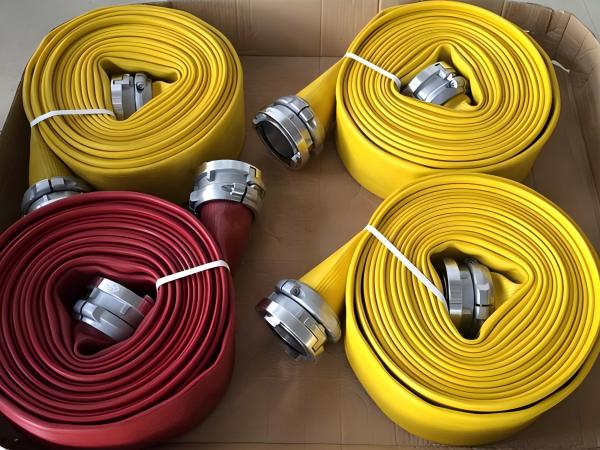
A TPU (thermoplastic polyurethane) layflat hose is typically built using a through‑the‑weave extrusion process, where a TPU tube is bonded through a high‑tenacity polyester jacket, creating a lightweight, high‑pressure, collapsible hose. [sunmoonlayflathose]
Key characteristics from an expert viewpoint:
- Excellent abrasion resistance – TPU has very high tear and wear resistance, ideal for dragging across rough ground. [shotonhydraulic]
- Good chemical resistance – TPU resists many oils, fuels, and a wide range of industrial chemicals better than many conventional rubbers and PVC. [sinohose]
- Wide temperature range – remains flexible at low temperature (often down to about −40 °F / −40 °C, depending on formulation). [anacondapipeandhose]
- Low weight, high strength – high strength‑to‑weight ratio, especially valuable in long-distance water or fluid transfer lines. [sinohose]
As a manufacturer, we often position TPU layflat hose as the go‑to choice for multi‑chemical environments, aggressive slurries, and mobile systems that need lightweight yet robust hose strings. [sunmoonlayflathose]
An NBR layflat hose uses nitrile butadiene rubber as the lining and/or cover, usually reinforced with a woven textile jacket. [tubes-international]
Key characteristics from practical projects:
- Outstanding resistance to oils and fuels – NBR is known for excellent resistance to mineral oils, diesel, gasoline, and many petroleum products. [tubes-international]
- Good chemical stability – performs well in many hydrocarbon‑based fluids and general industrial media, though not as universal as PTFE. [gates]
- Solid mechanical durability – good abrasion resistance, puncture resistance, and flexibility for field use. [sinohose]
- Trusted in firefighting and industrial hoses – NBR/PVC composites are frequently used in fire hoses and chemical plant hoses because of their mix of oil, ozone, and chemical resistance. [anacondapipeandhose]
As a manufacturer, we often see NBR layflat hose chosen when the dominant risk is petroleum contamination and oil exposure, especially in environments that combine fuel, hydraulic oil, and outdoor weathering. [sunmoonlayflathose]
Independent chemical resistance tables treat NBR and polyurethane (PU/TPU) as strong performers in different but overlapping spaces. [gates]
- NBR (nitrile rubber)
- Rated "excellent" to "good" for oils, fats, and petrochemical products such as petrol and diesel. [gates]
- Susceptible to strong oxidizing agents, some polar solvents, and certain aggressive chemicals.
- Polyurethane (PU / TPU)
- Rated "excellent" for abrasion resistance and "good" for many oils and petrochemical products. [shotonhydraulic]
- Often preferred to traditional rubber for mixed chemical exposure and abrasive slurries. [shotonhydraulic]
Industry tests and hydraulic hose comparisons confirm that polyurethane is typically more chemical resistant than standard rubber compounds, excluding extremely aggressive media where PTFE is required. [shotonhydraulic]
Below is a simplified, application‑oriented comparison based on common industry data and field usage. Exact performance depends on formulation and the specific chemical, so always confirm with compatibility charts and your supplier. [anacondapipeandhose]
| Aspect / Medium | TPU Layflat Hose (Polyurethane) | NBR Layflat Hose (Nitrile Rubber) |
|---|---|---|
| General industrial chemicals | Very good for many industrial chemicals and blends (anacondapipeandhose) | Good, but can be more selective in strong chemicals (tubes-international) |
| Oils and fuels | Good–very good, suitable for many oils and fuels (tubes-international) | Excellent resistance to oils, fuels, petrochemicals (tubes-international) |
| Abrasive chemical slurries | Excellent, thanks to abrasion resistance and tear strength (sinohose) | Good, but usually less abrasion‑proof than TPU (sinohose) |
| Strong acids / bases (highly corrosive) | Limited; may require PTFE for extreme conditions (tubes-international) | Limited; also not ideal for highly aggressive chemicals (tubes-international) |
| Temperature‑chemical stability | Maintains properties at low temp; upper temp limited vs special rubbers (sinohose) | Good stability in typical industrial temperature ranges (tubes-international) |
| UV and weathering with chemicals | Good, but may require cover or additives outdoors (anacondapipeandhose) | Often better weathering when formulated with NBR/PVC blends (sinohose) |
From a practical selection standpoint:
- Choose TPU when you expect mixed chemicals, abrasive media, and frequent movement.
- Choose NBR when oil, fuel, and petroleum are the dominant fluids and you need proven oil resistance.
In oilfield operations, layflat hoses must handle produced water with residual hydrocarbons, treatment chemicals, and sometimes solids. [api]
- TPU layflat hoses excel in long-distance water transfer, fracking water lines, and produced water with abrasive solids, where their chemical resistance plus abrasion resistance extend service life. [api]
- NBR layflat hoses are very strong performers in fuel transfer, diesel filling lines, and oil‑contaminated areas, leveraging NBR's excellent oil resistance. [tubes-international]
API's Recommended Practice 15WT highlights the importance of hose integrity and compatibility in oilfield water applications, reinforcing that material choice and chemical resistance are crucial for safety and environmental protection. [api]
In chemical plants, hoses may face cleaning agents, solvents, diluted acids, alkalis, and oils at different stages. [rubberhoseindia]
- TPU layflat hoses are often preferred where the fluid type changes frequently or includes abrasive slurries plus chemicals, such as in waste treatment lines. [anacondapipeandhose]
- NBR layflat hoses perform well in dedicated oil‑based chemical circuits where the medium is primarily hydrocarbon, not a broad chemical mix. [gates]
Standards and guidelines (ASTM, other industrial hose standards) emphasize verifying chemical compatibility, temperature, and pressure for every chemical service. [rubberhoseindia]
In irrigation, dewatering, and mining, chemical exposure often comes from fertilizers, treatment chemicals, and sediments, rather than pure solvents. [sunmoonlayflathose]
- TPU layflat hoses are typically favored in mining slurries and high‑abrasion dewatering lines, where abrasion plus chemical exposure is severe. [sinohose]
- NBR layflat hoses can be used where oil presence is high, for example around fuel handling zones or heavy equipment maintenance areas. [tubes-international]
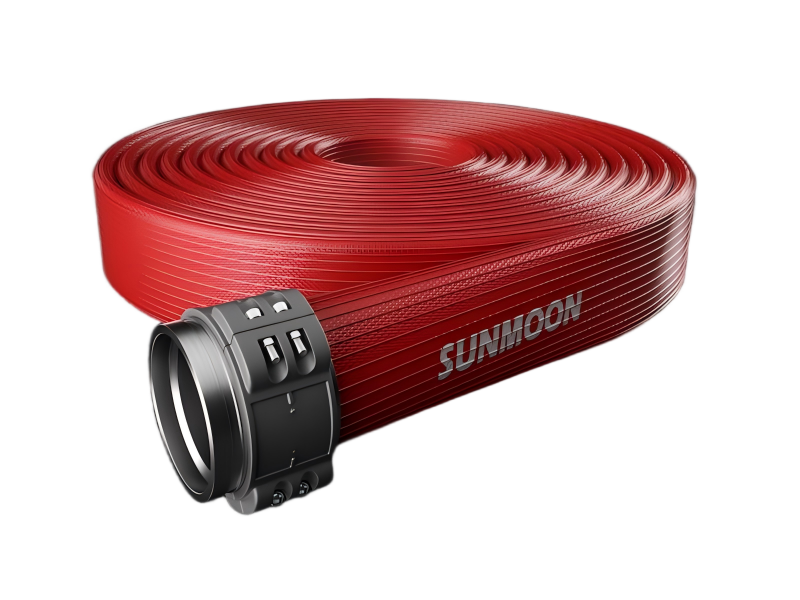
From tracking recent industry publications and technology pages, several current trends influence TPU vs NBR decisions: [rubberhoseindia]
1. Shift to higher performance polymers
- Many fluid‑handling systems are moving from standard rubber or PVC to enhanced polymers like TPU due to better chemical resistance, lower weight, and higher durability. [shotonhydraulic]
2. Focus on lifecycle cost, not just purchase price
- Hoses that survive aggressive chemicals without early failure reduce downtime and replacement costs, which often justifies the premium for TPU layflat hoses in harsh environments. [api]
3. Growing attention to standards and safety
- Guidance from organizations like API and ASTM stresses the need for material compatibility, pressure integrity, and risk management, pushing buyers to demand clear chemical resistance documentation and test data. [rubberhoseindia]
From our manufacturing side, we see that projects with stricter HSE requirements increasingly specify TPU layflat hose for complex or unknown chemical mixtures, while NBR layflat hose remains a favorite wherever oil and fuel exposure dominate.
As a layflat hose manufacturer working with global clients, we typically guide engineers through this simple but robust decision workflow when chemical resistance is a priority:
1. List all chemicals and fluids the hose will contact (including cleaning agents and occasional spills).
2. For each fluid, note: concentration, temperature range, and contact duration.
Then cross‑reference each fluid with standard chemical compatibility tables for TPU/PU and NBR. [gates]
Consider:
- Pressure and surge – higher working pressures and water hammer favor materials with strong mechanical strength (TPU is often advantageous here for long lines). [sinohose]
- Temperature – verify that the chemical‑resistance rating is valid at your operating temperature, not just at room temperature. [tubes-international]
- Mechanical abuse – if the hose will be dragged over rough terrain or used in mining, TPU's abrasion resistance is an important advantage. [shotonhydraulic]
- If the main risk is oils, fuels, and petroleum products, choose NBR layflat hose for its excellent oil resistance. [sunmoonlayflathose]
- If the main risk is mixed chemicals, unknown blends, slurries, or frequent relocations, choose TPU layflat hose for its more universal chemical and abrasion performance. [anacondapipeandhose]
Finally, work with your hose supplier to:
- Confirm compatibility based on exact formulation and application data.
- Select wall thickness, reinforcement, and coupling style that match your pressure and chemical conditions. [rubberhoseindia]
Because we produce both TPU layflat hose and NBR layflat hose, along with custom‑engineered versions, we can test and adapt compounds to specific media when necessary. [alibaba]
Many failures blamed on "bad hose" are actually compatibility or specification mistakes. From our day‑to‑day experience with projects in oil & gas, mining, agriculture, and municipal systems, we consistently see three advantages when customers work directly with a specialized layflat hose manufacturer:
1. Application‑specific material selection
- We help match TPU vs NBR to your actual chemical profile rather than relying on generic labels like "oil‑resistant" or "chemical‑resistant". [sunmoonlayflathose]
2. Custom engineering for edge cases
- For borderline applications, we can adjust TPU or NBR formulations, reinforcement designs, and wall thicknesses to balance chemical resistance, flexibility, and pressure capability. [alibaba]
3. Documented performance and testing
- Our hoses are built to recognized quality standards (e.g., ISO‑based production, reference to ASTM test methods), with testing to verify chemical resistance, burst pressure, and dimensional stability. [alibaba]
This combination of practical project data plus formal testing is what creates real‑world reliability—not just theoretical resistance values.
To make the comparison more concrete, here is how we generally recommend TPU vs NBR layflat hose in practice when chemical resistance is central:
- Best for TPU layflat hose
- Long‑distance produced‑water and flowback lines containing chemicals and solids.
- Mining slurries with abrasive particles and treatment chemicals.
- Industrial wastewater lines with mixed unknown contaminants.
- Best for NBR layflat hose
- Fuel transfer lines (diesel, gasoline) and oil‑contaminated areas.
- Hoses in firefighting and chemical plant environments where NBR/PVC blends are already standard and the dominant media are oils and hydrocarbon‑based fluids. [sinohose]
- Applications requiring high oil resistance and good weathering, but not extreme acids or solvents.
In borderline cases, we often run small pilot lengths or provide sample sections for on‑site compatibility testing, especially for proprietary chemical blends.
From a chemical resistance perspective, TPU layflat hoses offer broader coverage for mixed industrial chemicals and abrasive slurries, while NBR layflat hoses deliver top‑tier performance in oil and fuel environments. The best choice depends on your exact fluids, temperatures, and operating conditions. [tubes-international]
If you are planning a new project or upgrading existing lines and are unsure whether polyurethane or nitrile rubber layflat hose is the better fit, you should:
- Gather your chemical list, temperature, and pressure data.
- Reach out to a specialized manufacturer like Sunmoon for a material selection and hose design recommendation based on real test data and global project experience. [alibaba]
Share your chemical list and project parameters with us, and our engineering team will recommend a TPU or NBR layflat hose configuration—or a custom solution—optimized for safety, service life, and total cost of ownership.
1. Which hose has better overall chemical resistance, TPU or NBR?
For mixed industrial chemicals and abrasive slurries, TPU layflat hose generally offers better overall chemical resistance and durability. For pure oil and fuel environments, NBR layflat hose is often superior because of its excellent oil resistance. [shotonhydraulic]
2. Can TPU layflat hoses replace NBR hoses in fuel transfer lines?
In some cases, TPU layflat hoses can handle oils and fuels effectively, but NBR is traditionally the first choice for dedicated fuel and oil lines due to its proven resistance. Final selection should be based on a detailed chemical compatibility check. [sunmoonlayflathose]
3. How do temperature and chemicals interact for these hoses?
Both materials must be checked for chemical resistance at the actual operating temperature. TPU retains flexibility in low temperatures and performs well with many chemicals, but both TPU and NBR have limits at high temperatures and with highly aggressive media. [gates]
4. Are TPU layflat hoses more durable than NBR in abrasive environments?
Yes. TPU is widely recognized for excellent abrasion and tear resistance, which makes TPU layflat hoses more durable when dragged across rough ground or used with abrasive slurries. [sinohose]
5. What standards or guidelines should I look at when selecting layflat hose for chemical service?
Check chemical resistance tables for NBR and polyurethane, and ensure your hose complies with relevant ASTM‑based tests and sector guidelines such as API RP 15WT for oilfield water operations. Your manufacturer should provide test data and guidance for your exact application. [api]
1. Tubes International – *Table of hose material chemical resistance* (NBR and PU characteristics and chemical ratings).
https://www.tubes-international.com/technical-information/table-of-hose-material-chemical-resistance/ [tubes-international]
2. Shoton Hydraulic – *Exploring Hydraulic Hose Materials: Rubber vs Polyurethane vs PTFE* (comparative chemical resistance and applications).
https://shotonhydraulic.com/exploring-hydraulic-hose-materials-rubber-vs-polyurethane-vs-ptfe/ [shotonhydraulic]
3. Anaconda Pipe and Hose – *Flat hose uses in industrial applications* (materials used, chemical resistance, and applications).
https://anacondapipeandhose.com/technology/flat-hose-uses/ [anacondapipeandhose]
4. Sinohose / technical comparison – *TPU vs. Nitrile Rubber* (performance characteristics for layflat hoses and fire hoses).
https://www.sinohose.com/tpu-vs-nitrile-rubber-which-material-offers-better-abrasion-resistance-for-firefighting.html [sinohose]
5. Sunmoon – *TPU vs. NBR vs. PVC: How to Choose the Right Layflat Hose for Your Project* (manufacturer perspective on material selection).
https://sunmoonlayflathose.com/blogs/news/tpu-vs-nbr-vs-pvc-how-to-choose-the-right-layflat-hose-for-your-project [sunmoonlayflathose]
6. Gates – *Chemical Resistance Tables* (polymer‑specific chemical rating data including polyurethane and nitrile).
https://www.gates.com/content/dam/documents-library/installation-guides/chemical-resistance-tables.pdf [gates]
7. Rubber Hose India – *Industrial Hose Quality Standards Guide 2026* (overview of hose standards and testing philosophy).
https://rubberhoseindia.com/industrial-hose-quality-standards/ [rubberhoseindia]
8. API – *Recommended Practice 15WT – Operations for Layflat Hose in Oilfield Water Applications* (guidelines on safe layflat hose operation).
https://www.api.org/products-and-services/standards/important-standards-announcements/recommendedpractice15wt [api]
9. Alibaba listing – Sunmoon TPU layflat hose product data (manufacturer background, specification reference).
https://www.alibaba.com/product-detail/SUNMOON-high-precision-large-diameter-10_60750637941.html [alibaba]


