

Views: 222 Author: Loretta Publish Time: 2026-01-16 Origin: Site


Content Menu
● Main Decision Points for Garden Hose Buyers
● PVC Garden Hose: Structure, Strengths, and Limitations
>> Main Advantages of PVC Garden Hoses
>> Limitations of PVC Garden Hoses
>> Typical Applications and Users of PVC Garden Hoses
● Rubber Garden Hose: Structure, Strengths, and Limitations
>> What Is a Rubber Garden Hose
>> Main Advantages of Rubber Garden Hoses
>> Limitations of Rubber Garden Hoses
>> Typical Applications and Users of Rubber Garden Hoses
● PVC vs Rubber Garden Hose: Direct Performance Comparison
>> Key Performance Comparison Table
● How Climate, Usage, and Budget Shape Material Choice
>> Frequency of Use and Working Environment
>> Regional Climate Conditions
>> Cost Budget and Procurement Cycle
>> Brand and Supplier Considerations
● Where TPU Layflat Hoses Fit Among PVC and Rubber Options
>> Core Features of TPU Layflat Hoses
>> Typical Use Cases for TPU Layflat Hoses
● Practical Buying Checklist for Hose Selection
● Best Practices for Use and Storage to Extend Hose Life
>> Usage Tips
>> Storage and Maintenance Tips
● Take the Next Step: Choose the Right Hose Solution for Your Needs
● Frequently Asked Questions (FAQ)
>> Q1. Which material is generally more suitable for long‑term heavy use?
>> Q2. Can PVC garden hoses stay in direct sun for a long time?
>> Q3. Do rubber garden hoses still work well in winter?
>> Q4. In which situations are TPU layflat hoses more appropriate?
>> Q5. What should be considered when evaluating a hose supplier?
It is now the hot summer season, the sun is strong, and hoses are exposed to high temperatures, rough ground, and frequent bending. Choosing the right garden hose material directly affects durability, service life, and everyday convenience. Whether for home gardening, retail shelves, or large‑scale irrigation projects, selecting the right hose material can reduce replacement frequency, improve user experience, and increase long‑term value.[1]
When comparing PVC garden hose and rubber garden hose, the most important factors are:
- Resistance to heat, cold, and UV exposure
- Flexibility and kink resistance during frequent use[1]
- Pressure rating and safety margin for pumps and irrigation systems[1]
- Weight, portability, and storage space
- Total cost over the hose's full service life[1]
Different users and scenarios require different material selections. Light balcony watering has very different requirements compared with commercial landscaping or agricultural irrigation.[1]
A PVC (polyvinyl chloride) garden hose is made from plastic and usually consists of one or more layers of PVC, sometimes combined with a fiber‑braided reinforcement layer. The structure typically includes an inner PVC tube, an optional polyester fiber mesh, and an outer PVC jacket.[1]
- Lightweight and easy to carry, drag, and coil, especially suitable for small gardens and balconies.[1]
- Lower cost, making it suitable for large‑scale purchases and price‑sensitive projects.[1]
- Good color and appearance customizability, helpful for branding and retail display.[1]
- Good basic corrosion resistance against many common garden chemicals and mild fertilizers.[1]
These characteristics make PVC hoses convenient for users who do not require heavy‑duty performance.
- Weak cold and heat resistance compared with rubber; the hose can harden in low temperatures and soften in high heat.[1]
- Average UV resistance; long‑term direct sun exposure accelerates aging and deformation.[1]
- Shorter service life in harsh environments or under frequent, high‑intensity use.[1]
Because of these limitations, PVC garden hose is best applied in mild climates, shaded environments, or low‑frequency use patterns.[1]
- Home gardening retail market and DIY consumers.[1]
- Light use scenarios on balconies, courtyards, patios, and small green spaces.[1]
- Customers and projects with limited budgets and shorter expected replacement cycles.[1]
In these cases, PVC hoses provide a practical balance between performance and cost.
A rubber garden hose is made of synthetic rubber, often with fabric or steel wire reinforcement to enhance pressure bearing capacity and weather resistance. The layered structure usually includes a rubber inner tube, a reinforcing layer, and a robust outer rubber cover.[1]
- Very good flexibility; the hose remains bendable in both high and low temperatures and is not easy to knot.[1]
- Wide temperature resistance range, generally from around -40℃ to 100℃, suitable for cold and hot regions.[1]
- High pressure resistance, making it suitable for professional irrigation equipment and pressure pump systems.[1]
- Strong UV resistance and anti‑aging performance, ideal for long‑term outdoor exposure.[1]
- Long service life and strong wear resistance, especially under frequent dragging and rough surface contact.[1]
These advantages allow rubber hoses to maintain stable performance in more demanding environments.
- Greater weight compared with PVC, requiring more effort during transportation and daily use.[1]
- Higher initial unit cost, positioning it in a more premium product segment.[1]
However, in many professional scenarios, the longer service life and better reliability of rubber hoses often offset the higher purchase price over time.
- Commercial garden maintenance and landscaping units.[1]
- Agricultural irrigation and related project support.[1]
- High‑end DIY gardening users who value durability and performance.[1]
- Markets with strict standards for product quality and reliability.[1]
These users tend to require stable operation under frequent use and variable weather.

Feature | PVC Garden Hose | Rubber Garden Hose |
Flexibility | Medium flexibility; tends to harden at low temperatures. | Excellent flexibility; maintains good bending performance in high and low temperatures. |
Temperature resistance | Generally around -10℃ to 65℃. | Generally around -40℃ to 100℃. |
Pressure resistance | Suitable for ordinary household water pressure. | Can withstand higher pressure and connect with pump systems and professional equipment. |
UV & aging resistance | Average; not recommended for long-term sun exposure. | Good UV and anti-aging performance; suitable for outdoor use. |
Weight | Lighter; easier to carry and pull. | Heavier; higher transportation and use effort. |
Service life | More suitable for outdoor but low-frequency use. | Long service life; supports long-term, high-frequency use. |
Cost level | Lower cost; suitable for large-volume, low-price projects. | Higher cost; targets high-end and quality-focused users. |
Typical customers | Home gardening retail, small green spaces, low-budget users. | Commercial maintenance units, agricultural projects, high-end DIY users. |
- Occasional, light use, such as daily household watering, small lawns, and potted plants, tends to favor PVC hoses for their cost‑effectiveness and convenience.[1]
- Frequent or heavy use, such as gardening teams, growers, and maintenance crews, tends to require rubber hoses for their wear resistance and longer service life.[1]
Selecting a hose that matches the actual use intensity helps avoid premature failure.
- In tropical or cold regions with strong sun or low temperatures, rubber hoses offer better adaptability to high and low temperature extremes.[1]
- In mild climates without large temperature swings, PVC hoses can still meet typical household and light commercial needs.[1]
Climate‑based selection improves performance stability and reduces cracking or deformation caused by temperature.
- Short‑term, low‑priced, high‑turnover projects, such as promotional campaigns or basic retail lines, can rely on PVC hoses to control upfront costs.[1]
- Long‑term cooperation and high‑end market projects benefit more from rubber hoses, which extend replacement intervals and deliver higher perceived quality.[1]
Balancing unit price with expected service life helps optimize the total cost of ownership.
Key points when evaluating hose suppliers include:
- Professional experience and technical understanding of hose materials and structures.[1]
- Stable production quality and clear performance specifications.[1]
- Responsive after‑sales service and consistent support for different product lines.[1]
A capable supplier can also assist in matching hose types to specific regional and project needs.
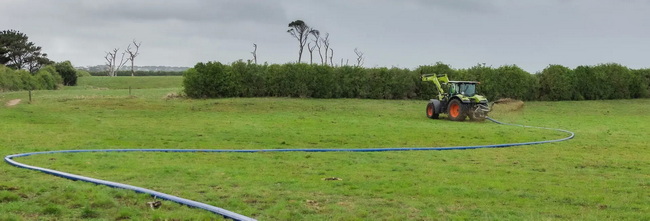
TPU (thermoplastic polyurethane) layflat hoses differ from traditional round PVC and rubber garden hoses by using a flat structure that becomes round only when pressurized. This structure allows:
- High tensile strength and abrasion resistance, suitable for dragging across farmland, construction sites, and rough ground.
- Good low‑temperature flexibility, often superior to standard PVC under cold conditions.
- Lightweight, compact storage, as hoses can be rolled into tight coils and take up less space.
These characteristics make TPU layflat hoses more suitable for professional and large‑scale applications.
TPU layflat hoses are typically used in:
- Agricultural irrigation systems, including open fields and large greenhouses.
- Temporary or semi‑permanent water transfer pipelines over long distances.
- Industrial or emergency water supply and drainage scenarios.
When projects require high performance and engineered specifications, TPU layflat hoses provide a strong alternative to traditional garden hoses.
1. Clarify the primary use scenario: home garden, commercial landscaping, farm irrigation, industrial cleaning, or temporary water transfer.
2. Evaluate climate: note the lowest and highest temperatures and the intensity of sun exposure.
3. Identify pressure requirements: tap pressure only or connection to pumps and irrigation systems.
4. Set budget and expected replacement cycle: focus on short‑term savings or long‑term cost performance.
5. Consider storage conditions: indoor, shaded outdoor, or exposed outdoor storage.
6. Review supplier capabilities: technical support, customization options, and after‑sales service.
Using this checklist helps buyers systematically narrow down suitable materials and structures.
- Avoid dragging hoses over sharp edges or very rough surfaces to reduce external wear.
- Keep operating pressure within the rated range of the hose and equipment.
- In hot weather, release internal pressure when the hose is not in use to reduce stress.
Good daily habits reduce damage caused by over‑stretching and overload.
- Drain residual water after use, especially in cold seasons, to avoid internal freezing.
- Store hoses in a cool, dry, and shaded place to slow aging, particularly for PVC products.[1]
- Use hose reels or proper coiling methods to prevent permanent kinks and flattening.
For TPU layflat hoses, rolling them flat, keeping them clean, and storing them dry further extends their service life and makes redeployment easier.
Selecting the right hose material is crucial for performance, longevity, and total cost, especially when working in demanding climates or running large‑scale projects. If your business requires dependable hose solutions for gardening, landscaping, or irrigation, now is the time to align material choice, application scenario, and supplier capabilities. Reach out to discuss your specific working conditions, pressure and temperature requirements, and long‑term goals, and move forward with hose products that match both your technical standards and your market positioning.
For long‑term, high‑frequency use, rubber hoses are more suitable because of their better flexibility, wider temperature resistance, and stronger wear and aging resistance.[1]
PVC hoses have only average UV resistance and are not recommended for long‑term direct sun exposure, since this accelerates aging, hardening, and potential cracking.[1]
Rubber hoses normally remain flexible at low temperatures and can withstand a broad temperature range, so they are suitable for use in many cold regions.[1]
TPU layflat hoses are more appropriate for long‑distance water transfer, agricultural irrigation systems, and professional or industrial use where high strength, abrasion resistance, and compact storage are required.
Important factors include technical experience in hose production, clear product specifications, stable quality control, and reliable after‑sales support, along with the ability to provide solutions tailored to different climates and applications.[1]


