

Views: 222 Author: Loretta Publish Time: 2026-01-22 Origin: Site


Content Menu
● Why SAE Fittings Matter in Hydraulic Systems
● Core SAE Thread and Seal Concepts
● Main SAE Fitting Standards and Types
>> SAE J514 – JIC 37° Flare Fittings
>> SAE J1926 – ORB (O-Ring Boss)
>> SAE J1453 – ORFS (O-Ring Face Seal)
>> SAE J512 – 45° Flare and Inverted Flare
>> SAE J518 – Four-Bolt O-Ring Flanges
● Typical Applications of SAE Fittings
● How to Choose the Right SAE Fitting
● Material Options and When to Use Them
● Practical Installation Best Practices
● Maintenance Strategies for Leak-Free SAE Connections
● Pressure Rating and Safety Considerations
● Common Failure Modes and How to Avoid Them
● How SAE Fittings Compare to Other Thread Standards
● Trends and Best Practices in SAE Fittings
● Action Call: Request a Custom SAE Hose Assembly Solution
>> 1. What does SAE mean on fittings?
>> 2. Are JIC and SAE the same?
>> 3. Can ORFS and JIC fittings be mixed?
>> 4. How often should SAE hydraulic fittings be inspected?
>> 5. Which SAE fitting type is best for high-vibration equipment?
SAE fittings are standardized hydraulic connectors designed by the Society of Automotive Engineers to deliver leak-free, high-pressure performance in demanding fluid power systems. Understanding their types, standards, and selection principles is essential for building safe, efficient hydraulic, pneumatic, and fuel systems.
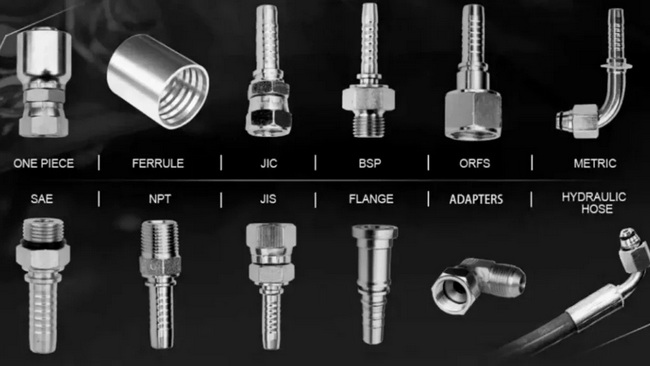
SAE fittings are mechanical connectors that join hoses, tubes, and components in hydraulic and other fluid systems according to SAE dimensional and performance standards. They provide controlled geometry for threads and seal surfaces so that fittings from different manufacturers remain interchangeable and reliable.
- SAE stands for Society of Automotive Engineers, the body that publishes the J-series fitting standards widely used in fluid power and transportation.
- These fittings are optimized for high pressure, vibration, and temperature variations common in mobile and industrial hydraulics.
Modern hydraulic systems demand repeatable sealing under pulsating pressure, shock loads, and harsh operating environments. SAE fittings address these challenges with clearly defined torque, pressure ratings, and sealing geometries.
Key benefits include:
- Leak-free connections when installed within the rated pressure and torque ranges.
- High resistance to pressure spikes, vibration, and temperature cycling.
- Easy replacement and system modification thanks to standardization across brands.
Correct identification of threads and sealing style is the foundation of selecting the right SAE fitting. Misidentification leads directly to leaks, galling, and premature failure in the field.
Main concepts:
- Thread form: Unified UN/UNF straight threads are common in ORB, ORFS, and JIC connections.
- Seal type: Sealing may occur at a cone seat, an O-ring in a groove, or an O-ring face.
- Dash size: Size codes (-04, -06, -08, etc.) correlate to nominal tube or hose sizes and thread diameters.
To enhance user experience, a simple comparison table or thread identification chart image can be inserted in this section to help users distinguish between thread types at a glance.
SAE J514 covers JIC 37° flare fittings, one of the most prevalent connection types in hydraulic systems worldwide. Both male and female ends use a 37° cone seat, and sealing occurs at metal-to-metal contact rather than at the threads.
Key points:
- Designed for high-pressure hydraulic applications on metal tubing.
- Typical size range from about 1/8 inch to 2 inch tube outside diameter.
- Popular in mobile equipment, industrial hydraulics, and test circuits.
SAE J1926 defines straight-thread ports and fittings that seal with an O-ring captured at the boss. The thread provides clamping force, while the elastomer O-ring provides the primary seal against a machined chamfer.
Highlights:
- Recommended for leak prevention in medium- and high-pressure systems.
- Excellent vibration resistance due to the resilient O-ring, suitable for mobile machinery and construction equipment.
SAE J1453 covers O-Ring Face Seal fittings, where a groove on the fitting face holds an O-ring that seals against a flat mating surface. The threads are straight and only provide the clamping force, not the primary seal.
Advantages:
- Outstanding leak tightness even under high shock and impulse pressures.
- Preferred for high-pressure, high-vibration systems where downtime is costly.
A cross-section diagram showing where the O-ring sits in ORFS fittings can significantly improve clarity and visual engagement in this part of the article.
SAE J512 covers 45° flare and inverted flare fittings commonly used in automotive and refrigeration systems. These fittings use straight threads with a 45° seat where sealing occurs at the cone interface.
Key characteristics:
- Well suited to lower-pressure lines such as fuel, refrigerant, and some brake or transmission circuits.
- Often manufactured from brass for corrosion resistance and formability.
SAE J518 defines four-bolt split flanges used to connect large hoses and rigid lines to pumps, motors, and manifolds. A groove in the flange holds an O-ring that seals against a flat port surface.
Important details:
- Two primary series: Code 61 (standard) and Code 62 (high-pressure).
- Ideal for high-flow, high-pressure circuits where threaded connections would be bulky or difficult to service.
A pressure rating chart comparing Code 61 and Code 62 series by size would be highly valuable for engineers selecting flange connections.
SAE hydraulic fittings are used wherever controlled, safe hydraulic power or fluid transfer is required. Standardization simplifies global sourcing, maintenance, and system expansion.
Representative fields:
- Mobile hydraulics: excavators, loaders, agricultural machinery, cranes.
- Industrial power units: presses, injection molding machines, machine tools.
- Automotive and truck: fuel systems, power steering, braking, refrigerant lines.
- Oil and gas: drilling equipment, subsea systems, refinery hydraulics.
Selecting the correct SAE fitting is a safety-critical decision that affects efficiency, downtime, and warranty. A structured decision process reduces errors and installation rework on site.
Key factors:
1. Thread and standard: Confirm whether the system uses JIC, ORB, ORFS, 45° flare, inverted flare, or four-bolt flanges.
2. Pressure rating: Check system working and peak pressures against fitting dynamic pressure limits, typically based on an appropriate design factor.
3. Temperature and fluid: Verify compatibility of fitting and seal materials with temperature range and fluid chemistry.
4. Environment: Consider corrosion, abrasion, and vibration to determine whether carbon steel, stainless steel, or brass is appropriate.
A small decision-flow diagram here (for example, “Pressure → Environment → Standard → Material”) can help non-experts quickly understand the selection process.
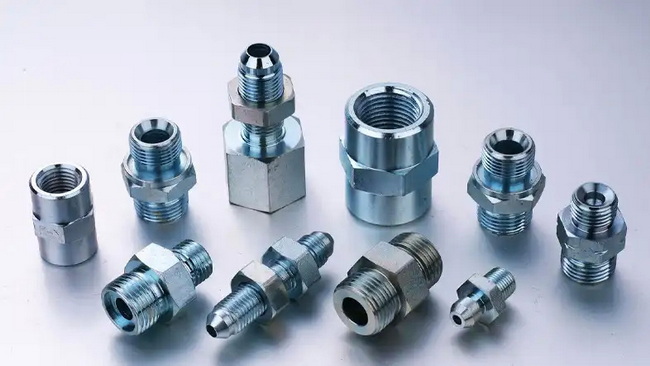
The choice of material is closely tied to cost, service life, and regulatory requirements. Correct material selection reduces corrosion, leakage, and unexpected downtime in harsh environments.
Common materials:
- Carbon steel: Best for high-strength, cost-sensitive hydraulic systems in construction and industrial equipment.
- Stainless steel: Preferred in corrosive environments such as marine, offshore, and chemical processing.
- Brass: Typical for lower-pressure fuel, refrigeration, and pneumatic circuits where machinability and corrosion resistance are important.
Correct installation is the single most effective way to keep SAE fittings leak-free through their full service life. Most premature failures trace back to contamination, misalignment, or incorrect torque.
Recommended steps:
1. Inspect and clean: Check all fittings, hoses, and tubes for cracks, burrs, or deformation, and remove contamination before assembly.
2. Align carefully: Avoid bending tubes or hoses during tightening; the seal surface must seat squarely to prevent scoring or uneven loading.
3. Use proper torque: Tighten with a calibrated torque wrench following the manufacturer's torque chart to avoid over- or under-tightening.
4. Protect seals: For ORB and ORFS, lubricate O-rings with a compatible fluid and ensure they are not twisted or pinched when assembling.
Where appropriate, a simple illustrated step-by-step installation graphic can be added to guide technicians through best practices.
Preventive maintenance keeps hydraulic systems stable and avoids costly unplanned shutdowns. A simple inspection routine greatly reduces the risk of leaks and hose bursts around SAE fittings.
Useful practices:
- Periodic visual checks for seepage, wetness, damaged plating, or hose cover blistering next to fittings.
- Scheduled replacement of seals and O-rings exposed to high temperature or aggressive fluids.
- Documentation of any re-tightening or fitting replacements to track patterns of recurring issues.
Understanding pressure ratings is essential to applying SAE fittings safely in high-energy hydraulic systems. Each fitting size and configuration has a defined working pressure based on dynamic testing and a minimum burst safety factor.
Key safety points:
- Published working pressure assumes that fittings are used within specified operating conditions and with compatible components.
- System pressure spikes must remain below the fitting's rated working pressure to maintain fatigue life and avoid crack initiation under cyclic loads.
A bar chart comparing working pressure by fitting size and series (for example J514, J1453, and J518 Code 61/62) can make this section more intuitive for engineers and buyers.
Knowing how fittings typically fail helps engineers design more robust systems and technicians avoid repeat errors. Early recognition of patterns reduces environmental incidents and safety risks.
Typical issues:
- Thread galling or stripping due to cross-threading or over-torque, often seen on stainless steel connections.
- Seat damage and scoring when fittings are tightened while misaligned or contaminated with metal chips.
- O-ring extrusion or nibbling in ORB and ORFS systems when pressure spikes exceed ratings or when improper O-ring hardness is used.
Prevention measures include correct torque, alignment, adequate filtration, and selecting seals with appropriate hardness and chemical compatibility.
In global systems, SAE fittings often coexist with BSP, metric, and other connection standards, which increases the risk of mismatched components. Clear differentiation protects against dangerous “almost fits”.
Feature | SAE (JIC / ORB / ORFS / J512 / J518) | BSP (British) | Metric ISO |
Common use | North American hydraulics, mobile, industrial | European pneumatics, some hydraulics | Automotive, machinery, global OEMs |
Thread style | UN / UNF straight threads plus flanges | BSPP / BSPT parallel or taper | Metric parallel or taper |
Primary seal | Cone, O-ring boss, O-ring face, flange O-ring | Cone or bonded washer | O-ring, cone, or bonded seal |
This comparison helps designers standardize on one system where possible and use adapters carefully when multiple standards are unavoidable.
Industry guidance increasingly emphasizes system-level safety and lifecycle efficiency in hose and fitting design. Newer machines often combine traditional JIC with ORFS and high-pressure flange connections to balance cost and performance.
Emerging trends:
- Wider use of ORFS in high-duty mobile equipment to minimize environmental leakage.
- Preference for stainless and advanced surface coatings where extended warranties and low total cost of ownership are required.
For engineers, OEMs, and maintenance teams who need reliable SAE-standard hydraulic assemblies, working with an engineering-driven manufacturer ensures that fittings, hoses, and accessories are matched as a complete system rather than as isolated parts. Share your pressure, temperature, fluid, and environmental requirements, and you can receive optimized recommendations that combine SAE fittings with compatible TPU lay-flat hoses and other components tailored to your application.
Ready to build safer, leak-free hydraulic systems? Request a custom SAE hose assembly quote today, and get expert support from design to delivery.
Contact us to get more information!
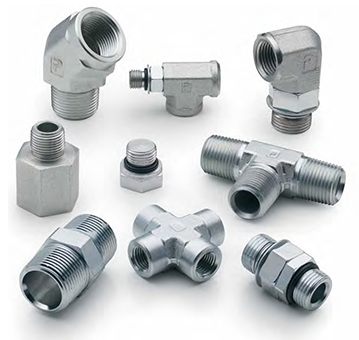
SAE refers to fittings designed according to standards from the Society of Automotive Engineers, which define geometry, performance, and interchangeability for hydraulic and related systems.
JIC 37° flare is an SAE-defined connection under SAE J514, but the term “SAE fittings” is broader and also includes ORB, ORFS, 45° flare, inverted flare, and four-bolt flange connections.
ORFS and JIC use different sealing geometries and are not directly interchangeable, although adapters are available to safely transition between them when needed.
Inspection frequency depends on duty cycle, but many operators align fitting checks with routine hydraulic filter or oil-change intervals to detect leaks, damage, or loosening at an early stage.
ORFS and ORB connections are widely preferred for high-vibration environments because their O-ring seals maintain compression even when metal components experience micro-movement.
<p>Estimated article word count: approximately 1,900 words.</p>
<p>SEO-optimized article summary (meta description, ~300 characters):<br>
https://www.sae.org/standards/j516_201110-hydraulic-hose-fittings
https://ibtinc.com/ultimate-guide-hydraulic-hose-fittings/
https://www.hoseandfittings.com/the-ultimate-guide-to-sae-hydraulic-fittings/
https://www.njadapter.com/a-the-essential-guide-to-sae-hydraulic-fittings-understanding-types-installation.html
https://www.air-way.com/Assets/n2uploads/Resources/Tables/Pressure%20Ratings%20General%20Reference%20112613.pdf
https://www.eng-tips.com/threads/jic-an-installation-best-practice.514643/
https://brennaninc.com/fitting-identification-introduction/
https://jasonhosesolutions.com/guideline/sae-j1273-hydraulic-guidelines/
https://www.hydraulicsdirect.com/thread-charts-hd/fitting-thread-chart
https://www.hydraulichoses.com/thread-charts-hh


