

Views: 222 Author: Sunmoon Publish Time: 2026-05-08 Origin: Site


Thermoplastic polyurethane (TPU) drag hoses are engineered to move slurry with higher solids more safely, efficiently, and cost‑effectively than many traditional rubber or PVC options when they are correctly specified and used. As both a manufacturer and a long‑time user of layflat hose systems in agriculture and industrial slurry transfer, I have seen how the right TPU layflat or drag hose can stabilize flow, reduce downtime, and dramatically extend hose life in abrasive, high‑solid applications. [sunhose]
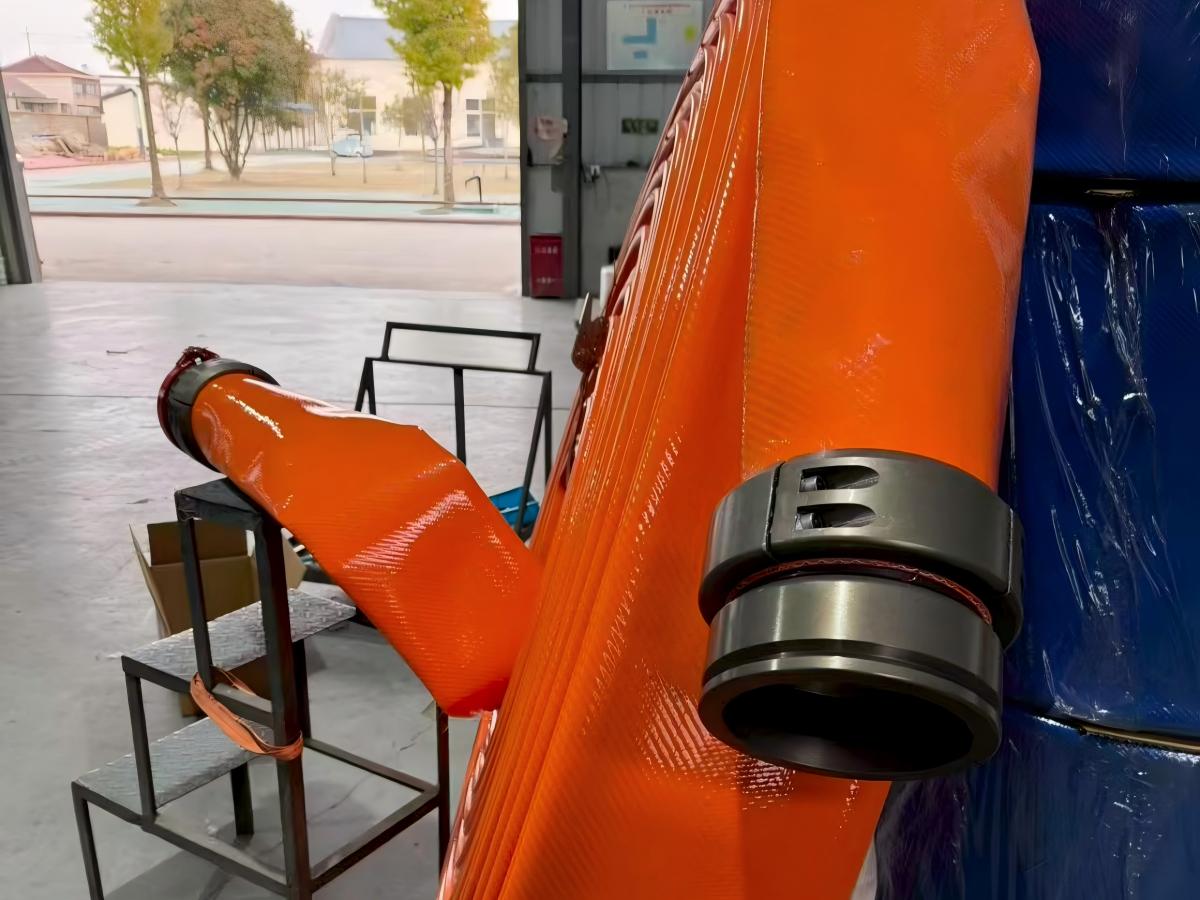
In slurry management, "high solid content" typically refers to mixtures where a large percentage of the volume is made up of suspended particles such as manure solids, sand, silt, fertilizer granules, or industrial by‑products. These solids increase abrasion, make the fluid more viscous, and create more mechanical stress on hoses, pumps, and couplings. [ttpumps]
When operators upgrade from lower‑quality hoses to TPU drag hoses, the first difference they report is more stable flow and fewer failures during peak load conditions, especially during seasonal slurry spreading or continuous industrial discharge. This is because TPU's mechanical strength and flexibility are better suited to repeated bending, dragging, and pressurization under abrasive conditions than many conventional materials. [solutions.covestro]
From an engineering standpoint, TPU combines high tensile strength, excellent elongation, and strong abrasion resistance, making it well suited for slurry transfer with aggressive solids. Compared with traditional rubber or PVC layflat hoses, TPU drag hoses typically deliver longer service life, especially when they are dragged over fields, gravel paths, or concrete during application. [zyfire]
Key reasons TPU drag hoses perform better in high‑solids slurries include: [sunhose]
- Abrasion resistance against manure fibers, sand, and mineral particles.
- High flexibility even at low temperatures, which reduces kinking and localized stress.
- Stable mechanical strength under repeated pressurization and decompression cycles.
- Good chemical resistance to agricultural nutrients and many industrial chemicals.
- UV and weather resistance for long‑term outdoor deployment on farms and job sites.
For operators, these material advantages translate into fewer hose bursts, less downtime, and lower total cost of ownership over multiple slurry seasons. [ttpumps]
The choice between TPU, nitrile, and traditional rubber hoses depends on pressure, chemical exposure, and how often the hose is dragged or repositioned. Many agricultural and industrial users now prefer TPU drag hoses where large volumes of abrasive slurry must be moved continuously over long distances. [midwesthose]
Hose material comparison for high‑solids slurry
| Hose Type | Abrasion Behavior In Drag Use | Flexibility In Cold | Typical Use Case In Slurry | Relative Service Life In High Solids |
|---|---|---|---|---|
| TPU drag hose | Very good on fields and rough ground sunhose | Very good, stays flexible sunhose | Long‑distance drag hose systems, irrigation with solids ttpumps | Long, especially when used within ratings sunhose |
| Nitrile rubber hose | Good, but usually heavier ttpumps | Moderate to good ttpumps | Stationary or semi‑mobile slurry transfer ttpumps | Medium to long depending on handling ttpumps |
| PVC layflat hose | Fair, prone to wear and cracking zyfire | Poor to moderate in cold zyfire | Light‑duty water transfer, low solids zyfire | Short in abrasive high‑solids service zyfire |
From the user's perspective, the weight‑to‑durability ratio of TPU layflat hoses often makes day‑to‑day handling easier—crews can deploy and retrieve longer lines with less fatigue while still maintaining high abrasion resistance. This is particularly valuable in drag‑hose slurry systems that cover large field areas or extended industrial sites. [solutions.covestro]
In practice, operators value three things most: uptime, predictable performance, and long service life between replacements. Feedback from agricultural and industrial users of TPU drag hoses often highlights: [midwesthose]
- Noticeably fewer pinhole leaks after one or more seasons.
- Cleaner inner walls with less buildup when compared with lower‑grade hoses.
- Easier deployment and retrieval using reels due to the hose's consistent flexibility.
These observations align with the physical behavior of TPU in hose constructions: the material resists crack propagation and maintains its mechanical integrity under repeated bending and pressurization. As a manufacturer focused on TPU layflat and drag hoses, we see these patterns consistently across high‑solids slurry applications when hoses are correctly selected and operated within specification. [sinohose]

A high‑quality TPU drag hose for slurry transfer is more than just its base polymer; it is an engineered system. Critical design elements include: [sunhose]
- Reinforcement layer: High‑tenacity woven reinforcement provides the pressure rating and dimensional stability needed for long runs at steady pressure. [zyfire]
- TPU cover and liner: Inner and outer TPU layers improve abrasion resistance, chemical compatibility, and lifecycle. [solutions.covestro]
- Optimized wall thickness: Balanced to handle solids impact and drag forces while keeping weight manageable for field work. [ttpumps]
- Temperature rating: Proper TPU grades ensure flexibility in cold conditions and strength in hot climates. [zyfire]
When these features are correctly specified to match the slurry composition, flow rate, and working conditions, TPU drag hoses maintain stable performance even when solid content rises, minimizing blockages and mechanical damage. [sunhose]
From a materials‑engineering perspective, TPU combines "soft" flexible segments and "hard" segments that give it strength and abrasion resistance. This microstructure allows the hose wall to deform slightly under particle impact, distributing stress rather than allowing sharp localized damage. [pdf.dfcfw]
In high‑solids slurry transfer, this means:
- Fewer gouges and cuts on the inner wall from sand and mineral solids.
- Better resistance to surface erosion where turbulence is highest (near bends and couplings).
- Reduced risk of fatigue cracking in zones where the hose repeatedly flexes under pressure cycles.
By contrast, more brittle materials tend to develop micro‑cracks that expand under cyclic loading, ultimately causing leaks or catastrophic failure in demanding slurry applications. TPU's balanced toughness and elasticity are key reasons it can sustain higher solid content over longer operating windows. [pdf.dfcfw]
Even the best TPU drag hose will underperform if the system layout and operating practices are not optimized. Based on field experience and industry guidance, a robust high‑solids slurry system should incorporate: [sinohose]
1. Correct hose diameter and pressure class
Choose inner diameter and pressure rating based on target flow, pump curve, and maximum operating pressure, maintaining a safety margin above peak pressure. [midwesthose]
2. Gradual transitions and minimal sharp bends
Use sweeping bends and correctly sized manifolds to reduce turbulence, especially at high solid contents. [ttpumps]
3. Protective measures on rough terrain
Avoid dragging hoses across sharp stones, steel edges, or aggressive surfaces; use protective sleeves or routing plates in high‑risk areas. [sinohose]
4. Correct coupling selection and installation
Use couplings rated for both pressure and abrasion with secure clamping to avoid point loading and premature failure. [ttpumps]
When these practices are followed, TPU drag hoses consistently maintain higher throughput, experience fewer blockages, and require less reactive maintenance on high‑solid slurry lines. [sinohose]
For buyers evaluating TPU layflat and drag hoses for slurry transfer, a structured selection approach reduces risk and ensures the hose can handle the intended solid content. [zyfire]
Step 1 – Define the application [zyfire]
- Type of slurry (agricultural manure, industrial slurry, mining tailings).
- Typical and maximum solid content.
- Continuous vs intermittent operation, expected operating hours per season.
Step 2 – Set performance targets [ttpumps]
- Required flow rate and line length.
- Allowable pressure drop across the hose run.
- Target service life (seasons or operating hours).
Step 3 – Match hose specifications [midwesthose]
- Inner diameter and wall thickness to achieve required flow and durability.
- Working and burst pressure ratings above pump max.
- Temperature range compatible with site conditions.
Step 4 – Confirm material compatibility [sunhose]
- Check TPU's resistance to specific chemicals or additives in the slurry.
- Verify abrasion resistance for solids type (sand, fibers, mineral particles).
Step 5 – Plan handling and storage [sinohose]
- Hose reel capacity and bending radius.
- Storage environment to protect from sharp objects and unnecessary stress.
Following this process helps ensure the selected TPU layflat hose is capable of handling both current and future increases in slurry solid content, while maintaining safety and reliability.
Correct daily operation is essential to protect your investment and maintain performance in high‑solids service. Recommended practices include: [sinohose]
- Stay within pressure and temperature ratings: Never exceed the hose's specified limits to avoid bursting or delamination. [zyfire]
- Avoid dragging over sharp or extremely rough surfaces: Where unavoidable, use protective measures in those sections. [sinohose]
- Flush after use: Clear residual solids and chemicals to reduce internal abrasion and buildup. [ttpumps]
- Dry and store correctly: Store flat or on appropriate reels in a clean, dry environment away from concentrated heat sources. [zyfire]
Customers who follow these practices typically report significantly longer service life and fewer unplanned downtime events in demanding slurry operations. [sinohose]
Standard off‑the‑shelf hoses do not always match the exact pressure, length, and handling needs of specific slurry projects. This is where custom manufacturing of TPU layflat hoses and TPU drag hoses becomes a strategic advantage. [midwesthose]
Custom options that matter most in high‑solids slurry transfer include: [sunhose]
- Tailored inner diameter and wall thickness to balance flow and durability.
- Reinforcement design tuned for your pressure and drag conditions.
- Length customization to minimize couplings and potential leak points.
- Color and marking for easy identification, safety, and asset tracking.
For global users, partnering directly with a specialized TPU layflat hose manufacturer in China allows you to align hose design with your slurry characteristics, system layout, and regional compliance requirements. This helps ensure consistent performance as your operation scales or slurry characteristics change. [sunhose]
If you are planning a new slurry transfer line or upgrading from older hoses, this is the right time to evaluate TPU layflat and drag hoses for your high‑solids application. By sharing your slurry composition, target flow rates, and operating conditions, you can obtain a customized TPU hose configuration that balances durability, flexibility, and cost.
Reach out to our engineering team with your slurry data, site layout, and current hose challenges so we can help you design a TPU drag hose solution that safely handles higher solid content and supports reliable, long‑term operation.
Q1: Can TPU drag hoses handle very abrasive slurries with sand and grit?
Yes, TPU drag hoses are designed with high abrasion resistance and reinforced construction to manage slurries containing sand, grit, and other hard particles when specified correctly for pressure and diameter. [solutions.covestro]
Q2: How does temperature affect TPU layflat hose performance in slurry transfer?
TPU hoses maintain flexibility and strength over a broad temperature range, which helps prevent kinking and cracking in both cold and hot environments, as long as operation stays within the manufacturer's rated limits. [sunhose]
Q3: What is the typical service life of a TPU drag hose in high‑solids applications?
Service life depends on pressure, solid content, drag conditions, and maintenance, but many users see significantly longer life from TPU drag hoses compared with PVC or lower‑grade rubber options in similar high‑solids work. [ttpumps]
Q4: Are TPU hoses compatible with chemical additives used in slurry conditioning?
TPU offers broad chemical resistance, and most common agricultural nutrients and many industrial additives are compatible; however, compatibility with specific additives should always be confirmed with the manufacturer. [sunhose]
Q5: Why is custom manufacturing important for high‑solid slurry hose systems?
Custom TPU hose design allows you to match inner diameter, pressure rating, reinforcement, and length to your unique slurry conditions and system layout, helping to reduce failure risk and improve overall lifecycle performance. [midwesthose]
1. TPU Hose properties and advantages in fluid transfer applications. [sunhose]
2. Precautions and operating guidelines for TPU layflat hoses. [sinohose]
3. Slurry transfer hose selection for agricultural applications. [ttpumps]
4. TPU material characteristics and mechanical performance in hoses. [solutions.covestro]
5. TPU hose purchase parameters and application considerations. [zyfire]
6. Large‑diameter TPU transfer hoses for high‑volume operations. [midwesthose]
7. Technical discussion of TPU segments and performance evolution. [pdf.dfcfw]


