

Views: 222 Author: Sunmoon Publish Time: 2026-05-07 Origin: Site


As a manufacturer who has personally walked through crowded hose warehouses and redesign projects, I've seen how switching from rigid pipes to PVC layflat hose can free up to 80% of warehouse space while simplifying day‑to‑day operations. For global buyers managing multi‑site inventories, this is no longer a "nice‑to‑have" optimization but a strategic decision that impacts cost, safety, and flexibility. [dripmax]
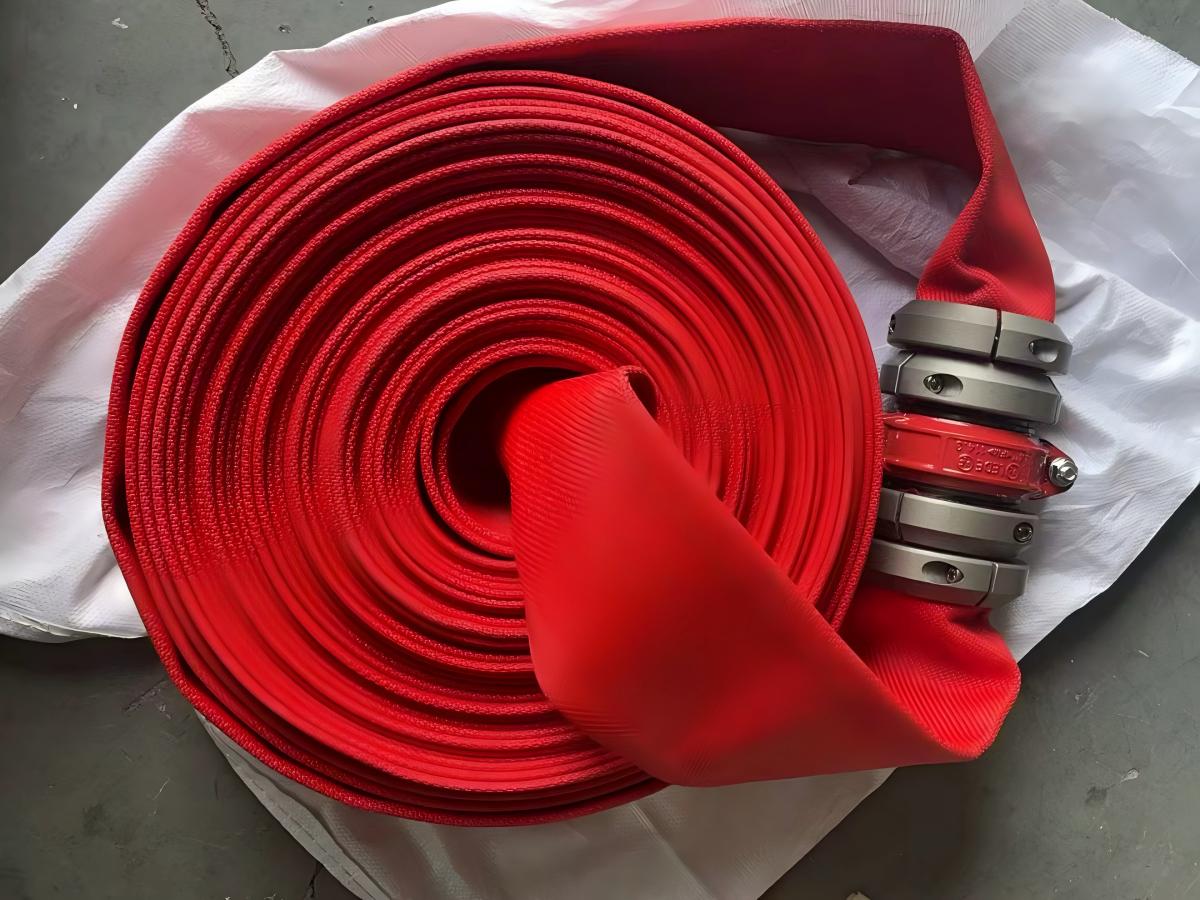
Over the past few years, demand for lay flat hoses has grown strongly, with the global lay flat hose market expected to reach over USD 1.2 billion around 2030, driven by infrastructure, agriculture, mining and industrial fluid transfer projects. This growth is happening while warehouse space and labor costs are rising in most industrial regions, forcing operations teams to rethink how they store and move piping systems. [daehose]
From my work with distributors and OEMs, three recurring pain points keep coming up:
- Overstocked, inefficient warehouses full of bulky rigid pipes
- High transport and handling costs for long, non‑collapsible piping
- Slow response when projects change and pipe layouts must be re‑engineered
PVC layflat hose directly addresses all three, particularly in storage and logistics.
When rigid pipes are not in use, they keep their full cylindrical shape and must be stored as long, bulky pieces or large bundled stacks on racks or pallets. By contrast, PVC layflat hose collapses completely when empty and can be folded and stacked in compact coils, reducing the storage footprint dramatically. [pumpindustry.com]
In real warehouse layouts, this translates into:
- One pallet of layflat hose replacing multiple pallets of rigid pipe for the same transfer length [dripmax]
- The ability to store long lengths (hundreds of meters) in a single compact coil
- Easier vertical stacking with less risk of rolling or instability
Industry sources report that collapsible layflat hoses can reduce storage space requirements by up to 80% compared with traditional rigid systems, especially in large‑scale water transfer and irrigation setups. Even conservative case studies outside the hose sector show 30% warehouse space efficiency gains when switching to flat formats, reinforcing how powerful this geometry change can be in real logistics environments. [lincoln-plastics]
From an engineer's and purchasing manager's perspective, it helps to look beyond "flat vs. round" and compare technical characteristics that affect both performance and storage.
| Aspect | PVC Layflat Hose | Rigid Pipe (Steel / PE / PVC) |
|---|---|---|
| Storage footprint | Collapsible, can save up to 80% warehouse space when stored flat and coiled dripmax | Full diameter maintained at all times, requires racks and large floor area pumpindustry.com |
| Flexibility | Highly flexible, follows ground contours and bends easily pumpindustry.com | Limited bending radius, requires fittings, elbows, or path‑cutting pumpindustry.com |
| Weight | Lightweight, easier manual handling and stacking daehose | Heavier, often needs forklifts or cranes for large diameters pumpindustry.com |
| Deployment speed | Rapid rollout and retrieval, ideal for temporary or seasonal projects pumpindustry.com | Slower assembly with joints, welding, or fittings pumpindustry.com |
| Joint count | Long continuous lengths, fewer joints and leak points pumpindustry.com | Many joints, higher risk of leaks and maintenance issues pumpindustry.com |
| Cost of logistics | Lower transport volume, fewer truckloads due to compact coils daehose | Higher truck space needed for same transfer length pumpindustry.com |
| Typical applications | Agriculture, mining, construction dewatering, temporary water transfer pumpindustry.com | Permanent pipelines, high‑pressure trunk lines |
This table mirrors what we see in the field: operations teams are not just switching for storage, but for a combination of space, flexibility, and lifecycle cost advantages.
When I first visited a client's warehouse in Southeast Asia, they were storing several hundred meters of rigid PVC pipe for irrigation projects. The aisles were narrow, inventory counting was difficult, and every new shipment required reshuffling multiple racks. After a seasonal switch to PVC layflat hose, we observed three practical changes:
1. The same transfer capacity occupied less than half a row of racking.
2. Workers could pick, coil, and load hoses without forklift support for most diameters.
3. The planning team could reserve space for higher‑value products because hoses no longer dominated the layout.
These qualitative observations are backed by the core design of flat hoses: they are engineered to stay flat when not pressurized, then expand into a round profile under pressure for efficient flow. For buyers, that means one product can behave like both an efficient pipeline in use and a space‑saving textile when stored. [24marketreports]
Modern farms increasingly rely on mobile and seasonal irrigation systems, where equipment must be deployed during the watering season and stored compactly off‑season. PVC layflat hose is particularly valued because it is lightweight, collapsible and economical, allowing farmers to store long lengths in small sheds or ISO containers between growing cycles. [pvchosecn]
By replacing rigid pipe runs with layflat, farms can:
- Store full irrigation networks in a fraction of the space
- Reduce the number of vehicles needed to move hoses between fields
- Extend equipment life by storing hoses properly rather than exposed outdoors [pvchosecn]
In mining and large construction sites, engineers regularly need to set up temporary dewatering lines, bypass pumping or emergency drainage. Here, layflat hoses offer rapid deployment, easy relocation, and efficient storage in site containers when not in use. [pumpindustry.com]
Project teams benefit from:
- Smaller on‑site storage yards for hoses
- Faster mobilization when projects shift to new work fronts
- Fewer heavy lifts and crane operations for pipe handling, improving safety [pumpindustry.com]
OEM purchasing managers and distributors increasingly favor lay flat formats because they improve stock density and reduce warehouse and transport costs per meter of fluid transfer solution. One reported case showed a flat‑format packaging change delivering 30% warehouse space efficiency improvement, which is very consistent with the gains we see when transitioning from rigid pipe to lay flat hose in industrial settings. [daehose]
For distributors, this means:
- More SKUs and diameters per rack bay
- Lower storage cost per meter of hose stocked
- Better ability to serve urgent orders without expanding the building footprint
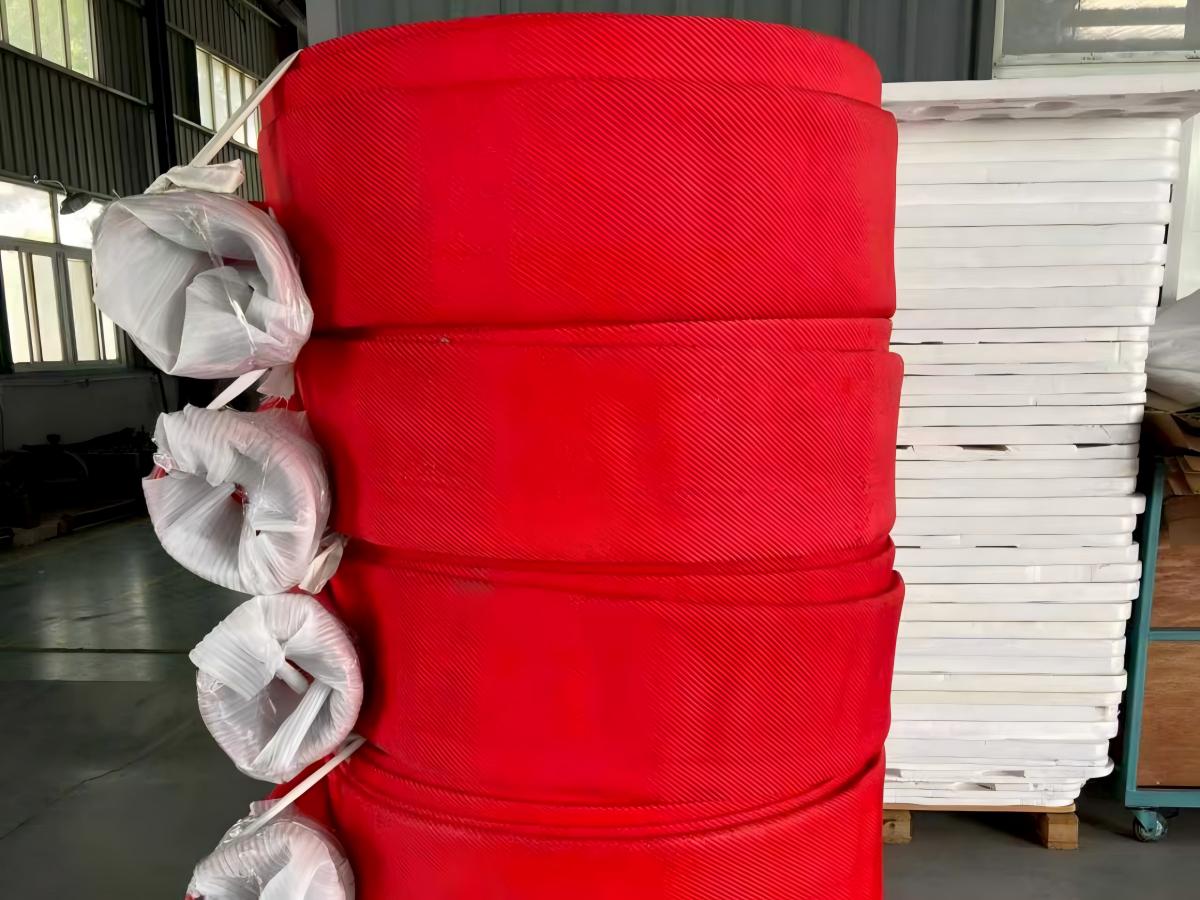
Storage is only one part of the efficiency equation; logistics and handling matter just as much. Industry data and field experience point to several reinforcing advantages:
- Reduced transport volume: Collapsible hoses allow more product to be loaded into a single container or truck, cutting fuel and freight costs. [daehose]
- Lower handling effort: Lightweight construction reduces strain and allows more tasks to be done without heavy machinery, especially for small and medium diameters. [hondotx]
- Faster stock rotation: Coiled layflat hoses are easier to count, label and move, making cycle counting and inventory adjustments more efficient.
Combined, these factors lower the total cost of ownership for buyers who manage multi‑site projects or export to multiple regions.
Many operations directors ask not "if" layflat hoses save space but "how much will we save here?" Based on industry practice, here is a simple step‑by‑step approach you can use internally:
1. Measure current pipe storage volume
- Count the number of pallets or rack bays occupied by rigid pipes.
- Record the average length per pallet and typical diameters.
2. Estimate equivalent layflat hose length
- Calculate the total transfer length needed for your projects (for example, 2,000 m of 3‑inch pipe).
- Determine how many coils of layflat hose would be needed for the same length.
3. Use standard coil dimensions
- Obtain coil outer diameter, height, and weight from your layflat hose supplier's datasheet.
- Simulate how many coils fit per pallet and per rack bay.
4. Compare occupied floor area and rack volume
- Recalculate total pallet count and rack bays needed for layflat coils.
- Compare this to your current footprint to estimate percentage space saved.
5. Add freight and handling factors
- Ask your logistics provider to quote container or truck loading plans for both rigid pipes and layflat coils.
- Convert those plans into cost per meter of installed pipeline.
This method often reveals that an advertised "up to 80%" saving is not just a marketing number but achievable in many real warehouse configurations when coils and racks are optimized correctly. [lincoln-plastics]
From a technical standpoint, modern lay flat hoses are built from durable PVC or advanced polymers like TPU or NBR, usually reinforced with synthetic fibers such as polyester or aramid. This construction lets them combine flexibility and high pressure resistance while maintaining a flat profile when not pressurized. [renatoflex]
Recent material innovations have further improved abrasion resistance and temperature performance, extending product lifetimes in tough environments such as abrasive mining or outdoor agricultural use. For buyers, that means storage gains do not come at the cost of durability; instead, you get both space efficiency and longer service intervals compared to older hose designs. [24marketreports]
As a Chinese manufacturer focused on PVC layflat hose and other flat hose solutions, Sunmoon is positioned to support global customers who need customized, space‑efficient fluid transfer systems. While many suppliers offer generic hoses, a specialist manufacturer can tailor:
- Hose diameters, wall thicknesses and pressure ratings for specific industries
- Coil lengths and packaging to match your racking and container dimensions
- Color coding, branding and labeling to simplify warehouse operations and picking
In practice, this means your project teams do not just receive "standard rolls," but engineered solutions aimed at maximizing space, efficiency and handling safety in your particular logistics setup. For export customers, optimized coil design and palletization can translate directly into fewer containers and lower landed cost per meter of hose.
If you are planning a transition, the highest‑performing projects I have seen generally follow a disciplined approach:
1. Start with one pilot application
- Choose a project with frequent setup/teardown, such as seasonal irrigation or temporary dewatering.
2. Align engineering and warehouse teams early
- Define pressure, flow rate and temperature requirements, then map how coils will be stored and picked.
3. Standardize diameters and connection types
- Minimize adapter complexity by specifying common couplings or quick‑connect systems.
4. Work closely with your hose manufacturer
- Share your rack dimensions, container types, and handling equipment so coil sizes and packaging can be optimized.
5. Track KPIs over 6–12 months
- Monitor warehouse space usage, number of truckloads, deployment time, and maintenance incidents.
This type of structured rollout dramatically increases the chances of realizing the full storage and cost optimization potential rather than capturing only partial benefits.
If your warehouses are under pressure and your teams are still fighting with pallets of rigid pipe, this is the moment to reassess your fluid transfer strategy. A focused partner like Sunmoon, specializing in PVC layflat hose and other flat hose solutions, can help you design customized, compact coil configurations and connection systems that free up to 80% of storage space while maintaining the performance your projects demand. [dripmax]
Share your current pipe specifications, warehouse layout and key applications, and we can work with you to propose a space‑optimized layflat hose solution tailored to your global operations. The result: leaner warehouses, lower logistics costs and more agile project deployment across every site you manage.
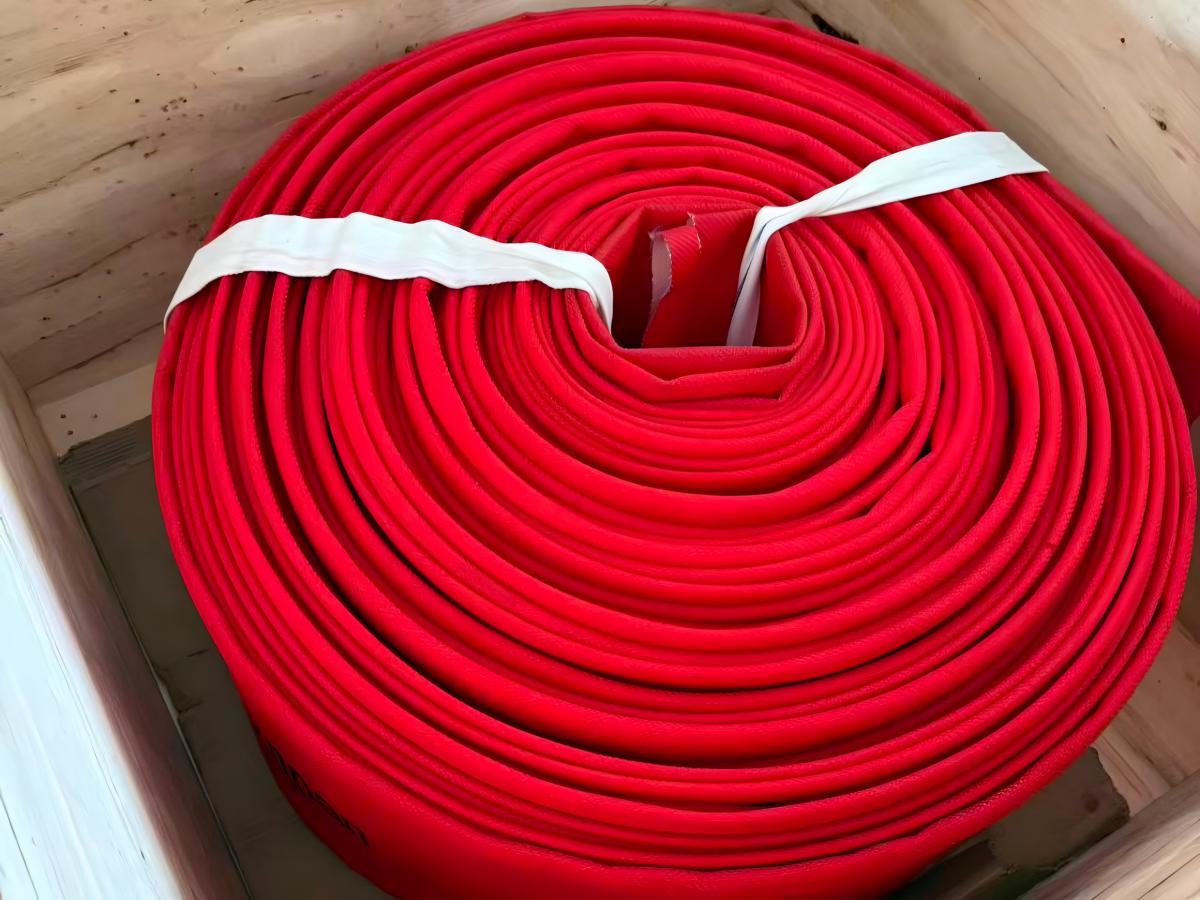
1. Can PVC layflat hoses really save 80% of my warehouse space?
In many applications, yes—industry sources document storage footprint reductions of up to 80% compared with traditional rigid hoses and pipes, especially when coils and racking are optimized. [dripmax]
2. Are layflat hoses durable enough for mining or construction?
Modern layflat hoses use reinforced PVC or advanced polymers with textile reinforcement, offering strong abrasion and cut resistance for harsh environments, including mining and construction dewatering. [renatoflex]
3. How do layflat hoses impact transport costs?
Because they collapse and coil tightly, layflat hoses require less truck and container volume, often allowing more length per load and lowering freight cost per meter of hose. [pvchosecn]
4. Are layflat hoses suitable for permanent installations?
They are ideal for temporary, seasonal or semi‑permanent systems; for very long‑term high‑pressure trunk lines, rigid pipelines may still be preferred, but layflat can complement them in branches and mobile segments. [hondotx]
5. What information should I prepare before talking to a manufacturer like Sunmoon?
You should prepare your required diameters, flow rates, pressures, working environment, typical project lengths, and current warehouse layout so coil sizes, wall thicknesses and packaging can be optimally designed for your operations.
1. Dripmax – "Layflat Hose Solutions: Revolutionary Flexible Water Transfer…", discusses up to 80% warehouse space savings with layflat hoses. https://www.dripmax.com/application/layflat-hose
2. Pump Industry – "Overcoming the limitations of rigid pipes with layflat hoses", outlines storage footprint, handling and deployment benefits over rigid pipes. https://www.pumpindustry.com.au/overcoming-the-limitations-of-rigid-pipes-with-layflat-hoses/
3. Daehose – "Flat Hoses for Reliable and Flexible Fluid Transport in Industrial…", explains collapsible design, space savings and logistics advantages. https://daehose.com/flat-hoses/
4. Xiangan – "Secret Benefits of Using PVC Lay Flat Hose in Farming", highlights space‑saving layout and easy storage/transport for agriculture. https://www.pvchosecn.com/news/lay-flat-discharge-hose-secret-benefits-of-using-pvc-layflat-hose-in-farming.html
5. Hondo Resources – "Layflat Hose vs Poly Pipe: Which Is Best for You?", compares flexibility, deployment and storage of layflat hoses versus poly pipe. https://hondotx.com/blog/layflat-hose-vs-poly-pipe/
6. Lay Flat Hose Market Forecast – "Lay Flat Hose Market 2025 forecast to 2032", provides market size, growth and material innovation data. https://www.24marketreports.com/chemicals-and-materials/global-lay-flat-hose-forecast-market
7. Renatoflex – "PVC Layflat Hose vs. Canvas Hose: A Comprehensive Comparison", covers durability, compact storage and chemical resistance of PVC layflat hoses. https://www.renatoflex.com/PVC-Layflat-Hose-vs--Canvas-Hose--A-Comprehensive-Comparison_136.html
8。 Lincoln Plastics – "10 Benefits of Lay Flat Plastic Tubing for OEM Purchasing Managers", includes a case study showing warehouse space efficiency improvements using flat formats. https://www.lincoln-plastics.com/news-post/10-benefits-of-lay-flat-plastic-tubing-for-oem-purchasing-managers


