

Views: 222 Author: Loretta Publish Time: 2026-01-06 Origin: Site


Content Menu
● Main Types of Irrigation Hoses
>> Surface Drip Irrigation Hoses
>> Subsurface Drip Irrigation Hoses
>> Soaker Hoses and Flat Weeper Hoses
>> Sprinkler and Micro‑sprinkler Hoses
>> Layflat Discharge and Mainline Irrigation Hoses
● Key Materials for Irrigation Hoses
>> Rubber and Reinforced Rubber Hoses
>> TPU (Thermoplastic Polyurethane) Layflat Hose
● How to Choose the Right Irrigation Hose
>> Step 1 – Clarify the Irrigation Scenario
>> Step 2 – Define Flow Rate, Pressure, and Distance
>> Step 3 – Select Diameter and Length
>> Step 4 – Match Material to Environment
>> Step 5 – Check Standards and Quality Indicators
● Typical Applications of Irrigation Hoses
>> Field Crops and Plantations
>> Orchards, Vineyards, and Perennial Crops
>> Landscaping, Turf, and Gardens
● TPU Layflat Irrigation Hose: Key Advantages
>> Lightweight With High Pressure Capability
>> Excellent Abrasion and Weather Resistance
>> Long Continuous Lengths and Compact Storage
● Quick Comparison: PVC, Rubber, and TPU Layflat
● Best Practices for Installing Irrigation Hoses
>> Pre‑installation Inspection
● Maintenance, Inspection, and Replacement
>> Daily and Seasonal Maintenance
>> Visual Inspection Checklist
>> When to Replace an Irrigation Hose
● Plan Your Next Irrigation Project With Expert Hose Selection Support
● Frequently Asked Questions About Irrigation Hoses
>> (1) What type of hose is most suitable for long‑distance irrigation?
>> (2) How often should irrigation hoses be replaced?
>> (3) Are soaker hoses appropriate for large‑scale farming?
>> (4) Can layflat hoses be used with fertilizers and agricultural chemicals?
>> (5) How can leaks in irrigation hoses be minimized?
Efficient irrigation hoses are the backbone of modern agriculture, directly influencing crop yields, water utilization, and operating costs. Irrigation systems that combine the right hose type, layout, and materials help farmers maintain stable production, even under increasingly variable climate conditions.
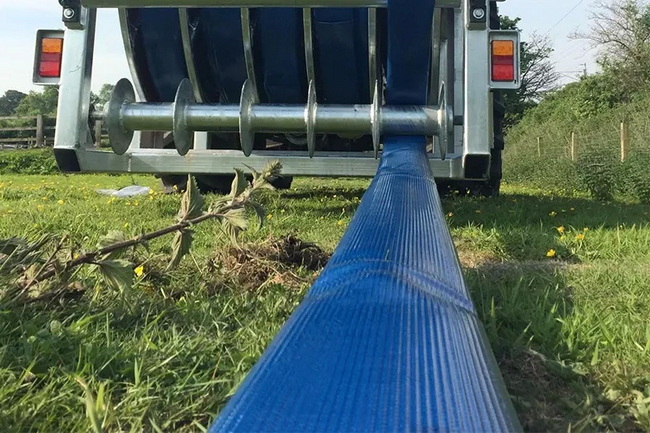
An irrigation hose is a flexible conduit that delivers water from a source or pump to crops, lawns, greenhouses, and landscaped areas. It can be installed on the soil surface, buried shallowly, or suspended above ground, depending on system design and crop requirements.
In agricultural and landscaping systems, irrigation hoses usually work together with pumps, filters, valves, and emitters in formats such as drip irrigation, sprinkler irrigation, and flood or surface irrigation. Selecting the correct hose structure, diameter, and pressure rating is critical for uniform distribution and consistent performance across the field.
Different hose structures and formats serve different fields, crops, and budgets. Understanding these common hose types helps match performance and cost to real‑world operating conditions.
Surface drip hoses, often called drip lines or drip tapes, are thin‑wall plastic tubes with integrated emitters spaced at fixed intervals. They deliver low‑flow water directly to the crop root zone along each row.
These hoses significantly reduce evaporation and leaf wetting while supporting precise fertigation. They are widely used in row crops, orchards, vineyards, and greenhouse beds where water conservation and targeted application are essential.
Subsurface drip hoses are buried a few centimeters below the soil surface so that water is released underground rather than at the surface. This design further limits evaporation and keeps the topsoil relatively dry, which helps reduce weed growth.
These systems are favored for high‑value crops and regions with scarce water resources. They require attentive design and maintenance to control root intrusion and emitter clogging, but they offer excellent water use efficiency over many seasons.
Soaker hoses are made from porous materials that allow water to seep slowly along their entire length. Flat weeper hoses are a related design that lies flat when depressurized and inflates slightly during operation.
These hoses are popular in gardens, hedges, flower borders, and small plots where low‑pressure, uniform seepage is sufficient. They are easy to install, relocate, and store, making them attractive for homeowners and landscapers who need flexible, small‑scale watering solutions.
Sprinkler hoses and micro‑sprinkler lines act as supply conduits for sprinklers, sprayers, and micro‑sprinkler heads that distribute water over a surface area. They can be configured to simulate rainfall for turf and field crops or provide targeted spray patterns for orchards and nurseries.
These systems often rely on polyethylene or similar plastic hoses connected to barbed, compression, or threaded fittings. Maintaining controlled pressure across the network is important to achieve uniform throw distance and application rates from all outlets.
Layflat hoses are flexible hoses that remain flat when not pressurized and form a round cross‑section when filled with water. They are widely used as mainlines and transfer hoses between pumps, reservoirs, and irrigation blocks.
They are particularly effective where hoses must be deployed and retrieved frequently, such as mobile irrigation, temporary construction dewatering, rental systems, and seasonal water transfer. In these applications, long continuous lengths and rapid handling are more important than rigid piping.
Hose material has a direct impact on flexibility, durability, UV resistance, pressure rating, and overall cost. The most common irrigation hose materials include PVC, PE, rubber, and thermoplastic polyurethane (TPU).
PVC hoses are common in light agricultural and garden irrigation due to their low cost and straightforward processing. They perform adequately in many low‑ to medium‑pressure situations, especially when handling is gentle and temperatures are moderate.
However, PVC can become stiff in cold weather and tends to harden and crack under long‑term exposure to strong sunlight if not properly stabilized. For heavy‑duty or high‑pressure irrigation projects, more advanced materials are usually preferred.
Polyethylene is the dominant material for drip irrigation tubes and tapes. It is flexible, corrosion resistant, and compatible with most drip fittings and emitters, making it suitable for both surface and subsurface drip systems.
PE tubing usually operates in low‑pressure ranges and is optimized for uniform, low‑flow emission rather than high‑pressure transfer. It provides a cost‑effective backbone for lateral lines in orchards, vineyards, vegetable fields, and greenhouse installations.
Rubber and reinforced rubber hoses offer excellent flexibility and mechanical robustness under higher pressure. They are used for mobile sprinkler systems, industrial water lines, and various high‑duty field operations that involve frequent movement or exposure to rough surfaces.
The main limitation of rubber in large‑scale irrigation is weight. Heavier hoses increase manual handling effort, machine load during deployment, and transportation costs when large distances or multiple fields are involved.
TPU layflat hose integrates thermoplastic polyurethane layers with a textile reinforcement to achieve high working pressures, long service life, and excellent abrasion resistance while remaining significantly lighter than comparable rubber hoses.
This material shows strong resistance to punctures, weathering, many fertilizers, and common agricultural chemicals within the recommended compatibility range. Its combination of strength, flexibility, and reduced mass allows long continuous lengths that can be quickly deployed, retrieved, and transported between sites.
A structured selection process reduces trial‑and‑error and ensures that each hose section contributes to reliable irrigation performance. The following steps provide a practical framework.
Start by defining where and how the hose will be used. Key aspects include crop type, planting pattern, irrigation method, and whether the system is fixed or mobile.
Additional considerations such as climate, soil type, and topography help determine which hose types and layouts are realistic. For example, sloping terrain may favor certain drip or layflat designs that handle elevation changes more effectively.
Next, calculate or estimate the target flow rate and allowable pressure range. These values are influenced by pump capacity, field size, and the required application rate per hectare or per zone.
Longer hose runs and higher flow rates cause greater friction losses, which must be offset by larger diameters, higher pressure ratings, or shorter sections. Ensuring adequate pressure at the farthest emitters or sprinklers is critical for uniform watering.
Diameter is one of the most influential parameters in hose selection. Larger diameters reduce pressure loss and increase flow capacity but cost more and may be less flexible. Smaller diameters are less expensive and easier to handle, but they can restrict flow and amplify friction losses.
Length should be matched to the layout of each block or zone. In many projects, long continuous sections reduce the number of joints and potential leak points. Layflat hoses, in particular, can be supplied in extended lengths that simplify mainline design.
Each field environment presents unique challenges, such as sharp stones, vehicle traffic, UV exposure, chemicals, or frequent deployment. These factors should guide material selection.
For example, heavily trafficked farm roads, abrasive surfaces, and high working pressures call for more robust materials and reinforcements. Conversely, low‑pressure backyard or small‑plot systems can operate efficiently with lighter, less expensive hose options.
Finally, evaluate hose quality by reviewing technical data and the supplier's manufacturing background. Important indicators include working pressure, burst pressure, temperature range, abrasion resistance, and UV stability.
Consistent dimensional control, clear markings, and documented quality control procedures are also signs of a reliable product. In professional projects, these details simplify specification, installation, and long‑term maintenance planning.
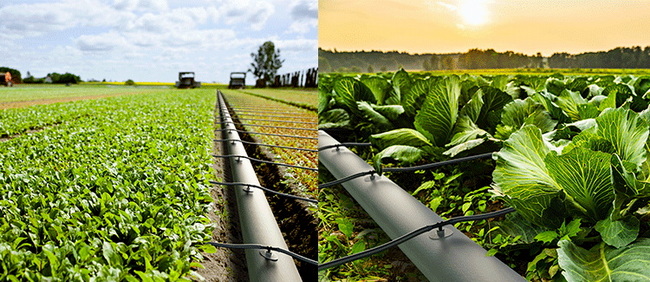
Grouping irrigation scenarios by scale and function helps clarify which hose types and materials are likely to perform best.
Large fields for grains, oilseeds, sugar crops, cotton, and similar commodities often adopt combinations of drip lines, sprinklers, and mobile irrigation machines. Mainlines and sub‑mains carry significant water volumes across long distances.
In such environments, high‑capacity transfer hoses and durable mainlines help keep pumping and labor costs under control. Systems may be configured for seasonal redeployment as crop rotations and planting patterns change.
Orchards and vineyards demand stable moisture in the root zone and minimal foliage wetting to limit disease pressure. Drip hoses and micro‑sprinkler lines typically supply individual trees or vines.
Flexible mainlines and laterals must accommodate tree spacing, canopy development, and sometimes uneven terrain. Hose selection must balance durability with the need for occasional changes during re‑planting or pruning cycles.
In greenhouses and nurseries, irrigation hoses often integrate with automation, fertigation equipment, and fine pressure regulation for benches, pots, and seedling trays. Lightweight PE or PU tubing, small drip lines, and micro‑sprinkler circuits are common.
Hoses in these environments must handle frequent connection changes, cleaning, and reconfiguration while maintaining consistent performance. Compact layouts and overhead routing sometimes introduce tighter bending radii that favor more flexible materials.
Residential and commercial landscaping often relies on soaker hoses, flat weeper hoses, small sprinkler hoses, and standard garden hoses. These products prioritize ease of installation and adjustment over extreme durability or pressure capability.
Landscaping projects typically involve curved beds, varying plant densities, and decorative elements, so hoses must adapt to non‑linear routing while maintaining acceptable aesthetics. Quick connectors and modular fittings support flexible seasonal changes.
TPU layflat hoses introduce a combination of characteristics that make them particularly attractive for demanding irrigation tasks and long‑distance water transfer.
Due to their thermoplastic structure and engineered reinforcement, TPU layflat hoses achieve high working pressures while remaining significantly lighter than many rubber hoses of comparable rating. This reduces physical effort and equipment requirements during deployment and retrieval.
Lower weight also translates into reduced transport costs when projects span multiple sites or require frequent relocation of hose assets. This is an important factor for contractors, rental fleets, and large plantation operators.
TPU materials are noted for high abrasion resistance and robust performance in outdoor environments. This allows hoses to be dragged across soil, gravel, and vegetation with slower wear rates compared to many alternative materials.
These hoses also provide strong resistance to UV radiation and hydrolysis when properly formulated. As a result, they maintain flexibility and mechanical strength over longer service lives in sun‑exposed, high‑humidity, or temperature‑variable conditions.
TPU layflat hoses can be produced and supplied in long continuous coils that minimize intermediate joints and couplings. Fewer joints mean fewer potential leak points, faster setup, and cleaner system hydraulics.
When depressurized, the hose collapses into a flat profile that coils tightly, saving valuable storage space in warehouses, containers, or equipment sheds. This compactness also simplifies shipping and on‑site logistics.
The following table summarizes key characteristics of three common hose material categories used in irrigation and water transfer.
Feature / Material | PVC Irrigation Hose | Rubber Hose | TPU Layflat Hose |
Typical pressure range | Low to medium | Medium to high | Medium to very high |
Weight | Light | Heavy | Light to medium |
Flexibility in cold weather | Limited | Good | Good |
Abrasion resistance | Moderate | Good | Very high |
UV and weather resistance | Moderate | Good | Excellent |
Typical use cases | Gardens, light farm tasks | Mobile sprinklers, heavy-duty jobs | Long-distance mainlines, high-pressure irrigation and water transfer |
For small gardens, budgets and light operating demands often point toward PVC or basic PE solutions. For larger or more demanding systems, especially those involving longer distances and mobile operation, advanced hose concepts such as TPU layflat tend to provide a better balance of performance and lifecycle cost.
Sound installation practices unlock the full potential of the selected hose type and reduce early failures or maintenance issues.
Before installation, inspect hose coils and assemblies for manufacturing or handling damage. Look for cracks, pinholes, bulges, or flattened sections that may indicate internal issues.
Confirm that diameters, wall thicknesses, pressure ratings, and end connections match the system design. Clear labeling and traceable batch information are helpful for future troubleshooting or replacement.
Careful route planning protects the hose from unnecessary stress. Aim for the straightest practical path, with gentle curves rather than tight bends that could kink the hose or concentrate stress.
Where hoses cross sharp edges, rocks, or traffic paths, use protective sleeves, guides, or supports. In long layflat runs, secure key sections to minimize unwanted movement and abrasion during start‑up, operation, and draining.
Connection quality directly affects leakage rates and maintenance workload. Select fittings that are specifically designed to work with the hose material, wall thickness, and diameter.
Apply appropriate sealing methods such as clamps, gaskets, and thread seals according to fitting design. After assembly, pressurize the system gradually and perform a thorough leak check before placing the system into normal service.
Consistent maintenance and inspection practices extend the usable life of irrigation hoses and improve system reliability during critical growing stages.
Regularly flush lines to remove sediments and biological build‑up that can clog emitters or restrict flow. In climates with freezing conditions, drain hoses after use to prevent internal ice damage.
Surface cleaning may be necessary when mud, plant residues, or fertilizer deposits accumulate on the hose exterior. Clean, dry storage spaces help preserve flexibility and mechanical properties during off‑season periods.
A simple but disciplined inspection routine can identify early warning signs of failure. Items to monitor include surface cuts, deep abrasion marks, exposed reinforcement, localized swelling, and persistent kinks.
Sections showing such symptoms should be isolated and evaluated. In many cases, timely removal or repair of a small section prevents larger failures that could disrupt irrigation during peak demand.
Over time, all hose materials experience fatigue, environmental aging, and mechanical wear. Repeated leaks, loss of pressure capacity, or noticeable deformation under normal operating pressures are strong signals that replacement is necessary.
Many professional users implement preventive replacement schedules tied to seasons, operating hours, or inspection results. This approach reduces unexpected downtime and improves overall water management reliability.
The right irrigation hose does more than move water; it supports yield stability, labor efficiency, and long‑term operating cost control. When designing or upgrading an irrigation system, technical guidance on hose types, materials, pressure ratings, and layouts can significantly improve project outcomes.
If you are preparing a new irrigation project or optimizing an existing one, consider compiling your core parameters – including water source, flow rate, pressure range, distances, terrain, and crop plan – and sharing them with a specialized hose engineering team. With this information, it is possible to recommend appropriate drip, soaker, sprinkler, and layflat configurations, along with detailed hose specifications, connection schemes, and handling guidelines tailored to your fields and operating strategy.
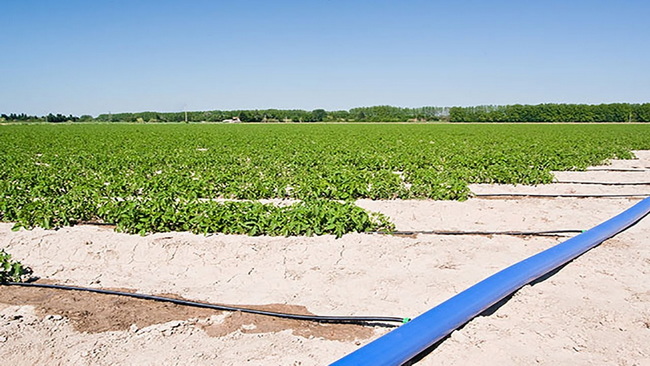
For long‑distance irrigation that requires high flow and stable pressure, layflat hoses designed for water transfer are generally the most suitable option. Their long continuous lengths and relatively low weight support efficient deployment between water sources and fields.
Replacement intervals depend on material, operating pressure, environmental conditions, and handling practices. As a practical guideline, hoses used in intensive agriculture should be evaluated annually and replaced when they show repeated leaks, deformation, or significant wear.
Soaker hoses are typically used for gardens, landscaping, and small plots, where moderate lengths and low pressures are sufficient. Large‑scale farms usually rely on drip lines, sprinkler systems, and layflat mainlines that are better suited to extended distances and higher flow rates.
Many layflat hoses are designed to handle fertilizers and a range of agricultural chemicals within specified compatibility limits. It is important to check the supplier's chemical resistance information and follow any recommendations for rinsing or flushing after use.
Leaks can be minimized by selecting compatible hoses and fittings, using adequate sealing methods, and avoiding excessive bending or tension at joints. Regular system inspections, timely repairs, and preventive replacement of aged sections further reduce the likelihood of unexpected failures.


