

Views: 222 Author: Loretta Publish Time: 2026-01-01 Origin: Site


Content Menu
● What Are Tubes, Pipes, and Hoses?
● Core Applications: Tube vs Pipe vs Hose
● Sizing Rules: How Each Is Measured
>> Tube sizing
>> Pipe sizing and nominal pipe size (NPS)
>> Hose sizing
● Materials and Manufacturing: Why They Behave Differently
>> Tube materials and processes
>> Pipe materials and processes
>> Hose materials and processes
● Performance Comparison: Rigidity, Flexibility, and Pressure
>> Tube, pipe, hose at a glance
● When to Use Hose Instead of Tube or Pipe
>> Typical scenarios where hose is better
>> Benefits of TPU layflat hose in these scenarios
● Practical Selection Guide: Tube, Pipe, or Hose?
>> Step-by-step selection checklist
● Get Engineering Support for Your Next Hose or Piping Project
● FAQs: Tubes, Pipes, Hoses, and TPU Layflat Hose
>> 1. Is a hose the same as a pipe?
>> 2. Can a pipe and hose be used interchangeably?
>> 3. Are tubes more precise than hoses and pipes?
>> 4. When should TPU layflat hose be used instead of PVC layflat hose?
>> 5. How do I choose the right size for a TPU layflat hose?
Tubes, pipes, and hoses all move fluids or gases, but they are engineered for very different jobs, standards, and sizing rules, and choosing the wrong one can cause leaks, failures, or costly downtime. TPU layflat hose adds another high-performance option for modern projects that need long-distance, flexible, and lightweight fluid transfer.

Tubes, pipes, and hoses are all hollow conduits, yet they differ in rigidity, precision, and how engineers specify them. Understanding these fundamentals makes it easier to choose correctly for structural frames, permanent pipelines, or flexible hose lines.
- Tube: Usually rigid, with precise dimensions and tight tolerances, often used in structural or high-precision systems.
- Pipe: Rigid conduit with standardized nominal sizes, optimized for flow capacity and pressure in piping systems.
- Hose: Flexible conduit designed for easy routing, vibration absorption, and quick deployment, including modern TPU layflat hose for demanding applications.
Each option serves a different type of application, defined by load, movement, and installation style. Matching the right product to the right job reduces maintenance and improves system safety.
Tubes are widely used where precision and strength matter more than flexibility. In many cases, tubes are selected because they must hold shape under load and fit accurately with surrounding components.
- Structural frames in machinery, racks, and vehicles.
- Medical equipment, instrumentation, and heat exchangers needing accurate outside diameter.
- Automotive and aerospace components where tight tolerances and consistent stiffness are critical.
Pipe is the backbone of permanent piping systems in buildings, plants, and infrastructure. Engineers focus on internal flow capacity, pressure rating, and compatibility with pipe fittings and codes.
- Water, steam, gas, and chemical distribution networks.
- Process lines in industrial plants that must follow standards such as ASME B36.10M and B36.19M.
- Underground and in-wall installations where rigid support and long service life are required.
Hoses are chosen when systems need flexibility, movement, or fast deployment, rather than rigid routing. TPU layflat hose extends these advantages to high-pressure, long-distance transfer in agriculture, mining, and energy projects.
- Hydraulic systems, mobile machinery, and automotive lines that vibrate or move.
- Temporary and semi-permanent transfer lines for water, slurry, fuel, and chemicals.
- Long flexible lines using TPU layflat hose for irrigation, dewatering, firefighting, and industrial water transfer.
One of the biggest practical differences between tubes, pipes, and hoses is how size is defined and marked. Misunderstanding OD, ID, and nominal size is a common cause of ordering mistakes and poor flow performance.
Tubes are specified with outside diameter (OD) and wall thickness, which together define the inside diameter and strength. This approach supports accurate fit in structural joints and tight tolerance assemblies.
- Typical markings include “1 in OD × 0.065 in wall thickness” or metric equivalents.
- OD and wall thickness determine load capacity and bending stiffness in structural design.
- Standards such as ASTM and ISO define mechanical properties, tolerances, and testing methods for tubes.
Pipe uses nominal pipe size (NPS) plus schedule to describe dimensions, which can be confusing for non-specialists. The nominal diameter is not the actual diameter, and the schedule number defines wall thickness and pressure capability.
- A “2 in” pipe name does not mean the measured diameter is 2 in, because NPS is a nominal label.
- A 2 in Schedule 40 pipe has a larger inside diameter than a 2 in Schedule 80 pipe because the Schedule 80 wall is thicker.
- Standards such as ASME B36.10M and B36.19M set standard outer diameters and wall thickness combinations.
Most hoses are specified by inside diameter (ID) because flow area is the critical parameter. In addition to ID, engineers consider working pressure, safety factor, and minimum bend radius.
- A “1 in hose” generally refers to 1 in ID rather than OD.
- Hose datasheets list ID, working pressure, burst pressure, temperature range, and recommended media.
- TPU layflat hose also specifies weight per meter and standard coil length for handling and logistics planning.
Material selection and manufacturing processes explain why tubes, pipes, and hoses have different mechanical behavior, durability, and cost. Understanding these factors helps balance strength, weight, corrosion resistance, and flexibility.
Tubes are commonly made from metals and engineering plastics to deliver high strength and precision. The chosen material depends on required stiffness, corrosion resistance, and allowable budget.
- Common metals include carbon steel, stainless steel, and aluminum.
- Seamless tubes are produced through extrusion or piercing and are favored for high pressure and smooth internal surfaces.
- Welded tubes are formed by bending strip into a cylinder and welding the seam, often at a lower cost than seamless tubes.
Pipes share many materials with tubes but follow standards oriented toward pressure and flow rather than cosmetic finish. Their production route is chosen to match diameter, wall thickness, and volume requirements.
- Pipes are manufactured from metals, plastics, and even concrete depending on the application.
- Common plastic pipes include PVC and other thermoplastics used in drainage and watering systems.
- Steel pipes are widely applied in plumbing, industrial fluids, and high-pressure services.
Hoses use flexible materials such as rubber, thermoplastics, and reinforcement layers. This combination allows hoses to handle pressure while staying flexible and easy to route.
- Rubber hoses often use EPDM for weather resistance and nitrile or neoprene for oil and chemical resistance.
- Thermoplastic hoses, including TPU layflat hose, are typically made using extrusion, co-extrusion, and multi-layer processes with textile or metal reinforcement.
- Reinforcement can include carbon steel, stainless steel, alloy steels, or textile fabrics to meet various pressure levels.
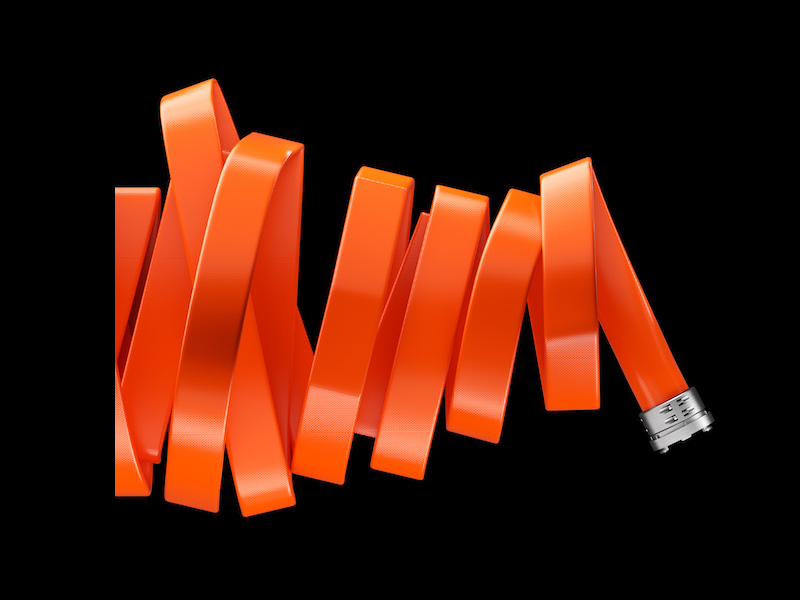
Engineers compare tubes, pipes, and hoses on rigidity, flexibility, pressure rating, and how well they handle vibration and movement. TPU layflat hose often outperforms traditional hoses where long runs and rapid deployment are needed.
- Rigidity and load bearing: Tubes and pipes are rigid and can be self-supporting for structural and fixed piping designs, while hoses are flexible and usually need support or ground contact.
- Flexibility and routing: Hoses offer maximum flexibility, allowing routing around obstacles and quick reconfiguration of systems.
- Pressure and pulsation: Tubes and pipes are suited to applications where minimal volumetric expansion is desired, while hoses help absorb vibration and pressure fluctuations.
Aspect | Tube | Pipe | Hose / TPU Layflat Hose |
Typical rigidity | Rigid structural member. | Rigid pressure conduit. | Flexible conduit. |
Main design focus | Precise OD, strength, tolerances. | Flow capacity, pressure, standards. | Flexibility, routing, deployment. |
Size notation | OD × wall thickness. | NPS + schedule. | ID plus pressure and bend radius. |
Typical materials | Steel, stainless, aluminum. | Metals, plastics, concrete. | Rubber, PVC, TPU. |
Typical use | Frames, medical, precision systems. | Plumbing, process piping. | Hydraulics, mobile, transfer lines. |
Mobility / deployment | Low; mostly fixed. | Low; mostly fixed. | Very high, especially layflat. |
In many systems, tubes and pipes are used for fixed, rigid segments, while hoses cover areas needing movement, vibration isolation, or frequent connection changes. TPU layflat hose extends hose usage into heavy-duty, long-distance applications that previously relied mainly on rigid pipe networks.
- Equipment that vibrates or moves, where rigid pipe would be prone to fatigue at joints.
- Temporary water or slurry transfer lines on construction, mining, or energy sites.
- Rapid deployment and retrieval in emergency response and large-area operations using layflat hose coils.
- Fast deployment: Long continuous lengths can be uncoiled quickly and laid on the ground with minimal jointing work.
- Low weight and compact storage: TPU layflat hose coils occupy less space than equivalent pipe systems, lowering transport and handling effort.
- High durability: TPU combines abrasion resistance, puncture resistance, and UV stability for long service life in demanding outdoor use.
A simple decision framework helps engineers and buyers decide when to choose tube, pipe, or hose, and when to introduce TPU layflat hose. Asking a few practical questions quickly narrows the options.
1. Is the line fixed or moving?
- Fixed systems tend to favor pipe or tube.
- Moving or vibrating sections often require hose connections.
2. Is precision or flow the priority?
- Precision fit and structural support point toward tube.
- Flow capacity and pressure control point toward pipe or hose sized by ID.
3. How long is the run and how often will it move?
- Short, static runs can be more economical with pipe or tube.
- Long runs or frequently relocated lines benefit from TPU layflat hose.
4. Which environment and fluid are involved?
- Corrosive or abrasive media may require stainless steel, special alloys, or TPU layflat hose with suitable lining.
- Outdoor UV and rough terrain favor hose materials with strong weathering and abrasion resistance.
5. What standards and approvals are required?
- Building and process piping must follow applicable pipe codes and standards.
- Hose assemblies should comply with relevant DIN, ISO, or SAE requirements where applicable.
Choosing between tubes, pipes, conventional hoses, and modern TPU layflat hose has direct impact on safety, uptime, and operating cost. For projects that demand long-distance, flexible, and reliable fluid transfer, contacting an engineering-driven TPU layflat hose manufacturer for a detailed sizing and configuration review helps ensure that diameter, pressure rating, materials, and couplings are fully aligned with real-world operating conditions and future expansion needs.
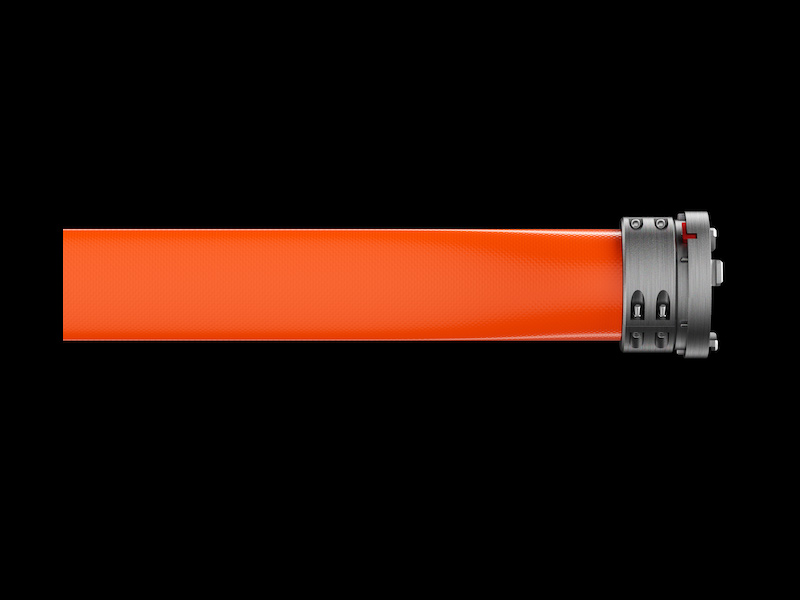
No, a hose is a flexible conduit while a pipe is rigid and standardized for permanent installations. Hoses are used where movement, vibration, or frequent reconnection is expected, whereas pipes are used mainly in fixed infrastructure.
They generally cannot be swapped directly because their fittings, pressure ratings, and installation practices differ. Hoses may replace pipe sections in areas where vibration or repeated connection would damage a fully rigid pipeline.
Yes, tubes usually come with tighter dimensional tolerances, especially on outside diameter, to support precise fits and structural performance. Pipes and hoses focus more on flow capacity and pressure ratings than on strict OD tolerances.
TPU layflat hose is better suited to demanding environments that involve abrasion, rough terrain, frequent deployment, or wide temperature swings. In these situations, TPU typically offers longer service life and a better balance of flexibility and durability than standard PVC layflat hose.
Sizing starts from the required flow rate, allowable pressure drop, and working pressure in your system. After that, checking bend radius, reinforcement strength, and connection options ensures that the selected TPU layflat hose will operate safely and efficiently.


