

Views: 262 Author: Sunmoon Publish Time: 2026-07-05 Origin: Site


Content Menu
● What Is a Safety Factor in Mining Hose Design?
● Why Safety Factors Matter in Mining and Dewatering Operations
>> Human Safety in Confined Work Areas
>> Equipment Protection and Downtime Control
● Core Parameters in Hose Safety Factor Calculations
>> Burst Pressure – Test Bench Reality vs. Field Reality
>> Maximum Working Pressure – Beyond Nameplate Ratings
● Typical Safety Factors Used in Mining Hoses
>> Common Ratios in Industry Practice
● Step‑by‑Step – How Engineers Calculate Hose Safety Factors
>> Practical Engineering Workflow
● Sunmoon's Expert Perspective on Dewatering Hose Safety Factors
>> Field Lessons from Global Dewatering Projects
● Designing Custom Dewatering Hoses with the Right Safety Factor
>> How Sunmoon Customizes Safety Factor Strategies
● New Insights – Latest Practices in Mining Hose Safety Management
>> Trend 1 – Formal Hose Registers and Inspection Programs
>> Trend 2 – Pressure Monitoring for Critical Lines
>> Trend 3 – Integrated Training on Hose Safety
● Practical Checklist – Before Approving a High‑Pressure Hose for Mining Use
● User Feedback – What Mining Customers Say About Dewatering Hoses
● Choosing Sunmoon for High‑Pressure Dewatering Hoses
● Optimize Your Hose Safety Factor with Sunmoon
● FAQ
Calculating the safety factor for high‑pressure mining hoses is not just a math exercise—it is a critical risk control step that directly impacts operator safety, equipment uptime, and total cost of ownership in demanding dewatering and slurry applications. As a specialized Chinese manufacturer of dewatering hoses and flat hoses, Sunmoon has seen in practice how a well‑chosen safety factor prevents catastrophic failures in mines, quarries, and tunneling projects worldwide.
In modern mining, high‑pressure hoses carry water, slurry, and chemicals through confined spaces where a single rupture can compromise an entire shift. A structured approach to safety factors helps engineers, maintenance teams, and procurement managers make consistent, defensible hose selections across dewatering systems, high‑wall pumps, and underground galleries.
From Sunmoon's field experience with dewatering hose projects in Asia, Africa, and Latin America, three realities stand out: real‑world pressure spikes rarely match design assumptions, installation quality varies between sites, and operators often extend hose service life beyond the original plan. In this context, a transparent safety factor strategy is one of the most effective ways to absorb uncertainty without over‑engineering every hose run. [linkedin]
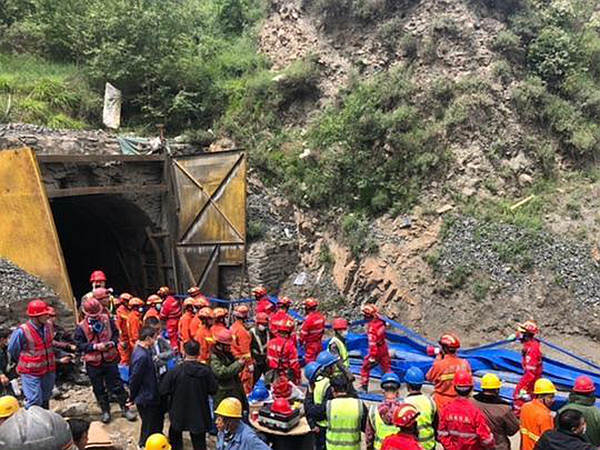
In hose engineering, the safety factor expresses the margin between the hose's burst pressure and its maximum recommended working pressure. It is typically defined as: [texcelrubber]
Safety factor=Burst pressure/Maximum working pressure
Industrial hose standards and hydraulic hose guidelines commonly specify safety factors of 3:1 or 4:1 for high‑pressure applications, meaning the hose is designed to burst at three to four times its rated working pressure. For mining environments where vibration, abrasion, and operator‑driven pressure spikes are common, many reliability engineers treat 4:1 as a practical minimum rather than an aspirational target. [global]
In underground headings or pump rooms, miners often work within a few meters of pressurized dewatering hoses. If a hose wall is weakened by abrasion or misalignment, a rupture can eject high‑pressure fluid and fragments, creating immediate risk of injury. A robust safety factor provides extra margin so that even degraded hoses are less likely to fail at normal operating pressures. [shotonhydraulic]
Unplanned hose failures can flood electrical rooms, damage pumps, and contaminate instrumentation, forcing emergency shutdowns. By selecting hoses with higher safety factors, operators reduce the probability of sudden bursts, keeping dewatering systems stable and preventing downstream damage to valves, manifolds, and portable pump sets. For multi‑site mining groups, this stability translates directly into fewer unplanned maintenance interventions and lower lifetime operating cost per meter of hose. [townley]
Burst pressure is measured in controlled test conditions on new hoses. While this value is essential for calculations, field hoses experience: [senflowtech]
- Long‑term abrasion on the outer cover. [contractorsmaintenanceservice]
- Chemical exposure from process water or cleaning agents. [shotonhydraulic]
- Mechanical damage from dragging, sharp edges, and vehicle crossings. [townley]
Because of these factors, safety‑conscious engineers avoid treating lab burst pressure as a guarantee. Instead, they use it as an initial benchmark and then apply safety factors to account for years of degradation in operation. [texcelrubber]
Maximum working pressure should reflect not only pump discharge pressure but also transient spikes caused by valve closure, pump start‑up, or blockages. In high‑pressure water‑jet mining or aggressive dewatering setups, short‑duration peaks can easily exceed nominal settings by 25–50%, especially when manual valves are used. To maintain a valid safety factor, engineers must capture these peaks during commissioning and treat them as part of the real working pressure envelope. [stacks.cdc]
Industrial hose manufacturers and engineering guides frequently cite these patterns: [crossco]
| Application type | Typical safety factor | Notes on use in mining contexts |
|---|---|---|
| General industrial water hoses | 3:1 | Low‑risk environments. (texcelrubber) |
| Hydraulic hoses for equipment and machinery | 4:1 | Common OEM standard. (senflowtech) |
| High‑pressure mining and slurry hoses | 3:1–4:1 | Selection based on risk profile. (global) |
| Critical underground high‑pressure water jets | ≥4:1 | Extra margin for worker safety. (stacks.cdc) |
From Sunmoon's project data in hard‑rock and coal operations, sites that adopted 4:1 safety factors for their most critical dewatering lines reported fewer emergency hose replacements and more predictable maintenance intervals. This aligns with the broader move across the mining sector toward conservative pressure design philosophies. [linkedin]
Reliability engineers and maintenance planners typically follow a straightforward workflow when validating hose safety factors:
1. Define the operating envelope. Record normal discharge pressure plus expected peaks during pump start‑up, valve operation, and known upset conditions. [global]
2. Confirm hose burst pressure from the manufacturer. Use documented test values from certificates or product datasheets, rather than assumptions. [senflowtech]
3. Calculate the safety factor. Divide burst pressure by the maximum working pressure, including transient spikes, Safety Factor = Minimum Burst Pressure ÷ Maximum Working Pressure. [texcelrubber]
4. Compare with internal standards. Assess whether the resulting number aligns with site policy—for example, minimum 3:1 for surface dewatering and 4:1 underground. [global]
5. Adjust hose selection if needed. If calculated safety factor is insufficient, engineers either choose a hose with higher pressure rating or redesign the line to reduce peaks. [shotonhydraulic]
By documenting these steps as part of a hose management standard, mining companies improve auditability, make procurement decisions more transparent, and create a shared language between maintenance, engineering, and HSE teams.
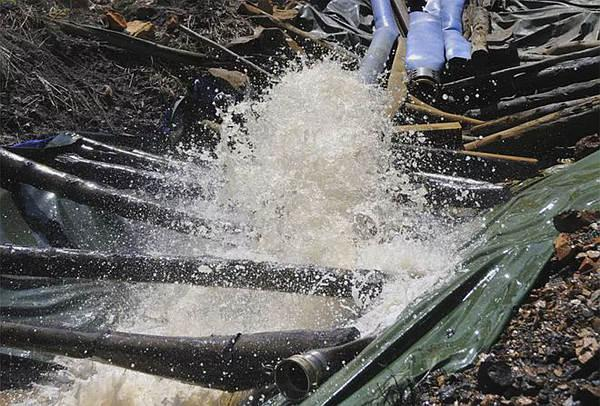
Sunmoon's engineers have supported dewatering hose deployments from open‑pit mines with long flat‑hose strings to compact underground pump rooms with tight bend radii. Across these environments, three recurring lessons inform their safety factor recommendations: [dultmeier]
- Installation quality directly affects functional safety factor. Poor routing, excessive kinking, and unsupported bends amplify local stress, effectively eroding theoretical margin. [contractorsmaintenanceservice]
- Operational discipline determines real working pressure. Sites with consistent valve handling procedures and gradual ramp‑ups see more stable pressure profiles and can use their safety factor more effectively. [stacks.cdc]
- Hose selection must match fluid and environment. Abrasive slurry, chemically treated water, or hot fluids accelerate cover and tube degradation, calling for higher safety factors or more frequent inspection. [townley]
This expert view reflects years of OEM and ODM collaborations where Sunmoon has tailored hose constructions—reinforcement design, cover compounds, and coupling strategies—to match each mine's risk profile rather than offering a single generic solution. [dultmeier]
As a flat dewatering hose manufacturer, Sunmoon integrates safety factor considerations into every stage of hose design for international customers. Typical customization steps include:
- Pressure class selection. Matching hose reinforcement to the mine's required working pressure plus appropriate safety factor margin.
- Material engineering. Choosing cover and lining compounds that resist abrasion, UV, and chemical exposure, preserving burst strength over time. [contractorsmaintenanceservice]
- Length and coupling strategy. Optimizing hose segment lengths and joint types to minimize pressure losses and stress concentrations. [global]
For OEM/ODM clients, Sunmoon can co‑develop application‑specific safety factor guidelines that align with internal engineering standards, simplifying global deployment across multiple mines with varied regulatory requirements. [dultmeier]
Recent industry practice emphasizes digital hose registers that track each hose's installation date, operating pressure range, and inspection findings. By correlating recorded faults with pressure histories, reliability engineers refine safety factor policies over time, adding objective data to decisions that were previously based on experience alone. [linkedin]
High‑value pump lines increasingly include inline pressure sensors or portable loggers to measure spikes during real operations. This data helps engineers confirm whether existing safety factors are adequate or if pressure control interventions—such as slow‑closing valves or variable‑speed drives—are needed. [linkedin]
Some mining groups now integrate hose safety factor concepts into operator training, not just engineering handbooks. When pump operators understand how sudden valve movements affect safety margins, they are more likely to adopt steady operating habits that protect both personnel and equipment. [stacks.cdc]
To support day‑to‑day decisions, Sunmoon's experts recommend a concise pre‑approval checklist for high‑pressure hoses in dewatering and slurry service:
- Confirm that the calculated safety factor meets or exceeds site standards (e.g., ≥3:1 or ≥4:1 depending on risk level). [senflowtech]
- Verify that hose materials are compatible with process fluid, ambient temperature, and expected chemical additives. [shotonhydraulic]
- Check that routing plans avoid sharp bends, kinks, and unprotected contact points that can reduce effective safety margin. [contractorsmaintenanceservice]
- Ensure coupling selection and assembly procedures are validated for the target pressure range and hose type. [townley]
- Document inspection intervals and replacement criteria so that aging does not silently consume the designed safety factor. [linkedin]
Following this checklist helps keep the safety factor not just a number in a specification sheet, but a living control embedded in daily operations.
Sunmoon's global customers often highlight three practical outcomes after adopting dewatering hoses with clearly defined safety factors and tailored constructions: [townley]
- More predictable hose lifetimes. When safety factors and inspection schedules are aligned, hose replacement becomes a planned event instead of a reactive emergency.
- Greater operator confidence. Clear communication of pressure ratings and safety margins reduces anxiety around high‑pressure lines in confined spaces. [stacks.cdc]
- Lower total cost per ton mined. While higher safety factors may slightly increase upfront hose cost, the reduction in downtime and incident‑driven repairs usually improves overall economics. [global]
These comments mirror a broader shift in mining toward data‑driven reliability management, where hose performance is tracked as carefully as pump performance or conveyor uptime.
When you select Sunmoon as your dewatering hose partner, you gain access to engineering support that treats safety factor management as a core design principle, not an afterthought. From exploratory discussions on pressure envelopes to detailed drawings for customized flat hoses, Sunmoon's team helps translate theoretical safety ratios into robust, site‑ready hose assemblies. [dultmeier]
If you are planning a new dewatering system or upgrading existing hose runs, you can collaborate with Sunmoon to:
- Review current safety factor policies and identify gaps.
- Specify hose constructions and lengths that match real pressure profiles.
- Develop OEM/ODM packages with standardized safety factor documentation for multiple sites.
If your mining or quarry operation relies on high‑pressure dewatering hoses, now is the ideal time to revisit how you calculate and apply safety factors across critical lines. Sunmoon's technical team can support you with application analysis, hose selection, and customized flat‑hose designs that align safety, performance, and cost. [global]
Contact Sunmoon's engineering specialists to share your pressure requirements, installation environment, and current hose challenges, and they will help you design a safer, more reliable dewatering solution built around a clearly defined safety factor strategy. [townley]
Q1: Is a 3:1 safety factor always enough for mining hoses?
In low‑risk surface dewatering applications, 3:1 can be acceptable, but many underground and high‑pressure lines benefit from 4:1 or higher to account for pressure spikes and harsher operating conditions. [texcelrubber]
Q2: How often should safety factor calculations be reviewed?
Safety factor assumptions should be revisited whenever pump configurations change, new valves are installed, or incident reports indicate unexpected pressure behavior. [linkedin]
Q3: Do flat dewatering hoses require different safety factors than round hoses?
Flat hoses experience different bending and handling patterns, so safety factors must be evaluated alongside installation practices and expected mechanical stress, not only pressure ratings. [contractorsmaintenanceservice]
Q4: What data do I need to calculate hose safety factor?
You need the hose's documented burst pressure and a realistic maximum working pressure that includes both normal operating conditions and expected transient peaks. [senflowtech]
Q5: Can Sunmoon support OEM/ODM hose designs with custom safety factor guidelines?
Yes. Sunmoon collaborates with OEMs and large mining groups to define hose constructions, pressure classes, and safety factor recommendations aligned with internal engineering standards and site‑specific risk profiles. [dultmeier]
1. Contractors Maintenance Service – "High Pressure Hoses: What you need to know" – <https://www.contractorsmaintenanceservice.com/post/high-pressure-hoses-what-you-need-to-know>. [contractorsmaintenanceservice]
2. CDC – "Hose Safety During High-Pressure Water-Jet Cutting" – <https://stacks.cdc.gov/view/cdc/206104/cdc_206104_DS1.pdf>. [stacks.cdc]
3. Texcel Rubber – "Safety Factors for an Industrial Rubber Hose" – <https://www.texcelrubber.com/blog/174/safety-factors-for-an-industrial-rubber-hose>. [texcelrubber]
4. Weir Group – "How to Choose the Right Mining Hose Assembly" – <https://www.global.weir/newsroom/global-news/2017/seven-factors-to-consider-when-selecting-mining-hose-assemblies/>. [global]
5. Senflow – "Engineering Logic of Working Pressure, Burst Pressure, Safety Factor" – <https://www.senflowtech.com/engineering-logic-working-pressure-burst-pressure-safety-factor>. [senflowtech]
6. LinkedIn – "Enhancing Hydraulic Hose Safety in Mining Operations" – <https://www.linkedin.com/pulse/enhancing-hydraulic-hose-safety-mining-operations-andrew-cao-jfipc>. [linkedin]
7. Cross Company – "Hydraulic Hose Ratings: Working Pressure Vs Burst" – <https://www.crossco.com/resources/technical/hydraulic-pressure-ratings/>. [crossco]
8. ShotOnHydraulic – "High Pressure Hydraulic Hoses: Selection, Failure Modes and Safety" – <https://shotonhydraulic.com/what-is-a-high-pressure-hydraulic-hose-pressure-ratings-standards-and-selection-guide/>. [shotonhydraulic]
9. Townley Engineering – "Mining Flex 200-300 PSI Hose" – <https://www.townley.net/products/rubber-hose-and-rubber-lining/mining-flex-hose/>. [townley]
10. Dultmeier Sales – "Mining Hose Selection Guide" – <https://www.dultmeier.com/mining-hose-selection-guide>. [dultmeier]


