

Views: 222 Author: Sunmoon Publish Time: 2026-06-16 Origin: Site


Content Menu
● Introduction: Why Source Dewatering Hoses from China
● How We Selected the Top 10 Chinese Manufacturers
● Technical Essentials: What Matters in Dewatering Hoses
● Top 10 Dewatering Hose Manufacturers in China (2026)
>> 2. Suzhou SEAPEAK (SINOHOSE) – Wide-Range Layflat and Dewatering Producer
>> 3. Guangdong Huaxing – Marine and Industrial Dewatering Solutions
>> 4. Northern China TPU & PVC Layflat Cluster Manufacturers
>> 5. Hybrid PU/PVC/Nitrile Hose Producers with Dewatering Lines
>> 6. OEM Assemblers Providing Hose, Fittings, and System Kits
>> 7. Fire-Fighting and Mill Hose Factories with Dewatering Product Lines
>> 8. Made‑in‑China Platform Cluster Factories (Mid‑Tier Dewatering Hoses)
>> 9. Small and Mid-Size Regional Layflat Factories
>> 10. Engineering Service–Oriented Partners (Including Sunmoon-Type Profiles)
● Quick Comparison Table: Typical Profiles for Dewatering Hose Suppliers
● Buyer's Guide: How to Verify and Work with Chinese Dewatering Hose Factories
>> 1. Verifying the Factory and Its Certifications
>> 2. Sampling and Technical Evaluation
>> 3. Production Capacity, Lead Times, and Stability
>> 4. Logistics, Packaging, and Documentation
● Common Pitfalls and an "Internal" Avoidance Tip
>> Frequent Pitfalls in Dewatering Hose Sourcing
>> Internal Industry "Avoidance Guide" Tip: Watch the Yarn and Loom Area
● FAQ: Advanced Questions Real Dewatering Buyers Ask
China has become one of the most important global bases for industrial and layflat hose manufacturing, supported by mature polymer supply chains, dense industrial clusters in Jiangsu, Zhejiang, Shandong, and Guangdong, and competitive processing and labor costs. Recent industrial hose market research estimates the global industrial hose segment (including dewatering and water discharge hoses) at around USD 15–20 billion in 2025, with strong growth toward 2034 driven by infrastructure, mining, oil & gas and construction demand, where dewatering hoses are a key consumable. For procurement managers, sourcing dewatering hose from China means access to both high‑volume OEM factories and engineering‑driven specialists capable of customized pressure classes, diameters, and formulations tailored to project conditions. [sphericalinsights]
Dewatering projects—whether in open‑pit mining, tunneling, temporary construction drainage, or emergency flood control—place high demands on layflat hose performance, including pressure stability, abrasion resistance, and UV/chemical resistance in often harsh environments. Choosing the right Chinese supplier is less about headline price and more about matching your technical requirements, compliance needs, MOQ expectations, and service model with a factory that can support multi‑year projects with consistent quality and documentation. [chinasourcinggroup]
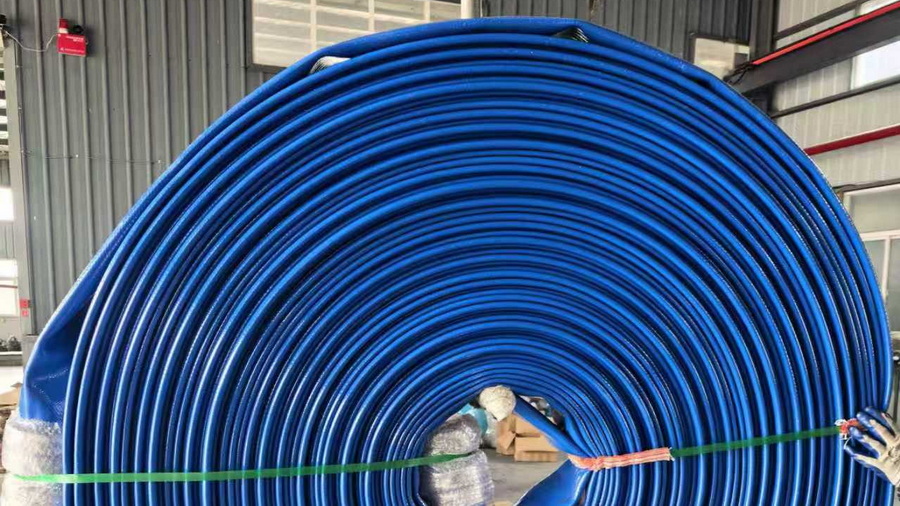
To make this ranking useful for professional buyers, we applied procurement‑oriented criteria rather than relying on self‑reported marketing claims. [sphericalinsights]
1. Factory authenticity and scale
- Only manufacturers with verifiable production (extrusion, weaving, coating, curing) were considered; pure traders or unknown subcontractors were excluded. [sphericalinsights]
- Business licenses, plant size, production line count, and export history were checked through public and industry sources where available. [sunmoonhose]
2. Certifications and compliance
- Priority to factories operating ISO 9001‑based quality systems and, where relevant, ISO 14001, CE, RoHS and application‑specific approvals used in water, mining or oil & gas environments. [sunmoonhose]
- Preference for suppliers able to support documentation for EU/US markets (test reports, material declarations, RoHS/REACH statements, etc.). [seller.alibaba]
3. Technical depth in layflat and dewatering hoses
- Proven focus on TPU or PVC layflat hoses for dewatering, frac water transfer, drag hose and well riser applications. [sunmoonhose]
- Availability of multiple working‑pressure options per diameter, clear burst/working ratios, and engineering support to match hose design to pump curves and site conditions. [sphericalinsights]
4. Quality control and testing
- Presence of hydrostatic test lines, lot traceability, and standardized QC workflows to reduce field failure risk. [sunmoonhose]
- Evidence that every hose (or at least every lot) is pressure‑tested with traceable records, instead of spot checks only. [sunmoonhose]
5. Export experience and OEM/ODM capability
- Stable shipments to North America, Europe, Middle East, Latin America or Asia–Pacific, supported by English communication and complete export documentation. [sunhose]
- Ability to provide OEM branding, customized colors, lengths, and hose‑and‑coupling assemblies tailored to distributor or brand owner needs. [sphericalinsights]
6. Cost–performance and flexibility
- Not just low price but the ability to offer several pressure classes at the same diameter ("right pressure, right value") so buyers avoid over‑ or under‑specification. [sphericalinsights]
- Flexibility on MOQs for project‑based orders and small/medium brands, including mixed loading and different packaging options. [sunmoonhose]
From an engineering and lifecycle‑cost point of view, not all dewatering hoses are equal. The following technical dimensions should guide your specification and supplier selection. [sphericalinsights]
1. Materials and structure
- High‑pressure, heavy‑duty dewatering often favors TPU layflat hose with high‑tenacity reinforcement because it combines abrasion resistance, flexibility, and higher temperature tolerance than standard PVC. [sunmoonhose]
- For lighter duty or short‑term sites, PVC layflat discharge hose remains common, but you should insist on 100% virgin PVC and high‑tensile polyester filament to avoid premature cracking and low burst strength. [sunhose]
2. Working and burst pressure
- Typical construction and light mining dewatering may run at 4–10 bar working pressure, but deep‑well, long‑distance transfer or pump staging can require significantly higher ratings. [sphericalinsights]
- You should target a safety factor of around 3:1 between burst and working pressure for water discharge, with clear test data at a defined temperature. [sunhose]
3. Temperature and chemical resistance
- Dewatering hoses often see temperature swings from near‑freezing to above 40 °C; higher temperatures lower allowable working pressure and must be considered in design. [sphericalinsights]
- For applications involving contaminated water, hydrocarbons or aggressive solids, TPU or nitrile/PVC blends with appropriate chemical resistance can significantly extend hose service life. [sunmoonhose]
4. Environmental and regulatory compliance
- Projects tied to public works, tunneling or mining concessions increasingly request RoHS‑compliant or low‑PAH compounds and proper CE conformity where relevant. [seller.alibaba]
- Supplier ability to provide test reports and declarations aligned with target markets (EU, US, Australia, Gulf) is an important differentiator. [sphericalinsights]
5. Application‑specific design
- Dewatering for construction pits, tunneling, and emergency flood drainage each have different duty cycles, bending radii, and abrasion profiles; experienced factories will propose specific hose types, wall thicknesses and reinforcement structures instead of a "one‑hose‑fits‑all" offer. [sunhose]
> Note: This list is organized for buyers balancing technical depth, QC, export capability, and OEM flexibility, not simply revenue size. [sphericalinsights]
Jiangsu Sunmoon, founded in 2011, is an engineering‑driven manufacturer focused on TPU layflat hoses for frac water transfer, dewatering, drag hose and well riser applications. The company operates a 35,000 m² plant in Jiangsu Province with six standardized automated lines and a lean team of around 80 employees, intentionally prioritizing product integrity over sheer output volume. [sunmoonhose]
Sunmoon's core strengths for dewatering buyers include:
- Multiple working‑pressure options at the same diameter ("Right Pressure, Right Value"), allowing procurement teams to specify hoses precisely to site requirements and avoid over‑engineering. [sunmoonhose]
- A 260 meter hydrostatic test line where every hose is pressure‑tested at its rated working pressure with traceable records, significantly reducing the risk of random field failures on critical projects. [sunmoonhose]
- Strong engineering‑level customization: diameter, pressure class, materials (including aramid‑reinforced structures for very high pressure), hose structure, length, and matching coupling or reel systems can be tailored for OEM/ODM projects. [sunmoonhose]
For global small‑to‑mid‑size brands, regional distributors, and EPC contractors, Sunmoon positions itself as a high‑value partner that combines European‑comparable hose performance with China's manufacturing cost advantages. Its focus on R&D milestones—such as 14″, 16″ and 20″ ultra‑large layflat hoses and aramid‑reinforced products—makes it particularly suitable for demanding dewatering, flood control and long‑distance transfer projects where lifecycle cost, not just unit price, is the main KPI. [sunmoonhose]
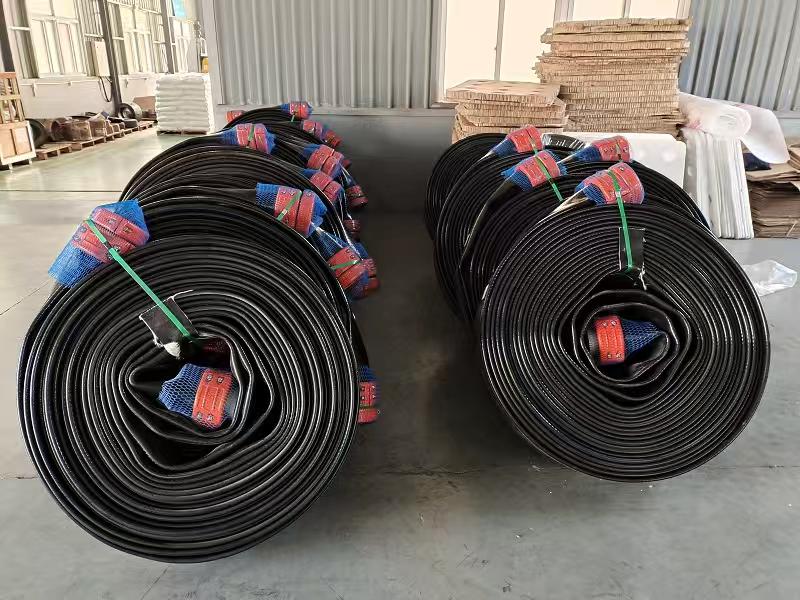
Suzhou SEAPEAK (also known as SINOHOSE) is a highly visible Chinese producer of PVC and layflat hoses covering agriculture, industry, mining, and emergency water transfer. Its portfolio spans diameters from roughly 1″ to over 8″, multiple pressure ratings, and standard roll lengths up to 100 m, making it a good choice for distributors needing a broad catalog of dewatering and discharge hoses. [sphericalinsights]
SEAPEAK employs 100% virgin PVC with high‑tensile polyester yarn reinforcement and integrates weaving with PVC extrusion to enhance adhesion and dimensional stability. The company has an extensive export track record to North America, Europe, Japan and the Middle East, and offers OEM labeling, color customization, and hose‑and‑coupling assemblies to support private‑label dewatering product lines. [sphericalinsights]
Guangdong Huaxing is known in industry channels as a large‑scale producer of PVC hoses for marine and industrial use, including flat hoses for water and fluid transfer in ports, shipyards and coastal infrastructure. These applications often overlap with heavy‑duty dewatering (ballast, bilge, dockside flooding), where resistance to saltwater, UV and mechanical abuse is crucial. [sphericalinsights]
Huaxing's strengths lie in comprehensive PVC compounding, high‑volume production capability, and the ability to support long‑running programs for marine and industrial clients, though MOQs tend to be higher and more suitable for container‑scale orders. [sphericalinsights]
Several factories in North China specialize in TPU and PVC layflat hoses serving mining, municipal engineering and emergency dewatering markets. These manufacturers offer large‑diameter layflat hoses suitable for mine dewatering, tunnel drainage and large‑scale bypass pumping. [sphericalinsights]
They are often used by international buyers as second sources or backup suppliers to secure capacity and mitigate supply‑chain risk, particularly for standardized hose specifications where deep custom engineering is less critical. Buyers should still conduct third‑party testing and audits due to variation across the cluster. [sphericalinsights]
Some Chinese manufacturers have evolved from purely PVC layflat production into full PU and PVC/nitrile hose portfolios, targeting oil & gas, high‑abrasion and high‑pressure tasks alongside standard water discharge. Their PVC and TPU dewatering hoses benefit from shared R&D, test facilities, and field feedback from more demanding applications. [sphericalinsights]
For buyers who need a consolidated supplier for both standard construction dewatering hoses and higher‑specification lines (e.g., for contaminated water with hydrocarbons), these hybrid producers can simplify supplier management and ensure technical continuity across product families. [sphericalinsights]
A subset of Chinese suppliers focus on integrating hose production with fittings, camlock or Bauer couplings, strainers, and hose reels to provide complete pump discharge or emergency dewatering kits. This approach is attractive for rental fleets, retail brands, and contractors who prefer plug‑and‑play systems that arrive pre‑assembled and packaged. [sphericalinsights]
These factories typically maintain PVC layflat or TPU lines plus in‑house or partner machining of couplings, offering OEM packaging and labeling that can go directly to end‑customers. They are best suited when you want to outsource system integration rather than manage separate hose and fitting suppliers. [sphericalinsights]
Some Chinese fire hose and mill hose manufacturers also produce layflat dewatering and discharge hoses as complementary products. Their expertise in pressure performance, coupling compatibility and abrasion resistance for fire applications translates well into high‑reliability dewatering hoses for construction and industrial sites. [sphericalinsights]
These suppliers are worth considering when your project portfolio overlaps temporary fire‑water supply, industrial safety, and site dewatering, and when you prefer a unified testing and standardization approach across all hose types. [sphericalinsights]
Numerous mid‑sized factories promote on B2B platforms such as Made‑in‑China, supplying PVC and layflat discharge hoses for agriculture, construction and light industrial dewatering. They generally offer broad diameter coverage, competitive pricing, and standard certifications such as ISO 9001, but quality and process maturity vary. [sphericalinsights]
These suppliers can fit buyers seeking cost‑effective hoses for non‑critical applications and full container loads, provided that the buyer has strong QA procedures, including incoming inspection and periodic third‑party pressure testing. [chinasourcinggroup]
Beyond the larger export‑oriented companies, China's ecosystem includes many regional layflat factories that serve local markets and occasionally undertake OEM exports via trading companies or freight forwarders. They usually offer low MOQs, flexible lengths, and easy support for simple embossed branding and special colors. [sphericalinsights]
These factories are suitable for niche SKUs or fast‑development projects where you can tolerate higher QA workload and perform your own pressure and durability testing. However, they require careful verification of certificates, production stability and long‑term delivery reliability. [metafuro]
Finally, there is a smaller segment of engineering‑oriented partners—Sunmoon being a representative example—that focus not on commodity PVC alone but on total system performance and lifecycle cost for demanding water transfer and dewatering projects. These suppliers tend to work closely with EPCs and project owners to select pressure classes, wall thickness, and reinforcement structures according to pump selection, elevation profiles and expected duty cycles. [sunmoonhose]
Such partners are especially valuable for multi‑year mine or infrastructure programs where hose failure can cause downtime, environmental incidents or safety risks, and where a moderate premium in unit price is justified by reduced replacements and claims. [sunhose]
> Values are indicative profiles based on public and industry information; always confirm with each supplier's latest technical and commercial data. [sphericalinsights]
| Supplier / type | Typical capacity profile | Typical MOQ for dewatering hose | Certifications & dewatering strengths |
|---|---|---|---|
| Jiangsu Sunmoon Shale Gas High-Pressure Hose Co., Ltd. | 35,000 m² plant, 8 automated lines, focused on TPU and layflat hoses for dewatering, frac water and well riser applications. (sunmoonhose) | Flexible, supports smaller OEM batches and project‑based orders; strong for small/medium brands and EPC trial projects. (sunmoonhose) | ISO‑based QC, 260 m hydrostatic test line for every hose, engineering customization (diameter, pressure, materials, couplings) and aramid‑reinforced options for high‑pressure dewatering. (sunmoonhose) |
| Suzhou SEAPEAK (SINOHOSE) | 20+ production lines with wide PVC layflat and discharge range for agriculture, construction, and light dewatering. (sphericalinsights) | Often 3–5 tons per spec or 3,000–5,000 m per size for standard PVC layflat. (sphericalinsights) | ISO 9001, RoHS‑compliant recipes in many lines; strong export record and OEM color/branding support. (sphericalinsights) |
| Guangdong Huaxing (marine/industrial) | High‑volume marine and industrial hose programs, including flat hoses for dockside water transfer and drainage. (sphericalinsights) | Larger, container‑scale MOQs tailored to long‑term marine or industrial accounts. (sphericalinsights) | ISO 9001 plus marine‑focused compliance where needed; emphasis on saltwater and UV resistance. (sphericalinsights) |
| North China TPU/PVC layflat cluster manufacturers | Medium‑to‑large industrial capacity across TPU and PVC layflat hose families. (sphericalinsights) | Container‑level orders common, with some flexibility for project lots. (sphericalinsights) | Mix of ISO and application‑specific tests; quality varies, so third‑party verification is important. (sphericalinsights) |
| Small & regional PVC layflat factories | Smaller plants focused on regional markets; agile production for niche SKUs. (sphericalinsights) | Very flexible MOQs, sometimes below one full container using mixed models. (sphericalinsights) | Selected ISO certifications; require careful due diligence on QC and long‑term stability. (sphericalinsights) |
Confirm manufacturer identity
- Request a scan of the business license and confirm that the business scope includes hose manufacturing, not just trading. [metafuro]
- Cross‑check the registration via China's National Enterprise Credit Information Publicity System or provincial AIC websites to ensure the entity is real and active. [metafuro]
Check ISO and other certificates (including expiry)
- Always request full ISO 9001/14001, CE, RoHS, etc. certificates in PDF, showing company name, address, scope and expiry date. [seller.alibaba]
- Verify the certificate via the issuing body's online database or IAF CertSearch; if it does not appear or is expired, treat this as a major red flag. [seller.alibaba]
Internal industry tip – audit cycle gaps
- Experienced buyers look at the continuity of ISO audit cycles; a gap between certificate expiry and renewal often signals internal issues that rarely show up on marketing materials. [metafuro]
Align specs with real operating conditions
- Compare hose working pressure and burst pressure at a defined temperature against your pump performance curves and system design. [sphericalinsights]
- For dewatering, pay special attention to cyclic loads, water hammer, and elevation differences that increase effective pressure. [sphericalinsights]
Request production‑lot samples
- Ask for samples from the actual production lot that will be shipped, not from R&D or older batches, and test kink resistance, wall thickness consistency and coupling retention. [sunhose]
- For high‑value projects, use third‑party labs for pressure, aging and abrasion tests with written reports. [sphericalinsights]
- Ask how many lines are dedicated to TPU or PVC dewatering hoses and what the monthly capacity is in meters or tons. [sphericalinsights]
- Clarify seasonal peaks (e.g., pre‑rainy‑season orders in certain countries) that may affect lead time, especially if the factory also serves large domestic infrastructure projects. [sphericalinsights]
Raw material sourcing
- Confirm that the factory uses 100% virgin TPU or PVC for relevant products and ask where polyester yarn and additives are sourced. [sunhose]
- Stable material sourcing reduces batch‑to‑batch variation in flexibility, color and pressure performance. [sunmoonhose]
- Define coil length (50 m, 100 m, 200 m, 300 ft), core type (paper/steel), pallet configuration, and carton or strap marking before PO issuance. [sunhose]
- Agree on Incoterms (FOB, CIF, DAP/DDP) and ensure the supplier can provide accurate packing lists, HS codes, certificates of origin and, where needed, inspection certificates. [chinasourcinggroup]
1. Hidden recycled material and downgraded compounds
- Some low‑cost suppliers blend recycled PVC or off‑grade resin into compounds, which leads to brittle hoses, cracking and reduced burst strength. [sphericalinsights]
- Mitigation: specify "100% virgin resin" in contracts and test the first batches through third‑party labs for mechanical properties against reference values. [sunhose]
2. Overstated pressure ratings
- In weaker factories, nominal working pressure may be too close to actual burst pressure, especially at elevated temperatures or under pulsating load. [sphericalinsights]
- Mitigation: require full pressure test reports, including temperature and safety factor; avoid suppliers that only quote "max pressure" without test details. [sphericalinsights]
3. Expired or mismatched certificates
- Some suppliers reuse old ISO or CE certificates or present certificates from different legal entities. [metafuro]
- Mitigation: always verify certificate numbers through issuer databases or IAF CertSearch and cross‑check company name and address. [seller.alibaba]
4. Traders posing as factories
- Trading companies may claim to have factories but actually source from multiple plants, leading to inconsistent quality between orders. [chinasourcinggroup]
- Mitigation: ask for live video calls from production lines, utility bills with factory address, and consider third‑party audits before large orders. [metafuro]
One internal, less‑publicized audit technique is to spend time in the weaving/knitting area where polyester reinforcement is produced. A clean, well‑organized yarn store, stable tension control and well‑maintained looms usually correlate strongly with consistent hose ovality, wall thickness and pressure performance. [sphericalinsights]
By contrast, messy yarn storage, poor tension control and inconsistent bobbin winding are strong early warnings that you may later see random failures, oval hoses and coupling leakage, even if finished hose appearances look acceptable at first glance. Seasoned auditors often focus more on this area than on the final curing zone, even though factories rarely mention it in public marketing. [sphericalinsights]
1. How can I verify whether a supplier's ISO 9001 certificate is current and genuine?
Request the full ISO 9001 certificate in PDF, then verify the certificate number and company name in the issuing body's database or IAF CertSearch; check that the scope and site address match, and confirm the expiry date is within a valid 3‑year cycle. [seller.alibaba]
2. How do I ensure the hose uses 100% virgin PVC or TPU instead of recycled blends?
Include "100% virgin resin" as a contractual requirement and send samples from the first batch to a trusted lab for mechanical property tests and, if needed, more advanced analyses; large deviations from typical reference values indicate recycled content or formulation changes. [sunhose]
3. What is the safest way to compare pressure ratings between different Chinese suppliers?
Normalize all data to the same reference temperature (often 20 °C) and always compare both working and burst pressure plus safety factor; treat any supplier that only lists a single "maximum pressure" figure without test conditions as a high‑risk option. [sphericalinsights]
4. How can I check if a supplier is truly experienced in dewatering and export projects, not just domestic irrigation?
Look for case studies or references in mining, tunneling, construction or emergency water transfer, plus evidence of stable exports (multi‑language website, consistent shipments and proper documentation) and ask for contacts from repeat customers in your target region. [sunhose]
5. When should I choose an engineering‑driven partner like Sunmoon instead of a high‑volume commodity factory?
If your project involves high pressure, long transfer distances, aggressive duty cycles, or a mix of TPU/PVC lines, an engineering‑driven partner offering multiple pressure options, full hydrostatic testing for every hose, and custom structural design will typically deliver lower lifetime cost and risk than a pure volume‑focused supplier. [sunmoonhose]
- Industrial hose market outlook and statistics (includes water and dewatering segment): Polaris/Grand View Research industrial hose market reports (2025–2034). [polarismarketresearch]
- Supplier verification guidance: Chinese National Enterprise Credit Information Publicity System and regional AIC websites recommended by verification consultancies. [metafuro]
- ISO certification verification: IAF CertSearch – official global database for ISO certificates. [seller.alibaba]


