

Views: 253 Author: Sunmoon Publish Time: 2026-06-14 Origin: Site


Content Menu
● Introduction: Why Source Dragline Hose from China
● How We Evaluated "Top" Dragline Hose Manufacturers
● Technical Overview: What Matters in Dragline Hose
● Top 10 Dragline / Layflat Hose Manufacturers in China (2026)
>> 1. Jiangsu Sunmoon Shale Gas High-Pressure Hose Co., Ltd.
>> 2. Sinopulse Hose Factory Co., Ltd.
>> 3. Laike Hydraulics / Layflat Division
>> 4. Qingdao Qingflex Hose Factory
>> 5. Hebei Qianli Rubber Products Co., Ltd.
>> 6. LUCOHOSE
>> 7. Shijiazhuang StrongFlex Industrial Co., Ltd.
>> 8. Qingdao Techoses Industrial Co., Ltd.
>> 9. Sunhose (Weifang, Shandong)
>> 10. Representative Metal / Industrial Hose Clusters
● Quick Comparison: Sample Parameters for Key Manufacturers
● Common Pitfalls When Sourcing Dragline Hose (And How to Avoid Them)
● Internal "Insider" Tip: How Chinese Factories Really Allocate Their Best Material
● Buyer's Guide: Verifying Factories and Managing Projects
>> 1. Verifying Factory Legitimacy and Certifications
>> 2. Sampling and Testing Workflow
>> 3. Logistics and Incoterms Considerations
>> 4. Using Industry Data and Official Sources
● Conclusion and Call to Action
● FAQ: Advanced Questions Real Buyers Ask
China has developed a complete industrial hose and layflat hose supply chain, integrating raw material suppliers, extrusion and weaving lines, large‑scale coating equipment, and testing laboratories in several coastal and inland industrial clusters. For dragline hose (often supplied as TPU or rubber layflat hose for irrigation, slurry transfer and dewatering), this cluster effect translates into competitive pricing, wide specification coverage, and relatively fast lead times even on customized orders. [sunmoonpipe]
In parallel, the global industrial hose market continues to grow steadily, driven by mining, agriculture, shale gas operations and infrastructure projects. Recent reports indicate that industrial hose demand is expanding with a CAGR around the mid‑single digits toward 2030 and beyond, which incentivizes Chinese manufacturers to keep upgrading their production capacity and quality systems for export markets. For procurement managers looking for long‑term dragline hose partners, China therefore offers both scale and a deep bench of export‑oriented factories. [stratviewresearch]
Before listing companies, it is important to explain the selection logic, especially for buyers managing multi‑year supply programs and framework agreements.
Core selection criteria
- Factory certifications and compliance
- Valid ISO 9001 quality systems, and where relevant ISO 14001 and ISO 45001 for environmental and occupational safety management. [rentonehose]
- Ability to supply hoses that comply with major export‑market requirements such as CE, RoHS, REACH or equivalent where applicable, especially for hoses exposed to drinking water or environmentally sensitive fluids. [rentonehose]
- R&D capability and technical depth
- In‑house formulation or close cooperation with raw material suppliers for TPU, NBR, PVC and reinforcement yarns, rather than simple toll manufacturing. [made-in-china]
- Ability to engineer dragline hoses for specific applications: high‑pressure dewatering, abrasive slurry lines, agricultural drag irrigation, or long‑distance water transfer.
- Quality control and testing infrastructure
- Batch test reports, pressure and burst testing, dimensional checks, and aging tests documented and shareable with overseas clients. [laikehydraulics]
- Transparent traceability from raw material batch to finished hose reel.
- Capacity, stability and delivery performance
- Annual production capacity measured in meters or tons, plus track record of fulfilling repeated container‑level shipments on time. [sunmoonhose]
- Flexibility for small pilot orders and then ramp‑up to regular shipments, which is crucial when validating new dragline specifications with end users.
- Export experience and OEM/ODM support
- Clear experience with OEM programs for foreign brands, including neutral packaging, private‑label printing and customized color coding. [sunmoonpipe]
- Dedicated English‑speaking sales/technical teams for efficient communication during design and sampling.
The list below covers manufacturers with demonstrated strength in layflat and dragline hose production, export readiness and customization capabilities, with a mix of large‑scale players and more flexible mid‑sized factories.
Dragline hose is typically a variant of layflat hose engineered for continuous dragging across fields, mining benches or construction sites, so both mechanical durability and hydraulic performance matter.
Key technical parameters procurement teams should confirm include:
- Material system
- TPU layflat hose offers high abrasion resistance, good low‑temperature flexibility and long service life for drag irrigation and mine dewatering. [made-in-china]
- NBR or synthetic rubber‑lined hoses are common when oil resistance or fuel transfer is required, but tend to be heavier. [rentonehose]
- Reinforcement and construction
- High‑tenacity polyester or aramid fiber reinforcement layers significantly improve tensile strength and working pressure for long dragline runs. [sunmoonhose]
- For high‑pressure drag applications (e.g., shale gas, long‑distance water supply), multi‑layer constructions with TPU cover and aramid reinforcement are often preferred.
- Pressure, diameter and length range
- Typical dragline hoses range from 2" to 12" (sometimes larger) in diameter, with working pressures from 10–40 bar depending on application and construction.
- Longer continuous lengths reduce coupling points and leakage risk but require careful reel and deployment planning.
- Compliance and environmental performance
- For export to regions with strict environmental rules, buyers increasingly ask for evidence of RoHS‑compliant raw materials, and sometimes REACH SVHC screening, to reduce regulatory risk. [rentonehose]
- Some projects specify CE marking for hose assemblies or related pumping systems; in these cases, factories must document conformity and test protocols.
These parameters should be part of your RFQ templates and technical datasheets when you approach any Chinese dragline hose supplier.
> Note: The list is arranged with a focus on dragline/layflat hose capability and export readiness, not purely by size.
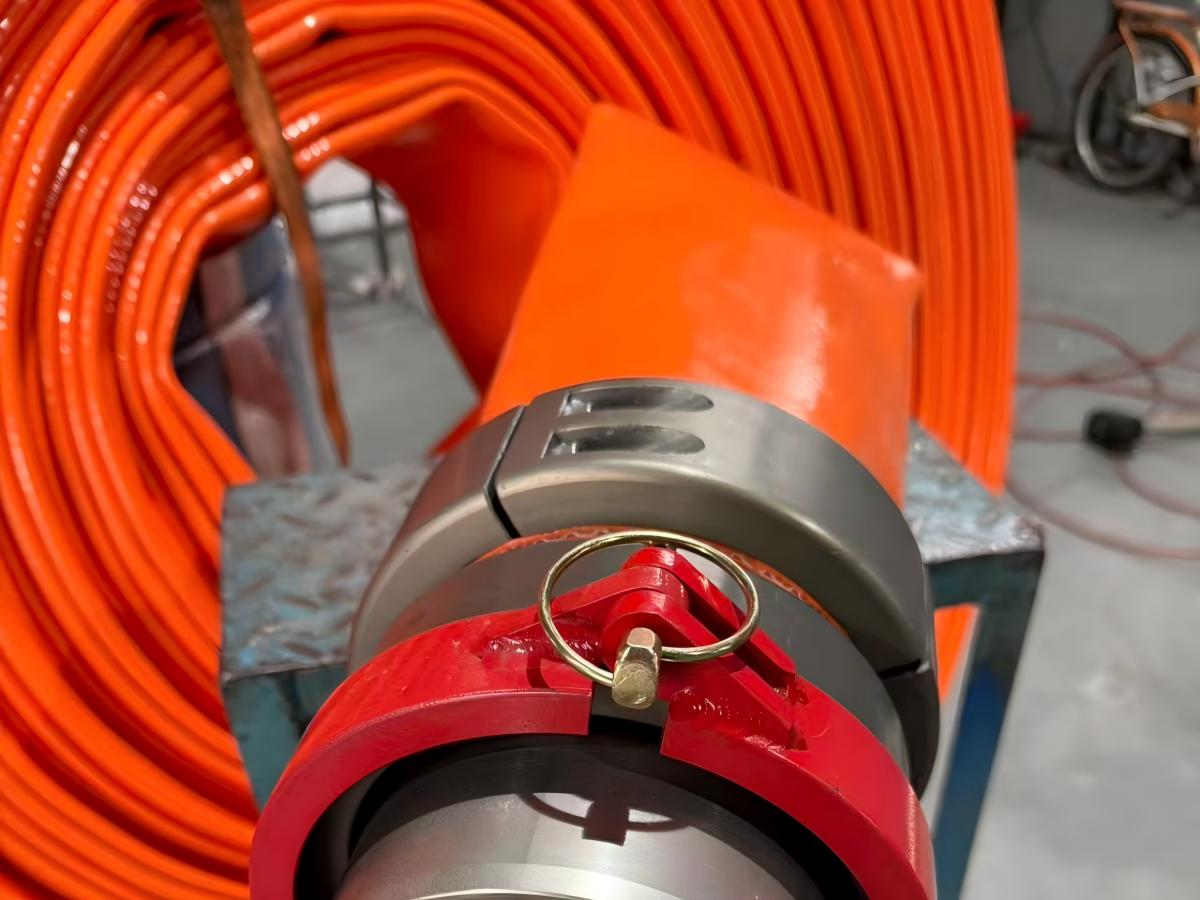
Jiangsu Sunmoon Shale Gas High‑Pressure Hose Co., Ltd. is located in Taizhou, Jiangsu, and specializes in high‑pressure TPU layflat hoses, anti‑oil delivery hoses, slurry hoses and NBR LDH fire hoses, with products exported worldwide. Established around 2011, the company integrates R&D, production and sales, focusing on flexible layflat solutions for shale gas extraction, agricultural irrigation, remote water supply and emergency drainage. [sunmoonpipe]
For dragline hose applications, Sunmoon's TPU and aramid‑reinforced layflat ranges offer a good balance of abrasion resistance, pressure rating and ease of deployment, which is attractive for small and mid‑sized brands entering new markets. The factory's annual hose production capacity has reached approximately one million meters, giving it enough scale for containerized OEM orders while remaining flexible on customized sizes, colors and branding for niche distributors. [made-in-china]
From a buyer's perspective, Sunmoon is particularly suited as a cost‑efficient and technically capable OEM partner: it supports deep customization (wall thickness, working pressure, coupling schemes, private labels) and tends to offer responsive communication for iterative sampling. This profile makes it a strong option for distributors and small to medium brands that need reliable quality and tailored specifications without the minimum order quantities typical of the very largest hose groups. [sunmoonhose]
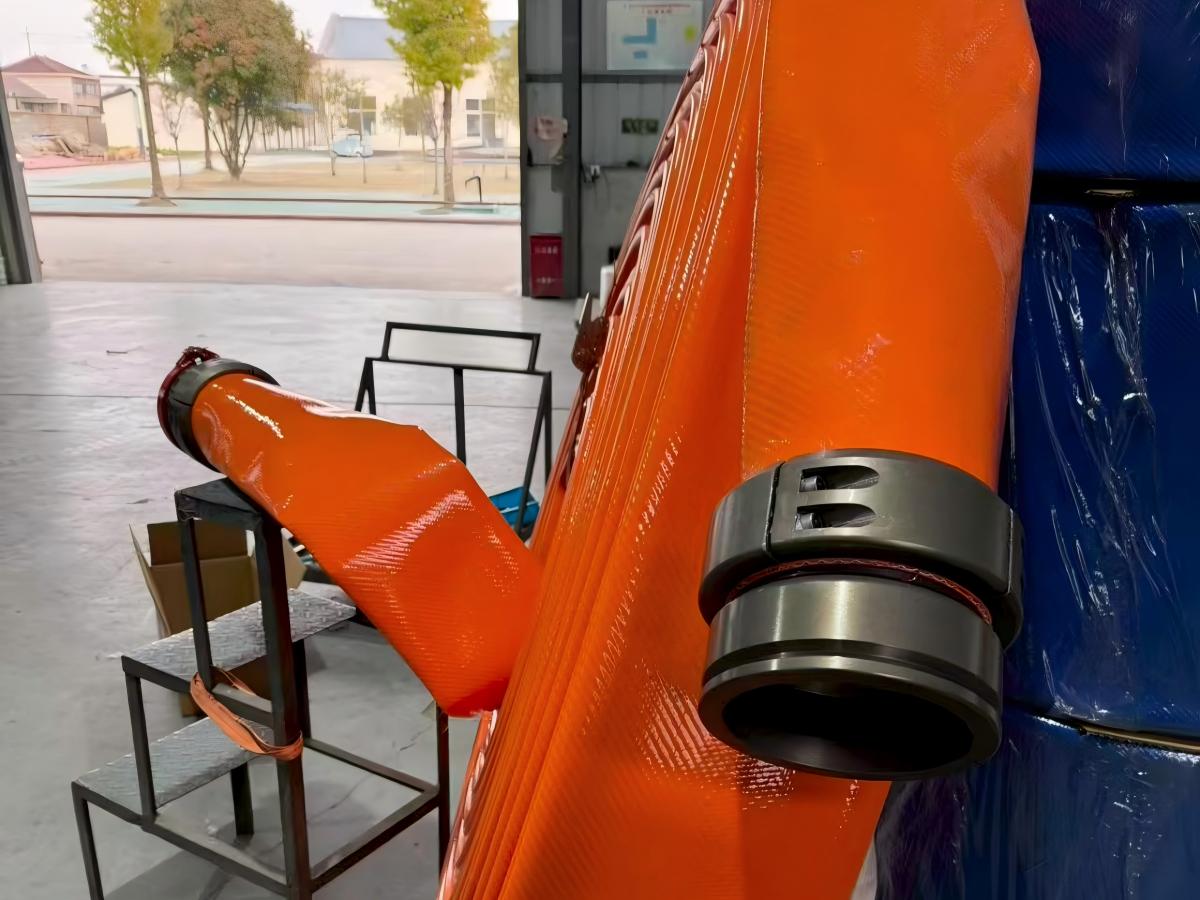
Sinopulse, based in Hebei, appears frequently in rankings of Chinese hydraulic and industrial hose manufacturers and supplies a full range of rubber and layflat hoses to global markets. The company emphasizes standard and high‑pressure hose lines for construction, mining and agricultural equipment, making it relevant where dragline hoses must integrate with existing hydraulic systems. [sinopulse]
Its strengths include broad product coverage, strong export experience and the ability to ship mixed container loads of different hose types to consolidators and OEMs. For buyers, Sinopulse works well when you prefer to consolidate multiple hose categories (hydraulic, industrial and layflat) under one larger supplier. [sinopulse]
Laike Hydraulics, located in Zhejiang, is primarily known for hydraulic hose and fittings but has expanded into related hose products as part of complete fluid power packages. While it is not exclusively focused on dragline hose, its technical understanding of high‑pressure applications and couplings can be useful for integrated systems, especially for OEM equipment manufacturers. [laikehydraulics]
Buyers that need both hoses and matched fittings, plus engineering support for system design, may find Laike's package approach efficient for long‑term programs.
Qingdao Qingflex Hose Factory in Shandong focuses on industrial and hydraulic hoses and exports to multiple regions, including Europe and the Americas. The company supplies various rubber and layflat hose constructions for industrial water, oil and material transfer, which can be adapted for certain dragline scenarios where flexibility and abrasion resistance are required. [laikehydraulics]
Its edge is a combination of relatively mature QC processes and broad catalog coverage, which makes it suitable when you need dragline hose alongside several other industrial hose SKUs.
Hebei Qianli is a long‑established rubber hose manufacturer producing a wide mix of industrial hoses, including layflat and discharge hoses for irrigation and construction. With strong positioning in Hebei's hose cluster, it benefits from local supply of reinforcement yarns, rubber compounds and metal fittings. [laikehydraulics]
The company's drag‑type discharge hoses are an option for buyers prioritizing proven rubber technology for rugged environments over lighter‑weight TPU solutions.
LUCOHOSE, based in Yantai, Shandong, targets global buyers with a portfolio of hydraulic, industrial and PVC/PU hoses. For dragline‑style applications, its layflat and discharge hoses are relevant wherever cost‑effective water transfer is more important than ultra‑high pressure ratings. [laikehydraulics]
The firm's export‑oriented positioning and marketing means it is accustomed to documentation, test reports and packaging requirements for overseas distributors.
StrongFlex in Shijiazhuang, Hebei, manufactures a broad range of rubber and PVC hoses for industrial use, including suction, discharge and layflat formats. While not a pure dragline specialist, its product set can cover lower‑pressure irrigation and dewatering drag lines. [laikehydraulics]
StrongFlex tends to appeal to buyers who want competitive pricing on standard specifications and can accept more generic branding for private‑label programs.
Qingdao Techoses offers multiple industrial hose solutions and is part of the Shandong hose cluster serving global markets. The factory's capabilities overlap with dragline hose needs in water discharge and slurry handling, particularly in construction and agriculture projects. [laikehydraulics]
For procurement teams, Techoses can be considered when building a second‑source strategy to complement primary suppliers of dragline hoses.
Sunhose in Weifang manufactures a variety of industrial hoses, including layflat hoses used for irrigation and water discharge. As part of Shandong's hose ecosystem, it benefits from ready access to raw materials and logistics channels for export shipments. [laikehydraulics]
Buyers may consider Sunhose when they need standard layflat hoses for drag irrigation and prefer suppliers with existing overseas customer references.
Although focused more broadly on metal hoses, several Chinese clusters and manufacturers rank highly for industrial hose exports, underscoring the strength of China's hose manufacturing base overall. These companies often operate in regions where rubber and plastic hose factories coexist, creating opportunities for integrated supply of different hose types for complex projects. [b2bdata.baidu]
For large EPC contractors and distributors, combining dragline hoses from TPU/rubber factories with complementary metal and composite hoses from these clusters can streamline sourcing across multiple fluid‑handling categories.
The following table provides a simplified comparison using publicly available information and typical ranges seen in export‑oriented factories; buyers should always verify exact figures and certifications during due diligence.
| Manufacturer | Typical product focus for dragline use | Approx. annual capacity (layflat/industrial hose) | Typical MOQ for OEM print | Common certifications / focus markets | OEM/ODM notes |
|---|---|---|---|---|---|
| Jiangsu Sunmoon Shale Gas High-Pressure Hose Co., Ltd. | TPU and NBR layflat hoses for shale gas, irrigation, dewatering and remote water supply (sunmoonpipe) | Around 1 million meters of hose per year (sunmoonpipe) | Flexible; often supports small trial batches then container‑level orders | ISO‑style QC focus, export to multiple regions; can align with CE/RoHS‑oriented projects upon request (sunmoonpipe) | Strong OEM/ODM for small and mid‑sized brands, deep customization of size, color and branding (sunmoonpipe) |
| Sinopulse | Hydraulic and industrial rubber hoses, some layflat for water and slurry (laikehydraulics) | High; oriented to global hydraulic hose demand (exact figures on request) | Moderate; usually pallet or container level | Serves Europe, Americas and other markets with standard certifications (laikehydraulics) | Suitable for brands consolidating hydraulic + layflat hoses |
| Laike Hydraulics | Hydraulic systems and hoses; supporting layflat where required (laikehydraulics) | Medium‑high, focused on hydraulic lines | Typically higher MOQ for customized hose prints | Targets OEM machinery builders and distributors (laikehydraulics) | Strong on systems engineering and matched fittings |
| Qingdao Qingflex | Industrial and hydraulic hoses, including discharge/layflat (laikehydraulics) | Medium‑high with export orientation | Negotiable; standard SKUs widely available | Exports to multiple continents with standard QC practices (laikehydraulics) | Good for multi‑category hose sourcing |
| Hebei Qianli | Rubber industrial hoses, including discharge and layflat formats (laikehydraulics) | Medium; long‑established facility | Moderate MOQs | Focus on general industrial markets (laikehydraulics) | Solid choice for robust rubber drag hoses |
| LUCOHOSE | Hydraulic, industrial and PVC/PU hoses (laikehydraulics) | Medium‑high | Moderate; depends on product line | Sells widely to global distributors (laikehydraulics) | Practical for cost‑effective water transfer hoses |
| StrongFlex | Rubber and PVC hoses for multiple uses (laikehydraulics) | Medium | Lower MOQs for generic specifications | General industrial and construction markets (laikehydraulics) | Private‑label options at competitive pricing |
| Techoses | Industrial hoses, including discharge types (laikehydraulics) | Medium | Negotiable | Export‑oriented with standard documentation (laikehydraulics) | Good candidate as secondary supplier |
| Sunhose (Weifang) | Industrial and layflat hoses for irrigation and water discharge (laikehydraulics) | Medium | Moderate | Agricultural and industrial export markets (laikehydraulics) | Simple OEM branding on standard layflat |
| Metal hose cluster companies | Metal and flexible hoses for industrial projects (b2bdata.baidu) | High; often serving large EPC projects | Higher MOQs in line with project scale | Focus on project compliance and documentation (b2bdata.baidu) | Useful complement to dragline hose sourcing |
Use this table as a starting point for supplier shortlisting and then dive deeper with RFQs, audits and sample validation.
Beyond price and catalog specifications, several "hidden" risk points often impact total lifecycle cost and project reliability.
- Material downgrading and silent spec changes
- Pitfall: After the first shipment, some buyers observe reduced wall thickness, lower‑grade TPU or weaker reinforcement yarns, even though product labels remain the same.
- How to avoid: Lock key parameters (material type, minimum wall thickness, reinforcement structure, burst pressure) into the purchase contract and require per‑batch test reports with photo evidence and lot numbers.
- Overstated pressure ratings
- Pitfall: A hose is marketed at a certain working pressure, but long‑term use near that limit leads to early failures.
- How to avoid: Request third‑party or factory lab test curves (pressure vs. time to failure) and apply your own internal derating factors, especially for continuous dragline use.
- Weak coupling and end‑fitting quality
- Pitfall: Hose body is acceptable, but couplings or clamps are not properly matched, causing leaks or blow‑offs under surge pressure.
- How to avoid: Either specify exact coupling standards and materials in the RFQ or purchase hose only and assemble couplings with a trusted local partner using defined procedures.
- Insufficient abrasion resistance for dragging
- Pitfall: Using standard layflat hose not designed for continuous dragging across rough ground, leading to premature wear.
- How to avoid: Request abrasion test results (e.g., rotating drum tests) and, where possible, field‑test a short length under realistic drag conditions before approving mass production.
- Documentation that looks good but is outdated
- Pitfall: Suppliers provide ISO or CE documents that are expired or not actually applicable to the specific production site.
- How to avoid: Verify certificate numbers directly on the issuing body's website and check that the scope includes the hose product and the actual factory address.
A less obvious but widely known industry practice is that many factories allocate their highest‑grade material batches and tightest QC windows to repeat, predictable orders from long‑term customers, while new or irregular buyers may receive more variable production runs.
To position yourself as a "core customer" from the start, even with modest volumes, you can:
- Share a realistic, rolling 12‑month forecast so the factory can plan material purchases and production slots around your needs.
- Structure contracts with phased volume increases tied to performance, so the factory sees potential for growth if they maintain stable quality.
- Request to keep the same formulation and process parameters once a sample is approved, with change‑control triggers if the factory wants to alter any inputs.
This approach increases the chances that you will be placed in the same priority tier as larger accounts over time, improving consistency without having to match their volumes on day one.
- Business registration and basic background
- Check that the company is properly registered, with a factory address matching what appears on official documents and reputable B2B platforms. [made-in-china]
- Use government or chamber of commerce databases where available, and request copies of the business license in Chinese and English.
- ISO and related certifications
- Ask for complete ISO certificates (not just logos on presentations) and verify them by searching the certificate number and issuing body online.
- Confirm expiry dates and scope (e.g., "Production and sales of TPU layflat hose") rather than accepting generic "rubber products" descriptions.
- Environmental and safety compliance
- For projects with ESG requirements, look for ISO 14001, ISO 45001 or equivalent and ask how the factory manages waste, emissions and worker safety. [rentonehose]
- If RoHS or REACH compliance is critical, request recent test reports from accredited labs referencing your exact product code.
A disciplined sampling process can eliminate many downstream disputes:
1. Define an application‑specific test plan
- Include working pressure tests, burst tests, abrasion tests and flexibility checks at relevant temperatures.
2. Request multiple sample lengths
- For dragline hoses, test at least 2–3 lengths from the same batch to assess consistency.
3. Field test under realistic dragging conditions
- Deploy the hose in the actual environment (or a close simulation) to evaluate wear, kinking, handling and coupling performance.
4. Approve a "frozen" specification
- Once samples pass, freeze key parameters and require written notification and re‑approval if the factory wants to change materials or process settings.
Dragline hoses, especially in large diameters and long lengths, are bulky and may be shipped on reels or folded pallets, affecting freight costs.
- Optimize packaging and loading
- Work with the supplier to design packaging that balances hose protection and container utilization (e.g., nesting reels, stacking folded coils).
- Choose appropriate Incoterms
- For most overseas buyers, FOB main Chinese ports or CFR/CIF arrangements are common; ensure that responsibilities for export clearance and marine insurance are clearly defined.
- Clarify lead times and peak‑season risks
- Ask suppliers how they handle Chinese New Year and local power‑restriction periods, and build buffer stock accordingly.
To validate market positioning and long‑term demand, it is useful to reference industry reports and official statistics:
- Industrial hose market reports from global research firms show steady growth driven by oil and gas, mining and agriculture, supporting the case for long‑term dragline hose demand. [datamintelligence]
- Industry association and government export data (e.g., from Chinese trade statistics platforms or sectoral associations) help you benchmark a supplier's claim about export volumes and main markets. [b2bdata.baidu]
Include links to trusted sources (industry associations, export bureaus, research providers) in your internal documentation so stakeholders can easily cross‑check assumptions.
Example external resources (for your final blog's link section):
- Global industrial hose market overview – Stratview Research and similar providers. [stratviewresearch]
- Industrial hose market trends – DataM Intelligence. [datamintelligence]
- Articles on selecting industrial hose manufacturers – specialized B2B blogs and association portals. [rentonehose]
China's dragline hose and layflat hose ecosystem gives global procurement teams a broad choice of suppliers, from large hydraulic‑hose groups to specialized TPU and NBR layflat factories like Jiangsu Sunmoon. By applying transparent criteria—certifications, R&D depth, QC, capacity and OEM/ODM capability—and by proactively managing sampling and verification, you can significantly reduce risk and total lifecycle cost in your hose supply chain. [sunmoonpipe]
Contact a flexible R&D‑oriented partner such as Jiangsu Sunmoon Shale Gas High‑Pressure Hose Co., Ltd. for customized TPU layflat and dragline solutions. [sunmoonhose]
1. How can I verify if a manufacturer's ISO 9001 certificate is still valid and applies to the actual plant producing my dragline hose?
Ask for the full PDF certificate, then check the certificate number on the issuing body's official website and confirm the site address and certification scope match the factory and product. If the supplier is unwilling to share the full document or details do not match, treat this as a red flag and request clarification or consider alternative vendors. [rentonehose]
2. What is a reasonable safety factor between catalog working pressure and my actual operating pressure for dragline applications?
Given the dynamic loads, temperature swings and abrasion faced by dragline hoses, many engineering teams apply an internal factor of at least 1.5–2.0 between catalog working pressure and maximum expected operating pressure. You should also consider surge pressures from pumps and valves and adjust your safety factor accordingly, especially for continuous 24/7 operations.
3. How many sample rounds should I budget before locking a long‑term dragline hose supplier?
Many professional buyers plan for 2–3 rounds of samples: an initial specification check, a field trial under realistic conditions, and a final pre‑mass‑production batch to validate consistency. Keeping structured feedback and test data from each round allows you to negotiate improvements and document the final "frozen" spec more effectively.
4. Can I rely on a single supplier in China for all my dragline hose needs, or should I set up a dual‑sourcing strategy?
For smaller annual volumes and stable designs, a single strong supplier with clear contingency plans may be sufficient; however, for critical projects or large national networks, many buyers maintain at least one qualified secondary supplier to mitigate production disruptions, shipping delays or regional lockdowns. Dual sourcing also provides leverage for periodic benchmarking of price and service.
5. What is the most effective way to verify abrasion resistance claims for dragline hoses?
Beyond lab tests, the most reliable method is to run a controlled field test where a defined hose length is dragged over a standard route and operating time that reflects your real use case, then record wear depth, outer cover damage and any reinforcement exposure. Combining this with standardized abrasion test results from the factory lab or third‑party labs gives a more complete picture than relying on catalog wording alone.


