

Views: 222 Author: Sunmoon Publish Time: 2026-05-10 Origin: Site


China remains the largest production and export base for PVC hoses, benefiting from mature upstream PVC resin supply, dense hose manufacturing clusters, and competitive labor and energy costs. PVC hose revenues reached about 8.38 billion USD in 2025 globally, with Asia–Pacific, led by China, as the largest regional market. [grandviewresearch]
For PVC layflat hoses used in agriculture, construction dewatering, mining, and emergency drainage, Chinese manufacturers have built complete product lines from standard 2–8 inch discharge hoses up to high-pressure layflat assemblies. Many factories now combine PVC, PU, NBR and TPU layflat products, allowing buyers to consolidate multiple hose categories under one supplier.
This guide is written for professional procurement managers who care about not just price, but also certifications, capacity, QC discipline, and long-term reliability. It focuses specifically on manufacturers with sustained export experience, clear positioning, and stable PVC layflat hose capability in 2026. [ensun]
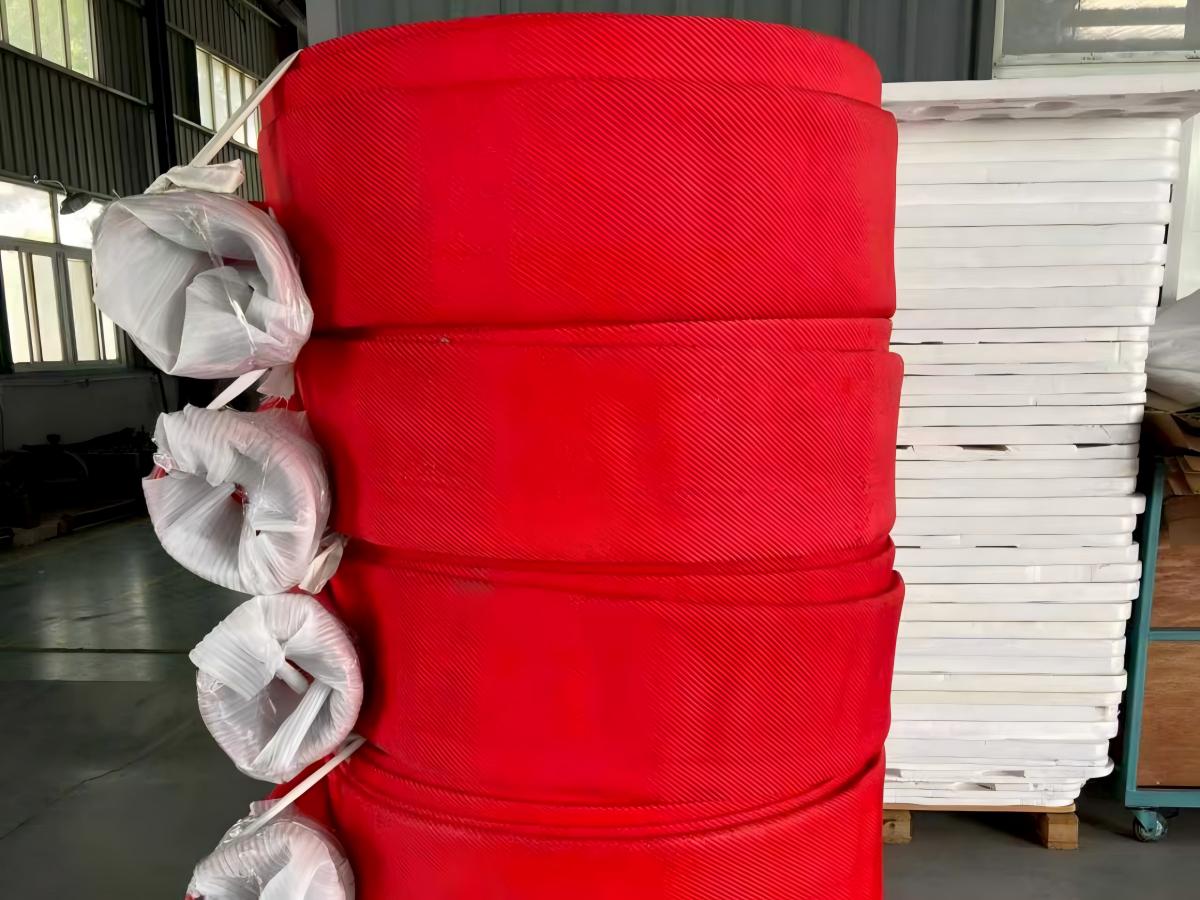
Before shortlisting factories, we use criteria similar to what an experienced sourcing director would apply in a vendor qualification program:
1. Certifications and compliance
- Valid ISO 9001 quality management and, where relevant, CE or related conformity for hose assemblies. [layflat.en.made-in-china]
- Ability to meet RoHS/REACH or food-grade requirements when specified, particularly for agriculture or potable-water applications.
2. Process and QC capability
- Integrated control of weaving (polyester jacket) and PVC extrusion, ideally in a continuous process to stabilize wall thickness and adhesion.
- Routine hydrostatic pressure testing, burst testing and traceable batch records for each production lot. [ensun]
3. Capacity, delivery stability and range
- Multiple production lines or equivalent capacity to support repeat orders in the 20–100 km range annually for mid-sized importers.
- Flexible standard lengths, typically 20–100 m (or 50–300 ft) rolls, with optional extra-long reels for agricultural or mining projects.
4. Export track record and market coverage
- Real export references into demanding markets such as North America, EU, Japan, the Middle East and Latin America.
- English-speaking sales and basic engineering support on working pressure, temperature range, fittings and assembly methods. [ensun]
5. OEM/ODM depth
- Ability to customize color, branding, printing, packaging and pressure class, not just "change the logo". [ensun]
- For some factories, capability to design complete hose system solutions, including couplings, assemblies and reels. [ensun]
6. Transparency and verifiability
- Clear company identity, legal address, and auditable certifications rather than only trading-company style catalogs. [sunchineinspection]
- Willingness to share test reports, inspection records, and to support third‑party audits or pre‑shipment inspection. [connectedsourcing]
Before looking at specific manufacturers, it helps to define what "good" looks like in technical and operational terms.
- ISO 9001: Indicates basic quality management systems are in place; always check that the certificate is valid and the legal entity matches the supplier's name. [connectedsourcing]
- CE: Relevant when hoses or assemblies are being supplied into EU markets, especially when integrated into pressurized equipment. [connectedsourcing]
- Third‑party audits: For larger orders, an on‑site or remote factory audit that reviews workforce size, equipment, capacity and QC processes is now considered standard practice. [connectedsourcing]
To verify, request PDF certificates and cross‑check them against issuing bodies' online databases; expired or mismatched certificates are red flags. [connectedsourcing]
When reviewing PVC layflat hose offers, professional buyers usually look at:
- PVC resin quality and plasticizer type: 100% virgin PVC is preferred for stability; DBP‑free formulations are now common in higher‑spec products.
- Reinforcement: High‑tensile polyester yarn, often 3‑ply for agricultural hoses and multiple spiral plies for heavier-duty mining or industrial hoses.
- Working and burst pressure: Common ranges are 2–10 bar working pressure, with burst pressure typically 3× working pressure for higher‑quality products.
- Temperature range: Standard ranges are around −10 ℃ to +60 ℃ for PVC layflat; above 20 ℃, allowable working pressure usually drops and should be derated.
Leading factories can adjust:
- Wall thickness and jacket density to hit specific pressure targets without over‑design.
- Color, length, printing and fittings (camlock, Bauer, threaded) to match private‑label brands and local standards.
This is where R&D‑driven manufacturers, including engineering‑oriented layflat hose companies, can offer more granular "right pressure, right value" options instead of a single pressure per size. [ensun]
The PVC hose market, including PVC layflat hose, was valued at around 8.38 billion USD in 2025 and is projected to grow at roughly 5.3% CAGR through 2033. Asia–Pacific is the largest contributor, driven by irrigation expansion, construction, mining and municipal infrastructure. [grandviewresearch]
China's advantage is not only low cost, but also industrial clustering: entire ecosystems of resin suppliers, braid yarn producers, extrusion equipment manufacturers and hose fitting suppliers sit within a few hours' trucking distance of major hose factories. This enables shorter lead‑times for capacity ramp‑up and faster tooling or formulation changes when OEM buyers need custom solutions. [ensun]
For buyers, this clustering means you can often source PVC layflat hoses, TPU or NBR layflat hoses, fittings and even complete pump‑hose packages from a small number of integrated suppliers. That simplifies vendor management and technical harmonization.
> Note: The list below focuses on factories with clear PVC layflat competence and export experience, combining product depth, QC capability, and OEM service. Order is not a strict ranking, but grouped by specialization and positioning.
Jiangsu Sunmoon is an engineering‑driven layflat hose manufacturer based in Jiangsu with a 35,000 m² site, six automated lines and an approximately 80‑person team. It originated in TPU layflat hoses for demanding applications such as frac water, drag hoses and large‑diameter transfer lines, and has extended into NBR and double‑layer PVC layflat hoses. [ensun]
Unlike large volume‑driven factories, Sunmoon emphasizes:
- Engineering‑level customization: Multiple working‑pressure options for the same diameter, letting buyers match hose specifications precisely to operating pressure and duty cycle instead of over‑specifying. [ensun]
- Rigorous QC: Every hose is hydrostatically tested on a 260‑meter test line, with only hoses that run stably at rated working pressure released, and records kept for traceability. [ensun]
- R&D strength: Continuous product milestones including 14–20 inch ultra‑large TPU hoses and aramid‑reinforced structures for high‑pressure applications, which reflects strong design and testing capability even for lower‑pressure PVC layflat. [ensun]
Positioning as a PVC layflat partner:
- For PVC and PVC composite layflat, Sunmoon is attractive as a "high value" OEM partner for small to mid‑size brands that need deeper technical support and are willing to trade a small premium for engineering advice, faster customization, and tighter QC feedback loops. [ensun]
- The company's lean, customer‑centric culture and willingness to engineer around real‑world duty conditions make it a good match for regional hose brands, rental companies and pump system integrators looking for long‑term collaboration rather than spot purchasing. [ensun]
Best fit: Buyers prioritizing performance–to‑price ratio, customization flexibility and responsive communication over pure low cost, especially for private‑label PVC and TPU layflat programs in Europe, the Middle East and the Americas.
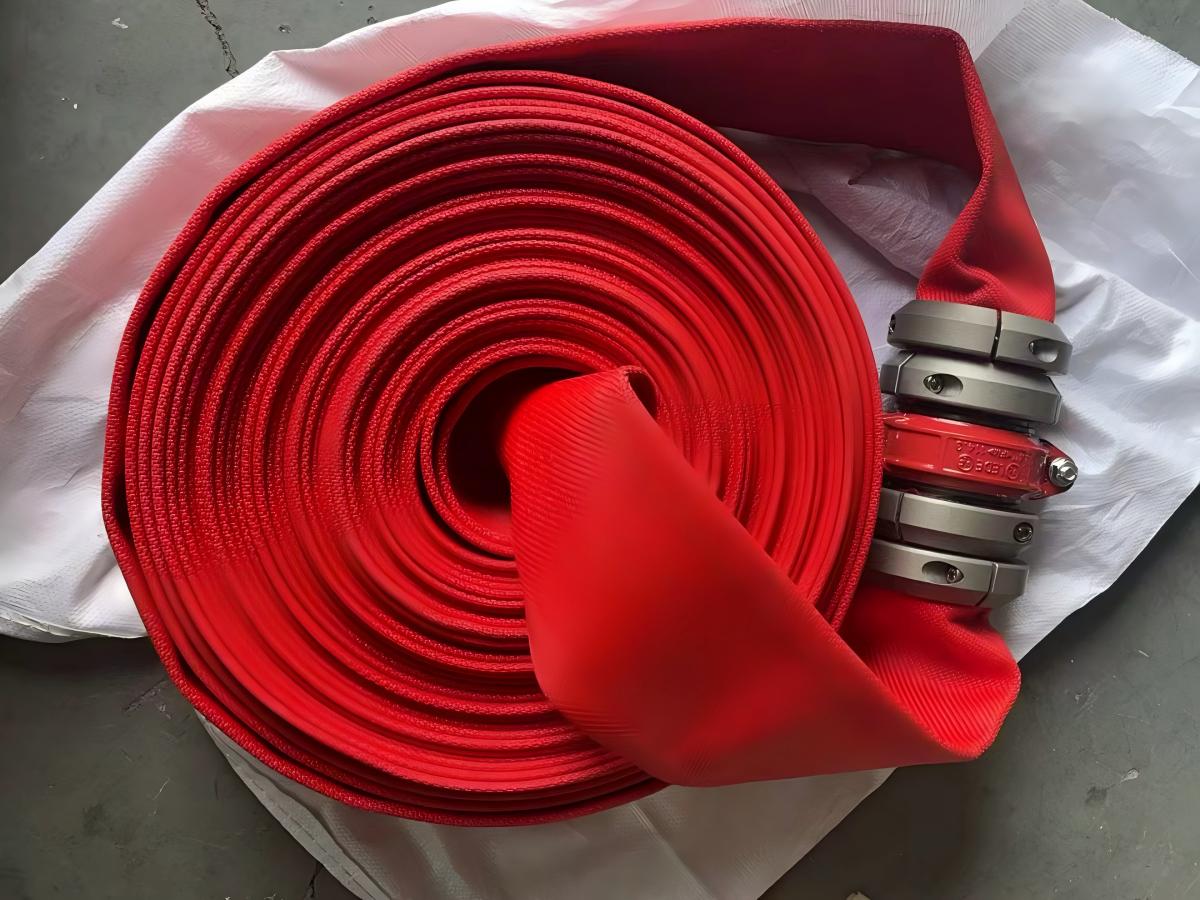
Suzhou SEAPEAK, also known as SINOHOSE, positions itself as one of China's leading PVC layflat hose manufacturers, integrating weaving and PVC extrusion on advanced equipment. It focuses on 100% virgin PVC and high‑tensile polyester yarn, and operates over 20 production lines, allowing consistent supply for worldwide distributors.
Key traits:
- Product scope: Double‑layer PVC layflat, agricultural, mining, industrial PVC layflat hoses, plus assemblies from 1 inch up to 8 inch.
- Technical features: Acid and alkali resistance, anti‑twist design and pressure ratings up to about 4 bar working / 12 bar burst in typical configurations.
- Export and OEM: SEAPEAK exports heavily to America, Canada, Japan and the Middle East, and offers customized color, length and branding for private‑label programs.
Best fit: Buyers who need a wide PVC layflat catalog, stable container‑scale shipments and standard to mid‑high performance hoses for agriculture, construction and general industry.
Within SINOHOSE's portfolio, the agricultural and mining PVC layflat product lines deserve special mention because they address two high‑stress use cases. The agricultural line uses 3‑ply polyester reinforcement and chemical‑resistant PVC suitable for fertilizers and agricultural chemicals, while the mining series uses multiple spiral plies and heavier walls for abrasion and pressure stability.
For buyers consolidating their hose range, this allows a single supplier to cover low‑pressure farm irrigation hoses and heavier industrial dewatering or dust‑suppression lines under one brand structure.
Several Chinese factories have moved beyond pure PVC into PVC/Nitrile and PU layflat hoses to serve oil, mining, municipal and fire‑fighting markets. They typically maintain a PVC layflat range as the volume backbone and use the same weaving and extrusion infrastructure for alternative materials. [ensun]
These suppliers are well‑suited for buyers who want to:
- Gradually upgrade from PVC layflat to higher‑performance NBR or PU hoses in critical applications while keeping the same supplier. [ensun]
- Source both low‑end PVC layflat and high‑end TPU/NBR hoses for different segments of their portfolio.
Best fit: Hose brands or distributors planning multi‑tier product lines (good/better/best) across PVC, PVC/Nitrile and PU using unified fittings and packaging concepts.
Large hose groups in China often produce PVC layflat hose alongside rubber, hydraulic and fire hoses, selling through OEM and OBM channels worldwide. They offer strong brand recognition, relatively sophisticated quality systems and broad product catalogs. [us.metoree]
For professional buyers, the advantage is risk diversification and the ability to keep more of their hose requirements under one audited group supplier. The trade‑off is that minimum order quantities (MOQs) can be higher and engineering or branding flexibility per SKU slightly lower than with mid‑sized, more agile factories.
Best fit: Multinational distributors or big importers who value group‑level audits, stable multi‑product supply and long‑term contracts.
In addition to the profiles above, practical sourcing work in 2024–2026 points to several additional categories of factories worth attention:
- Specialist fire hose manufacturers that also produce PVC layflat hose reels and PVC fire hoses for low‑ and medium‑pressure applications, often with strong EN or NFPA awareness.
- Regional hose plants in Shandong, Jiangsu, and Zhejiang that focus on OEM PVC layflat for foreign brands with strict packaging and labeling requirements. [layflat.en.made-in-china]
- Export‑oriented PVC hose manufacturers that have invested in PU ducting, hybrid polymer hoses and accessories (camlocks, Bauer couplings, strainers, clamps), making them attractive "one‑stop" partners.
- Factories serving mining and infrastructure projects with reinforced PVC layflat hoses and assemblies for pumps, especially in the Middle East, Africa and Latin America.
- Smaller engineering‑oriented factories similar to Sunmoon that offer strong customization and are willing to co‑develop non‑standard hoses and system solutions for niche applications. [ensun]
Because Chinese hose clusters are dense and dynamic, serious buyers should combine lists like this with factory audits and sampling, rather than relying solely on online rankings.
The figures below are indicative based on publicly available information and typical discussion ranges; always confirm directly with each supplier.
| Manufacturer / Type | Approx. annual hose capacity | Typical MOQ for PVC layflat | Common certifications | OEM/ODM depth | Typical focus markets | Positioning |
|---|---|---|---|---|---|---|
| Jiangsu Sunmoon Shale Gas High‑Pressure Hose | Six automated lines; focused engineering capacity across TPU/NBR/PVC layflat ensun | Flexible for mid‑sized and project orders, often negotiable for OEM brands ensun | Quality and inspection certificates; engineering‑grade test regime ensun | Very high – pressure‑class design, structure optimization, solutions including couplings and reels ensun | Global projects in oil & gas, agriculture, dewatering and infrastructure ensun | High value, engineering‑driven partner for small–mid hose brands and system integrators |
| Suzhou SEAPEAK (SINOHOSE) | 20+ production lines, high container‑scale output for PVC layflat and related hoses | 1–3 pallets per spec for standard sizes (varies by market) | ISO 9001; product testing aligned with export markets layflat.en.made-in-china | High – colors, lengths, branding and assemblies widely customized | Americas, Japan, Middle East, other global regions | Broad‑range PVC layflat supplier with strong export track record |
| Large integrated hose group | Dozens of lines across PVC, rubber and hydraulic hoses us.metoree | Typically full container per item or per mixed order | ISO 9001, often ISO 14001 and various product standards us.metoree | Medium – strong on branding, more standardized customization | Global distributors and OEMs | One‑stop, group‑audited hose supplier |
| Fire hose and PVC layflat specialists | Medium capacity focused on fire hose and layflat reels | Moderate MOQ; balanced between OEM brands and projects | Often ISO and fire‑related standards; CE for certain markets | Medium–high – fire hose reel systems and branding | Fire protection, municipal and industrial safety | Niche specialist for fire and emergency layflat |
| Multi‑material PVC/NBR/PU layflat factories | Medium–large capacity across materials ensun | Varies; often flexible for multi‑material programs | ISO and application‑specific test reports | High – system‑level product planning with good/better/best tiers | Global hose brands, rental fleets, industrial distributors | Portfolio partner for multi‑tier hose offerings |
Use this table as a starting point when screening suppliers and shortlisting candidates for deeper evaluation.
- Request a copy of the Chinese business license and check the "business scope" for manufacturing terms (生产/加工/制造). [sunchineinspection]
- Confirm the registered company name on the business license matches the name on invoices, contracts and certifications. [sunchineinspection]
- Beware suppliers with extremely wide product catalogs that seem unrelated; this can be a sign of a pure trader rather than a factory. [sunchineinspection]
- Ask for ISO 9001 and any CE or other relevant certificates, then validate them on the issuing body's website, checking expiry date and legal entity. [connectedsourcing]
- Make sure the certificate covers the relevant product scope (e.g. hose manufacturing) instead of a generic office‑only registration. [connectedsourcing]
Internal industry pitfall (rarely written online): some factories "borrow" certificates from related companies or historical entities. A quick check on the certification body's database and the company's Chinese name often reveals mismatches; if the legal representative or address is clearly different, pause and investigate further. [sunchineinspection]
Whether on‑site or remote via a third‑party, an audit should assess:
- Production layout, key machines, QC stations and test equipment. [connectedsourcing]
- Capacity vs. claimed output; for example, how many meters of PVC layflat hose per day per line. [ensun]
- In‑process control, including visual inspection, pressure testing and traceability.
Skipping this to save a few hundred dollars is a common and costly mistake when deposits or orders are in the tens of thousands. [connectedsourcing]
Professional buyers increasingly adopt controlled sampling:
- Request samples taken from actual production runs instead of lab‑made "golden samples". [connectedsourcing]
- Ask for multiple meters or rolls to see variation across a batch.
- Compare mass‑production samples later against the original approvals to detect "quality fade". [connectedsourcing]
For PVC layflat hoses, freight efficiency matters because they are relatively bulky versus their unit value. Best practice includes:
- Optimizing roll lengths and palletization for container loading density (e.g. 50–100 m rolls).
- Aligning incoterms (FOB, CIF, DAP) with your risk tolerance and freight expertise.
- Clarifying whether couplings are assembled or shipped loose to manage space and customs classification.
Third‑party logistics and inspection providers can help consolidate shipments and perform final random inspections before loading. [connectedsourcing]
1. Material downgrading after first order ("quality fade")
Initial shipments meet specification, but later batches quietly switch to lower‑grade PVC or reduced reinforcement density. To reduce risk, insist on random third‑party inspections, periodic lab tests, and written change‑control requirements in your supply agreements. [sunchineinspection]
2. Traders posing as factories
Trading companies can add value, but problems arise when they pretend to own factories. Always check business scope and VAT invoices, and ask for factory audit reports with company names matching the legal entity. [sunchineinspection]
3. Over‑reliance on platform "verified" badges
Badges usually confirm only basic registration, not long‑term quality stability or manufacturing depth. Treat them as a starting point at best, not a guarantee of performance. [connectedsourcing]
4. Under‑specifying pressure and safety margins
Using low‑pressure PVC layflat hose for higher‑pressure or elevated‑temperature applications can cause premature failure. Always specify working pressure, maximum transient spikes, media and temperature, and let the factory propose an appropriate safety factor.
5. Ignoring life‑cycle cost
Cheapest hoses often have shorter lifespans and higher failure rates, especially in drag or mining applications. Engineering‑oriented suppliers like Sunmoon that optimize pressure classes can reduce total cost per operating hour, even if unit prices are slightly higher. [ensun]
Q1: How can I check if a supplier's ISO 9001 certificate is still valid?
Ask for the full scanned certificate, identify the issuing body, and search the certificate number and company name on the certification body's official website. Verify that the name, address, and scope match the supplier and that the expiry date is in the future. [connectedsourcing]
Q2: How do I confirm a Chinese supplier is a real factory, not only a trader?
Check the business license's business scope for manufacturing activities, request photos or video of production lines, and, ideally, conduct a third‑party factory audit. Comparing VAT invoices and audit reports to the license helps confirm the manufacturing entity. [sunchineinspection]
Q3: What is the most reliable way to avoid "quality fade" in PVC layflat hoses?
Use long‑term quality agreements with change‑control clauses, schedule periodic third‑party inspections, and perform random lab tests on incoming batches to monitor wall thickness, tensile strength and pressure performance over time. [sunchineinspection]
Q4: What certifications should I require for PVC layflat hoses sold into the EU?
At minimum, ISO 9001 for the factory, plus CE and, where relevant, RoHS/REACH compliance for materials and assemblies. Check with local regulatory experts if hoses will be used in drinking water or food‑related applications, as additional standards may apply. [connectedsourcing]
Q5: How should I structure sample orders to reflect mass‑production reality?
Request production‑line samples from standard runs, not specially prepared small batches, and specify that samples must be drawn following normal QC procedures. Use several rolls per spec and test both mechanical properties and pressure performance before approving for mass production. [connectedsourcing]
- Global PVC hose market outlook and figures, Grand View Research, 2025–2033. [grandviewresearch]
- Supplier verification and risk‑control guidance for Chinese factories, Connected Sourcing. [connectedsourcing]
- Practical methods to distinguish factories from trading companies, Sunchine Inspection. [sunchineinspection]
- Example of PVC layflat hose manufacturing standards and materials, SEAPEAK (SINOHOSE).
- Example of manufacturer profile and engineering‑driven layflat hose development, Jiangsu Sunmoon Shale Gas High‑Pressure Hose Co., Ltd. [ensun]


