

Views: 222 Author: Loretta Publish Time: 2026-01-19 Origin: Site


Content Menu
● Understanding Dewatering Hose Manufacturers and Suppliers
● Why Dewatering Matters in Syria
● Why TPU Layflat Hoses Dominate Dewatering Applications
● Sunmoon: Engineering‑Driven Dewatering Hose Partner for Syria
● Applications of Dewatering Hoses in Syria
● Key Features to Look for in Dewatering Hose Manufacturers and Suppliers
● Pressure Ratings and Diameters
● Durability and Environmental Resistance
● Operational Advantages of TPU Dewatering Hoses
● Typical Project Workflow with Dewatering Hose Manufacturers and Suppliers
● Best Practices for Using Dewatering Hoses in Syria
● Collaboration and Supply Chain for Syrian Buyers
● How Sunmoon Positions Itself for Syrian Projects
● FAQs About Dewatering Hose Manufacturers and Suppliers in Syria
>> 1. What should Syrian buyers prioritize when selecting dewatering hose manufacturers and suppliers?
>> 2. Why are TPU layflat hoses recommended over conventional PVC hoses for dewatering in Syria?
>> 3. Can dewatering hose manufacturers and suppliers customize hoses for specific Syrian projects?
>> 4. How do dewatering hose manufacturers and suppliers help reduce total project costs?
Dewatering Hose Manufacturers and Suppliers play a critical role in Syria's construction, mining, agriculture, municipal and emergency drainage projects, where reliable temporary water transfer is essential for safety and productivity. Among these global partners, Sunmoon stands out as an engineering‑driven TPU layflat Dewatering hoses producer that can tailor solutions for Syrian customers who need high pressure, long‑distance and large‑flow water transfer systems.

Dewatering hose manufacturers and suppliers are industrial companies that design, engineer, produce and distribute flexible hoses used for rapid removal or transfer of water, slurry and light chemicals from job sites. These products are commonly specified in construction excavations, mine pits, tunnel projects, oil and gas pads, agricultural fields, flood‑control projects and municipal emergency drainage operations in and around Syria.
Key characteristics that distinguish high‑quality dewatering hose manufacturers and suppliers include:
- Focus on thermoplastic polyurethane (TPU) and other advanced materials for abrasion resistance, pressure rating and long service life
- Ability to engineer large‑diameter layflat hoses for high‑volume dewatering and flood discharge
- Integrated R&D, production and sales capabilities to support custom projects and special application requirements
- Strong export and logistics experience to support Syrian importers and regional distributors
For buyers in Syria, partnering with established dewatering hose manufacturers and suppliers ensures reliability, documented performance, export experience and access to technical support in fluid transfer system design.
Syria's climate and geography create diverse challenges for water management and dewatering. Coastal regions can experience heavy seasonal rainfall and flooding, while inland and arid areas depend on careful water control around construction, mining and agricultural projects. Dewatering hose manufacturers and suppliers help address these challenges by offering flexible, fast‑deploying hose systems that can move large water volumes safely.
In practical terms, reliable dewatering is essential to:
- Stabilize excavations and foundations by lowering groundwater levels
- Keep mine pits, quarries and tunnels dry enough for equipment and workers
- Protect infrastructure and communities during extreme rainfall and flood events
- Support irrigation and water distribution in areas where rigid pipelines are not economical
Choosing qualified dewatering hose manufacturers and suppliers allows Syrian stakeholders to respond quickly to both planned projects and unplanned emergencies.
Thermoplastic polyurethane layflat hoses have become a preferred choice for modern dewatering hose manufacturers and suppliers because they combine high tensile strength, flexibility, and chemical resistance in a relatively lightweight structure. In comparison with conventional PVC or rubber flat hoses, TPU dewatering hoses typically provide better abrasion resistance, improved low‑temperature performance and longer service life under cyclic pressure and harsh terrain.
From the perspective of dewatering hose manufacturers and suppliers serving Syrian contractors, some of the most important advantages of TPU layflat hose technology are:
- High working pressure and burst pressure ratings suitable for demanding mine dewatering, shale water transfer and emergency drainage conditions
- Through‑the‑weave extrusion technology, which bonds the TPU cover and lining around a high‑tenacity woven polyester or aramid reinforcement, improving durability and kink resistance
- Compatibility with a wide range of fluids including fresh water, seawater, produced water, industrial wastewater and certain chemicals used in cleaning and mining environments
- Excellent resistance to puncture, abrasion and UV radiation, which is critical for long‑term outdoor use in Syrian climates
These characteristics allow dewatering hose manufacturers and suppliers to support Syria's infrastructure, oil and gas and agriculture sectors with efficient, portable and reusable water transfer systems.
Sunmoon is a specialized manufacturer focused on TPU layflat hoses, integrating R&D, production and global sales, with product lines designed for oil and gas water transfer, mining dewatering, flood drainage, irrigation and emergency pumping operations. As one of the dedicated dewatering hose manufacturers and suppliers with TPU expertise, Sunmoon designs hoses to withstand high working pressures over long distances, meeting international standards and project requirements in various regions, including markets like Syria through export channels.
Core strengths that make Sunmoon a strategic choice among international dewatering hose manufacturers and suppliers for Syrian buyers include:
- Advanced TPU layflat portfolio, including large‑diameter hoses up to around DN400 for high‑flow flood discharge, shale water supply and large‑scale municipal pumping
- Working pressure ratings that can reach 150–240 psi or higher for specific models, with burst pressures typically around three times the working pressure
- Emphasis on high‑tenacity polyester or aramid reinforcement layers, extrusion‑through‑the‑weave processing and customized wall thickness and pressure ratings to match specific dewatering duties
- Capability to supply long continuous lengths per roll, which reduces the number of joints and potential leak points in Syrian field deployments
- Active presence on global B2B platforms and a track record of supplying TPU and PE layflat hoses to oil and gas, mining, agricultural and firefighting applications worldwide
For Syrian distributors or project owners, Sunmoon's engineering support can help size hoses, recommend pressure classes and match hose performance with local pump fleets and couplings, positioning the company as a strong candidate among dewatering hose manufacturers and suppliers for long‑term cooperation.
Dewatering hose manufacturers and suppliers serve a broad range of sectors in Syria. Across these sectors, TPU layflat hoses provide flexibility, speed of deployment and durability that rigid pipes cannot match.
Key application areas include:
- Construction and civil works: Foundations, basements, bridge works, road cuts and tunneling projects rely on dewatering hoses to remove groundwater and stormwater, keeping excavation zones stable and safe.
- Mining and quarry operations: Open pits and underground galleries require continuous dewatering to maintain dry working areas and protect equipment, making high‑pressure TPU hoses an attractive option.
- Oil and gas infrastructure: Transfer of fracturing water, produced water and fire‑fighting water along long distances in energy projects, including pipelines, storage ponds and well sites.
- Agriculture: Large‑diameter layflat hoses for conveying irrigation water from rivers, wells or reservoirs to Syrian fields where flexible pipeline deployments are needed.
- Municipal and emergency services: Flood relief, urban emergency drainage and temporary bypass pumping during sewer repairs or water main maintenance.
By specifying products from experienced dewatering hose manufacturers and suppliers, Syrian stakeholders can improve system reliability, reduce leak risks and minimize downtime during critical operations.
Selecting the right dewatering hose manufacturers and suppliers is crucial for long‑term performance and cost control in harsh Syrian environments ranging from coastal zones to arid interiors. Buyers should evaluate several technical and service attributes:
- Material technology and construction
- Pressure rating and safety margins
- Abrasion, chemical and UV resistance
- Availability of large diameters and long continuous lengths
- Engineering support, quality control certifications and logistics capability
Below is a focused overview of the most important technical features offered by leading dewatering hose manufacturers and suppliers such as Sunmoon and other international TPU hose specialists.
Most high‑end dewatering hose manufacturers and suppliers rely on extruded thermoplastic polyurethane for both the inner lining and outer cover of their layflat hoses. This TPU sheath is reinforced with a circular‑woven polyester or aramid jacket, and the hose is produced using through‑the‑weave extrusion so that the TPU encapsulates and bonds with the reinforcement, reducing delamination and extending lifespan under repeated pressurization and dragging.
When assessing dewatering hose manufacturers and suppliers, consider:
- Whether the manufacturer can adjust TPU formulation for oil resistance, low‑temperature flexibility or specific chemical environments
- Availability of smooth or ribbed outer covers that influence abrasion performance on rocky terrain or in mining applications
- The type of reinforcement (polyester vs aramid) and how it impacts pressure rating, weight and flexibility
These construction details make a significant difference in demanding Syrian projects such as pipeline trenching, quarry dewatering and urban drainage.
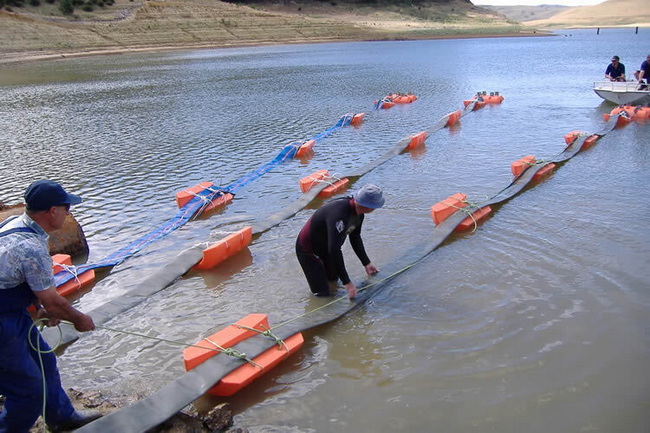
Dewatering hose manufacturers and suppliers typically publish tables of working pressure, burst pressure, wall thickness and weight for each hose diameter. Common sizes range from 2 inch up to 12–16 inch for heavy‑duty TPU dewatering hoses, with a variety of pressure classes to match different pump systems.
Syrian buyers should work closely with dewatering hose manufacturers and suppliers to:
- Match hose pressure rating with pump discharge pressure and friction loss over the intended hose length
- Select suitable diameters for required flow rates in dewatering, flood relief or irrigation applications, balancing hose weight, flexibility and pump capability
- Consider safety margins, ensuring that working pressure remains safely below the rated limit, especially when water hammer or transient pressure spikes could occur
This engineering step avoids premature hose failure and ensures safe operation under Syrian field conditions.
Top dewatering hose manufacturers and suppliers emphasize durability through abrasion‑resistant TPU covers, extra outer wall thickness and UV‑stable compounds. In many mining and construction dewatering installations, hoses are dragged over rough surfaces, subjected to sunlight and exposed to abrasive solids, making these properties essential for long service life.
In addition to mechanical durability, many TPU dewatering hoses are designed to resist:
- Commonly used chemicals and industrial cleaning fluids
- Hydrolysis and microbial degradation in wet environments
- Aging under temperature fluctuations and strong sunlight in outdoor Syrian deployments
Working closely with dewatering hose manufacturers and suppliers allows Syrian end users to select hose types optimized for their climate, altitude, soil conditions and water chemistry, reducing maintenance costs and unplanned downtime.
Beyond raw material properties, TPU hoses from modern dewatering hose manufacturers and suppliers offer several practical advantages that are crucial in the field:
- Lightweight design: TPU layflat hoses are significantly lighter than many rubber alternatives, making manual handling easier and reducing labor intensity during deployment and retrieval.
- Compact storage: When not in use, TPU hoses lie flat and can be tightly coiled, saving storage space in warehouses and on vehicles.
- Quick deployment: Long continuous lengths allow rapid setup with fewer couplings, which is particularly useful in emergency flood‑response operations in Syrian cities and towns.
- Energy efficiency: Smooth inner linings reduce friction losses, helping pumps operate more efficiently over long distances.
These advantages contribute to lower operational costs and faster response times, making TPU‑based dewatering hose manufacturers and suppliers especially attractive for time‑critical projects.
When Syrian contractors or agencies cooperate with professional dewatering hose manufacturers and suppliers, the process usually follows a structured workflow:
1. Project definition
The buyer shares information about flow rate, total hose length, elevation changes, fluid type, maximum pressure and environmental conditions. This step is essential for accurate hose selection and system design.
2. Technical recommendation
The manufacturer's engineering team reviews the data and recommends specific hose models, diameters, pressure classes and coupling options. They may also propose layout schemes to minimize friction loss and avoid sharp bends.
3. Quotation and documentation
Dewatering hose manufacturers and suppliers prepare commercial quotations along with technical datasheets, test reports and compliance documents as needed. Syrian importers can then compare alternatives on both performance and cost.
4. Production and quality control
Once the order is confirmed, hoses are produced according to internal standards and any project‑specific requirements. Tests for pressure, dimensional accuracy and material properties are carried out as part of quality assurance.
5. Logistics and delivery
Manufacturers arrange packing, loading and international shipping, coordinating with Syrian customers on delivery schedules that align with project timelines or seasonal demands.
6. After‑sales support
Reliable dewatering hose manufacturers and suppliers remain available to support installation guidance, troubleshooting, maintenance recommendations and potential future expansions of the hose system.
This systematic cooperation model helps reduce risk and ensures that Syrian projects achieve the expected performance.
Even when hoses are supplied by leading dewatering hose manufacturers and suppliers, correct handling and operation are essential. Syrian users can improve reliability by following several best practices:
- Avoid dragging the hose over sharp edges or extremely rough surfaces whenever possible; use protective pads or ramps where hoses cross roads or rocky ground.
- Do not exceed the rated working pressure, and consider transient surges when pumps start or stop; pressure monitoring is recommended for critical lines.
- Lay hoses in gentle curves rather than tight bends to prevent kinking and local stress on the reinforcement.
- Drain hoses completely and clean them after use, especially when handling abrasive or contaminated liquids, to extend service life.
- Store hoses in shaded or indoor areas when possible, and avoid long‑term exposure to standing water or chemicals during storage.
Dewatering hose manufacturers and suppliers often provide specific maintenance guidelines and training materials, which Syrian operators can integrate into their safety and maintenance procedures.
While Syria has local and regional distributors for industrial hoses, many specialized TPU dewatering hose products are imported from major manufacturing bases in Asia and Europe. This structure makes the relationship with dewatering hose manufacturers and suppliers particularly important for ensuring consistent specification, traceability and after‑sales support.
For Syrian project owners, contractors, trading companies and government agencies, recommended steps when working with dewatering hose manufacturers and suppliers include:
- Providing detailed project data: Pump curves, elevation profiles, desired flow rates, fluid type and maximum operating pressure, so that the manufacturer can recommend appropriate hose models and diameters.
- Requesting documentation: Test reports, material certificates, quality system evidence and any relevant compliance statements for potable water or specific industrial standards.
- Coordinating logistics: Planning shipping, warehousing and on‑site delivery schedules ahead of peak construction or flood seasons, particularly where infrastructure and customs procedures can affect lead times.
Global dewatering hose manufacturers and suppliers with experience in oil and gas, mining and water management can also provide training material to help Syrian crews deploy, retrieve, coil and store long lengths of TPU layflat hose safely and efficiently.
As an engineering‑driven producer of TPU layflat hoses, Sunmoon aims to offer integrated solutions rather than only individual hose products. This approach aligns well with what Syrian project developers often need from dewatering hose manufacturers and suppliers.
Key aspects of Sunmoon's positioning include:
- Customizable specifications: Ability to design hoses with specific diameters, pressure ratings, wall thicknesses and lengths to fit each project's hydraulic and logistical constraints.
- Heavy‑duty ranges: High‑pressure hoses suitable for mine dewatering, long‑distance water transfer in oil and gas, and large‑scale flood protection projects.
- Project‑oriented mindset: Focus on understanding the entire water transfer system instead of just selling hose by the meter, which helps optimize overall performance and long‑term cost.
- Compatibility with common couplings: Design of hose ends to integrate with widely used clamp‑type, bolt‑on or grooved couplings, simplifying local installation and maintenance in Syria.
By combining TPU technology, tailored engineering and export experience, Sunmoon strengthens its position among dewatering hose manufacturers and suppliers targeting Middle Eastern markets.
Dewatering hose manufacturers and suppliers serve as critical partners in Syria's ongoing infrastructure, energy, agricultural and emergency drainage projects by providing reliable flexible pipelines for rapid water transfer in challenging environments. TPU layflat technology, led by engineering‑driven manufacturers such as Sunmoon, delivers high‑pressure capability, excellent durability and long‑distance transport performance that support everything from mine dewatering and flood discharge to irrigation and municipal bypass systems for Syrian customers.
By collaborating closely with specialized dewatering hose manufacturers and suppliers, Syrian buyers can specify hoses that are properly matched to pump systems, terrain and fluid characteristics, achieving safer operations, lower lifecycle costs and better resilience against climatic and operational uncertainties. As Syria continues to rebuild and expand its infrastructure, the role of qualified dewatering hose manufacturers and suppliers will only become more important, offering the technical foundation for effective water management across multiple sectors.
Syrian buyers should prioritize manufacturers and suppliers that specialize in TPU layflat hoses, offer clearly documented pressure ratings and provide verifiable quality certifications such as ISO 9001 or equivalent. It is also vital to choose dewatering hose manufacturers and suppliers that can offer engineering support for hose sizing and system design, as well as proven export and logistics experience to deliver products on time into the Syrian market.
TPU layflat hoses from advanced dewatering hose manufacturers and suppliers deliver better abrasion resistance, higher working pressures and improved flexibility compared with typical PVC hoses. These characteristics are crucial for Syrian mining, construction and flood‑control projects where hoses are dragged across rough terrain, subjected to sunlight and expected to operate reliably over many cycles of pressurization and depressurization.
Yes, many dewatering hose manufacturers and suppliers, including Sunmoon, can customize hose diameter, wall thickness, pressure rating and length to match specific project requirements such as long‑distance flood discharge, mine dewatering or oilfield water transfer. Customization can also include coupling types, hose color, marking and packaging, making it easier for Syrian contractors to integrate hoses into existing fleets and identify lines by application on busy job sites.
By providing durable TPU hoses with high abrasion resistance and long service life, dewatering hose manufacturers and suppliers reduce the frequency of hose replacement, leakage incidents and unplanned downtime. In addition, engineering guidance on correct hose sizing and layout improves pumping efficiency, cuts energy consumption and minimizes damage caused by over‑pressure or poor hose routing, which directly lowers the overall cost of Syrian dewatering operations.
Syrian importers should request detailed technical data sheets, pressure and burst test results, material certificates and quality management system documentation from dewatering hose manufacturers and suppliers. For certain applications, especially those involving potable water, environmental regulations or sensitive industrial processes, it is also advisable to obtain conformity statements and any relevant regional or international approvals that demonstrate the hoses meet applicable standards.
1. https://www.sunmoonhose.com
2. https://www.sunmoonhose.net/tpu-layflat-hose/
3. https://www.sunmoonpipe.com/tpu-layflat-hose/
4. https://sunmoonhose.en.alibaba.com/productgrouplist-803209907/TPU_lay_flat_hose.html
5. https://www.made-in-china.com/showroom/kevin9277/
6. https://www.sunmoonhose.com/tpu-lay-flat-hose/
7. https://www.zyfire.com/product/mining-dewatering-tpu-layflat-hose
8. https://gollmer-hummel.com/en/application-areas/mining/dewatering-hoses
9. https://www.sunhose.com/tpu-layflat-hose/
10. https://www.orient-hose.com/tpu-layflat-hose-has-huge-advantages/
11. https://www.sunhose.com/layflat-hoses-decoded-why-pvc-rubber-and-tpu-cater-to-different-needs/
12. https://www.papagenogroup.com/news/Differences-between-PVC-Layflat-Hose-and-TPU-Layflat-Hose-173.html
13. https://www.asoehose.com/aplications/mining-dewatering-solution/
14. https://mandals.com/mining/


