

Views: 222 Author: Loretta Publish Time: 2026-01-04 Origin: Site


Content Menu
● Understanding Frac Hose in Qatar
● Why TPU Layflat Hose Leads the Market
● Sunmoon: Engineering-Driven TPU Frac Hose Specialist
>> Product Portfolio for Frac Applications
● Qatar's Oilfield Hose Supply Landscape
● Roles in the Frac Hose Value Chain
● Key Selection Criteria for Frac Hose Manufacturers and Suppliers in Qatar
>> Technical Performance and Certification
>> Product Range, Customization, and Accessories
>> Logistics, Lead Times, and After-Sales Support
● Best Practices for Operating TPU Frac Hose in Qatar
>> Installation and Pressure Management
>> Inspection, Maintenance, and Storage
● Broader Applications of TPU Layflat Hose
● Strategic Benefits for Qatar Operators
● FAQ
>> 1. What makes TPU layflat hose a better choice than rigid pipe for frac operations in Qatar?
>> 3. What should Qatar operators look for when choosing local distributors for frac hoses?
>> 4. Can TPU layflat frac hoses be used for applications besides fracturing in Qatar?
>> 5. How can operators extend the service life of TPU layflat frac hoses in Qatar's climate?
Frac operations in Qatar rely on robust, high-pressure hose systems to move water and fluids safely and efficiently across long distances under demanding desert conditions. Choosing the right Frac Hose Manufacturers and Suppliers is therefore a strategic decision that directly affects operational uptime, safety, and overall project cost. This article explores the role of global TPU layflat frac hose specialists such as Sunmoon, the structure of Qatar's hose supply market, and best practices for specifying and operating frac hoses in the region.[1][2][3]
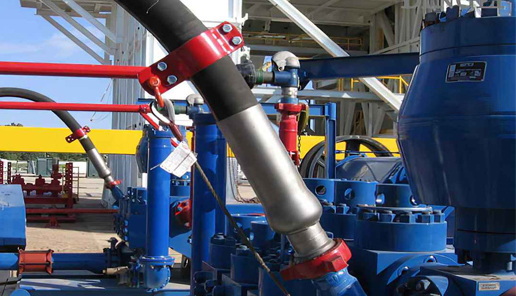
Hydraulic fracturing and high-volume water transfer in Qatar's oil and gas fields require equipment that can withstand abrasive media, high working pressures, and extreme heat. Frac hoses are deployed in long strings between water sources, storage ponds, pump units, and well pads, creating a flexible pipeline network that must perform reliably under fluctuating flow and pressure.[2][1]
TPU layflat frac hose has become a preferred solution because it combines high tensile strength, flexibility, and excellent resistance to abrasion, chemicals, and UV degradation. Compared with conventional rigid steel pipe or segmented HDPE lines, TPU layflat hose reduces the number of connections, speeds up deployment, and simplifies relocation between pads.[4][2]
Key functional requirements typically met by leading Frac Hose Manufacturers and Suppliers include:[4]
- High working pressure ratings adequate for frac water supply and flowback operations
- Strong reinforcement, often through-the-weave polyester or synthetic fibers, to resist kinking and elongation
- Compatibility with a wide temperature range, often from roughly −46 ℃ up to around +80 ℃, for global field use in both hot and cold climates[4]
In Qatar's desert environment, reliability and ease of handling are crucial, making TPU layflat hose particularly attractive to operators and service companies. The layflat design allows long continuous lengths to be reeled, transported, and deployed quickly, minimizing downtime between frac stages.[1][2]
Common advantages emphasized by leading Frac Hose Manufacturers and Suppliers include:[4]
- Durability: TPU covers and liners resist abrasion from sand, silt, and other particulates, while also withstanding UV exposure and hydrolysis over repeated campaigns.[1]
- Flow efficiency: Smooth internal bores help maintain turbulent but stable flow, reducing pressure losses over long runs.
- Operational flexibility: Hoses can follow changing terrain, cross roads with suitable protection, and bypass obstacles more easily than rigid pipe strings.[2]
- Lifecycle cost: Although quality TPU layflat hose represents a capital investment, extended service life and reduced labor can lower total cost per barrel moved.
These attributes explain why so many Frac Hose Manufacturers and Suppliers have expanded their TPU layflat product portfolios to serve not only North American shale plays but also high-growth markets in the Middle East, including Qatar.[2]
Among global Frac Hose Manufacturers and Suppliers, Sunmoon distinguishes itself as an engineering-driven manufacturer specializing in TPU layflat frac hose and other high-pressure layflat products. The company integrates R&D, production, and global sales, focusing on tailored solutions for oil and gas, shale development, mining, municipal emergency drainage, and industrial water transfer.[3][5]
Sunmoon was established in 2011 and has developed multiple production lines dedicated to large-diameter TPU layflat hose manufacturing. It operates under certified management systems that cover quality, environment, and occupational health and safety, giving international customers confidence in consistent production and traceability.[5][3]
This engineering depth allows Sunmoon and similar Frac Hose Manufacturers and Suppliers to fine-tune hose design elements such as:[6]
- TPU formulations for improved abrasion resistance and flexibility
- Reinforcement structures optimized for high working pressure and limited expansion
- Outer cover characteristics tailored for UV resistance and rough handling in remote field locations
Sunmoon offers a broad range of high-pressure TPU layflat hoses designed for frac water supply and related services, including models in large diameters and long continuous lengths. Example product configurations feature hoses up to around 12 inch diameter with lengths such as 660 ft per roll, enabling operators to cover large distances using fewer sections and couplings.[6]
Typical characteristics found in Sunmoon's frac hose product lines include:[6]
- Working pressures around 200–500 psi, depending on size and construction, with burst pressures generally at least three times the working pressure
- Strong circular woven reinforcement bonded integrally with the TPU layers for high tensile strength and minimal elongation
- Compatibility with specialized couplings and manifold systems suited to frac layouts and high-volume water transfer[7]
These design choices align well with the expectations of modern Frac Hose Manufacturers and Suppliers that must meet stringent performance standards for global oil and gas customers.
Qatar's energy sector uses a mix of internationally sourced equipment and local supply channels, and frac hoses are no exception. While specialized TPU frac hose often originates from global manufacturers, local trading houses and engineering distributors provide critical in-country support, inventory, and service.[8]
Several Qatari companies operate in the broader hose and fittings space, supplying hydraulic, industrial, and oilfield hoses as well as matching couplings and accessories. Although not all of them focus exclusively on frac hose, they frequently act as key intermediaries for Frac Hose Manufacturers and Suppliers seeking to serve operators in Qatar efficiently.[9][8]
Representative roles played by local entities include:[8]
- Stocking common hose sizes, fittings, and adapters needed for oilfield projects
- Providing assembly, crimping, and testing services for hydraulic and industrial hose systems
- Supporting urgent replacement needs to minimize downtime during critical operations[9]
By combining the specialized engineering capabilities of global Frac Hose Manufacturers and Suppliers with the responsiveness of local distributors, Qatar's operators can secure both technical excellence and timely support.[10]
Understanding how responsibilities are divided between manufacturers and local suppliers helps procurement teams in Qatar structure long-term partnerships. Frac Hose Manufacturers and Suppliers each contribute distinct strengths, which together form a resilient supply chain for large projects.[3]
Global TPU layflat hose manufacturers such as Sunmoon typically assume responsibility for:[3]
- Product design, material selection, and formulation
- Verification testing and quality control throughout production
- Documentation, such as technical datasheets, test certificates, and installation guidelines
By contrast, local Qatar distributors and service providers focus on:[8]
- Maintaining regional inventory of high-demand items and compatible fittings
- Providing on-site services, including assembly, inspection, and emergency replacement
- Adapting product offerings to local standards, regulatory requirements, and customer preferences[9]
When these elements are aligned, operators can rely on a continuous flow of equipment, technical data, and service expertise from their chosen Frac Hose Manufacturers and Suppliers, supported by agile in-country logistics.[10]
Selecting the right partners for frac hose supply is about more than price; it requires a structured evaluation of technical, commercial, and service capabilities. Qatar operators and EPC contractors can benefit from using a checklist approach when shortlisting Frac Hose Manufacturers and Suppliers for upcoming projects.[1][4]
Technical performance is the foundation of any frac hose purchase decision. Reputable Frac Hose Manufacturers and Suppliers document their design and testing regimes, including working pressure, burst pressure, temperature limits, and abrasion performance.[2][4]
Points to verify include:[4]
- Compliance with recognized quality management standards in manufacturing
- Availability of third-party or in-house test reports for pressure, bending, and abrasion
- Clear marking and traceability on each hose length for size, rating, and production batch
For high-profile projects, engineering teams may also request finite element analysis summaries, material data, or detailed test logs from their Frac Hose Manufacturers and Suppliers to validate design margins.[1]
Frac operations in Qatar may require different hose diameters and pressure classes depending on flow rates, fluid properties, and pump configurations. Therefore, it is useful to select Frac Hose Manufacturers and Suppliers with broad and flexible product ranges.[2][4]
Desirable attributes include:[6]
- Availability of multiple diameters, including large-bore hoses suitable for main water trunk lines
- Working pressure options aligned with expected pump discharge pressures and safety factors
- Customizable lengths, colors, and branding where needed for site identification and logistics
Equally important is the offering of compatible accessories such as couplings, manifolds, and reel systems that integrate seamlessly with the TPU hoses supplied by leading Frac Hose Manufacturers and Suppliers.[6]
For Qatar projects, procurement planners must consider shipping routes, customs clearance, and local storage to prevent delays. Frac Hose Manufacturers and Suppliers that have established partnerships or warehousing in the Gulf region can often deliver more predictable lead times.[8][9]
In evaluating suppliers, it is helpful to examine:[8]
- Typical production lead times for large orders and custom specifications
- Availability of emergency stock or expedited shipment options
- Clarity of warranty terms and responsiveness to technical or quality issues
After-sales support is particularly valuable, as some Frac Hose Manufacturers and Suppliers offer training, installation supervision, and lifecycle management guidance to help operators maximize hose performance and longevity.[1]
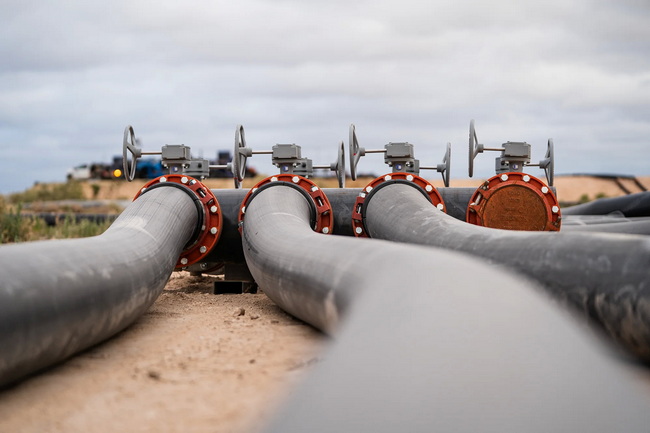
Even with premium products from top Frac Hose Manufacturers and Suppliers, actual field performance depends heavily on handling and maintenance practices. Qatar's combination of high temperatures, abrasive soils, and high equipment utilization can stress hose systems if not managed carefully.[2][1]
During installation, care should be taken to avoid dragging hoses over sharp rocks or edges, especially under tension. Where road crossings or sharp turns are unavoidable, additional ground protection or support structures can help reduce abrasion and localized stress.[1][2]
Pressure management guidelines from Frac Hose Manufacturers and Suppliers typically recommend:[4]
- Operating within specified working pressure limits, including allowance for transient spikes
- Monitoring pump discharge pressure and flow conditions to prevent surges
- Periodic verification of gauges and other instrumentation critical to safe operation
Routine inspection and maintenance are essential to catching issues early. Operators are generally advised to implement procedures aligned with manufacturer guidance, including visual checks, leak inspections at couplings, and review of any suspicious bulges or surface damage.[4][1]
Recommended practices include:[4]
- Conducting inspections before and after each campaign, documenting any observed damage
- Rotating hose segments where practical to distribute wear evenly
- Cleaning hoses when necessary to avoid buildup of aggressive residues
Storage also plays a major role in service life; many Frac Hose Manufacturers and Suppliers recommend storing hoses in shaded or covered environments whenever possible and avoiding long-term exposure to direct sunlight and standing water.[4]
While the main focus here is frac operations in Qatar, TPU layflat hose from specialized Frac Hose Manufacturers and Suppliers is used across a wide range of heavy-duty applications worldwide. These other use cases further demonstrate the versatility and robustness of the technology.[11][1]
Typical sectors that employ TPU layflat hoses include:[11]
- Mining dewatering and slurry handling
- Municipal and emergency drainage, such as flood response and temporary bypass systems
- Agricultural irrigation and long-distance water transfer
- Industrial wastewater transport and remote firefighting water supply
The ability of Frac Hose Manufacturers and Suppliers to adapt hose designs to different chemical exposures, pressure regimes, and environmental conditions is a major reason TPU layflat products have expanded far beyond the original oilfield niche.[2]
For Qatar's operators and service companies, collaborating closely with experienced Frac Hose Manufacturers and Suppliers offers several strategic advantages. Access to technical expertise, robust products, and responsive service networks directly supports both project performance and risk management.[3][1]
Key benefits include:[4]
- Improved reliability and reduced unplanned downtime due to hose failures
- Enhanced safety margins through verified pressure ratings and proven hose designs
- Greater flexibility when scaling operations up or down across multiple pads and fields
By leveraging specialized TPU layflat solutions from engineering-driven manufacturers such as Sunmoon, and integrating them with the capabilities of local Qatar distributors, operators can build resilient, high-performance fluid transfer systems tailored to regional conditions.[3]
Frac operations in Qatar place demanding requirements on fluid transfer infrastructure, making the selection of appropriate Frac Hose Manufacturers and Suppliers a critical decision. TPU layflat hose has emerged as a leading technology because it offers high pressure capability, abrasion resistance, and flexibility, all of which are essential for efficient water transfer in harsh desert environments. Engineering-driven manufacturers such as Sunmoon, working in concert with experienced local distributors and service providers, give Qatar operators access to high-quality frac hose solutions, reliable logistics, and technical support throughout the project lifecycle.[3][2][4]
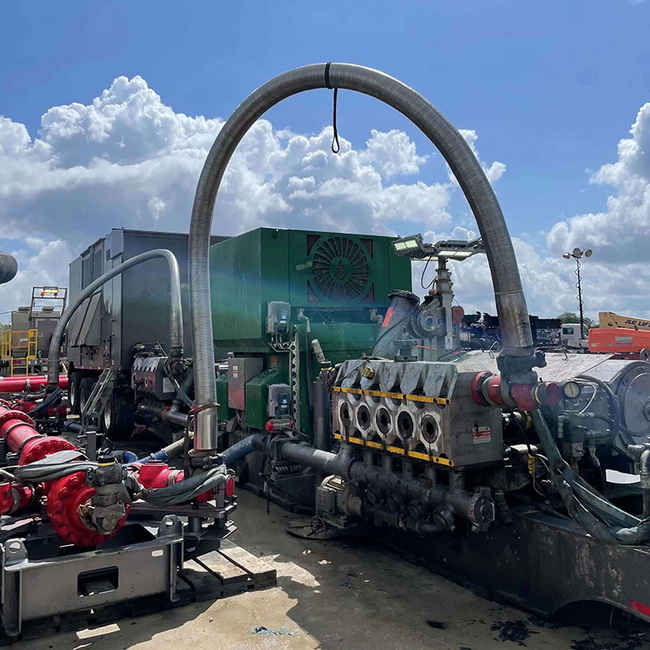
TPU layflat hose is lighter, more flexible, and easier to deploy in long continuous lengths than rigid steel or HDPE pipe, reducing the number of joints and overall installation time. Its abrasion-resistant TPU construction and reinforcement also provide strong performance under the high pressures and rough terrain typical of frac sites in Qatar.[2][4]
Reputable Frac Hose Manufacturers and Suppliers use controlled manufacturing processes, conduct hydrostatic and burst testing, and document performance data for each hose size and model. They operate under quality management systems and mark hoses with key information such as diameter, working pressure, and batch number to ensure traceability.[3][4]
Operators should seek distributors that work closely with recognized Frac Hose Manufacturers and Suppliers, maintain appropriate inventory, and have experience with oilfield applications. Valuable capabilities include hose assembly services, knowledge of local standards, and the ability to respond quickly to urgent replacement or expansion needs.[9][8]
Yes, TPU layflat hoses supplied by specialized Frac Hose Manufacturers and Suppliers are widely used for mine dewatering, emergency drainage, irrigation, industrial water transfer, and firefighting support. Their high pressure ratings, flexibility, and chemical resistance make them suitable for many demanding fluid handling tasks beyond fracturing.[11][1]
Operators can extend hose life by staying within rated working pressures, avoiding sharp bends or abrasive contact points, and implementing regular inspection routines. Proper storage—such as keeping hose reels in shaded areas and avoiding prolonged exposure to direct sunlight and standing water—also supports longer service life in Qatar's hot, arid environment.[1][4]
[1](https://www.ly-plastic.com/TPU-Layflat-Hose.html)
[2](https://rotarydrillinghose.com/fracking-hose/Industrial-Hose-Fracking-HoseT.html)
[3](https://www.sunmoonhose.com)
[4](https://www.sunhose.com/tpu-layflat-hose/)
[5](https://www.sunmoonhose.net)
[6](https://www.sunmoonpipe.com/tpu-layflat-hose/high-pressure-12inch-660ft-tpu-frac-layflat-long-distance-supply-hose.html)
[7](https://www.sunmoonhose.net/tpu-layflat-hose/8-inch-240psi-w-p-tpu-layflat-water-frac-hose.html)
[8](https://www.hydrocaretradingwll.com/hose-fittings-qatar/)
[9](https://powerflexqatar.com)
[10](https://hydromechqatar.com)
[11](https://www.sunmoonpipe.com/tpu-layflat-hose/)


