

Views: 222 Author: Sunmoon Publish Time: 2026-05-27 Origin: Site


As an engineer working with fuel transfer systems, and as a manufacturer of TPU layflat hoses, I'm often asked whether TPU anti-static oil hoses can really compete with traditional composite hoses in demanding fuel applications. This guide compares both options in real operational scenarios, so fuel operators, maintenance managers, and procurement teams can choose a hose that is safer, more efficient, and more cost-effective over the full lifecycle. [china-layflat-hose]

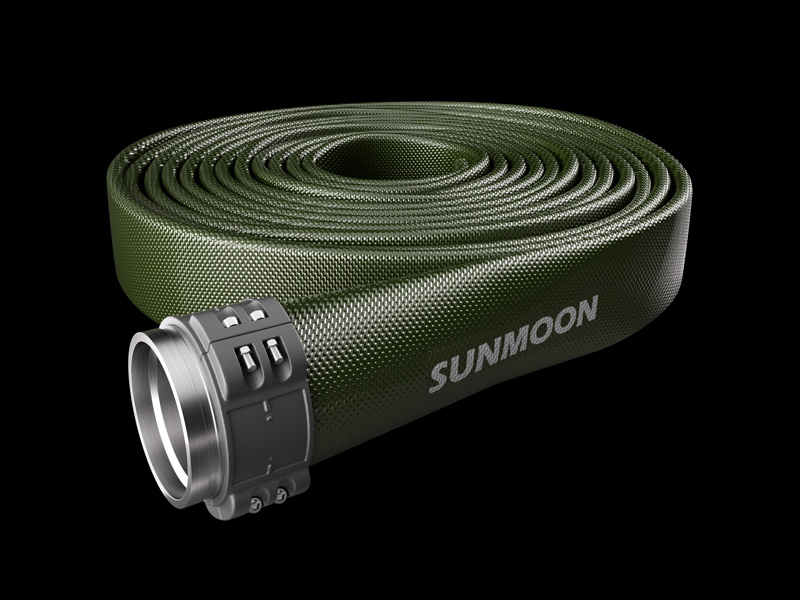
TPU (thermoplastic polyurethane) anti-static oil hoses are engineered flat hoses designed for high-pressure fuel and oil transfer, often supplied on reels for rapid deployment. Sunmoon focuses on TPU layflat hoses with reinforced textile or aramid structures, delivering high burst pressures and long service life in oilfield, mining, and emergency liquid transfer environments. [china-layflat-hose]
Key characteristics of TPU anti-static oil hoses: [sunmoonhose]
- Layflat design for compact storage and fast deployment.
- High tensile reinforcement (polyester or aramid fibers) for high working pressure.
- Excellent abrasion resistance for rough ground, truck traffic, and repeated dragging.
- Resistance to hydrocarbons, including diesel, some crude oils, and hydraulic oils (depending on liner formulation).
- Anti-static layers or conductive wires to dissipate static charges in fuel transfer.
Typical applications include: rapid fuel transfer lines in oil fields, temporary refueling lines for mining fleets, offshore support, and emergency dewatering with oil-contaminated water. [china-layflat-hose]
Composite hoses are multi-layered, flexible hoses built from spirally wound films and fabrics (often polypropylene, polyester or PTFE) between inner and outer metal wires, with an external cover. They were originally developed for chemical and petroleum transfer where both flexibility and chemical resistance are critical. [facebook]
Typical composite oil fuel hoses feature: [ewfm.co]
- Multi-layer plastic and fabric construction for chemical and fuel compatibility.
- Inner and outer spiral steel wires for pressure containment and vacuum resistance.
- Anti-static design, often via conductive wires or layers to dissipate static electricity.
- High flexibility with a small bend radius, suitable for tight manifolds and loading arms.
Composite hoses are widely used for ship-to-shore bunkering, tank truck loading, chemical plants, and terminals where multiple fuel or chemical products are transferred. [orientflexhose]
| Aspect | TPU Anti-Static Oil Hose | Composite Hose |
|---|---|---|
| Basic structure | TPU tube + reinforcement + TPU cover, layflat | Multi-layer films + fabrics + inner/outer metal wires + outer cover orientflexhose |
| Geometry | Flat when depressurized, round when pressurized | Always round, corrugated-style |
| Pressure capability | High working pressure with strong textile/aramid reinforcement china-layflat-hose | Designed for moderate pressure and often for suction/vacuum orientflexhose |
| Weight | Very lightweight per meter with high pressure rating | Lighter than some rubber hoses, but heavier than TPU layflat orientflexhose |
Expert insight: For long-distance ground-level fuel transfer where hoses are frequently deployed and retrieved, a layflat TPU design is much easier to handle and transport than a rigid, wire-reinforced composite hose. Composite hoses, however, excel where vacuum resistance and tight routing are critical, such as loading arms or top-loading tank trucks. [china-layflat-hose]
- Composite hoses can be tailored with specific inner layers to handle a wide range of fuels and chemicals, including gasoline, diesel, crude oil, and aggressive chemicals. [facebook]
- TPU oil hoses are generally formulated for petroleum-based products like diesel, certain crude oils, and oily water, but may have limits with highly aromatic or aggressive chemicals depending on TPU formulation. [sunmoonhose]
From a buyer's perspective, if your operation involves multi-product transfer (fuel + chemicals), composite hoses often offer broader compatibility options. If your use is focused on diesel or specific oils with known compatibility, TPU anti-static oil hoses can deliver excellent performance with lower weight and easier handling. [ewfm.co]
Static control is non‑negotiable in fuel transfer; mis-specified or non-bonded hoses can contribute to fires or explosions. Composite hoses are widely known for built-in anti-static wires that dissipate charges through the hose assembly when properly grounded. TPU anti-static oil hoses use conductive layers or embedded wires to achieve a similar effect in layflat form, allowing safe use in hydrocarbon transfer when correctly specified and grounded. [speakingofsafety]
Industry guidance stresses: [banlaw]
- Selecting hoses suitable for the specific fuel (diesel vs gasoline etc.).
- Ensuring bonding and grounding of fuel transfer hoses.
- Regular inspection, pressure testing, and electrical continuity checks.
In practice, both hose types can be engineered to meet safety standards, but correct installation and testing are just as important as the hose choice itself. [speakingofsafety]
- TPU layflat hoses can be supplied in long continuous lengths on reels, often hundreds of meters, enabling rapid deployment for pipeline-style fuel lines in mining, temporary operations, or emergency response. [china-layflat-hose]
- Composite hoses are usually supplied in shorter lengths with individual couplings, ideal for loading arms, tank truck connections, and flexible jumpers. [orientflexhose]
In my experience working with large mobile fleets, when crews need to deploy and retrieve hose lines daily, a layflat TPU option dramatically reduces manual handling time and storage space compared to rigid composite assemblies. [china-layflat-hose]
Maintenance data and industry recommendations show that fuel transfer hoses must be closely inspected and periodically tested to avoid failures. For typical petroleum hoses, guidance includes: [banlaw]
- Visual inspection before each use.
- Hydrostatic and electrical continuity testing on a regular schedule.
- Replacement when cracks, cuts, blisters, or leaks appear—or when service life limits are reached.
Composite hoses are well-proven in harsh terminal and marine environments, but their multi-layer structure and wire spirals require careful handling to avoid kinks or crushing damage. TPU layflat hoses, especially those engineered for oil and gas, offer excellent abrasion and weather resistance and can withstand being dragged over ground, but still need protection from sharp edges, extreme temperatures, and incompatible fluids. [sunmoonhose]
While pricing varies by region and specification, the total cost of ownership is driven by:
- Hose purchase price.
- Frequency of replacement.
- Downtime from failures, leaks, or testing.
- Labor and equipment cost for handling and storage.
Because TPU layflat hoses reduce transport and storage volume and allow long continuous runs, they can significantly cut installation time in large projects. Composite hoses can be competitively priced for shorter, high-flexibility connections, especially where vacuum and multi-fuel compatibility are essential, but may require more assemblies and fittings for long distances. [ewfm.co]
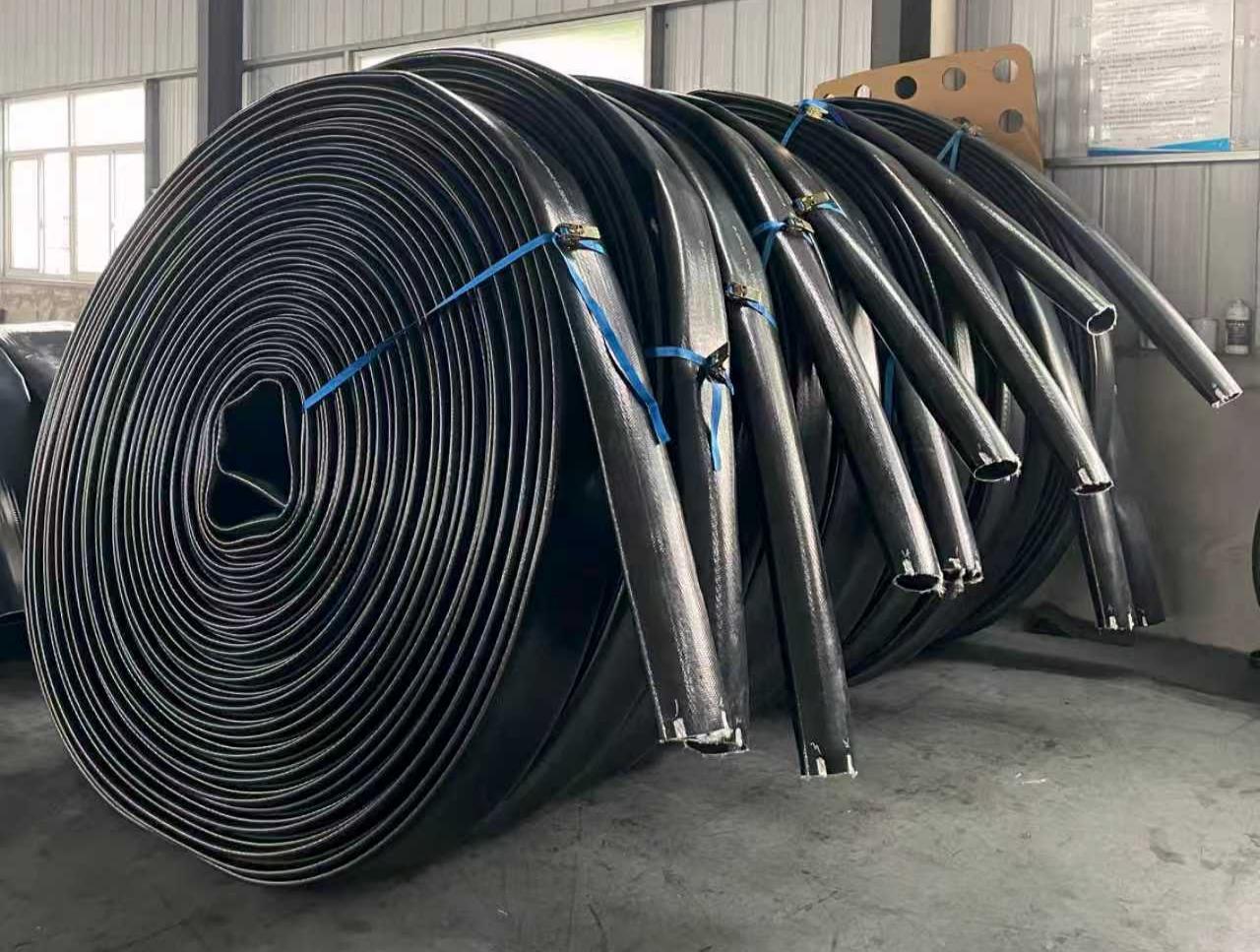
From a manufacturer's and field engineer's point of view, TPU anti-static oil hoses offer several strategic advantages in specific fuel transfer scenarios. [china-layflat-hose]
Operational advantages:
- Long-distance transfer: Ideal for creating temporary or semi-permanent fuel "pipelines" across mines, oilfields, or remote sites.
- Compact logistics: Layflat design reduces storage footprint in containers or on trucks, lowering logistics costs.
- Fast relocation: Crews can redeploy lines quickly when drilling pads, pits, or mobile equipment move.
Engineering advantages:
- High working pressure reserves, suitable for pump-driven transfer with significant elevation changes. [china-layflat-hose]
- High abrasion resistance when dragged over soil, gravel, or concrete. [sunmoonhose]
- Customization of length, diameter, color coding, and coupling types to match site standards. [china-layflat-hose]
Despite the strengths of TPU layflat hoses, composite hoses remain the reference solution in several critical areas. [facebook]
- Ship-to-shore bunkering: Composite hoses combine flexibility, vacuum capability, and chemical compatibility for marine fuel and chemical loading. [orientflexhose]
- Terminal manifolds and loading arms: Tight bend radii and complex routing favor the smaller bend radius of composite hoses. [ewfm.co]
- Multi-product operations: With the right liner combinations, composite hoses can handle a broader range of chemicals and fuels through one hose family. [facebook]
If your main challenge is compact routing and multi-fuel compatibility at fixed loading points, composite hoses can still be the most practical solution. TPU anti-static oil hoses complement them by covering long-distance distribution from those loading points to remote or mobile users. [orientflexhose]
To help project engineers and procurement teams decide, here is a step-by-step framework you can apply on your next project:
1. Define the medium and range of products.
- Single fuel (e.g., diesel only) vs multi-product (diesel, gasoline, chemicals). [facebook]
2. Map the transfer layout.
- Long-distance, mostly straight runs favor TPU anti-static layflat hoses. [china-layflat-hose]
- Short, complex, or vertical routing near loading arms favor composite hoses. [ewfm.co]
3. Assess operating pressure, suction, and elevation.
- If vacuum or suction service is critical (e.g., tank truck loading), composite hoses with inner/outer wire spirals are often preferred. [orientflexhose]
- High-pressure discharge lines benefit from reinforced TPU design. [sunmoonhose]
4. Evaluate handling and logistics.
- Remote or mobile sites with frequent layout changes gain major efficiency from layflat hoses on reels. [china-layflat-hose]
5. Check compliance and testing requirements.
- Confirm bonding/grounding arrangements and electrical continuity testing to manage static risk, regardless of hose type. [speakingofsafety]
Sunmoon specializes in engineering-grade TPU layflat hoses for oil and gas, mining, agriculture and emergency dewatering, supported by in-house R&D, production and application engineering. Based on customer projects across energy and mining, we typically recommend TPU anti-static oil hoses when: [china-layflat-hose]
- You need fast deployment of long fuel lines (hundreds of meters or more).
- Site access is challenging and logistics costs must be minimized.
- The medium is known fuels or oily water within TPU compatibility limits.
- You want custom lengths and couplings to reduce leak points and installation time.
For terminals, refineries, or marine operators already using composite hoses at loading points, we don't ask you to replace what works. Instead, we help extend your system with TPU layflat distribution lines that improve reach and flexibility beyond those fixed points. [sunmoonhose]
Regardless of whether you choose TPU anti-static oil hoses or composite hoses, safe and efficient operation depends on routine practices. [banlaw]
Installation tips:
- Verify compatibility of hose material with the specific fuel or chemical. [facebook]
- Ensure proper bonding and grounding of all fuel transfer hoses and connections. [speakingofsafety]
- Avoid tight bends below the recommended minimum bend radius. [ewfm.co]
- Protect hose from sharp edges, heavy vehicle traffic, and hot exhausts. [banlaw]
Maintenance and inspection: [speakingofsafety]
- Inspect hoses visually before each use for cuts, blisters, abrasion, or leakage.
- Schedule hydrostatic pressure testing and electrical continuity checks.
- Replace hoses that show damage, fail tests, or exceed recommended service life.
Many operators find that implementing a digital hose registry (with serial numbers, test dates, and inspection logs) significantly improves reliability and compliance. [banlaw]
| Scenario | Recommended Hose Type | Why |
|---|---|---|
| Long-distance diesel transfer across a mine | TPU anti-static layflat hose | Lightweight, reelable, fast deployment, high pressure capacity china-layflat-hose |
| Ship-to-shore marine fuel loading | Composite hose | High flexibility, proven in marine/terminal use, vacuum capable orientflexhose |
| Tank truck loading/unloading at a terminal | Composite hose + possible TPU downstream | Requires suction and tight routing; TPU can extend beyond fixed points orientflexhose |
| Temporary fuel line for remote generator farm | TPU anti-static layflat hose | Easy logistics and redeployment, minimal storage footprint china-layflat-hose |
| Multi-fuel or chemical transfer (fuel + aggressive chemicals) | Composite hose | Broader chemical compatibility with tailored liner options orientflexhose |
If you are evaluating TPU anti-static oil hoses vs. composite hoses for a new fuel transfer project, the right answer is often a hybrid approach: composite hoses where compact routing and suction are critical, and TPU layflat hoses where distance, mobility, and deployment speed matter most. [orientflexhose]
Sunmoon can help you: [china-layflat-hose]
- Analyze your fuel transfer layout and operating conditions.
- Select appropriate TPU layflat hose dimensions, pressure ratings, and anti-static designs.
- Customize lengths and couplings to reduce leak points and installation time.
You can reach our engineering team via the contact details on our official site to request a project-specific hose selection proposal or technical datasheet pack. [china-layflat-hose]
1. Can TPU anti-static oil hoses replace composite hoses in all fuel transfer applications?
No. TPU anti-static oil hoses are excellent for long-distance, ground-level fuel transfer and mobile operations, but composite hoses remain preferable for applications demanding strong vacuum capability, tight routing around manifolds, or multi-product chemical compatibility. [sunmoonhose]
2. Are TPU layflat hoses safe for diesel and crude oil transfer?
Yes, TPU formulations designed for oil service can safely handle diesel and many crude oils, provided compatibility is confirmed and proper bonding and grounding practices are followed. Always consult the hose manufacturer's chemical compatibility chart. [speakingofsafety]
3. How often should fuel transfer hoses be tested or replaced?
Industry guidance suggests visual inspection before each use, plus periodic hydrostatic and electrical continuity testing, with replacement whenever damage is observed or when service life limits (often several years) are reached as per your internal standards and regulations. [banlaw]
4. Do composite hoses and TPU hoses meet the same safety standards?
Both can be engineered to meet relevant standards for petroleum transfer, including static dissipation and pressure ratings, but compliance depends on specific design, assembly practices, and correct bonding/grounding in your installation. Always request documented test data and certifications from your supplier. [catawbarubber]
5. Can Sunmoon customize TPU anti-static oil hoses for specific projects?
Yes. Sunmoon offers customized TPU layflat hose solutions with different diameters, pressure ratings, lengths, colors, and coupling systems to match application requirements in oil, gas, mining, municipal and emergency response projects. [alibaba]
- Orientflex – Composite hose material and anti-static knowledge. [https://www.orientflexhose.com/composite-hose-material-and-anti-static-knowledge/] [orientflexhose]
- Catawba Rubber – Petroleum liquid transfer hoses: Reliable solutions for safe fuel transportation. [https://catawbarubber.com/petroleum-liquid-transfer-hoses-reliable-solutions-for-safe-fuel-transportation] [catawbarubber]
- Jiangsu Sunmoon Shale Gas High Pressure Hose Co., Ltd – About us. [https://china-layflat-hose.com/about/] [china-layflat-hose]
- Jiangsu Sunmoon Shale Gas High Pressure Hose Co., Ltd – Company profile. [https://china-layflat-hose.com/about/company-profile/] [china-layflat-hose]
- Orientflex – Composite hose classification (oil resistant composite hose usage). [https://www.facebook.com/orienthose/posts/] [facebook]
- WorkSafeBC / Speaking of Safety – Use the right hose to prevent fire during fuel transfer. [https://speakingofsafety.ca/right-hose-prevents-explosions-during-fuel-transfer/] [speakingofsafety]
- Sunmoon – Customized TPU layflat hose, oil and gas hose, dewatering hose. [https://www.sunmoonhose.com] [sunmoonhose]
- Alibaba – SUNMOON Hot Selling TPU Lay Flat Ducting Polyester Polyurethane Hose. [https://www.alibaba.com/product-detail/SUNMOON-Hot-Selling-TPU-Lay-Flat_60719989277.html] [alibaba]
- EWFM – Uses of composite hose in key sectors. [https://www.ewfm.co.uk/industries-on-the-move-uses-of-composite-hose-in-key-sectors/] [ewfm.co]
- Banlaw – Maintaining fuel transfer hoses for safety and savings. [https://www.banlaw.com/maintaining-fuel-transfer-hoses/] [https://www.banlaw.com/maintaining-fuel-transfer-hoses/] [banlaw]


