

Views: 231 Author: Sunmoon Hose Manufacturing Publish Time: 2026-07-21 Origin: Site


Content Menu
● Why Hose Construction Matters
>> Strengths of soft-wall hoses
>> Limitations of soft-wall hoses
>> Strengths of hard-wall hoses
>> Limitations of hard-wall hoses
● What Industry Buyers Care About
>> 1) Lifecycle cost, not purchase cost
>> 2) Site-specific handling economics
>> 3) Reinforcement quality and bonding
● Expert View From The Factory Floor
● FAQ
>> 1. What is TPU frac water hose?
>> 2. Which is more flexible, soft-wall or hard-wall?
>> 3. Which lasts longer in rough terrain?
>> 4. Can TPU hoses handle cold weather?
>> 5. Is TPU better than rubber or PVC for frac water transfer?
TPU frac water hose selection is not just a material choice. It is a construction choice that affects flow efficiency, abrasion life, reel handling, and total cost in field operations. For oil and gas buyers, the real question is whether a soft-wall or hard-wall TPU construction better fits the job profile, ground conditions, and transfer distance.
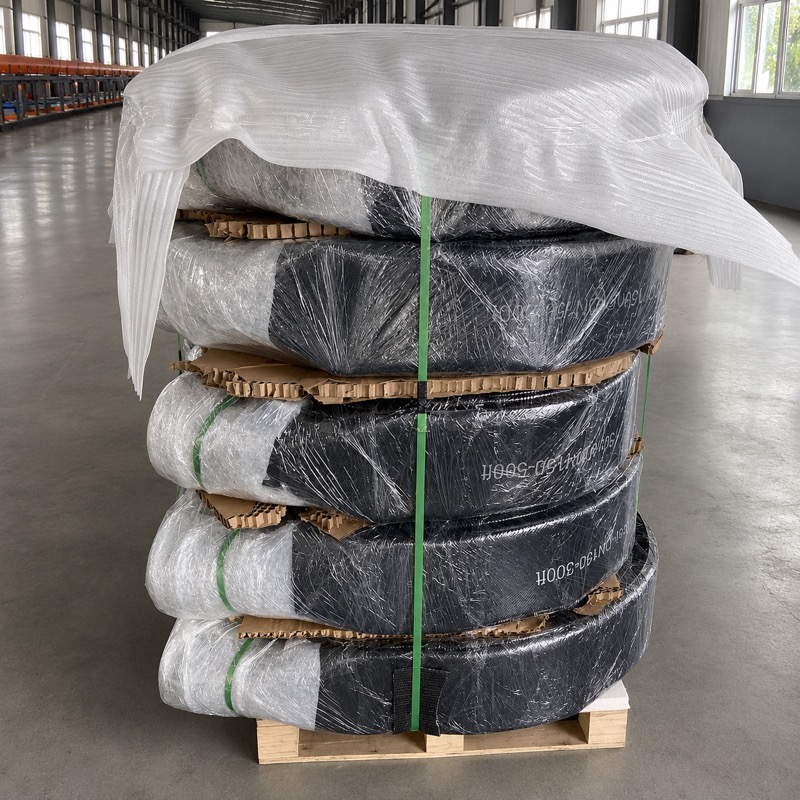
In frac water transfer, the hose often runs long distances, is dragged across rough terrain, and is exposed to repeated reel-in and reel-out cycles. That means the wall structure must do more than hold pressure; it must resist abrasion, preserve shape, and keep downtime low. TPU is widely used in these applications because it offers strong abrasion resistance, low-temperature flexibility, and pressure resistance suited to oilfield work.
Sunmoon Hose Manufacturing positions its frac water hose as a TPU composite layflat hose built for high abrasion resistance, low elongation, and long service life in harsh climates. That makes construction style especially important, because the same polymer can behave very differently depending on reinforcement, wall thickness, and layflat architecture.
Soft-wall TPU frac hoses are designed for flexibility first. They are easier to handle, lighter to move, and generally simpler to deploy over uneven terrain or around temporary field layouts.
- High flexibility, which helps during rapid deployment and frequent repositioning.
- Lower weight, which improves handling and reduces labor strain on site.
- Faster coil management, especially when hose must be transported, loaded, and re-laid often.
- Good abrasion resistance when TPU is properly formulated and reinforced.
Soft-wall designs can be more vulnerable to deformation under sustained mechanical stress if the reinforcement structure is not robust enough. They may also be less dimensionally stable in aggressive dragline use, especially where the hose is repeatedly pulled over rock, sand, or debris. In practice, that means the hose may need more careful routing and support to preserve service life.
Hard-wall TPU frac hoses prioritize structural stability. They are built to resist collapse, flattening distortion, and shape loss under pressure or external load, which can matter when the hose is used in demanding long-run transfer systems.
- Better shape retention, especially under pressure and repeated handling.
- Improved kink resistance, helping maintain smooth flow in difficult layouts.
- Stronger resistance to compression and external abrasion, useful on rough ground and in sustained service.
- More predictable hydraulic performance, because the hose geometry stays more stable during operation.
Hard-wall construction usually trades some flexibility for durability. It can be heavier, less agile in tight site conditions, and slightly harder to reel or reposition compared with a softer-wall design. For crews that prioritize fast deployment above all else, that can be a meaningful operational drawback.
| Factor | Soft-Wall TPU Hose | Hard-Wall TPU Hose |
|---|---|---|
| Flexibility | Higher | Moderate |
| Handling | Easier to move and coil | More rigid and controlled |
| Abrasion performance | Good, depends on reinforcement | Often stronger in severe drag conditions |
| Shape retention | Lower | Higher |
| Kink resistance | Good, but depends on design | Usually stronger |
| Best use case | Fast deployment, frequent repositioning | Long runs, harsh terrain, demanding mechanical load |
| Operator experience | Easier for crews to handle | More stable in fixed or semi-fixed routes |
The best choice depends on how the hose is used, not just where it is used. If the job requires fast setup, movement, and temporary routing, soft-wall construction is often the better operational fit. If the line will stay in service longer, face heavier drag, or operate in rougher terrain, hard-wall construction usually delivers better total durability.
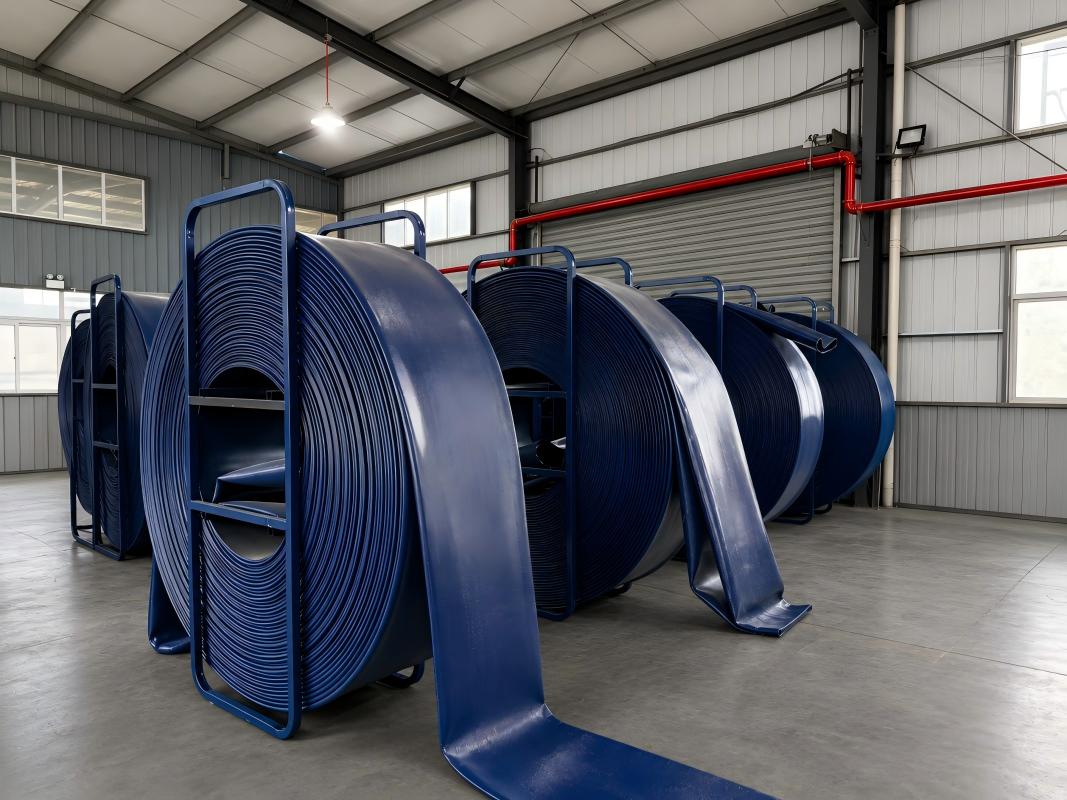
From a procurement perspective, the real evaluation should go beyond the words soft-wall and hard-wall. Buyers should compare working pressure, burst pressure, bend behavior, abrasion resistance, UV resistance, low-temperature flexibility, and connection compatibility. TPU hoses can also be engineered for wide operating ranges, with several sources noting strong performance in cold and hot environments.
For frac operations, three buying questions matter most:
1. How far will the hose be dragged?
2. How often will it be coiled and redeployed?
3. What is more costly: handling time or service failure?
That framing is often more useful than focusing only on initial unit price. In many oilfield projects, a hose that survives longer and reduces downtime can outperform a cheaper alternative on total cost of ownership.
The TPU layflat hose segment continues to expand, which reflects broader demand for durable, efficient transfer solutions in oil and gas applications. As adoption rises, buyers are placing more emphasis on service life, field reliability, and reduced replacement frequency. That shift favors constructions that can withstand repeated stress cycles rather than simply pass a one-time pressure test.
In the field, hose handling is labor. A soft-wall hose may save time during setup, while a hard-wall hose may reduce maintenance and replacement over a longer campaign. For contractors managing multiple pads, the right choice can materially affect crew productivity and logistics planning.
The wall construction is only part of the story. Through-the-weave extrusion and strong TPU-to-reinforcement adhesion are critical for stable performance, because poor bonding can shorten service life even when the material itself is high grade. This is why experienced buyers should ask for reinforcement details, not just material names.
Use this practical rule:
- Choose soft-wall TPU frac hose when the priority is speed, flexibility, and frequent handling.
- Choose hard-wall TPU frac hose when the priority is durability, geometry stability, and rough-service protection.
- Choose a customized hybrid design when the site needs both, such as a tough outer structure with enough flexibility for reel systems.
For export-focused buyers, customization is especially valuable because oilfield conditions vary by region, climate, and operating method. A factory with in-house engineering support and standardized automated lines can better tune wall thickness, reinforcement, diameter, and end-fittings for the specific project.
From a manufacturing standpoint, the best frac hose is rarely the "strongest" or the "softest." It is the hose whose construction matches the real mechanical load. In experience, the most common failure pattern is not material weakness alone, but mismatch between hose construction and operating behavior: excessive dragging, poor routing, wrong reel size, or incompatible fittings.
That is why Sunmoon Hose Manufacturing emphasizes integrated hose, coupling, and reel solutions rather than hose-only sales. When the whole transfer system is engineered together, performance becomes more predictable and installation errors drop.
If your job demands easy deployment and frequent movement, start with a soft-wall TPU frac hose. If your job demands tougher structure, higher geometry stability, and better survival on abrasive ground, hard-wall construction is usually the safer investment. For serious frac water transfer projects, the right answer is often a custom-engineered construction matched to pressure, terrain, temperature, and handling method.
For OEM, private label, or project-specific TPU frac water hose requirements, request a construction review and compare soft-wall vs. hard-wall options against your pressure, length, and site conditions before placing an order.
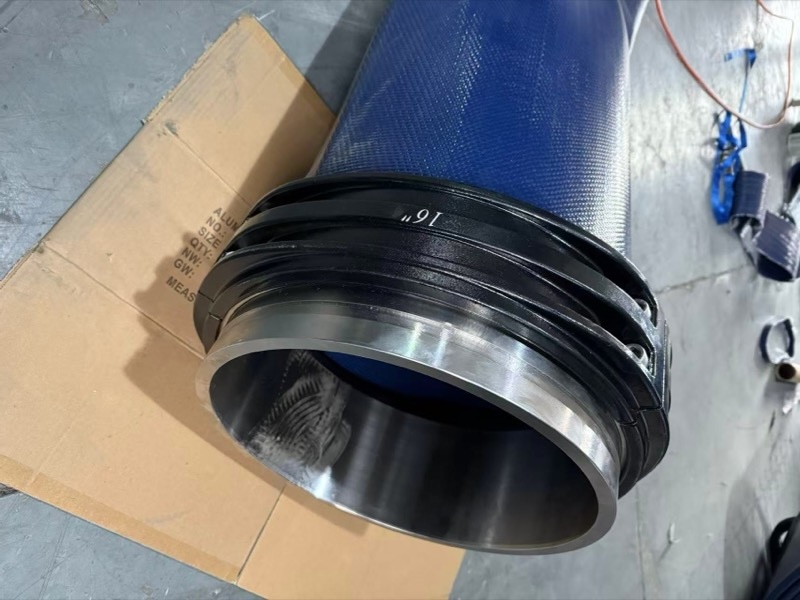
TPU frac water hose is a layflat hose made with thermoplastic polyurethane and reinforcement, designed for high-abrasion water transfer in oil and gas operations.
Soft-wall construction is generally more flexible and easier to handle during deployment.
Hard-wall construction usually performs better in harsh, abrasive, and high-load conditions because it retains shape and resists deformation more effectively.
Yes. TPU hose formulations can perform well in low-temperature environments, depending on the exact material and structure.
For many oilfield transfer jobs, TPU is preferred because it offers strong abrasion resistance, flexibility, and lower handling weight than many rubber or PVC alternatives.
- Sunmoon Hose Manufacturing official website: [https://www.sunmoonhose.com/]
- Lubrizol Engineered Polymers, oil and gas TPU materials overview: [https://www.lubrizol.com/]
- BASF, Elastollan® TPU for tubes and hoses: [https://plastics-rubber.basf.com/]
- BASF PDF, Elastollan® TPU for hose and tube: [https://download.basf.com/]
- Hoseinc, TPU hose overview: [http://www.hoseinc.com/tpu-hose.html]
- GII Research, TPU layflat hose market report: [https://www.giiresearch.com/report/ires1950273-tpu-layflat-hose-oil-transfer-market-by-material-type-pressure-rating-hose-diameter-wall-construction-end-use-global-forecast-2026-2032.html]
- Sunhose, TPU layflat hose manufacturer page: [https://www.sunhose.com/tpu-layflat-hose/]
- Hannover Messe PDF, layflat hose material information: [https://www.hannovermesse.de/apollo/hannover_messe_2021/obs/Binary/A1090001/12.TPU%20LAYFLAT%20HOSE.pdf]


