

Views: 222 Author: Sunmoon Publish Time: 2026-04-27 Origin: Site


When you specify a layflat hose, you are not just buying plastic. You are buying 5 years of uptime, risk and maintenance workload. [papagenogroup]
On paper, PVC layflat hose is the budget choice: it has a lower purchase price and is widely available. TPU (thermoplastic polyurethane) layflat hose, by contrast, costs more per meter but delivers higher abrasion resistance, better weathering performance and longer service life, especially in harsh outdoor or industrial environments. [sunhose]
In this article, we will:
- Compare TPU vs. PVC layflat hose in terms of durability, failure patterns and operating risk over 5 years. [renatoflex]
- Build a simple 5‑year life cycle cost model that you can adapt to your own project. [rollepaal]
- Share practical selection tips from the perspective of a Chinese manufacturer (Sunmoon) that supplies both TPU layflat hose and PVC layflat hose to global customers.
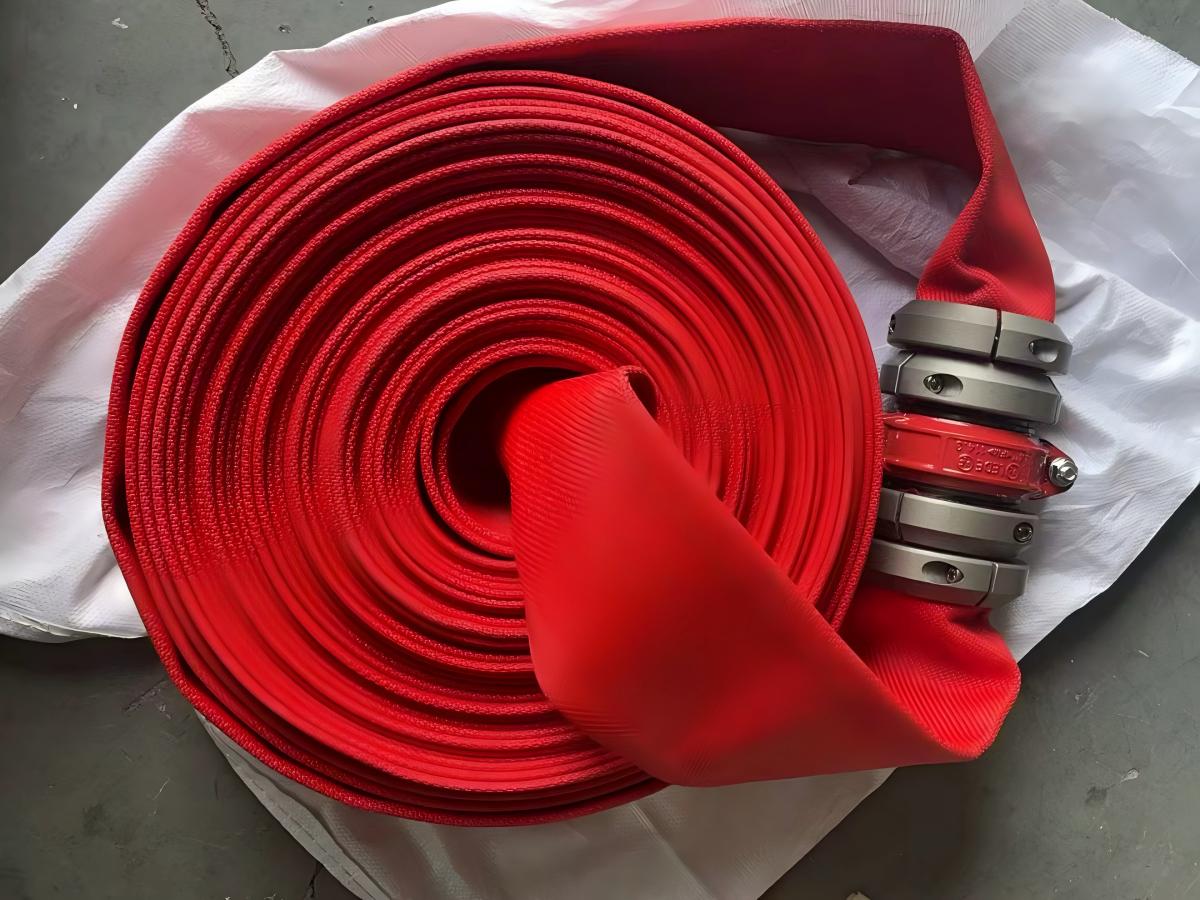
PVC layflat hose is made from polyvinyl chloride, often with reinforcement yarn, extruded into a flexible, flattened tube. [qdeastop]
Key characteristics:
- Low initial cost – attractive for budget‑sensitive projects and seasonal use. [eastophose]
- Good water and chemical resistance for common irrigation and general water transfer. [papagenogroup]
- Lower pressure rating compared with TPU, suitable mainly for low‑ to medium‑pressure applications. [papagenogroup]
- Durability limits – PVC tends to harden, crack and lose flexibility under UV and temperature cycling. Typical lifespans of 1–3 years are common in demanding outdoor use. [qdeastop]
TPU layflat hose uses thermoplastic polyurethane as the main material, usually with a high‑strength textile reinforcement. [sunhose]
Key characteristics:
- High abrasion resistance – TPU has excellent wear properties, ideal for aggressive slurries, dragging on the ground, or frequent deployment. [renatoflex]
- Superior elasticity and toughness – better resistance to kinking, puncture and fatigue. [sunhose]
- Higher pressure capability – TPU layflat hose is widely used in high‑pressure water transfer, mining, and oil transfer lines. [gii]
- Extended lifespan – industry data often shows 5–10 years in heavy‑duty applications when properly specified and maintained. [renatoflex]
From a life cycle cost perspective, the key question is: Do TPU's extra years of service and lower failure rate offset its higher purchase price? [papagenogroup]
Several industry sources and field surveys provide reasonable lifespan ranges under real‑world outdoor use: [sunhose]
| Property | PVC layflat hose (typical) | TPU layflat hose (typical) |
|---|---|---|
| Abrasion resistance | Moderate (papagenogroup) | Excellent (papagenogroup) |
| UV resistance | 6–24 months (qdeastop) | 3–7+ years (sunhose) |
| Typical lifespan outdoors | 1–3 years (qdeastop) | 4–10 years (sunhose) |
| Cold‑weather flexibility | Degrades, stiffens (renatoflex) | Better elasticity (renatoflex) |
Even conservative assumptions show that TPU layflat hose typically lasts at least 2–3 times longer than PVC under similar exposure. [renatoflex]
Understanding how hoses actually fail is crucial for a 5‑year cost analysis: [papagenogroup]
- PVC layflat hose
- UV embrittlement → cracking, pinhole leaks, splitting. [qdeastop]
- Fatigue at folds and kinks after repeated deployment. [papagenogroup]
- Reduced wall thickness and reinforcement in low‑cost products → earlier burst failures under dynamic loads. [papagenogroup]
- TPU layflat hose
- Wear after long‑term dragging over rough surfaces, but at a much slower rate. [sunhose]
- Local damage from extreme abrasion or incorrect coupling installation. [papagenogroup]
Hidden risk: inexpensive PVC layflat hoses may look economical at purchase, but their reduced reinforcement density and lower burst safety factor often lead to early failure, unplanned downtime and premature replacement. [papagenogroup]
As a manufacturer, Sunmoon repeatedly sees the same pattern: projects that switch from low‑cost PVC to TPU layflat hose often cut unplanned hose‑related stoppages by more than half over 3–5 years, especially in high‑UV regions or abrasive environments. [renatoflex]
To compare TPU vs. PVC layflat hose objectively, you need a life cycle cost (LCC) framework, similar to life cycle assessments used in the plastics and pipe industries. [rollepaal]
Over 5 years, total hose cost per line typically includes:
1. Initial purchase cost (material + couplings). [eastophose]
2. Planned replacements when the hose reaches end of life. [sunhose]
3. Unplanned failure costs, including:
- Lost production or irrigation time.
- Emergency repairs and labor.
- Potential damage to pumps, equipment or terrain. [papagenogroup]
4. Handling and logistics – labor and equipment to deploy, retrieve and move hoses. [sunhose]
Assume a 2‑inch layflat hose line used heavily outdoors for 6–8 months per year. We apply typical market patterns reported by hose manufacturers and industrial users: [eastophose]
- PVC layflat hose
- Unit price: baseline 1.0×. [qdeastop]
- Expected life: 2 years average before replacement in this duty. [qdeastop]
- Unplanned failure probability: higher, with multiple leak repairs or emergency replacements over 5 years. [qdeastop]
- TPU layflat hose
- Unit price: around 2.0–2.5× PVC for comparable size and rating. [renatoflex]
- Expected life: 5+ years in the same duty when properly handled. [renatoflex]
- Unplanned failure probability: much lower, especially for UV, abrasion and kink‑related failures. [papagenogroup]
Conceptually, over 5 years you might see:
- PVC: buy once at year 0, replace at year 2–3, possibly again near year 5, plus repair downtime. [qdeastop]
- TPU: buy once at year 0 and keep in service through year 5, with minimal repairs. [sunhose]
Even if TPU's initial cost is double, two PVC replacements plus repair events can bring total 5‑year cost close to or above TPU, especially when downtime is expensive. [papagenogroup]
In other words, TPU often delivers a lower cost per year of reliable service, which is the key metric for life cycle decisions. [rollepaal]

In agriculture, many growers use PVC layflat hose for seasonal irrigation because: [eastophose]
- It has a low upfront cost and is easy to deploy. [eastophose]
- Operating pressures are often moderate. [papagenogroup]
However, in regions with intense sunshine and long irrigation seasons, PVC hoses can crack after just 1–2 seasons. [qdeastop]
TPU layflat hose becomes attractive when:
- Irrigation is multi‑season or year‑round.
- Hoses are dragged over rough ground or gravel frequently.
- Water supply interruptions due to hose failure are costly (high‑value crops). [renatoflex]
For mining, oil transfer and industrial dewatering, TPU is increasingly the preferred option: [youtube]
- Exposure to abrasive slurries, oils and aggressive chemicals favors TPU's chemical and wear resistance. [papagenogroup]
- Long hose lines and high operating pressures magnify the risk of failure. [gii]
- Projects value lighter, flexible hoses that can be rapidly deployed and relocated. TPU's weight‑to‑strength ratio is a strong advantage. [youtube]
In these applications, lifecycle‑based evaluation shows that reliability and adequate safety margins are more critical than unit price, making TPU layflat hose the more economical choice over 5 years. [gii]
From an engineer's and manufacturer's perspective, PVC layflat hose still makes sense in several situations: [eastophose]
- Short‑term or backup lines
- Emergency pumping, temporary bypasses, short projects.
- Seasonal use with protected storage
- Hoses used only a few weeks per year and stored indoors the rest of the time. [qdeastop]
- Very low budget environments
- Where labor costs and downtime are low, and the project accepts more frequent replacement. [eastophose]
In these cases, the lower purchase price of PVC can still lead to a reasonable 5‑year cost, especially if users handle the hose carefully and limit UV exposure. [eastophose]
While this article focuses on cost, many buyers now weigh environmental impact as part of life cycle decision‑making. [rollepaal]
- PVC
- Requires plasticizers to remain flexible; some types raise environmental and health concerns. [dawnbags]
- Can be more difficult to recycle, and incineration may release harmful gases. [dawnbags]
- TPU
- Generally seen as a higher‑performance elastomer with good potential for mechanical recycling in closed loops. [rollepaal]
- Longer life means fewer discarded hoses over a 5‑year period, reducing material throughput. [rollepaal]
Life Cycle Assessment (LCA) methodologies used in the plastics and pipe industries consistently show that longer service life and reduced replacement frequency usually improve environmental performance per unit of service delivered. [rollepaal]
To choose between TPU vs. PVC layflat hose from a 5‑year life cycle cost perspective, you can follow this simple checklist: [papagenogroup]
1. Define your duty cycle
- Operating pressure, flow rate, fluid type.
- Daily operating hours and annual service months.
2. Quantify environmental stress
- UV exposure, temperature extremes, rough terrain, chemical exposure.
3. Estimate downtime cost
- Production loss per hour of hose failure.
- Labor cost for repairs, site access difficulty.
4. Compare realistic lifespans
- PVC: assume 1–3 years in harsh outdoor use, longer if well protected. [renatoflex]
- TPU: assume 4–8 years depending on severity and handling. [sunhose]
5. Model 5‑year cost
- Purchase + planned replacement + a realistic allowance for unplanned failures. [papagenogroup]
In many industrial cases, this approach shows TPU's higher purchase price is offset—and often surpassed—by its extended service life and lower failure rate. [papagenogroup]
As a Chinese manufacturer specializing in TPU layflat hose and PVC layflat hose, Sunmoon works with customers worldwide across agriculture, mining, construction and oil & gas.
From our manufacturing and field experience: [gii]
- We supply PVC layflat hose for:
- Cost‑sensitive agricultural irrigation.
- Light‑duty water transfer and temporary lines.
- We supply TPU layflat hose for:
- Oil and fuel transfer lines. [gii]
- High‑pressure water transfer in mining and construction. [youtube]
- Long‑distance hose strings where retrieval and redeployment are frequent. [youtube]
Customization options typically include:
- Hose diameter, wall thickness and pressure rating. [gii]
- Color coding for quick line identification. [sunhose]
- Coupling types (camlock, Bauer, flanged, etc.) and assembly. [papagenogroup]
- Special formulations for oil, chemical or temperature resistance. [papagenogroup]
By tuning these parameters, we help customers hit the optimal balance between upfront price, 5‑year reliability, and project‑specific risk tolerance. [gii]
If you are currently specifying PVC layflat hose for a project expected to run more than 2–3 years, your total cost and risk profile may be higher than necessary. Over a 5‑year window, upgrading to TPU layflat hose often pays for itself via fewer replacements, less downtime and more predictable performance. [renatoflex]
Action step:
- Share your key application parameters (pressure, length, fluid, environment and planned service years) with Sunmoon's engineering team. We can provide a custom TPU vs. PVC layflat hose life cycle cost comparison and recommend a hose construction tailored to your budget and performance targets.
1. Is TPU layflat hose always cheaper than PVC over 5 years?
Not always. In very light, seasonal use with low downtime cost, PVC may still be cheaper overall. But in harsh, continuous or critical operations, TPU frequently delivers a lower cost per year of reliable service. [qdeastop]
2. How do I estimate the replacement interval for PVC layflat hose?
Start from typical outdoor lifespans of 1–3 years depending on UV intensity, handling and pressure. Track real failures over one season, then adjust your life cycle model accordingly. [qdeastop]
3. Can TPU and PVC hoses share the same fittings?
In many cases yes, but verify dimensions, wall thickness and pressure rating. Properly matched couplings reduce stress concentrations and extend hose life. [papagenogroup]
4. Does TPU layflat hose require special maintenance?
TPU is robust, but basic best practices—avoiding sharp edges, proper storage, pressure within rating—still apply. Good handling maximizes its potential 5–10 year lifespan. [youtube]
5. How important is UV resistance in life cycle cost?
Very important for outdoor lines. Poor UV resistance is one of the main reasons low‑cost PVC hoses fail early, driving extra replacement and downtime costs. TPU's better weather resistance gives it a strong advantage here. [papagenogroup]
1. Papageno Group – *The Hidden Risks of Low-Cost Layflat Hoses in International Projects*
<https://www.papagenogroup.com/hidden-risks-low-cost-layflat-hoses-international-projects> [papagenogroup]
2. Papageno Group – *Differences between PVC Layflat Hose and TPU Layflat Hose*
<https://www.papagenogroup.com/news/Differences-between-PVC-Layflat-Hose-and-TPU-Layflat-Hose-173.html> [papagenogroup]
3. EASTOP – *PVC Layflat Hose: Enhancing Efficiency and Durability in Agricultural and Industrial Settings*
<https://www.qdeastop.com/news/pvc-layflat-hose-enhancing-efficiency-and-durability-in-agricultural-and-industrial-settings/> [qdeastop]
4. Sunhose – *PVC vs. Rubber vs. TPU Layflat Hoses: Key Differences*
<https://www.sunhose.com/layflat-hoses-decoded-why-pvc-rubber-and-tpu-cater-to-different-needs/> [sunhose]
5. RenatoFlex – *PVC vs TPU Hose: Differences, Applications, and How to Choose (2025 Guide)*
<https://www.renatoflex.com/PVC-vs-TPU-Hose--Differences--Applications--and-How-to-Choose--2025-Guide-_445.html> [renatoflex]
6. Eastop Hose – *PVC vs Rubber Layflat Hose: Cost-Effective Choice for Long-Term Use*
<https://www.eastophose.com/news_detail/27.html> [eastophose]
7. Dawnbags – *PVC vs. TPU Transparent Plastics: Differences, Applications and Market Trends*
<https://www.dawnbags.com/post/pvc-vs-tpu-%E9%80%8F%E6%98%8E%E5%A1%91%E6%96%99%E6%9D%90%E8%B3%AA%E8%A7%A3%E6%9E%90%EF%BC%9A%E5%B7%AE%E7%95%B0%E3%80%81%E6%87%89%E7%94%A8%E8%88%87%E5%B8%82%E5%A0%B4%E8%B6%A8%E5%8B%A2> [dawnbags]
8. Rollepaal – *LCA Comparison: PVC vs. PO*
<https://rollepaal.com/knowledge/lca-comparison-pvc-vs.-po> [rollepaal]
9. YouTube – *Why TPU Outperforms PVC for Industrial Layflat Hoses*
<https://www.youtube.com/shorts/YNWcc672548> [youtube]


