

Views: 222 Author: Loretta Publish Time: 2026-01-09 Origin: Site


Content Menu
● Beyond Air: TPU Lay Flat Hose for High‑Demand Fluid Transfer
● What Is a TPU Lay Flat Hose?
● Where TPU Lay Flat Hoses Excel
● How to Choose the Right Air Hose
>> 1. Define Application and Environment
>> 2. Check Pressure Rating and Safety Margin
>> 4. Choose the Correct Length
>> 5. Select Diameter for Airflow
● Hose Materials: Rubber, PVC, PU, and TPU
● Fittings, Connectors, and Compatibility
● Practical Selection Checklist
● Where to Use TPU Lay Flat Hoses in a System
● Get Expert Hose Selection Support
● FAQs
>> (1) What is the most common type of air hose for workshops?
>> (2) Can an air hose be used for hydraulic oil?
>> (3) When should a heat‑resistant air hose be selected?
>> (4) What is the main advantage of TPU lay flat hoses compared with traditional rubber hoses?
>> (5) How often should air hoses and TPU lay flat hoses be inspected?
Air hoses are critical to the performance, safety, and efficiency of pneumatic and fluid transfer systems, from small workshops to large‑scale industrial projects. They connect compressors, tools, and process equipment, and the right selection directly affects uptime and operating cost.
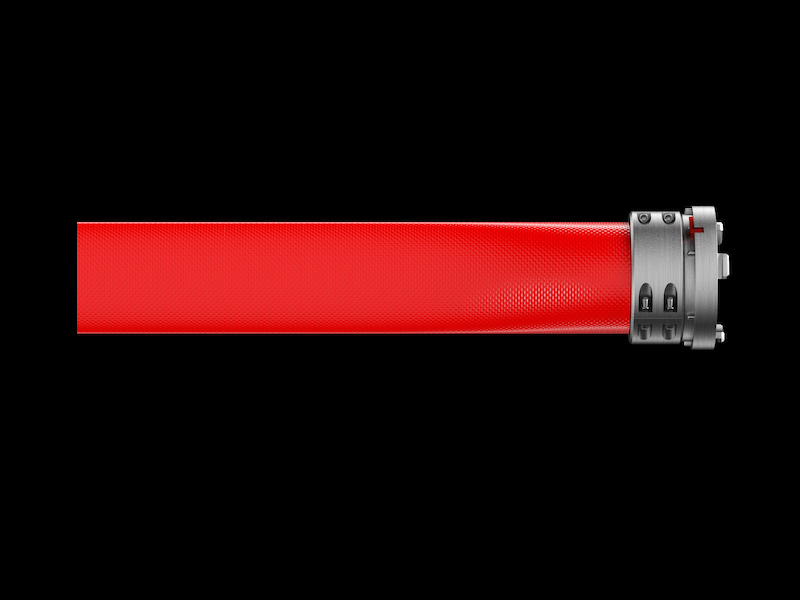
An air hose is a flexible tube designed to convey compressed air from a supply source, such as a compressor, to tools, machinery, or pneumatic systems. Common materials include rubber, PVC, polyurethane, and hybrid compounds, each offering different levels of flexibility, weight, and durability.
Air hoses are widely used in:
- Manufacturing and assembly lines for powering air tools, actuators, and clamping devices.
- Construction and automotive shops for impact wrenches, nailers, spray guns, and inflation.
- Agriculture and light industry where compressed air supports pumps, valves, and small machinery.
Although air hoses and hydraulic hoses may look similar from the outside, they are designed for very different media, pressures, and operating conditions. Choosing incorrectly can lead to leakage, burst failures, or serious safety hazards.
Criteria | Air Hose | Hydraulic Hose |
Conveyed medium | Compressed air or inert gases | Hydraulic oil or other hydraulic fluids |
Typical pressure range | Around 300–500 PSI for general industrial use | Often 3000–5000 PSI or higher |
Construction | Rubber, PVC, PU, or hybrid with 1–2 reinforcement layers | Rubber, thermoplastic, or PTFE with multiple steel or fiber reinforcements |
Flexibility | Generally more flexible and lighter | Often stiffer due to higher pressure design |
Temperature range | Wide range depending on material and specification | Wide range, selected for fluid and pressure |
Typical applications | Air tools, compressors, workshop and light process lines | Heavy machinery, presses, lifts, high-force equipment |
For compressed air systems, air hoses are the correct choice, while hydraulic hoses must remain dedicated to hydraulic oil circuits.
Air hoses can be classified by construction, mobility, pressure capability, and temperature resistance. Understanding the main types helps align hose performance with real‑world operating conditions.
A standard air hose is a straight, general‑purpose hose used to transfer compressed air from the compressor to tools or equipment. It is common in factories, garages, and maintenance facilities.
Key characteristics:
- Moderate pressure ratings that suit typical workshop and light industrial applications.
- Durable enough for daily use with air tools and inflation devices.
- Simple construction without auto‑retract mechanisms or special thermal insulation, which helps keep costs under control.
Standard air hoses made from rubber or quality hybrid materials remain popular because they maintain flexibility and resist abrasion in typical shop environments.
A retractable air hose is integrated with a spring‑ or motor‑driven reel so that the hose automatically rewinds into a compact housing after use. These systems are often mounted on walls, ceilings, or mobile frames.
Advantages:
- Tangle‑free storage that keeps floors clean and reduces trip hazards.
- Faster setup and recovery, saving time in garages and workshop bays.
- Space‑saving design that suits compact work areas or assembly lines.
Retractable air hose systems are best suited to light‑ and medium‑duty applications where convenience and floor safety are priorities.
A high‑pressure air hose uses additional reinforcement layers to safely carry higher pressures and withstand demanding service environments. These hoses are common in construction, mining, shipyards, and heavy industry.
Typical features:
- Multiple synthetic fiber or other high‑tensile reinforcement layers that increase strength and burst resistance.
- Working pressures significantly higher than standard air hoses, depending on size and design.
- Covers engineered for abrasion, oil mist, and weather exposure to extend service life in harsh conditions.
High‑pressure air hoses are used with powerful air tools, jackhammers, and long distribution lines where both pressure and flow requirements are demanding.
A heat‑resistant air hose is designed for high‑temperature environments, such as foundries, steel mills, glass works, and areas near hot engines or exhaust systems.
Key properties:
- Use of heat‑tolerant materials, such as EPDM or silicone, to maintain flexibility and integrity under elevated temperatures.
- Reinforced structure to prevent deformation and cracking during long‑term exposure to heat and pressure.
- Optional heat‑reflective or insulating outer layers to reduce heat absorption.
Heat‑resistant air hoses help protect both equipment and operators where conventional rubber or PVC hoses would age quickly or fail prematurely.
While the above hose types focus on compressed air, many industrial projects also require long‑distance, high‑volume fluid transfer, where TPU lay flat hoses have become a practical solution. These hoses are especially relevant in systems that combine pneumatic equipment with high‑capacity water or fluid handling.
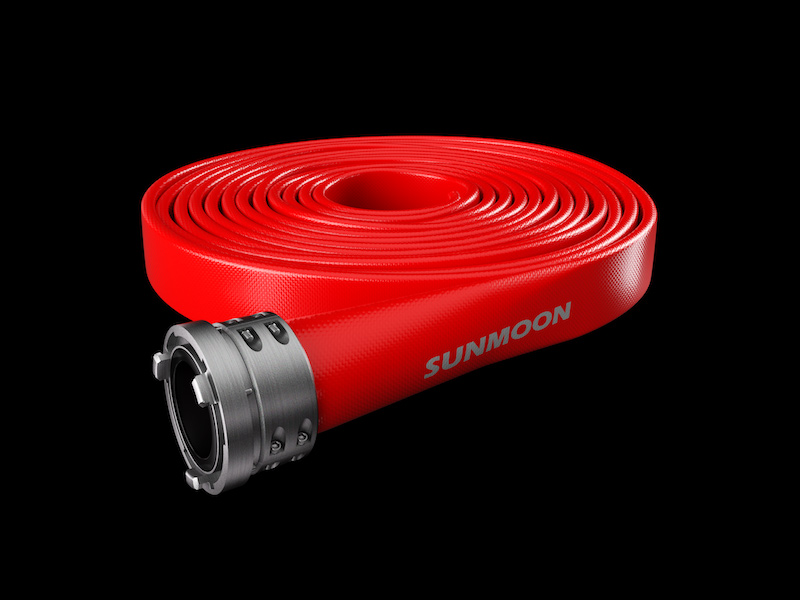
A TPU lay flat hose is a thermoplastic polyurethane hose with a through‑the‑weave construction that lies completely flat when not pressurized and becomes round under pressure. It typically uses a TPU tube and cover with a textile reinforcement layer.
Typical characteristics:
- High working pressure capacity, depending on hose size and construction.
- Excellent abrasion, chemical, and UV resistance for tough outdoor or mobile applications.
- Lightweight design that allows long lengths to be coiled, transported, and deployed quickly.
These properties make TPU lay flat hoses suitable for applications such as firefighting, irrigation, dewatering, and temporary industrial pipelines.

TPU lay flat hoses add value wherever large volumes of fluid must be moved quickly and repeatedly. Typical application scenarios include:
- Temporary or semi‑permanent pipelines in municipal projects, emergency drainage, or bypass pumping.
- Remote project sites where transport and rapid deployment of rigid pipelines are difficult or costly.
- Operations where compressed‑air tools operate alongside high‑volume water or fluid transfer, such as drilling, dewatering, or agricultural irrigation.
By combining conventional air hoses with TPU lay flat hoses, operators can build flexible, modular infrastructure that adapts to changing project needs.
Selecting the right type of hose is a safety‑critical decision that also influences energy consumption, tool performance, and overall equipment life. The following factors provide a practical framework.
Start by clarifying how and where the hose will be used.
Key questions:
- Is the hose used indoors, outdoors, or both?
- Is it exposed to oils, chemicals, UV light, or rough surfaces?
- Is the work area compact or spacious, and is hose storage a concern?
For example, a compact workshop may benefit from retractable hoses, while larger, rugged sites may require heavier high‑pressure hoses.
The hose must safely handle the maximum working pressure of the system.
Guidelines:
- Ensure the hose's working pressure meets or exceeds the highest system pressure.
- Allow a safety margin to cover pressure spikes and extend service life.
- For high‑demand tools or long runs, high‑pressure reinforced hoses help prevent swelling or failure.
Operating too close to the rated limit for long durations can reduce service life and increase risk.
Temperature affects flexibility, aging, and safety.
Consider:
- High ambient temperatures, hot surfaces, or hot air streams, which may require heat‑resistant hoses.
- Low temperatures, where rubber and certain PU formulations maintain flexibility better than PVC.
- Media temperature, especially if air or fluids are hot, and ensure the hose rating is suitable.
Matching hose material and construction to realistic temperature conditions is essential for consistent performance.
Hose length influences pressure drop, ergonomics, and cost.
Recommendations:
- Measure the required distance from the air source to the point of use, then add a reasonable allowance for routing.
- Avoid unnecessary extra length, which increases pressure loss and can clutter the workspace.
- Use strategically located outlets or manifolds to reduce extreme hose runs.
A balanced length provides enough reach while maintaining pressure and ease of handling.
Inner diameter has a direct impact on airflow and tool performance.
Points to note:
- High‑demand tools, such as large impact wrenches or sanders, generally require larger inner diameters to avoid pressure drop.
- Light tools and inflation tasks can often use smaller diameters, improving flexibility and reducing weight.
- Longer runs typically benefit from a slightly larger inner diameter to maintain adequate flow and tool performance.
Consulting manufacturer flow charts or engineering data helps match hose diameter to air consumption and distance.
Material selection determines how a hose behaves throughout its life cycle.
- Rubber: Very flexible, durable, and abrasion‑resistant, with good low‑temperature performance, though heavier and usually more costly.
- PVC: Lightweight and economical, but can be stiffer in cold conditions and less robust under high mechanical stress.
- Polyurethane (PU): Offers excellent abrasion resistance, low weight, and good flexibility, making it a strong choice for high‑performance hoses.
- TPU (thermoplastic polyurethane): Used extensively in lay flat hoses for demanding fluid transfer, due to high tensile strength, wear resistance, and chemical resistance.
Choosing a material that matches both environmental conditions and mechanical demands is essential for reliability and total cost control.
Even a robust hose can fail prematurely if fittings are poorly matched or installed.
Best practices:
- Select fittings rated for the same pressure and media as the hose, and compatible with hose material.
- Use proper clamping or crimping techniques to prevent leaks and blow‑offs.
- Standardize connector types across the workshop or plant to simplify maintenance and reduce downtime.
Routine inspection of fittings is important because many leaks originate at connection points rather than in the hose body.
Use this step‑by‑step checklist when selecting an air hose for a new system or upgrade:
1. Confirm the medium (compressed air, water, or other fluid).
2. Identify maximum working pressure and define a safety margin.
3. Determine ambient and media temperature ranges.
4. Evaluate the working environment for abrasion, chemicals, UV, and routing constraints.
5. Choose the hose type: standard, retractable, high‑pressure, or heat‑resistant.
6. Select an appropriate hose length and inner diameter for the required flow and distance.
7. Specify fittings and connectors compatible with system standards and safety requirements.
Following a clear selection process helps align technical needs with safety and budget targets.
In many projects, air hoses operate alongside high‑capacity fluid transfer lines, where TPU lay flat hoses can deliver significant advantages.
Typical uses include:
- Temporary or semi‑permanent transfer of water or other compatible fluids during construction, maintenance, or emergency response.
- Remote or large‑area sites where lightweight hose reels improve logistics, deployment time, and retrieval.
- Integrated systems where compressed air tools and high‑volume fluid transfer must work together seamlessly.
In these scenarios, TPU lay flat hoses complement traditional air hoses and expand the capability of the overall system.
Selecting the right air hose or TPU lay flat hose is more than a catalog choice; it is an engineering decision that directly influences safety, efficiency, and long‑term operating cost. For projects involving high pressure, long distances, or demanding environments, it is essential to work with a specialized team that understands both pneumatic and fluid transfer requirements.
Provide the key details of your application—working pressure, medium, temperature, distance, and environment—to a dedicated hose engineering team, and request a customized configuration that matches your technical and commercial goals. This targeted consultation helps you avoid under‑ or over‑specification and ensures your hose system is built to support reliable performance in global projects.
In workshops, standard rubber or hybrid air hoses are most common because they provide a good balance of flexibility, durability, and cost for everyday tools and inflation tasks.
An air hose should not be used for hydraulic oil, because it is not designed for the high, static pressures and pressure cycling typical in hydraulic systems, nor for the specific compatibility requirements of hydraulic fluids.
A heat‑resistant air hose should be selected when the hose will be exposed to high ambient temperatures, hot equipment surfaces, or hot air streams, such as near furnaces, engines, or exhaust lines.
TPU lay flat hoses are generally lighter, more abrasion‑resistant, and easier to store and deploy over long distances, which makes them particularly suitable for high‑volume fluid transfer and temporary pipeline applications.
Air hoses and TPU lay flat hoses should be visually inspected before each use, with more detailed checks scheduled regularly based on operating hours, pressure levels, and environmental severity, and replaced when signs of wear or damage appear.


