

Views: 222 Author: Loretta Publish Time: 2026-01-22 Origin: Site


Content Menu
● Key Design Features and Structure
● Main Benefits of JIC Fittings
● Common Types of JIC Fittings
● Typical Applications and Industries
● JIC vs Other Hydraulic Fitting Standards
>> Comparison of Major Fitting Types
● How JIC Fittings Work in a Hydraulic System
● Step-by-Step: Correct JIC Assembly and Tightening
● Common Failure Modes and How to Avoid Them
● Material Selection and Environmental Considerations
● Expert Tips for Selecting the Right JIC Fitting
● When JIC Is (and Is Not) the Best Choice
● Clear Call to Action: Get Expert Support for Your JIC and Hose Assemblies
>> 1. What does “JIC” stand for in fittings?
>> 2. Are JIC and SAE 45° fittings interchangeable?
>> 3. Do JIC fittings require thread sealant or tape?
>> 4. How many times can a JIC fitting be reused?
>> 5. How do I identify a JIC fitting in the field?
JIC fittings are 37° flare hydraulic connectors designed to deliver a secure, leak-resistant metal-to-metal seal in high-pressure fluid power systems, making them a core standard for modern hydraulic hose and tube assemblies. By understanding how JIC fittings work, where they are used, and how they compare to other standards, engineers and buyers can select safer, longer-lasting connections for demanding applications.

JIC (Joint Industry Council) fittings are 37° flare hydraulic fittings with UNF threads that comply with the SAE J514 standard and create a metal-to-metal cone seal between male and female ends. The 37° cone surfaces mate under torque to form a tight mechanical seal without relying on thread sealant or O-rings, providing excellent leak resistance in high-pressure systems.
These fittings are classified as parallel-thread compression fittings, where sealing occurs on the cone seat rather than on the threads themselves, which allows repeated assembly and disassembly with minimal damage when correctly torqued. JIC fittings are widely standardized, making them interchangeable across many manufacturers and easy to source globally.
A typical JIC fitting consists of a male flare, a female flare, and a nut or sleeve to secure the connection to tubing or hose. The male fitting has an external 37° conical seat and UNF straight threads, while the female fitting features a matching internal 37° cone and straight threads that draw the cones together under tightening.
Important design characteristics include:
- 37° flare sealing surface: The dual cones form a metal-to-metal seal that handles high pressure and vibration.
- UNF straight threads: Fine-pitch threads provide precise tightening and repeatable torque control.
- No elastomeric seal: JIC relies on geometry and surface finish, reducing dependence on O-rings that can age or swell.
For tube connections, a nut and sleeve (ferrule) are used to clamp the flared tube against the male cone, distributing stress and helping prevent tube cracking at the flare.
JIC fittings are favored in hydraulic systems because they offer a strong balance of pressure capability, reusability, and standardization.
Key advantages include:
- High-pressure capability: The 37° flare and metal-to-metal seat handle typical hydraulic pressures and dynamic loads.
- Excellent leak resistance: Properly assembled JIC connections maintain tight seals without thread sealant.
- Easy assembly and service: Compression-style design supports multiple disassembly and assembly cycles if not over-torqued.
- Global standardization: Defined by SAE J514 and widely used in North America and beyond, simplifying design and maintenance.
- Material versatility: Available in carbon steel, stainless steel, and brass for different environments and fluid types.
When correctly specified and installed, these fittings improve system uptime, reduce fluid loss, and lower maintenance costs over the life of hydraulic equipment.
JIC technology is available in a wide range of connector families to support hoses, tubes, adapters, and protective end closures.
Main types include:
- JIC hose fittings
These connect hydraulic hoses to other components using a 37° flare end and are often crimped or reusable depending on maintenance needs.
- JIC hydraulic hose ends (crimp and reusable)
- Crimp fittings provide permanent, high-integrity hose connections in production and OEM assembly.
- Reusable JIC fittings allow on-site hose replacement without special crimp equipment, useful for maintenance in the field.
- JIC caps and plugs
Threaded caps protect male ends, and plugs protect female ends or temporarily close circuits, limiting contamination and fluid loss during service.
- JIC adapters
JIC-to-JIC, and cross-standard adapters such as JIC to NPT, JIC to BSP, and JIC to ORFS, are used to integrate components built to different regional standards or legacy systems.
For better user experience, a simple visual chart summarizing these types and their typical use cases can be inserted in this section.
Because of their reliability and pressure rating, JIC fittings are used across agriculture, construction, mining, transportation, and marine hydraulic systems.
Representative applications include:
- Agricultural machinery: Tractors, harvesters, and implements use JIC connections in steering, lifting, and brake hydraulics.
- Construction and heavy equipment: Excavators, loaders, bulldozers, and cranes rely on JIC to connect cylinders, pumps, and motors.
- Mining, oil, and gas: Drilling systems, mud pumps, and fracturing equipment use JIC for high-pressure fluid circuits.
- Industrial production lines: Presses, injection molding machines, and automated lines use JIC fittings for compact, serviceable hydraulic manifolds.
- Trucks and commercial vehicles: High-temperature, high-pressure oil lines and auxiliary hydraulics often use JIC connectors.
- Marine and offshore: Stainless steel JIC fittings are deployed in shipboard hydraulics and port or platform equipment where corrosion resistance is critical.
Here, a flow diagram showing how JIC-connected components interact in a typical hydraulic system (pump → valve → cylinder → return line) can provide a clear visual overview.
To help engineers avoid misapplication, it is essential to understand how JIC compares with other common hydraulic fitting standards.
Fitting type | Seal principle | Typical flare / seat angle | Thread style | Pressure suitability | Typical applications |
JIC | Metal-to-metal on 37° flare cone | 37° flare | UNF straight thread | Medium to high hydraulic pressure | Industrial hydraulics, mobile equipment, aerospace derivatives |
SAE 45° flare | Metal-to-metal on 45° flare | 45° flare | Typically UNF | Low to medium pressure | Automotive, refrigeration, light industrial |
NPT / NPTF | Thread interference with sealant | Tapered threads | NPT / NPTF taper | Varies; prone to galling | Low-cost plumbing, legacy hydraulic circuits |
ORFS (O-Ring Face Seal) | Elastomeric O-ring on flat face | 0° flat face with O-ring | Straight threads | High to very high pressure | Heavy duty and high-vibration hydraulics |
JIC and SAE flare fittings are not interchangeable because their seat angles differ (37° vs 45°), and mixing them can cause misalignment, poor contact, and leaks or failures. Similarly, combining JIC with tapered thread fittings without proper adapters increases the risk of cross-threading, insufficient engagement, and unsafe assemblies.
A small angle-comparison diagram showing 37° vs 45° flare profiles can be inserted alongside this table to support visual understanding.
When a JIC male and female fitting are tightened, the two 37° cones contact first, then deform microscopically under torque to create a uniform metal-to-metal seal. Because sealing occurs at the flare rather than in the threads, thread damage or contamination has less direct impact on seal integrity, although good thread condition is still required for proper alignment and load transfer.
In operation:
1. System pressure pushes fluid against the flare surfaces, enhancing the contact pressure of the cone-to-cone interface.
2. Vibration and pressure cycling are absorbed by the angled metal interface and by the elasticity of the tubing or hose.
3. Properly supported lines and correct torque help maintain long-term sealing without frequent retightening.
This mechanism makes JIC a robust, predictable option for designers who need repeatable performance with manageable assembly procedures.
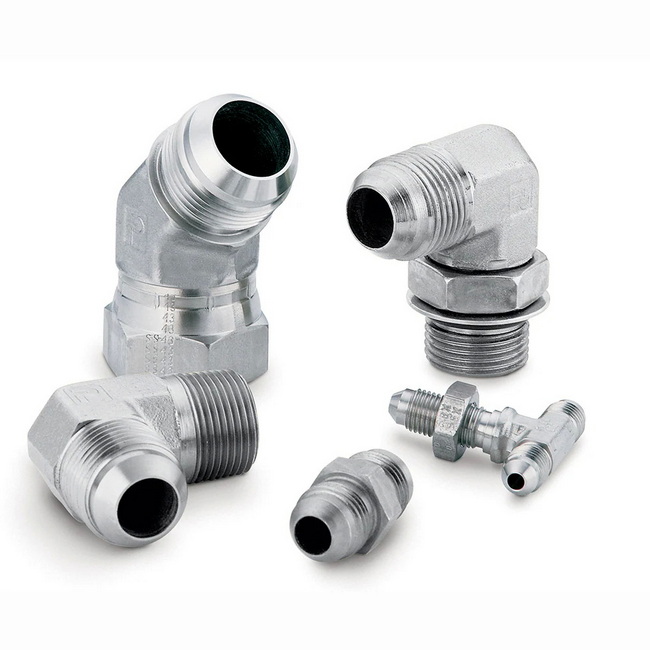
Many leakage issues trace back to incorrect assembly rather than product defects, so a clear, repeatable installation process is crucial.
Recommended steps for assembling JIC 37° fittings:
1. Inspect components
- Confirm thread type and size; verify both ends are 37° JIC, not SAE 45° or another standard.
- Check the cones for scratches, dents, or contamination that could compromise the metal-to-metal seal.
2. Prepare sealing surfaces
- Clean threads and cone seats with lint-free cloth; avoid abrasive tools.
- Lightly lubricate threads and cone with compatible hydraulic fluid or light oil to reduce galling.
3. Align and hand-tighten
- Bring the mating parts together in line; avoid side-loading the threads.
- Turn the nut or female fitting by hand until the cones first contact and resistance is felt.
4. Tighten to specification
- Use two wrenches: one to hold the body, one to turn the nut, so the tubing or hose does not twist.
- Follow manufacturer torque values or “flats from wrench resistance” (FFWR) guidelines, which indicate how many wrench flats to rotate after first resistance.
5. Check for leaks
- Pressurize the system gradually and inspect for weeping at the cone interface.
- If leaking, slightly tighten within allowed limits; if leakage persists, disassemble and inspect for damage.
A simple torque-versus-size table or FFWR chart embedded here will significantly improve user experience for maintenance technicians.
Even high-quality JIC fittings can leak or fail when misapplied, over-tightened, or combined with incompatible components.
Typical issues include:
- Over-tightening: Excess torque can gall the cone surfaces, distort the flare, and create micro-cracks that lead to leaks.
- Under-tightening: Insufficient torque prevents full cone contact, leaving a narrow sealing line that is vulnerable to pressure spikes.
- Misalignment and side loading: Bending force at the connection point can concentrate stress on one side of the cone, accelerating wear.
- Seat damage or contamination: Embedded particles or machining marks act as leak paths and can worsen under pressure cycling.
- Mixing standards: Attempting to mate JIC to SAE 45° or other flare types without an adapter usually results in poor sealing and should be avoided.
Adopting clear installation procedures, training, and periodic inspection greatly extends the service life of JIC-based systems, especially in high-vibration mobile equipment and heavy industry.
Choosing the right JIC material is essential to match system pressure, fluid chemistry, and environmental exposure.
Common material options include:
- Carbon steel: Standard choice for industrial and mobile hydraulics where corrosion risk is moderate; often zinc-plated for improved durability.
- Stainless steel: Preferred in marine, offshore, and food or chemical processing where corrosion resistance is critical.
- Brass: Used in lower-pressure or specialized fluid systems where good machinability and moderate corrosion resistance are needed.
In aggressive environments, using stainless steel JIC fittings with compatible stainless tubing and proper protective routing (clamps, sleeves, covers) helps prevent pitting and thread seizure over time.
For engineers and buyers, a structured selection checklist improves both safety and lifecycle cost.
When specifying JIC fittings, consider:
1. Operating pressure and safety factor
- Ensure the selected fitting and hose or tube combination meets or exceeds maximum system pressure with an appropriate safety margin.
2. Fluid type and temperature
- Check material compatibility with hydraulic oil, synthetic fluids, or special media, and confirm temperature limits for both fitting and sealing surfaces.
3. Connection type
- Decide whether hose ends, tube fittings, adapters, or bulkhead connections are needed for the layout.
4. Standard compatibility
- Map all existing ports and components (NPT, BSP, ORFS, metric) and use JIC adapters where necessary rather than forcing mismatched parts.
5. Serviceability
- In field-service environments, favor configurations that allow easy access and clear wrenching space to avoid accidental over-torque.
Adding a decision flowchart (“Do you need to connect hose to valve?” → “What pressure?” → “Which JIC family?”) will guide users visually through the selection process.
JIC fittings are often the best choice for medium-to-high-pressure industrial and mobile hydraulics where robust, re-serviceable connections are needed. They balance cost, availability, and performance, and are particularly attractive in systems with frequent maintenance or retrofits.
However, other standards may be more suitable when:
- Very high pressures or severe vibration make face-seal or O-ring fittings (such as ORFS) a safer option.
- Space constraints favor compact proprietary connector systems or manifold-mounted interfaces.
- Strict zero-leak requirements in certain industries call for O-ring-based or welded connections rather than metal-to-metal flares alone.
A short application matrix graphic showing “Best for / Acceptable / Not recommended” by fitting type and pressure range can support quick design choices.
Choosing the right JIC fittings, hose materials, and adapters is critical to building safe, reliable, and efficient hydraulic systems, especially when operating at high pressure or in harsh environments. To reduce leakage risk, extend component life, and simplify maintenance, work with an engineering-driven manufacturer that understands both fittings and flexible hose technologies.
If your equipment involves high-pressure lines, TPU layflat hoses, or complex multi-standard assemblies, contact our engineering team to review your specifications, recommend the appropriate JIC configurations, and support you from design through production. Reach out today to request a technical consultation or a customized quotation for JIC fittings and compatible hose assemblies tailored to your application.
Contact us to get more information!
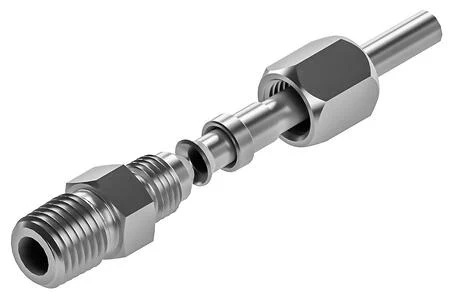
JIC stands for Joint Industry Council, referring to a family of 37° flare hydraulic fittings standardized under SAE J514. This designation identifies fittings that use a 37° metal-to-metal cone seal with UNF straight threads.
No, JIC and SAE flare fittings are not recommended to be interchanged because they use different flare angles (37° vs 45°). The mismatch prevents proper seating and can cause leaks, thread damage, or even fitting failure over time.
In general, JIC fittings seal at the metal cone, not on the threads, so thread sealant or tape is not required and can even interfere if misused. Only tapered thread adapters used in combination with JIC, such as NPT ports, may require suitable thread sealant.
JIC fittings can be reassembled multiple times if the cones and threads remain undamaged and are tightened within the recommended torque range. However, any fitting showing galling, visible cracks, or deep scratches on the seat should be replaced rather than reused.
To identify a JIC fitting, look for a 37° flare seat, UNF straight threads, and matching male and female cone geometry. Many manufacturers also mark part numbers or standard designations on the hex flats, which can be cross-checked against catalog data for confirmation.
1. https://www.strongflex.com/what-are-jic-fittings/
2. https://www.hydraulicsdirect.com/articles-hd/what-are-jic-fittings
3. https://www.brennaninc.com/how-to-assemble-and-tighten-jic-37-degree-fittings
4. https://cntopa.com/news/sae-vs-jic-hydraulic-fittings-what-is-the-difference
5. https://www.titanfittings.com/articles/differences-and-similarities-between-jic-and-npt-fittings
6. https://www.mfcp.com/blog/an-jic-37-flare-fittings
7. https://www.malonespecialtyinc.com/jic-jis-fittings/
8. https://www.strongflex.com/jic-fittings-vs-jis-fittings/
9. https://www.strongflex.com/project/jic-fitting/
10. https://www.strongflex.net/hydraulic-fitting-and-machine/hydraulic-fittings/


