


Content Menu
● Why Flanged Joints Are So Important
● Main Components of a Flanged Joint
>> Flange
>> Gasket
>> Bolting
● Common Types of Flange Joints
>> Blind Flange
● Comparison of Common Flange Types
● Materials Used for Flanges and Flange Joints
● How Flanges Are Manufactured
>> Cast Flanges
>> CNC Machining and Hybrid Manufacturing
● How a Flange Joint Is Assembled
● Common Causes of Flanged Joint Failure
● Flange Joints vs Welded Joints
● Where TPU Layflat Hoses Fit in Systems Using Flange Joints
● When to Consider Flanged Joints in a Project
● Build Safer, Maintainable Piping and Hose Systems
>> 1. What is the main purpose of a flange joint?
>> 2. What are the most common types of flanges?
>> 3. How do I choose the right gasket for a flange joint?
>> 4. Why do flange joints leak?
>> 5. Are flanged joints stronger than welded joints?
A flange joint is a detachable mechanical connection between pipes, valves, or equipment using bolted flanges with a gasket to create a leak‑tight seal in pressurized piping systems. When correctly selected, installed, and maintained, flanged joints provide reliable performance, easy maintenance, and the flexibility to modify or extend pipelines without cutting or welding.[1][2][3]
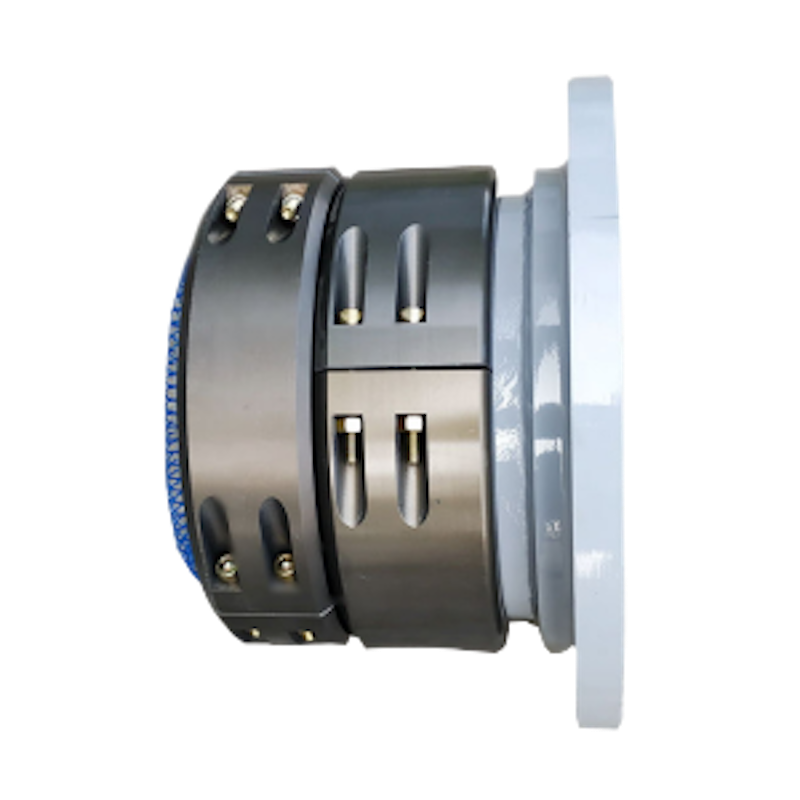
A flange is a disc‑ or ring‑shaped component with bolt holes and a machined sealing face that attaches to the end of a pipe, valve, or fitting. When two flanges are brought together with a gasket between them and tightened with bolts, they form a flange joint capable of withstanding internal pressure, temperature, and external loads.[3][4][1]
Typical applications include:
- Process and utility piping in refineries, chemical plants, and power stations.[5][1]
- Water, wastewater, and fire‑protection networks where rigid yet removable joints are required.[6][5]
- Heat exchangers, pumps, valves, and pressure vessels that must be periodically opened for maintenance.[7][1]
Flanged joints are critical because they combine mechanical strength with maintainability in complex piping systems. When designed and assembled correctly, they can deliver long‑term, leak‑free service even under high pressure, high temperature, and cyclic loading.[1][3][5]
Key functions include:
- Providing a strong, rigid connection between pipes, valves, and equipment.
- Allowing sections to be removed or replaced without cutting or re‑welding line pipe.
- Enabling reliable sealing through the correct pairing of gasket, flange finish, and bolt load.
- Compensating for small misalignments and thermal movements using appropriate flange types and gaskets.[4][1]
The flange typically has two main areas: the blade (disc) with bolt holes and sealing face, and the hub that transitions to the pipe. The blade contains the standardized bolt pattern and machined face, while the hub provides reinforcement and a welding or threading interface to the pipe.[4][1]
The gasket is a compressible element placed between flange faces to compensate for surface irregularities and provide a tight seal under bolt load. Depending on pressure, temperature, and media, gaskets may be soft, semi‑metallic, or metallic.[8][1]
Bolts and nuts generate the clamping force that compresses the gasket and holds the flanges together against internal pressure and external loads. Correct bolt selection, lubrication, and tightening sequence are essential to avoid leakage and uneven gasket stress.[8][1]
The six most common industrial flange types are weld neck, slip‑on, socket weld, threaded, lap joint, and blind, as standardized by ASME B16.5 and similar norms. Each type offers a different balance of strength, cost, and ease of installation.[5][4]
A weld neck flange has a long, tapered hub butt‑welded to the pipe, providing smooth stress transition and excellent fatigue resistance. This makes it suitable for high‑pressure, high‑temperature, and cyclic service in critical process lines, steam systems, and pressure vessels.[9][4][5]
Typical features:
- Full‑penetration butt weld that can be radiographed.
- Bore matched to pipe ID to minimize turbulence and erosion.[4]
The slip‑on flange slides over the pipe and is attached by fillet welds on one or both sides of the flange. It is easier to align and usually cheaper than a weld neck flange, but offers lower fatigue life and slightly lower pressure capability.[5][4]
Common uses:
- Low‑ to medium‑pressure water, air, and utility services.
- Systems where frequent changes are unlikely but cost is important.
A socket weld flange has a machined recess that receives the pipe end and is joined using a fillet weld around the outside. This design is often used for small‑diameter, high‑pressure piping where alignment and structural integrity are important.[10][11][4]
Typical uses:
- Small‑bore high‑pressure lines.
- Clean, leakage‑sensitive services where internal bore steps must be minimized.
Threaded flanges have internal threads that match the external threads on a pipe, allowing assembly without welding. They are suitable for low‑pressure, non‑critical services or locations where welding is undesirable.[11][10][4]
Typical applications:
- Low‑pressure utility lines.
- Temporary or short‑term piping.
A lap joint flange is used with a separate stub end that is butt‑welded to the pipe, while the loose flange ring can rotate to align bolt holes. This configuration is valuable where frequent disassembly or orientation adjustments are required, or where expensive alloy materials are limited to the stub end.[12][1]
A blind flange is a solid plate used to close the end of a pipe, valve, or nozzle with bolt holes around the perimeter. Blind flanges allow pressure‑tight isolation, hydrostatic testing, and future expansion of a line or vessel connection.[11][4]
Flange type | Connection to pipe | Typical pressure/temperature capability | Main advantages | Main limitations | Typical applications |
Weld neck | Butt weld to tapered hub | High pressure, high temperature, cyclic service | Highest integrity, good stress distribution, long fatigue life | Higher cost and welding skill requirement | Critical process lines, steam, high-pressure headers |
Slip-on | Fillet weld on one or both sides | Low to medium pressure | Easy alignment, lower cost, simple fabrication | Lower fatigue strength; not ideal for severe service | Water, air, general utility service |
Socket weld | Pipe inserted into socket, fillet welded | Medium to high pressure for small sizes | Good structural integrity, accurate bore alignment | Not suited for larger sizes; fillet weld inspection more difficult | High-pressure small-bore lines, hydraulic skids |
Threaded | Internal pipe thread | Low pressure, non-critical duties | No welding, easy assembly and disassembly | Limited to threaded pipe; potential for leakage at threads | Utility lines, small temporary connections |
Lap joint | Loose flange with welded stub end | Similar rating to mating stub end or flange | Flange can rotate, economical with expensive alloys | Slightly lower structural rigidity than weld neck | Corrosion-resistant process lines, frequent disassembly |
Blind | No pipe connection, solid plate | Same as matching flange rating | Complete isolation, easy pressure testing | High bending loads at large diameters | Line terminations, test points, future tie-ins |
Flanges are typically manufactured from carbon steel, stainless steel, and alloy steels, selected according to pressure, temperature, corrosion, and cost requirements. For low‑pressure or specialized environments, materials like ductile iron, copper alloys, or plastics may also be used.[13][6][7][5]
Common choices include:
- Carbon steel for cost‑effective, non‑corrosive or mildly corrosive services.
- Stainless steel for improved corrosion resistance in chemicals, seawater, and hygienic applications.[5]
- Alloy steels for high‑temperature or high‑strength performance in power and refinery service.[13][5]
Gaskets and bolting materials must be compatible with the flange material and service conditions to prevent galvanic corrosion and ensure long‑term integrity.[8][13]
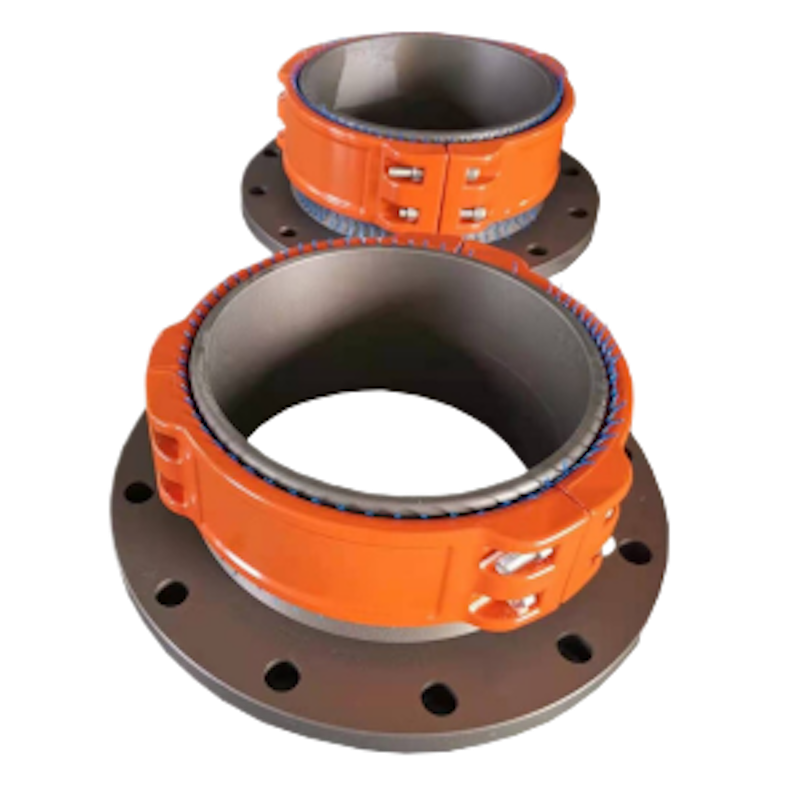
Flanges are produced by shaping metal into rings or discs and then finishing them by machining, drilling, and surface treatment to meet dimensional and performance standards. The main manufacturing methods are forging, casting, and cutting from plate, typically followed by CNC machining for final accuracy.[14][7]
Forged flanges are made by heating steel stock and deforming it under compressive forces using hammers, presses, or ring‑rolling equipment. The forging process refines grain flow, resulting in high strength, toughness, and fatigue resistance, which is why forged flanges are preferred for high‑pressure or high‑temperature service.[15][7]
Cast flanges are produced by pouring molten metal into a mold, allowing it to solidify, and then machining it to the required dimensions. Casting reduces material waste and cost but creates a less compact internal structure, making cast flanges more prone to defects and less suitable for severe high‑pressure duty.[7][14]
Forged or cast blanks are often finished with CNC turning and milling to achieve tight tolerances, accurate bolt circles, and precise sealing faces. Hybrid approaches that combine forging or casting with CNC machining allow manufacturers to balance strength, dimensional accuracy, and cost for different flange classes and sizes.[16][14]
Proper assembly is essential to achieve a safe, leak‑free flange joint, especially in high‑pressure systems. Following a structured procedure reduces gasket damage, misalignment, and uneven bolt loading.[8]
1. Verify components
- Confirm flange rating, facing type, gasket material, and bolting against design documents.
- Inspect for surface damage, corrosion, or contamination on flange faces and gasket.
2. Align flanges and pipes
- Bring flange faces parallel and concentric, within the specified tolerances.[8]
- Avoid using bolts as levers for alignment to prevent thread and hole damage.
3. Insert gasket
- Center the gasket between flange faces so it does not protrude into the bore or overlap bolt holes.[8]
- Use the correct gasket size and type for the flange facing and pressure.
4. Install and lubricate bolts
- Insert bolts and nuts, applying approved lubricant to threads and nut bearing surfaces where allowed.[8]
- Hand‑tighten all nuts to bring the flanges into uniform contact with the gasket.
5. Tighten in a star pattern
- Apply torque in multiple passes using a criss‑cross pattern to achieve uniform gasket compression.[8]
- Increase torque stepwise, then finish with a circular pass at final torque.
6. Verify and re‑check after pressurization
- Check for leaks during pressure testing and re‑torque if required by the gasket and bolting procedure.[8]
- Record torque values and inspection results as part of quality documentation.
Flanged joints can fail if installation, materials, or operating conditions do not match the design assumptions. Understanding frequent failure modes helps engineers and maintenance teams implement preventive measures.[7][8]
Typical issues include:
- Improper bolt loading due to under‑tightening, over‑tightening, or uneven tightening.
- Damaged, reused, or incompatible gaskets that cannot maintain sealing stress.[8]
- Misalignment that introduces bending stresses and uneven gasket compression.[8]
- Corrosion or erosion of flange faces, bolts, or gasket surfaces.[1][7]
- Thermal cycling and vibration that gradually loosen bolts or degrade gasket materials.[3][1]
A welded joint permanently fuses pipe sections, while a flanged joint uses bolted flanges with a gasket to create a detachable connection. Welded joints are lighter and often preferred for long, buried, or high‑integrity lines, but they are more difficult and costly to modify or inspect internally.[6][1]
Flanged joints, in contrast:
- Provide non‑permanent connections that can be opened for inspection or replacement.
- Simplify installation of valves, instruments, and equipment that must be removed periodically.
- Introduce potential leak paths at the gasket and bolts, making careful design and assembly essential.[1][8]
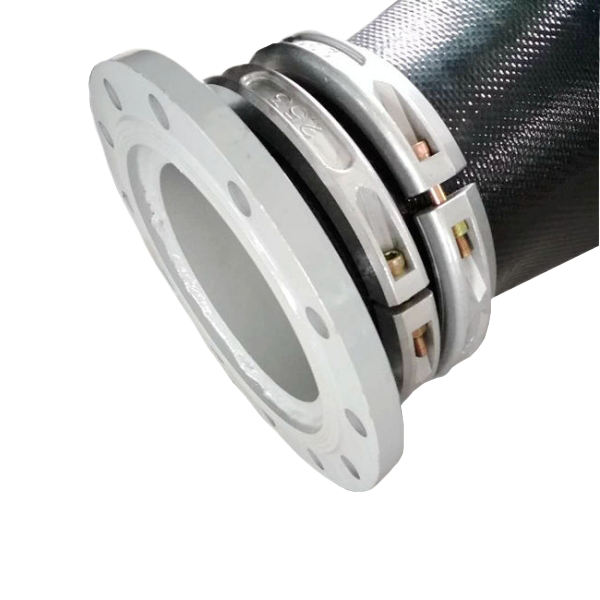
In many high‑flow water transfer, dewatering, irrigation, and temporary bypass projects, thermoplastic polyurethane layflat hoses are connected to manifolds, pumps, and steel pipelines using flanged couplings. TPU layflat hose offers low weight, flexibility, and good abrasion and chemical resistance for demanding outdoor or construction environments.
To integrate TPU layflat hose with flanged piping systems, it is important to use properly rated hose‑to‑flange adapters, compatible gaskets, and the same disciplined bolting and alignment practices used on rigid steel flanges.[1][8]
Flanged joints are a strong option when regular access, future modifications, or frequent testing of the system are expected. They are particularly useful where equipment must be removed for servicing, where pipelines may need tie‑ins, or where temporary flexible hoses must connect to permanent steel lines.[6][1]
For long, straight runs with minimal changes, welded joints often remain more economical, but combining welded lines with flanged equipment connections and hose interfaces can optimize lifecycle cost and maintainability.[6][1]
Engineering teams, contractors, and fleet operators who manage high‑pressure water transfer, industrial utilities, or temporary bypass systems should review flange joint selection, materials, and assembly practices together with their hose choices. Working with an engineering‑driven TPU layflat hose manufacturer that understands flanged connections, gasket compatibility, and real‑world pressure cycles helps achieve leak‑free, maintainable systems with lower downtime and better total cost of ownership.
The main purpose of a flange joint is to provide a detachable, leak‑tight connection between pipes, valves, and equipment so that systems can be assembled, maintained, and modified without cutting or welding.[3][1]
The most common types are weld neck, slip‑on, socket weld, threaded, lap joint, and blind flanges, as described in standards such as ASME B16.5.[4][5]
Gasket selection depends on flange facing, pressure class, temperature, media compatibility, and required tightness, with soft, semi‑metallic, and metallic gaskets each suited to different operating windows.[1][8]
Flange joints usually leak because of incorrect bolt tightening, gasket damage or incompatibility, flange misalignment, corrosion of sealing surfaces, or excessive thermal and vibration loading.[7][8]
Properly designed flanged joints can safely handle high pressures, but welded joints generally offer better structural continuity and lower leak risk over long runs, while flanges offer better maintainability at critical connection points.[6][1]
[1](https://www.sciencedirect.com/topics/engineering/flange-joint)
[2](https://www.darda.de/en/knowledge/flange-joint)
[3](https://www.youtube.com/watch?v=eAKiu5dgA8E)
[4](https://www.wermac.org/flanges/flanges_welding-neck_socket-weld_lap-joint_screwed_blind.html)
[5](https://www.worldofsteel.com/pages/types-of-flanges/)
[6](https://american-usa.com/products/ductile-iron-pipe-and-fittings/restrained-joint-pipe/flanged-joint-pipe)
[7](https://apiint.com/blog/how-are-flanges-manufactured/)
[8](https://www.nwpipe.com/app/uploads/2020/08/Flange-installation-D.Lay_.pdf)
[9](https://www.texasflange.com/blog/flange-types-asme-b16-5/)
[10](https://servicemetal.net/resource/what-are-the-different-types-of-flanges/)
[11](https://www.trupply.com/blogs/news/7-types-of-flanges-every-industrial-customer-should-know)
[12](https://www.unifiedalloys.com/blog/lap-joint-flanges-explained)
[13](https://www.asme.org/wwwasmeorg/media/resourcefiles/events/b16/b16_brochure-180323.pdf)
[14](https://lyncoflange.com/how-are-flanges-manufactured/)
[15](https://ssmalloys.com/forged-flanges-manufacturing-process/)
[16](https://www.longanflange.com/blog/hybrid-manufacturing-flange-production-process/)


