

Views: 222 Author: Loretta Publish Time: 2026-01-23 Origin: Site


Content Menu
● Core Functions and Benefits of Hose Ferrules
● Common Hose Ferrule Materials
>> Steel / Carbon Steel Ferrules
>> Other and Composite Materials
● Main Types of Hydraulic Hose Ferrules
>> Typical Ferrule Families by Hose Type
● How to Choose the Right Hose Ferrule
>> 1. Match Hose Type and Construction
>> 2. Check Working Pressure and Safety Margin
>> 3. Consider Operating Environment
>> 4. Material and Cost Strategy
>> 5. Follow Manufacturer Specifications
● How to Measure and Identify Ferrule Size
>> Step-by-Step Measurement Process
● Correct Installation: Step-by-Step Crimping Guide
>> Preparation
>> Ferrule and Fitting Assembly
● Safety Precautions and Common Mistakes
● Advanced Considerations for TPU Layflat and Thermoplastic Hoses
● Maintenance Best Practices for Long Service Life
● Key Applications of Hose Ferrules
● Take the Next Step: Get Expert-Engineered Hose and Ferrule Solutions
● Frequently Asked Questions (FAQ)
>> Q1. What does a hose ferrule actually do in a hydraulic system?
>> Q2. Can I reuse a hose ferrule after cutting the hose?
>> Q3. How do I know if a ferrule is over-crimped?
>> Q4. Which material should I choose for corrosive environments?
>> Q5. Why is matching brand and type between hose and ferrule important?
A hose ferrule is a critical safety component in hydraulic and fluid transfer systems because it creates a secure, leak-free connection between the hose and the fitting under pressure. Understanding how hose ferrules work, how to choose them, and how to install them correctly directly impacts the performance, service life, and safety of your entire system.

A hose ferrule is a short metal sleeve crimped or swaged over the outer cover of a hose to lock it mechanically to the fitting nipple and create a pressure-tight seal. In most hydraulic and industrial assemblies, the ferrule is part of a two-piece connection (ferrule plus insert) or a one-piece crimp fitting that is permanently attached using a crimping machine.
The ferrule grips the hose reinforcement to prevent blow-off at high pressure.
It acts as a weather seal, protecting the exposed reinforcement from corrosion, abrasion, and fatigue.
In thermoplastic and PTFE hose systems, specially designed ferrules ensure compatibility with the hose construction and working conditions.
Ferrules do much more than simply hold the hose in place; they are engineered to maintain system integrity over thousands of pressure cycles.
- Leak-free sealing: Properly crimped ferrules compress the hose uniformly around the nipple serrations, minimizing micro-gaps where fluid could escape.
- Mechanical retention: By anchoring into the hose reinforcement (steel wire, textile braid, or thermoplastic reinforcement), ferrules prevent the hose from backing off under pulsating pressure or vibration.
- Protection against external damage: Coated steel or stainless ferrules shield the cut hose end from moisture, chemicals, and physical impact in harsh environments.
- Improved safety and compliance: Correctly selected and installed ferrules help systems meet OEM and industry standards, reducing the risk of catastrophic hose failure.
Choosing the right material is essential to balancing pressure capability, corrosion resistance, cost, and weight.
Steel ferrules (often carbon steel) are the dominant choice in high-pressure hydraulic applications.
- Advantages: High strength, excellent fatigue life, good wear resistance, and cost-effective for most industrial systems.
- Typical applications: Construction machinery, mining equipment, heavy industrial machinery, and mobile hydraulics using spiral or braided hoses.
Often zinc-plated (yellow, black, or trivalent) to improve corrosion resistance in outdoor or mildly corrosive environments.
Stainless steel ferrules are used where corrosion resistance and cleanliness are critical.
- Advantages: Excellent resistance to moisture, salt spray, chemicals, and high temperatures; ideal where hygiene or long life is required.
- Typical applications: Marine systems, chemical processing, food and beverage, pharmaceutical production, and offshore hydraulics.
Brass ferrules are suitable for low-pressure, non-corrosive applications.
- Advantages: Easy to machine, good sealing in light-duty systems, and moderate corrosion resistance in clean environments.
- Typical applications: Light hydraulic systems, pneumatic lines, coolant circuits, low-pressure industrial air and water.
Some specialized systems use aluminum, plastic, or composite ferrules for weight reduction, non-metallic requirements, or specific chemical compatibility.
Used in sensitive electronic, pharmaceutical, or food applications where non-sparking or non-contaminating components are required.
Ferrules are typically matched to specific hose constructions such as wire-braided, spiral, thermoplastic, or PTFE hoses. Selecting the correct type ensures proper bite into the reinforcement and safe performance under rated pressure.
Ferrule family | Typical hose standard | System pressure level | Typical use case |
00110 / 00100 | SAE 100R1AT, EN 853 1SN, 1SC braided | Medium pressure | General industrial and mobile hydraulics |
00210 / 00200 | SAE 100R2AT, EN 853 2SN braided | Medium–high pressure | Heavy equipment, high-flow circuits |
00018 | SAE 100R7 / R8 thermoplastic | Low–medium pressure | Thermoplastic and TPU hose systems |
00400 | 4SP, 4SH, R12 spiral | High pressure | High-impulse, heavy-duty hydraulics |
00605 / 00621 | SAE 100R13, R15 spiral | Ultra high pressure | Extreme duty, construction, mining |
00TF0 | SAE 100R14 PTFE | Corrosion-resistant service | Chemical, food-grade, high-temperature |
Ferrules are also offered as one-piece and two-piece systems.
- Two-piece: Separate ferrule and insert; offers flexibility and is common in field assembly or OEM production lines.
- One-piece: Ferrule and nipple are permanently staked together at the factory; simplifies inventory and reduces assembly error risk.
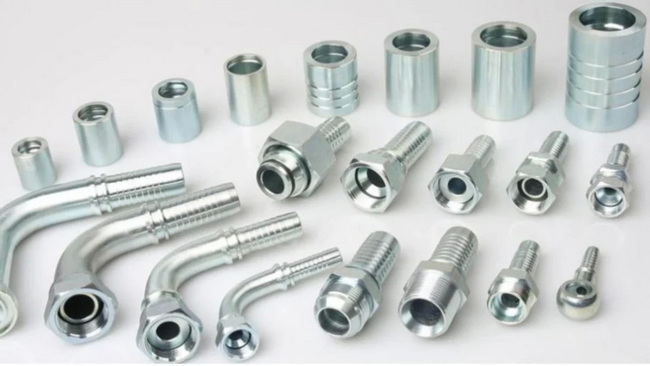
Correct ferrule selection requires considering both system conditions and hose construction.
Identify the hose standard: braided (R1AT, R2AT), spiral (4SP, 4SH, R12, R13, R15), thermoplastic (R7, R8, TPU), or PTFE (R14).
Select a ferrule series explicitly designed for that hose structure to ensure correct bite into reinforcement and safe retention.
Compare maximum working pressure of hose and ferrule; the complete assembly must meet or exceed your system pressure, including pressure spikes.
In high-impulse or severe-duty systems, choose ferrules tested with the hose at the required cycle and impulse ratings.
- Corrosion: Use stainless or heavily coated steel ferrules in marine, chemical, offshore, or wash-down environments.
- Temperature: Ensure ferrule and coating can withstand the fluid and ambient temperatures; stainless and high-grade steel perform better at elevated temperatures.
- Media compatibility: For aggressive chemicals or food-grade fluids, pair PTFE or compatible hoses with corrosion-resistant ferrules.
Steel ferrules: best balance of strength and cost for most hydraulic systems.
Stainless ferrules: higher initial cost but lower lifetime cost in corrosive or hygiene-critical environments.
Brass ferrules: economical for low-pressure and pneumatic systems but unsuitable for high-pressure hydraulics.
Always follow ferrule–hose matching charts from the hose manufacturer or trusted suppliers to avoid under-crimp, over-crimp, or incompatibility issues.
Mixing components from different brands without validation can compromise performance and may void warranties.
Accurate measurement is vital to avoid leaks, hose slippage, or reinforcement damage.
- Measure hose outer diameter (OD)
Insert the correct hose nipple or barb where required, then measure OD over the hose with the nipple in place, adding the manufacturer's recommended clearance. Use a caliper for precision, especially on reinforced or thermoplastic hoses.
- Measure ferrule inner diameter (ID)
With a vernier caliper, measure ferrule ID and confirm it is sized to fit snugly over the hose OD without cutting into the cover. The ID must allow proper compression when crimped but not be so loose that it cannot grip the reinforcement.
- Measure ferrule outer diameter (OD) and length
Measure OD to ensure the crimping machine dies can fully and evenly compress the ferrule. Measure ferrule length to confirm it covers enough of the hose reinforcement to achieve a secure crimp without interfering with adjacent components.
- Cross-check against specifications
Compare all measurements with the ferrule and hose manufacturer's tables before ordering or crimping.
Proper installation ensures the ferrule delivers its full sealing and retention capability.
Cut the hose square using a rotary blade or appropriate cutting equipment to prevent angled or frayed ends.
Clean the hose bore and cover to remove debris, rubber dust, or oil that might affect sealing.
- Select the correct ferrule and insert
Confirm hose type, size, and pressure, then choose the manufacturer-recommended ferrule and insert combination.
- Slide ferrule onto the hose
Place the ferrule over the hose end with the correct orientation and verify full coverage of the area that will be crimped.
- Insert the fitting (nipple)
Push the fitting into the hose bore until it reaches the designed insertion depth, ensuring the reinforcement is correctly positioned beneath the ferrule.
- Position assembly in the crimping machine
Set the crimping dies according to the specified crimp diameter for that hose–ferrule–fitting combination. Align the ferrule centrally within the dies to avoid uneven compression or deformation.
- Crimp and verify
Activate the crimping cycle and allow the machine to reach the target crimp diameter. Measure crimp diameter at several points around the ferrule to verify it is within the specified tolerance band, then inspect visually for flat, even crimp bands without cracks, bulges, or exposed reinforcement.
Even a high-quality ferrule will fail if used or installed incorrectly.
- Avoid over-tightening or over-crimping: Excessive compression can crush the hose reinforcement, reduce flow, and create stress points that lead to early failure.
- Do not under-crimp: Insufficient compression may allow the hose to blow off under pressure or leak at the connection.
- Avoid violent installation: Hammering or forcing components together can deform the ferrule or fitting and compromise sealing surfaces.
- Limit service life: Ferrules and hose assemblies have a finite life; long-term use under harsh cycles increases the risk of fatigue and leaks.
- Inspect regularly: Check for corrosion, deformation, cracks, leakage, or movement of the hose relative to the ferrule, especially in high-vibration systems.
For TPU layflat and thermoplastic hoses, ferrule selection must account for the unique mechanical behavior of these materials.
Thermoplastic and TPU hoses can expand and contract more under pressure and temperature changes than traditional rubber hoses, so ferrules must maintain grip without cutting into the softer cover.
Ferrules designed for R7/R8 thermoplastic hoses (such as the 00018 series) are engineered to distribute stress evenly across the hose wall for secure retention.
In flexible layflat hose applications (for example, irrigation, mining dewatering, temporary fluid transfer), ferrules should be paired with fittings and crimp settings verified for the hose's flat-to-round transition under pressure.
Because TPU layflat hoses are often used in long-length deployment and retrieval cycles, focusing on fatigue resistance and surface protection of the ferrule is essential to prevent coating damage and corrosion over time.
Consistent maintenance extends hose assembly life and minimizes unplanned downtime.
Schedule routine inspections for signs of leakage, hose cover blistering near the ferrule, or rust and pitting on the ferrule surface.
Replace assemblies immediately if there is visible movement between the ferrule and hose, or if the crimp bands are cracked or deformed.
In high-contamination environments, clean the ferrule area regularly to prevent buildup of chemicals, abrasive dust, or moisture that can accelerate corrosion.
Maintain records of installation date, operating pressure, and inspection findings to refine replacement intervals and improve system reliability.
Hose ferrules appear in nearly every fluid power and fluid transfer sector.
- Hydraulic systems: Pumps, motors, cylinders, and valves in construction, agriculture, mining, manufacturing, and mobile equipment.
- Industrial fluid handling: Water, oil, chemicals, and slurry transfer lines in plants and processing facilities.
- Automotive and aerospace: High-pressure fuel, brake, and lubrication lines requiring compact and highly reliable connections.
- Food, beverage, and pharma: When combined with stainless and PTFE hoses, ferrules support hygienic and cleanable hose assemblies.
In TPU layflat hose systems, ferrules are particularly valuable for temporary or mobile installations where fast deployment and retrieval demand robust yet lightweight hose assemblies.
Selecting and installing the right hose ferrule is essential for system safety, uptime, and total cost of ownership, especially when you are working with advanced TPU layflat and thermoplastic hose assemblies. If you are planning a new hydraulic or fluid transfer project, upgrading from traditional rubber hoses, or optimizing an existing TPU layflat hose system, now is the ideal time to consult an engineering-driven manufacturer that understands hose design, ferrule geometry, and real-world application demands.
Contact our expert team today to discuss your working pressure, media, and installation environment, and receive tailored recommendations for hose ferrules, crimp parameters, and complete TPU layflat hose assemblies. With application-specific guidance, prototype support, and long-term reliability testing, you can build safer, more efficient fluid transfer systems that are ready for the toughest operating conditions.
Contact us to get more information!
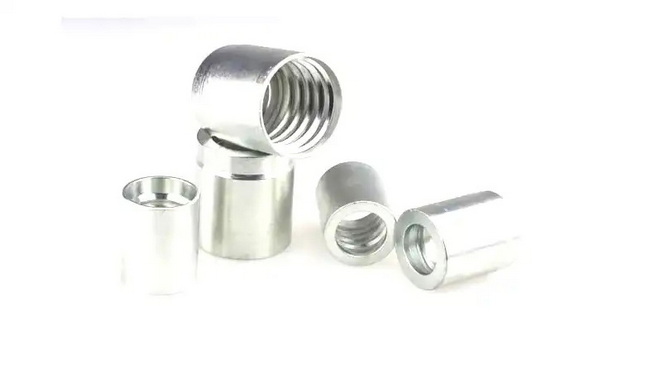
A hose ferrule mechanically locks the hose to the fitting and provides a leak-free seal by compressing the hose reinforcement around the fitting nipple under controlled crimping. This secure connection allows the system to operate safely at its rated pressure.
Most crimp ferrules used in hydraulic systems are designed for single use. Reusing them can lead to unpredictable retention and serious leakage or blow-off risks, so a new ferrule and proper crimp should always be used.
Typical signs of over-crimp include crushed hose reinforcement, reduced hose inner diameter, visible cracking or deformation of the ferrule, and crimp diameters that fall outside the specified tolerance when measured with calipers.
Stainless steel ferrules or ferrules designed for PTFE hoses are preferred in corrosive or hygiene-critical environments. They provide superior resistance to chemicals, moisture, and high temperatures compared with standard carbon steel ferrules.
Hose and ferrule systems are tested as a complete assembly. Mixing unapproved combinations can lead to improper crimping, reduced pressure rating, and loss of certification or warranty, increasing the risk of leaks and failures.
1. https://www.strongflex.com/what-is-a-hose-ferrule/
2. https://www.strongflex.net/ultimate-guide-to-choose-hydraulic-hose-ferrules/
3. https://cntopa.com/hydraulic-hose-ferrule-types-everything-you-need-to-know.html
4. http://www.njadapter.com/understanding-the-different-types-of-hydraulic-hose-ferrules.html
5. https://www.laikehydraulics.com/hose-ferrule-popular-science-analysis/
6. http://fittingsandadapters.com/howtoorcosif.html
7. https://www.sinopulse.cn/what-is-a-hose-ferrule-detailed-guide/


