

Views: 222 Author: Loretta Publish Time: 2026-01-14 Origin: Site


Content Menu
● Core Functions and Key Advantages
>> Core Functions of Duct Hoses
>> Operational and Safety Benefits
● Main Applications of Duct Hose
>> Building Ventilation and HVAC
>> Industrial Exhaust and Dust Collection
>> Other Typical Use Scenarios
● Common Types of Flexible Duct Hose
>> Silicone High Temperature Duct Hose
>> Flame Retardant and Anti Static Duct Hose
● How to Select the Right Duct Hose
>> Define Medium, Temperature, and Environment
>> Specify Size and Flow Requirements
>> Check Strength, Pressure, and Mechanical Properties
● Practical Installation Best Practices
>> Recommended Installation Steps
>> Safety and Compliance Considerations
● Maintenance and Troubleshooting
>> Routine Maintenance Checklist
>> Common Problems and Solutions
● Duct Hose and Rigid Duct Comparison
● When to Choose a High Performance TPU or PU Duct Hose
>> Ideal Application Scenarios
● How to Work With a Duct Hose Manufacturer
>> Information to Prepare Before Inquiry
>> Benefits of Custom Solutions
● Call to Action: Upgrade Your Duct Hose System Today
● FAQ
>> 1. What Is a Duct Hose Used For
>> 2. How Do I Choose Between PVC, PU, and Silicone Duct Hoses
>> 3. How Often Should Duct Hoses Be Cleaned or Replaced
>> 4. Can Duct Hoses Be Used for Corrosive Gases
>> 5. Why Is Anti Static or Conductive Duct Hose Important
A duct hose is a flexible conduit used to move air, fumes, dust, smoke, or light particles in industrial, commercial, and residential environments. It replaces or complements rigid ductwork where space is tight or frequent bending is required. Duct hoses are commonly made from PVC, PU, silicone, high temperature fabrics, and composite materials reinforced with steel wire or fabric layers.

- Promote air circulation and improve indoor air quality by supplying fresh air and discharging contaminated air.
- Remove harmful gases, fumes, and dust to support occupational safety and regulatory compliance.
- Assist in temperature control and heat exchange by transporting hot or cold air in HVAC and process systems.
- Flexibility and space saving: The hose can bend around obstacles, form complex layouts, and fit in narrow shafts, reducing the need for elbows and rigid fittings.
- Noise reduction: Flexible hoses help absorb vibration from fans and equipment, lowering transmitted noise.
- Multi property performance: Depending on material, duct hoses can be flame retardant, anti static, corrosion resistant, and electrically conductive.
- Improved ventilation efficiency: Smooth inner walls and optimized diameters help reduce pressure loss and maintain airflow.
- Environmental and worker protection: By removing dust and fumes from workshops, laboratories, and production lines, duct hoses protect workers and sensitive equipment.
- Extended service life: Correctly selected materials and reinforcement structures offer high wear resistance, pressure resistance, and aging resistance in industrial use.
- Building ventilation: Duct hoses connect to supply and exhaust outlets to discharge dirty air and bring in fresh air, improving room comfort.
- Air conditioning systems: Flexible duct hoses can replace sections of traditional metal ducts, enabling quick routing around beams, ceilings, and equipment.
- Renovation and retrofit projects: Flexible ducts are useful for projects where existing structures restrict rigid duct layouts.
- Workshop exhaust: Fabric or PVC ventilation hoses remove welding fumes, oil mist, solvent vapors, and other process exhausts from industrial workshops.
- Environmental dust removal: Ventilation cloth hoses connect to dust collectors to transport dust residues from cutting, grinding, and bulk material transfer systems.
- Process and chemical industries: Chemical resistant duct hoses handle gas phase chemicals and corrosive vapors at various temperatures and pressures.
- Mechanical noise reduction: Flexible hoses isolate vibration and pulsation between fans, blowers, and rigid ductwork.
- Agricultural and greenhouse ventilation: PU and PVC duct hoses help regulate temperature and humidity in agricultural buildings and greenhouses.
- Temporary and mobile ventilation: Lightweight hoses are often used for construction ventilation, shipbuilding, tunnels, and confined space air supply.
- Structure: PVC heavy duty laminated fabric reinforced with steel wire as the skeleton.
- Features: Lightweight, cost effective, good flexibility, suitable for general ventilation, air delivery, and light dust or fume extraction.
- Typical use: Building ventilation, temporary ventilation, air conditioning connections, and non abrasive dust transport.
- Structure: Transparent or colored polyurethane wall with embedded copper plated, galvanized, or stainless steel wire reinforcement.
- Features: High wear resistance, high tensile and tear strength, good resistance to mineral oil, chemicals, and UV.
- Typical use: Industrial dust collection, abrasive material suction, granule and powder conveying, and greenhouse environment regulation.
- Structure: Composite of silicone rubber, fiberglass cloth, and non combustible layers, reinforced with spiral galvanized or stainless steel strips.
- Temperature range: Typically from around minus 70 degrees Celsius to about 260 degrees Celsius, with short term peaks near 280 degrees Celsius.
- Typical use: High temperature exhaust, hot and cold air transport, engine and oven ventilation, and material recovery in thermal processes.
- Flame retardant versions: Designed to resist fire spread and maintain integrity during fire exposure, widely used in welding fume exhaust, equipment exhaust, and factory ventilation.
- Anti static or conductive options: Help prevent electrostatic buildup when transporting dusts and flammable gases, reducing explosion risk.
- Transported medium: Identify whether the system conveys clean air, dusty air, corrosive gases, abrasive particles, or high temperature fumes.
- Temperature range: Confirm minimum and maximum operating temperatures, including short term peaks, to choose a suitable material.
- Environment: Consider exposure to chemicals, UV, moisture, and outdoor weathering, as this affects material selection and service life.
- Inner diameter: Select a diameter that provides the required airflow without excessive pressure loss, based on fan capacity and system design.
- Length: Avoid hoses that are unnecessarily long, as this increases resistance and can reduce system efficiency.
- Bending radius: Ensure the hose minimum bending radius supports the planned routing without kinking or crushing.
- Pressure and vacuum rating: Confirm that the hose can safely withstand system working pressure and any vacuum loads.
- Reinforcement structure: Choose steel wire or fabric reinforcement according to required strength and flexibility.
- Durability: Evaluate wear, fatigue, and aging resistance to achieve the desired service life under continuous or cyclic operation.
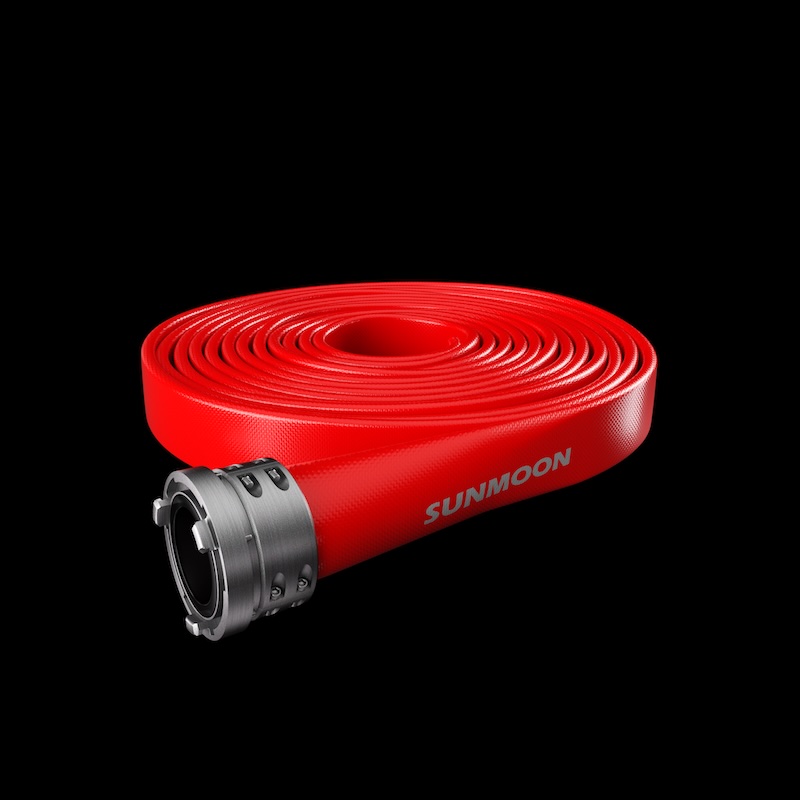
1. Measure accurately: Confirm the required hose length and diameter by measuring the exact distance between connection points.
2. Use proper connectors: Apply matching flanges, clamps, or couplings for airtight and mechanically secure connections.
3. Avoid sharp bends: Keep the bending radius above the hose minimum rating to prevent kinks and flow restrictions.
4. Support the hose: Use hangers, brackets, or saddles to prevent sagging, especially on longer horizontal runs.
5. Prevent torsion: Align hose and fittings during installation to avoid twisting, which can weaken the reinforcement over time.
- Fire walls and penetrations: Apply appropriate fire resistant treatment when duct hoses pass through fire rated structures.
- Grounding for anti static hoses: For conductive or anti static duct hoses, connect grounding points to dissipate static charges safely.
- Clear labeling: Mark flow direction, temperature limits, and maintenance schedules on critical hoses to support inspections and audits.
- Regular cleaning: Dust and dirt easily accumulate in ventilation ducts, so hoses should be cleaned periodically using vacuum equipment or duct cleaning tools.
- Connection inspection: Check hose ends, clamps, and joints for looseness, cracking, or damage, and repair or replace as needed to maintain airtightness.
- Avoid overstretching: Do not exceed recommended extension or compression limits to prevent premature fatigue or tearing of the hose body.
- Reduced airflow: Often caused by clogging, kinks, or crushed sections; visually inspect the line and remove obstructions or replace damaged parts.
- Local overheating: In high temperature systems, overheating may indicate that the hose material is not suitable for the actual temperature; upgrade to a high temperature resistant hose.
- Surface cracking or discoloration: Typically related to UV exposure, chemical attack, or aging; switch to more resistant materials in harsh environments.
Aspect | Flexible Duct Hose | Rigid Metal or Plastic Duct |
Installation flexibility | Highly flexible, easy to route around obstacles. | Limited flexibility, requires fittings and elbows. |
Space requirement | Saves space in tight shafts and ceilings. | Needs more clearance and fixed paths. |
Noise and vibration | Helps isolate vibration and reduce noise. | Transmits vibration more directly. |
Durability and cleaning | More sensitive to mechanical damage, cleaning requires care. | Very robust, internal cleaning is straightforward. |
Cost and speed | Lower labor cost and faster installation in many cases. | Higher installation time, materials may be more expensive. |
This comparison helps determine where flexible duct hose is the more efficient choice within a mixed system.
- Abrasive dust and particles: Handling wood chips, plastic pellets, grain, cement dust, or sand requires very high wear resistance along the hose wall.
- Frequent movement: In robotics, moving machinery, and mobile dust collectors, TPU or PU hoses withstand repeated bending without cracking.
- Outdoor exposure: PU hoses offer good resistance to UV and ozone, extending service life in outdoor or semi outdoor environments.
- Better life cycle cost: Although initial cost may be higher than standard PVC, less downtime and fewer replacements reduce total ownership cost in demanding processes.
- Stable performance across temperatures: Suitable TPU and PU formulas maintain flexibility at lower temperatures while resisting softening at moderate heat.
- Visual monitoring: Transparent PU hoses make it easy to check dust accumulation and blockages for proactive maintenance.
1- Application summary: Industry, installation environment, and purpose such as ventilation, exhaust, or dust collection.
2- Key technical parameters:
- Medium type and temperature range.
- Required inner diameter, length, and working pressure or vacuum.
- Standards or certifications such as flame retardancy level or anti static requirements.
3- Design constraints: Minimum bending radius, available installation space, and preferred connection types.
- Tailored material combinations: Temperature resistance, pressure resistance, flame retardant level, color, and wall thickness can be customized.
- Optimized lifespan: Matching the hose to the real working environment significantly extends service life and reduces unplanned shutdowns.
- Consistent multi site supply: A stable supplier ensures consistent specifications and quality across different locations.
If your ventilation or exhaust system handles high temperature air, abrasive dust, or complex routing, hose selection will directly affect safety, efficiency, and maintenance cost. A carefully specified duct hose can reduce energy loss, extend service life, and improve working conditions.
Review your current projects and identify where flexible duct hoses could solve space constraints, reduce noise, or handle demanding media more reliably. Then share your operating conditions, temperature range, and layout details with a professional duct hose engineering team. With accurate data and expert support, you can select or customize a duct hose solution that fits your application and helps your system run more safely and efficiently.

A duct hose is used to transport air, gases, fumes, smoke, dust, or light particles in ventilation, exhaust, and dust removal systems across industrial, commercial, and residential facilities.
PVC hoses are suitable for general ventilation and non abrasive air at normal temperatures. PU hoses are preferred for abrasive dust, particles, and outdoor exposure. Silicone hoses are mainly used for high temperature exhaust and hot air transport.
Cleaning frequency depends on dust load and working hours, but industrial systems should be inspected regularly and cleaned when visible buildup appears. Replacement is recommended when cracking, leaks, deformation, or serious wear are detected.
Duct hoses can be used for certain corrosive gases if the material is carefully selected according to the specific medium, temperature, and concentration. Chemical resistant PVC, PU, or composite hoses are generally recommended in these cases.
When transporting dusts or flammable vapors, static charges can accumulate on the hose surface. Anti static or conductive duct hoses, combined with proper grounding, help avoid sparks and reduce the risk of fire or explosion.


