

Views: 222 Author: Sunmoon Publish Time: 2026-04-20 Origin: Site


As an engineer who has stood at the edge of a flooded coal face in an emergency, I can say that frac water transfer hose and polyurethane high-pressure mining hose are no longer "optional accessories" – they are core safety infrastructure. In deep mines and shale plays, downtime measured in minutes quickly becomes a life‑safety and economic issue. [midwesthose]
A Frac Water Transfer Hose is a high-pressure, flexible layflat hose designed to move large volumes of water quickly over long distances during:
- Coal and metal mine dewatering and rescue. [hosesolutions]
- Shale gas and oilfield hydraulic fracturing ("frac") operations. [sinohose]
- Emergency flood response around industrial sites. [hosesolutions]
Compared with rigid steel and HDPE lines, polyurethane (TPU/PU) layflat hoses combine:
- High working pressure
- Excellent abrasion and chemical resistance
- Compact, lightweight, reelable design for rapid deployment and retrieval [midwesthose]
This combination is exactly why more rescue teams and mine operators now treat PU high-pressure layflat hose as a standard component in their emergency kits. [zyfire]
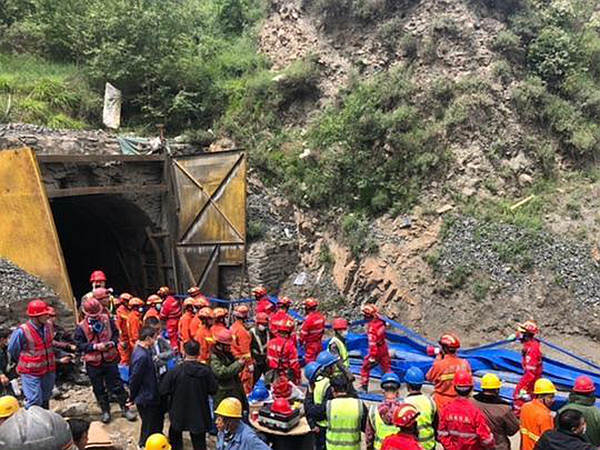
In the original Chinese case, the key pain point was not "Can we pump water?" but "Can we get the pipeline in place fast enough?" During a sudden inrush of water underground:
- Every minute of delay increases the risk of roadway collapse.
- Standing water threatens electrical systems and ventilation.
- Trapped workers rely on fast, stable dewatering to create survivable space.
Traditional options each have their advantages, but all struggle with speed:
- Steel pipe: High pressure, good durability, but heavy, slow to install, requires lifting equipment and precise alignment.
- Rigid PE/HDPE pipe: Corrosion-resistant and cost-effective, but still bulky and time‑consuming to join in confined headings. [global]
- Conventional hydraulic hose: Flexible and pressure‑resistant, but usually available only in short lengths, with high per‑meter cost.
In real rescue scenarios, the "deployment time" of the water discharge line often determines whether dewatering can start in tens of minutes or several hours. Polyurethane high-pressure mine rescue hoses directly solve this bottleneck by allowing long continuous lengths to be rapidly unreeled and pressurized. [zyfire]
From an industry specialist's view, modern PU frac water transfer hoses for mining and oilfield work share several core design features:
- Through-the-weave PU construction: Inner PU layer, polyester reinforcement, and outer PU sheath fused together for a single, robust structure. [zyfire]
- High working and burst pressure: Designed for demanding dewatering and water transfer applications in mines. [hosesolutions]
- Layflat, reelable body: Hose flattens completely when depressurized, dramatically reducing storage volume and simplifying handling. [sinohose]
- Abrasion and chemical resistance: PU is highly resistant to wear, many chemicals, and mine water contaminants, greatly extending service life. [mearthane]
For coal mine rescue, these advantages translate into:
- Faster deployment without cranes or heavy joining tools
- Longer continuous runs from shaft collar to deep headings
- Lower risk of joint leakage or failure under surge pressures
- Easier retrieval and re-use after the emergency
Modern mining PU layflat hoses typically have:
- Inner PU layer: Smooth bore to minimize friction loss and energy consumption. [sinohose]
- Reinforcement layer: High‑tensile polyester jacket providing tensile strength and pressure capability. [kuriyama]
- Outer PU layer: Abrasion‑resistant and UV‑stabilized coating to handle rough mine floors and sharp rock. [hosesolutions]
This architecture gives operators a hose that is simultaneously flexible, strong, and light, making it easier for small rescue teams to manage long lines without heavy machinery. [psiurethanes]
In the original Chinese application scenario, 50 m per roll is common for mine rescue because it balances:
- Enough length to reach deep headings quickly
- Manageable weight and size for manual handling in tight shafts
At each end of the roll, specialized mine‑rescue quick couplings are pre‑installed to allow:
- Rapid end‑to‑end connection of multiple hose sections
- High‑pressure, leak‑free performance during water transfer
- Secure, anti‑slip engagement even under vibration and surge loads
International mining hose suppliers also provide standard lengths such as 100 m and 200 m per reel for large dewatering projects, with customized lengths available on request. The key engineering principle is the same: fewer joints, faster setup, higher reliability. [kuriyama]
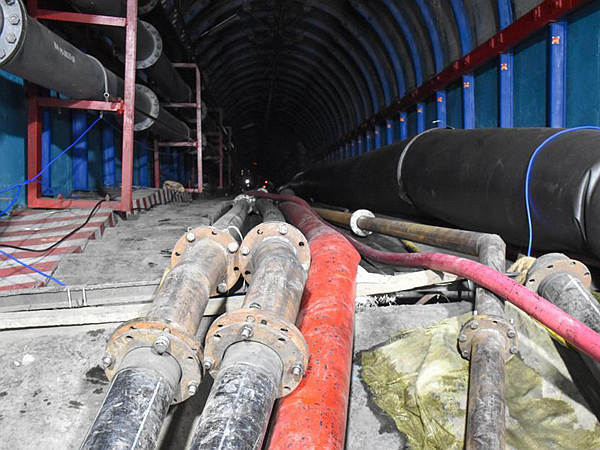
From a project and maintenance perspective, the choice between PU layflat hose and rigid pipe can be summarized as follows:
| Aspect | Polyurethane Layflat Hose | Steel / HDPE Pipe |
|---|---|---|
| Deployment speed | Very fast; unreeled in long lengths (midwesthose) | Slow; joint-by-joint assembly |
| Transport & storage | Compact, layflat, light weight (midwesthose) | Bulky, heavy, requires more space |
| Working pressure | High pressure capable (hosesolutions) | High for steel, moderate for HDPE |
| Abrasion resistance | Excellent with PU coating (hosesolutions) | Good for steel, lower for HDPE in rough terrain |
| Corrosion / chemical | Strong against many chemicals (psiurethanes) | Steel subject to corrosion; HDPE chemically stable |
| Flexibility / routing | Very flexible; navigates tight headings (midwesthose) | Rigid; difficult in complex geometries |
| Lifecycle cost | Lower maintenance, longer life in harsh conditions (hosesolutions) | Higher maintenance, more frequent replacement |
For emergency mine rescue and mobile frac operations, this comparison explains why high-pressure PU layflat hose is increasingly viewed as the smarter alternative to rigid pipe. [midwesthose]
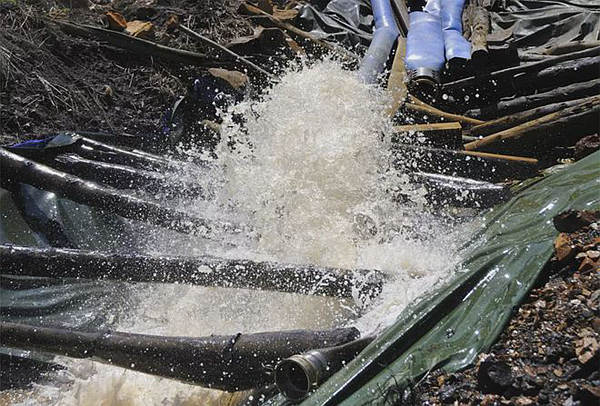
Imagine a sudden water inrush in a coal mine panel 600 m from the shaft bottom. As the on-call engineer, your decisions in the first hour are decisive:
1. Assessment
You estimate rising water at 30–40 cm per hour in the affected roadway, threatening power substations and trapping a development crew.
2. Equipment Mobilization
The rescue team brings high-head pumps and several rolls of polyurethane high-pressure mine hose, each about 50 m long with pre-fitted quick couplings.
3. Rapid Deployment
Instead of bolting pipe segments, the team unreels the layflat hose while moving into the heading.
- Turns and undulations in the roadway are handled simply by bending the hose.
- No cutting or special fittings are required.
4. System Build-Up
At the low point, the hose is clamped to the pump outlet; additional rolls are snapped together with quick couplings up to the shaft station.
Within a short time, a continuous high-pressure line is ready.
5. High-Pressure Dewatering
The pump is started, and water is driven through the PU hose to the surface discharge line. The high pressure rating ensures stable flow even with long vertical head.
6. Post-Event Reuse
After the water level is under control, the hose is drained, flattened, rolled up, and stored for the next emergency.
From an operational standpoint, the ability to carry long, compact rolls underground and assemble them in minutes rather than hours is the core value of PU high-pressure mine hoses. [mineflex]
For global buyers – especially safety managers and procurement engineers – product certification and traceability are as important as price. In many markets, mine dewatering and rescue hoses are expected to meet:
- Relevant mining or industrial hose standards and safety factors. [global]
- ISO‑based quality management requirements for the manufacturing plant. [hosesolutions]
Before purchasing any mining polyurethane hose, best practice is to insist on:
- National or third‑party pressure test reports from accredited labs.
- Detailed technical datasheets (working/burst pressure, temperature, tensile strength, and abrasion test data). [kuriyama]
- Evidence of previous projects and references in coal mines, metal mines, or oilfield operations.
The original Chinese copy correctly emphasized this: buyers should only purchase from formal, specialized manufacturers that can provide national‑grade third‑party test certificates and verifiable performance history. This aligns with global risk management practice in high‑hazard industries. [global]
As a specialized Chinese manufacturer of frac water transfer hose and polyurethane layflat hose, Sunmoon focuses on the specific needs of mining and oilfield clients worldwide. While every project is different, international customers typically look for:
- Custom diameters and pressure ratings matched to their pumps and pipelines.
- Project-specific lengths (e.g., 50 m for rescue kits, 100–200 m for production dewatering). [zyfire]
- Tailored end couplings (e.g., Storz, Victaulic, Camlock, or proprietary mine‑rescue connectors).
- Branding and color coding for easy identification by site and application.
From an industry practitioner's standpoint, a customized PU layflat solution reduces:
- Connection points and leak risks
- Time spent adapting generic products on-site
- Inventory complexity across multiple mines or frac pads
When combined with robust test reports and documented case studies, this level of customization helps procurement teams justify total cost of ownership, not just initial purchase price. [zyfire]
Based on industry guidelines for mining hose selection and long‑term reliability, engineers should evaluate a frac water transfer / mine dewatering hose using this checklist: [kuriyama]
1. Working Pressure and Safety Factor
- Confirm the hose's rated working pressure with at least a 3:1 or 4:1 safety factor over operating conditions.
2. Temperature Range
- Verify that the hose performs reliably from low ambient temperatures during shaft ventilation to hotter conditions near pumps. [hosesolutions]
3. Abrasion and Chemical Resistance
- Review abrasion test data and compatibility with mine water chemistry, including solids content and possible chemical additives. [mearthane]
4. Length and Handling
- Choose lengths that balance deployment speed with manual handling constraints underground.
5. Fittings and Couplings
- Ensure couplings are rated to the same (or higher) pressure than the hose and are compatible with existing pumps and manifolds.
6. Quality Management and Testing
- Request third‑party pressure tests, burst tests, and factory QA documentation.
7. Supplier Expertise and Support
- Prefer vendors with proven mining and oilfield project records, technical support, and the ability to offer customization.
Building these points into your internal purchasing and inspection checklist helps align site practice with global mining standards and Google's E‑E‑A‑T expectations for technically reliable content. [psiurethanes]
If you are responsible for safety, production, or procurement in mining or frac operations, now is the time to re‑evaluate your dewatering and water transfer infrastructure.
By upgrading from traditional steel or rigid PE pipelines to custom polyurethane high-pressure layflat hoses, you can:
- Cut deployment time in emergencies
- Improve operational flexibility in complex underground layouts
- Reduce long‑term maintenance and replacement costs
- Strengthen the safety and resilience of your entire operation [midwesthose]
To specify a solution tailored to your mine or frac project, prepare the following information before contacting Sunmoon or another specialist manufacturer:
- Required diameter and flow rate
- Maximum head and working pressure
- Typical operating temperature and water chemistry
- Preferred coupling standards and section lengths
With these parameters, a dedicated engineering team can propose a complete frac water transfer and mine rescue hose system that fits your site, your pumps, and your safety requirements.

Frac water transfer hoses are high-pressure, long-length layflat hoses designed specifically for large‑volume water movement in mining and oilfield environments, with greater abrasion resistance and stronger reinforcement than typical industrial hoses. [sinohose]
Polyurethane offers superior abrasion resistance, flexibility, and chemical stability, leading to a longer service life and reduced downtime compared with many rubber or PVC alternatives in harsh mining environments. [psiurethanes]
Many manufacturers offer standard lengths such as 100 m and 200 m per reel for mining applications, and can provide customized longer or shorter lengths depending on project needs. For mine rescue, around 50 m per roll is often chosen for easier underground handling. [kuriyama]
Buyers should ask for third‑party pressure and burst test reports, quality management certifications (such as ISO‑based systems), and technical datasheets detailing pressure, temperature, and abrasion performance, along with project references in similar environments. [global]
Yes. When properly designed, deployed within their rated limits, and correctly drained and stored, PU high-pressure layflat hoses can be reused across multiple emergencies and dewatering campaigns, offering strong lifecycle value. [midwesthose]
1. Hose Solutions – *Mineflex High Pressure Dewatering Hose* (properties and benefits of PU mining hoses). [https://hosesolutions.com/mining-hoses/] [hosesolutions]
2. Sinohose – *Applications of Polyurethane Layflat Hose in Agriculture and Mining* (flexibility, abrasion and chemical resistance). [https://www.sinohose.com/polyurethane-layflat-hose-in-agriculture-and-mining.html] [sinohose]
3. PSI Urethanes – *Boost Mining Efficiency with Polyurethane Components* (durability and corrosion resistance of polyurethane in mining). [https://psiurethanes.com/boost-mining-efficiency-with-polyurethane-components/] [psiurethanes]
4. ZYfire – *High Pressure Mining Water Dewatering Hose* (PU inner/outer layers and through‑the‑weave structure). [https://www.zyfire.com/news/zyfire-high-pressure-mining-water-dewatering-hose] [zyfire]
5. Kuriyama – *Mining Hose Selection Guide* (general mining hose specifications and selection factors). [https://www.kuriyama.com/library/Kuriyama-Mining-Hose-Guide.pdf] [kuriyama]
6. Weir Group – *Seven factors to consider when selecting mining hose assemblies* (engineering selection principles). [https://www.global.weir/newsroom/global-news/2017/seven-factors-to-consider-when-selecting-mining-hose-assemblies/] [global]
7. Midwest Hose – *TPU Hose in Mining: A Smarter Alternative to Pipe* (advantages of TPU water transfer hose over HDPE). [https://www.midwesthose.com/tpu-hose-in-mining-a-smarter-alternative-to-pipe/] [midwesthose]
8. Hose Solutions – *Mineflex Mining Hoses* product information (ISO‑certified manufacturing and standard lengths). [https://hosesolutions.com/mining-hoses/] [hosesolutions]
9. SEO.London – *水管工搜索引擎优化* (SEO and content structuring best practices). [https://seo.london/zh/%E6%B0%B4%E7%AE%A1%E5%B7%A5%E6%90%9C%E7%B4%A2%E5%BC%95%E6%93%8E%E4%BC%98%E5%8C%96/] [seo]
10. 哟派出海 – *水泵B2B工厂外贸网站如何做Google谷歌SEO优化关键字排名* (B2B industrial SEO strategy). [https://www.yooopaaa.com/2447] [yooopaaa]


