

Views: 236 Author: Sunmoon Publish Time: 2026-06-26 Origin: Site


Content Menu
● What Dust Suppression in Open Mines Really Requires
● Why High-Pressure Layflat Hoses Outperform Rigid Piping in Mines
● How Water Delivery Drives Effective Dust Suppression
● Sunmoon's Engineering Approach to Dewatering and Dust-Control Hoses
>> Core mining-oriented product lines
● Real-World Mining Case: High-Pressure TPU Hose in Mine Dewatering and Dust Control
● Design Considerations for Layflat Dust-Suppression Lines
>> 1. Working pressure and safety margin
>> 3. Abrasion and mechanical protection
● Step-by-Step: Deploying Layflat Hoses for Dust Suppression in an Open Pit
● Customization: Matching Hose Design to Each Mine's Dust-Control Strategy
● Long Runs, Dewatering, and Dust Suppression: A Combined Strategy
● Table: Layflat Hoses vs. Conventional Water Transfer in Mine Dust Suppression
● What Mine Operators Are Looking For (User Feedback Insights)
● How Partnering with a Specialized Hose Manufacturer Adds Value
● Call to Action: Build a More Resilient Dust-Suppression Network
● FAQs
>> References
Dust suppression in open-pit mines depends on reliable, high-volume water delivery, and high-pressure layflat hoses have become a core tool for doing this safely and cost-effectively. As a specialized Chinese manufacturer of dewatering and frac water transfer layflat hoses, Sunmoon brings field-tested engineering, customization, and mine-proven case experience that directly addresses the harsh realities of modern dust control. [sunmoonhose]
Open-pit mines generate intense dust from haul roads, blasting, loading, and crushing, which directly impacts worker health, equipment life, and regulatory compliance. Many operators still rely on rigid pipes, temporary manifolds, or undersized hoses that struggle with long runs, pressure loss, and frequent leak points. [hammerheadhose]
To keep airborne dust below permissible exposure limits, operations teams need:
- Stable water supply over long distances and variable terrain
- High instantaneous flow rates for spray bars, cannons, and truck filling
- Fast redeployment when pit geometry or haul roads shift
- Systems that minimize leak risk, downtime, and safety hazards
In this context, high-pressure layflat hoses offer a modern backbone for mine dust-suppression networks.
High-pressure layflat hoses are engineered as flexible pipelines that can be rapidly deployed on the ground, over berms, or along haul roads without extensive civil works. Compared with steel pipe, HDPE strings, or multi-segment rubber lines, they address several chronic pain points for mining operators. [sunmoonhose]
- Fewer joints, fewer leaks: Long continuous lengths dramatically cut the number of couplings, flanges, and threaded connections that commonly leak or fail. [hammerheadhose]
- Rapid deployment and retrieval: Hoses can be reeled out or recovered with standard handling equipment, reducing setup and changeover time for new benches or road alignments. [sunmoonhose]
- Lower transport and handling cost: Lightweight construction means more length per truckload and less lifting equipment required in the pit. [hammerheadhose]
- Better hydraulic performance: Smooth internal bores and optimized wall thickness reduce friction loss, helping maintain working pressure at the far end of long dewatering or dust-suppression runs. [bh-layflathose]
- Enhanced safety: Fewer elevated lines, less rigid pipe handling, and simplified layouts reduce dropped-object and trip hazards around active haul routes and loading areas. [hammerheadhose]
For dust suppression in particular, this translates into more consistent spray performance, fewer unscheduled shutdowns for leak repair, and better compliance with tightening safety and environmental standards.
In open-pit mining, dust suppression is only as good as the water delivery network behind it. Trucks, spray bars, fog cannons, and ring main systems all depend on stable pressure and flow.
Typical mine dust-control setups may include:
- Fixed spray lines on haul roads and around primary crushers
- High-mounted fog cannons aimed at transfer points
- Truck-filling stations for water bowsers
- Hybrid systems where dewatering and dust suppression share trunk lines
If line pressure drops, nozzles underperform and dust escapes; if it spikes, fittings and hoses can fail. Well-designed high-pressure layflat systems help maintain a stable operating window across uneven ground and long circuits.
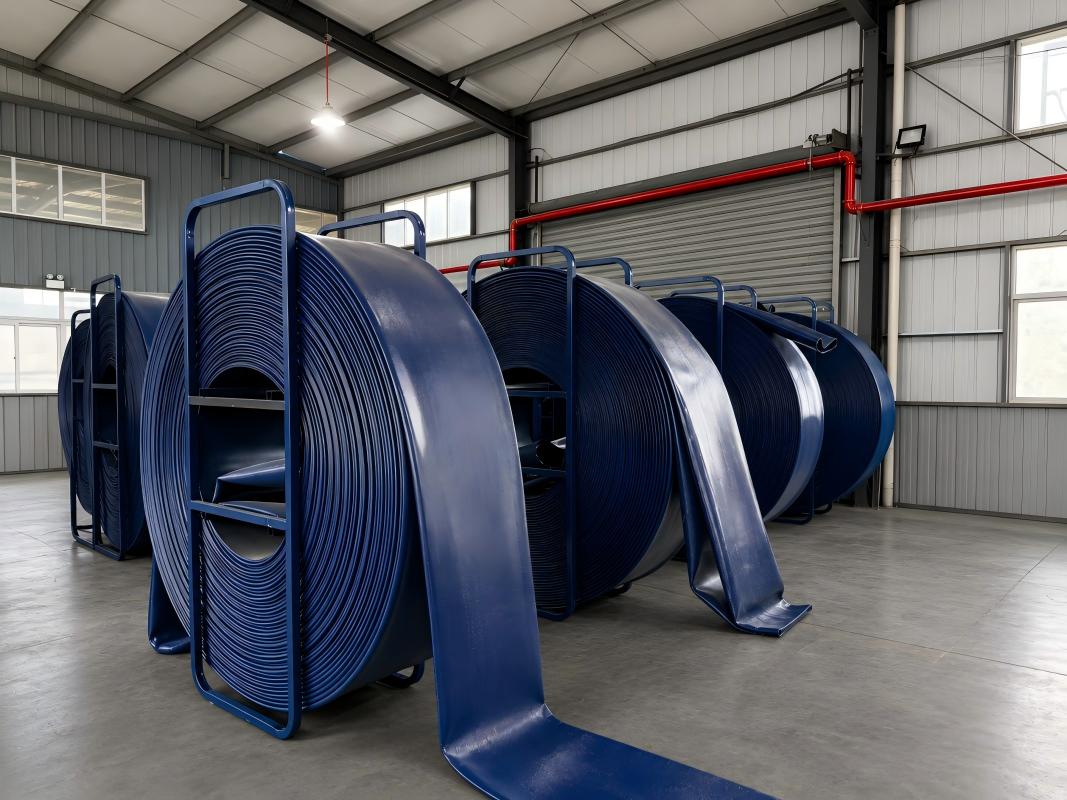
Sunmoon focuses on through-the-weave TPU layflat hose technology, combining melt-extruded thermoplastic polyurethane with integrated textile reinforcement. This construction locks in dimensional stability and wall-thickness tolerance while delivering high working pressure and strong adhesion between layers. [sunmoonhose]
- Dewatering Hose – For rapid-deployment water removal from pits, sumps, and galleries, also frequently repurposed as a trunk line feeding dust-suppression rings and truck-filling manifolds. [sunmoonhose]
- Frac Water Hose / High-Pressure Layflat Hose – Originally engineered for oil and gas fracturing operations, this hose architecture is highly suited to long-run, high-pressure dust-suppression networks in mines. [sunmoonhose]
These hoses are available in large diameters and are designed to maintain consistent performance in abrasive, high-UV, and temperature-extreme environments typical of remote mines. [sunmoonhose]
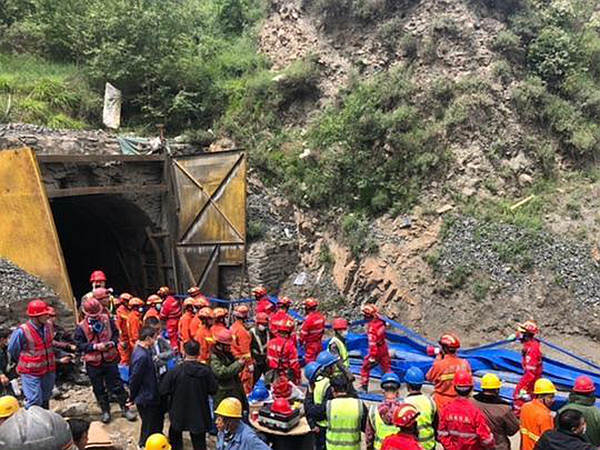
A recent Sunmoon case involved a mining operator facing severe water inrush that threatened both pit stability and dust-control capability. Traditional rigid pipelines required significant assembly time and were vulnerable to misalignment and joint failures under emergency conditions. [sunmoonhose]
By deploying a high-pressure TPU layflat hose system, the mine achieved:
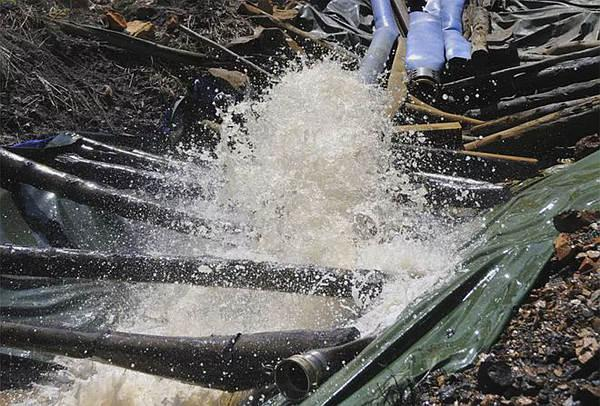
- Rapid water diversion from flooded zones, restoring access roads and work faces faster
- Stable feed pressure for downstream dust-suppression equipment once emergency levels were brought under control
- A measurable reduction in emergency response time compared with the previous steel and HDPE configuration, supporting safer and more continuous operations [sunmoonhose]
In follow-up feedback, the client emphasized that the combination of fast deployment, long continuous lengths, and manageable hose weight made it possible to reconfigure their dewatering and dust-suppression layout in hours instead of days. [sunmoonhose]
Engineering a robust layflat hose system for dust suppression means balancing hydraulic performance, mechanical durability, and mine logistics.
- Confirm required pressure at the most demanding point (e.g., highest elevation spray cannon).
- Specify hose working pressure above this requirement with an appropriate safety factor, considering pump characteristics and transient spikes.
- Use pressure-rated couplings matched to hose design to avoid weak points.
- Select hose diameter to handle peak flow with acceptable friction losses over the planned run length.
- Larger diameters reduce friction but increase weight; modern TPU layflat constructions help mitigate this by maintaining low elongation and good flexibility. [bh-layflathose]
- Where hoses cross haul roads or rock faces, add physical protection (grooved trenches, ramp covers, or wear pads).
- Choose hoses with proven abrasion resistance and strong interlayer adhesion for dragging or frequent repositioning. [bh-layflathose]
- Design trunk lines using standard lengths that can be quickly rearranged as benches advance.
- Use standardized quick couplings and manifolds to connect to spray rings, cannons, or truck-filling points.
A carefully engineered system can serve both dewatering and dust suppression, improving asset utilization and simplifying maintenance.
For mines transitioning away from rigid piping, the following practical deployment sequence has proven effective in the field:
1. Map the hydraulic circuit
Define water source, pump locations, elevation changes, and all dust-control endpoints (cannons, spray bars, truck filling).
2. Select hose types and sizes
Match high-pressure TPU layflat hoses to trunk lines and use appropriate diameters for branch lines feeding individual dust-suppression devices.
3. Plan hose routing and protection
Identify road crossings, sharp edges, and high-traffic areas; plan for guards, ramps, or alternate routes to protect the hose.
4. Pre-assemble sections off-line
Build standard hose modules with couplings, reducers, and manifolds in a controlled area to shorten in-pit installation time.
5. Deploy using reels or forklifts
Reel out full lengths along the designed route, minimizing twists and kinks, and verify that hoses lie flat without sharp bends.
6. Pressure test and commission
Gradually increase pressure, inspect for leaks at couplings and manifolds, and tune pump settings for optimal spray performance at the endpoints.
7. Monitor and adjust
Record flows and pressures, collect operator feedback, and adjust nozzle configurations or branch sizes as dust patterns and production rates change.
This process not only enhances dust-suppression effectiveness but also creates a repeatable playbook for future pit expansions.
No two open-pit mines are identical, and dust behavior depends on climate, ore characteristics, blasting strategy, and road layout. That is why hose customization is critical.
Sunmoon supports global customers with:
- Tailored diameters, wall thicknesses, and working pressures based on specific pump and elevation profiles. [sunmoonhose]
- Custom colors for easier visual identification and on-site safety zoning.
- Bespoke coupling solutions and end fittings compatible with existing manifolds and cannons.
- OEM/ODM support for operators and integrators who want branded or system-specific hose configurations. [sunmoonhose]
For multinational mining groups, this level of engineering support helps standardize dust-suppression practices across regions while still accommodating local terrain and regulatory requirements.
Many operators now design integrated water-management layouts where dewatering, dust suppression, and even process water share core infrastructure. Industry trends in long-run TPU layflat fracking hoses have shown that extended continuous lengths significantly reduce leak risk and maintenance compared to modular piping networks. [sunmoonhose]
Applying this thinking to mines enables:
- Fewer pump stations and transfer points along haul-road corridors
- Centralized monitoring of pressure and flow for both dewatering and dust-suppression circuits
- Faster re-routing when pits deepen or new satellite pits open
High-pressure layflat hoses serve as the backbone of this integrated system, turning a series of disconnected temporary fixes into a coordinated, resilient water network.
| Aspect | High-Pressure Layflat Hose | Steel / HDPE Pipe Systems |
|---|---|---|
| Installation speed | Fast reel-out, minimal joints (sunmoonhose) | Slower, requires assembly and more equipment (hammerheadhose) |
| Flexibility in layout | Highly flexible, follows terrain (sunmoonhose) | Limited; changes require cutting or re-welding (hammerheadhose) |
| Leak points | Few joints, lower leak risk (sunmoonhose) | Many joints and fittings, higher leak risk (hammerheadhose) |
| Transport and handling | Lightweight, compact storage (sunmoonhose) | Heavy, bulky, higher logistics cost (hammerheadhose) |
| Suitability for long runs | Excellent with TPU high-pressure designs (sunmoonhose) | Possible but often with more pump stations (hammerheadhose) |
| Maintenance requirements | Visual inspection, easy section replacement (sunmoonhose) | More frequent joint and support maintenance (hammerheadhose) |
From conversations and feedback shared with manufacturers, mine operations teams consistently highlight several expectations from their water-delivery hoses:
- Predictable pressure performance so spray systems stay within design envelopes.
- Stable reinforcement and low elongation to avoid creep, diameter changes, and coupling slippage under high loads. [sunmoonhose]
- Durability against abrasion and UV, especially for hoses laid permanently along haul roads in high-sun environments. [bh-layflathose]
- Clear technical communication and support, including pressure test data, material certifications, and troubleshooting guidance. [m.made-in-china]
Sunmoon's engineering-driven approach and long-term cooperation with domestic and international projects reflects these expectations, emphasizing product integrity over scale and backing each project with dedicated support. [sunmoonhose]
For mines seeking to upgrade or standardize their dust-suppression systems, working directly with a focused layflat hose manufacturer delivers several advantages:
- Access to application-specific design advice for dewatering, dust suppression, and combined water-management schemes.
- Confidence that hoses are produced on automated lines with tight process control and international quality certifications. [linkedin]
- Case-based insight from similar projects in mining, oil and gas, agriculture, and emergency response, which helps avoid common pitfalls. [sunmoonhose]
By integrating these capabilities into planning and procurement, operators reduce total lifecycle cost and de-risk large-scale dust-suppression upgrades.
If your mine is planning a pit expansion, solving chronic dust episodes, or retiring aging steel lines, now is the time to rethink how water gets to the point of use. A high-pressure layflat hose system, engineered around your topography, production plan, and regulatory obligations, can transform dust suppression from a constant firefight into a controlled, predictable process. [hammerheadhose]
Operations, maintenance, and safety teams can work together with a specialized manufacturer like Sunmoon to define hose specifications, connection standards, and deployment strategies that support both current and future phases of the mine. Engaging early allows you to validate assumptions through sample testing and pilot runs before you commit to full-scale rollout. [sunmoonhose]
1. Can the same layflat hose be used for both dewatering and dust suppression in an open-pit mine?
Yes, a properly specified high-pressure layflat hose can serve as a shared trunk line for dewatering discharge and dust-suppression feed, provided pressure, temperature, and chemical compatibility requirements are met. [hammerheadhose]
2. How long can a single layflat hose run be for dust suppression?
Modern TPU layflat hoses are produced in long continuous lengths, often hundreds of meters per section, and can be combined to support multi-kilometer runs with appropriate pressure management and pump sizing. [sunmoonhose]
3. What hose diameter is best for truck-filling stations in mines?
Medium-to-large diameters are typically used so trucks can be filled quickly without excessive pressure loss; the exact size should be based on target flow rates, pump output, and hose length, which an engineering team can help calculate. [bh-layflathose]
4. How often should layflat hoses be inspected in a mining dust-suppression system?
Visual inspections are recommended on a routine basis aligned with daily or weekly pit checks, with more detailed reviews after blasting cycles, major storms, or any operational incident that might have stressed the hose. [hammerheadhose]
5. What environmental conditions can high-pressure TPU layflat hoses withstand?
High-quality TPU layflat hoses are designed for harsh climates, offering resistance to abrasion, UV, ozone, and temperature fluctuations encountered in remote open-pit mines and similar heavy-duty environments. [bh-layflathose]
1. Sunmoon Hose Manufacturing – *Your Reliable Customized Layflat Hose Manufacturer in China*. Available at: [https://www.sunmoonhose.com]
2. Sunmoon Hose Manufacturing – *News & Case Studies (Mine Dewatering, High-Pressure TPU Hose Projects)*. Available at: [https://www.sunmoonhose.com/news.html]
3. Sunmoon Hose Manufacturing – *How Sunmoon's High‑Pressure TPU Layflat Hose Transforms Shale Gas Water Supply Operations*. Available at: [https://www.sunmoonhose.com/how-sunmoon-s-high-pressure-tpu-layflat-hose-transforms-shale-gas-water-supply-operations.html]
4. Mine Dewatering Hose – *Typical Applications and Requirements in Mining*. Available at: [http://www.hammerheadhose.com/other-hoses/mine-dewatering-hose/]
5. Mining Dewatering TPU Layflat Hose – *Product and Application Notes for Mining*. Available at: [https://www.asoehose.com/mining/]
6. Jiangsu Sunmoon Shale Gas High Pressure Hose Co., Ltd – *Company Profile and Export Information*. Available at: [https://m.made-in-china.com/company-kevin9277/]
7. Sunmoon Hose Manufacturing – *Top 10 2\" Lay Flat Hose Manufacturers in China / Long Runs Fracking Hose vs. Modular Piping*. Available via Sunmoon news and insights pages at: [https://www.sunmoonhose.com]


