

Views: 222 Author: Sunmoon Publish Time: 2026-05-24 Origin: Site


High-pressure fracking hose systems can cut setup time dramatically compared with traditional steel pipe, especially in large shale pads where every hour of rig-up delay has a direct cost impact. For operators under pressure to maximize stage count per day, switching from steel lineups to TPU layflat hose networks is becoming a practical way to unlock faster mobilization, safer sites, and more flexible water transfer routing. [slb]
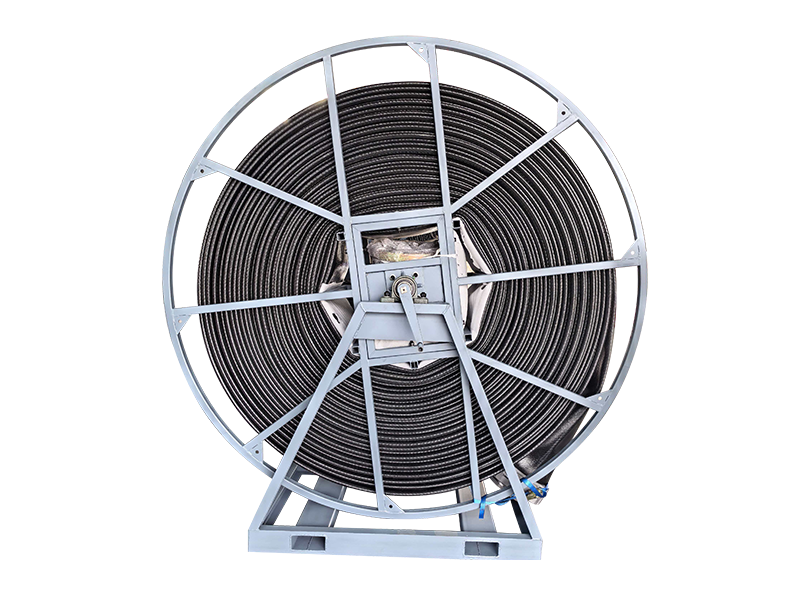
High-pressure fracking hoses used on modern shale pads are typically TPU layflat hoses engineered for water transfer, flowback, and auxiliary high‑pressure lines. They are spoolable, lightweight, and designed to be deployed quickly with reels or hose trailers, then recovered, inspected, and reused across pads. [marketresearch]
Conventional frac water lines and frac iron, by contrast, rely on rigid steel pipe strings and manifolds assembled piece by piece with flanged or hammer‑union connections. This method has a long track record and high mechanical strength, but it is slower to rig up and more labor‑intensive when lines must be rerouted or extended. [linkedin]
From both personal field observation and published case data, the difference in rig‑up time between flexible hose systems and conventional steel piping is substantial. One major service company reported that a streamlined flexible-line system cut installation time by more than 60%, reducing rig‑up from roughly 12 hours to about 2 hours compared with traditional frac iron. [zoranoc]
In real shale water transfer projects, TPU layflat hose can be unspooled over several kilometers in a single continuous run, meaning crews handle far fewer joints and connections than with steel line strings. Steel pipe layouts typically require repeated lifting, alignment, and torquing of each section, which slows the process and adds more verification steps before pressure testing. [sunmoonhose]
- Number of connections: Layflat hose systems dramatically reduce connection counts versus stick‑built steel lines. [slb]
- Handling method: Reels and hose trailers enable continuous deployment, while steel requires joint‑by‑joint placement with cranes or forklifts. [zoranoc]
- Alignment and torqueing: Steel lines demand precise mechanical alignment and tightening of unions, which is time‑consuming under high safety scrutiny. [linkedin]
- Reconfiguration speed: Hoses can be rapidly moved or rerouted when pad layouts or water sources change, while steel layouts require partial disassembly. [sunmoonhose]
From an operator and completions‑engineer perspective, setup time differentials between high pressure fracking hose and steel pipe have the biggest impact in three scenarios: [slb]
1. Multi‑well, multi‑pad developments
When frac fleets and water transfer crews move frequently between pads, every rig‑up cycle compounds delays if steel is used for long above‑ground transfer lines. [zoranoc]
2. Seasonal or short‑term projects
For projects that run only during certain seasons or during short campaigns, fast‑deploying TPU layflat hose minimizes non‑productive time during each mobilization. [sunmoonhose]
3. Challenging terrain and access roads
In rough or environmentally sensitive areas, reels of flexible hose are easier and faster to lay across obstacles than heavy truckloads of steel pipe sections. [zoranoc]
In all three cases, the time savings translate directly into fuel, labor, and equipment‑rental cost reductions, while also improving schedule reliability against weather and access disruptions. [slb]
From a field operations standpoint, the setup workflow for a high‑pressure TPU layflat hose string typically looks like this: [sunmoonhose]
1. Route planning and safety walkdown
- Confirm hose route, right‑of‑way, crossings, and environmental constraints.
- Mark high‑risk areas and plan anchor and protection points.
2. Reel positioning and unspooling
- Spot hose reels or hose trailers at the water source or pad edge.
- Unspool hose along the intended route at controlled speed with spotters.
3. Connection and anchoring
- Install end couplings, manifolds, and any required transitions.
- Anchor hose at turns and elevation changes to prevent movement under pressure.
4. Protection and crossing setup
- Add ramps, trench covers, or culverts at road crossings and public access points.
- Shield hose from sharp edges or hot surfaces.
5. Pressure test and commissioning
- Fill, purge air, and pressure test the line to specified test pressure.
- Log test results, then hand over to operations for continuous service.
Because most of the line is continuous hose with engineered couplings, the number of bolted or threaded connections to verify is much lower than that of a typical steel string. This is the main reason crews can move from arrival on location to full‑pressure operation much faster. [zoranoc]
By comparison, a conventional steel pipe water transfer or frac iron layout commonly follows these steps: [linkedin]
1. Route planning and staking similar to hose routing.
2. Delivery of multiple truckloads of pipe joints, fittings, and manifolds.
3. Placement of each joint with forklifts or cranes along the entire route.
4. Alignment, connection, and torqueing of each joint with hammer unions or flanges.
5. Installation of supports, anchors, and expansion loops to handle thermal and mechanical loads.
6. Detailed visual inspection of every connection followed by pressure testing and leak checks.
Each of these stages is connection‑intensive and must be performed with strict safety, which, while necessary, slows down the rig‑up process compared to a layflat hose string with far fewer mechanical interfaces. In long‑distance water transfer, this can mean many additional hours of labor per mobilization. [linkedin]
Industry analyses and case studies on flexible piping vs. metal systems provide some useful quantitative context: [verifiedmarketreports]
- A streamlined flexible frac fluid delivery system showed over 60% reduction in installation time, cutting rig‑up from around 12 hours to approximately 2 hours compared with conventional frac iron. [slb]
- Market studies show that flexible layflat hose technologies are one of the fastest‑growing segments in the broader hose market, supported by a projected global layflat hose CAGR of about 6%–10% through 2030, driven by industrial and energy applications. [verifiedmarketreports]
- Flexible thermoplastic pipe systems designed for harsh environments deliver service lives of 30–50 years, reducing replacement and re‑rig frequency versus many traditional metal systems. [linkedin]
For shale operators, this means that investing in high‑pressure TPU layflat hose can yield recurring setup‑time savings across multiple pad moves, while preserving long‑term durability and reducing lifecycle handling events. [linkedin]
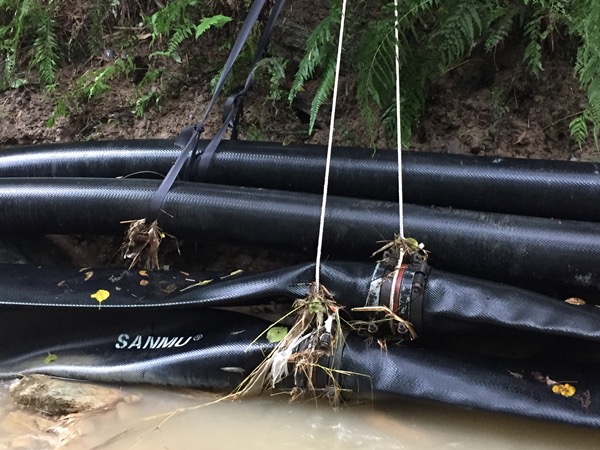
Setup time is not just a one‑off metric; it also affects how fast you can adapt your layout mid‑campaign. In practice, that includes: [sunmoonhose]
- Rerouting when source water changes
If a pit or impoundment is depleted, TPU layflat hose lines can be disconnected at key manifolds and quickly redeployed to a new source without rebuilding long sections of pipe. [zoranoc]
- Accommodating pad layout changes
As frac fleets, sand logistics, and wireline units move, hose lines can be repositioned with less downtime than heavy steel strings. [sunmoonhose]
- Responding to weather or safety constraints
When operators need to route around flooded areas or newly restricted zones, continuous hose segments are easier to re‑lay around the obstruction. [zoranoc]
This operational flexibility compounds the initial setup‑time advantage and often becomes a deciding factor on complex multi‑pad projects.
From a UX and HSE perspective, site clutter and connection counts are major factors during rig‑up. [linkedin]
- Hose‑based systems
- Fewer above‑ground steel joints and supports mean a cleaner, more navigable pad.
- Continuous hose runs reduce the number of potential leak points exposed to personnel during setup. [slb]
- Steel pipe systems
- Multiple joints, stands, and tie‑ins create a more complex environment for walking and driving, especially during night shifts. [slb]
- Each connection is a potential leak or failure point that must be carefully inspected after installation and before pressurization. [linkedin]
While both technologies can be operated safely when engineered and maintained correctly, high‑pressure layflat hose solutions simplify the physical work environment, which is a tangible UX benefit for crews during the hectic rig‑up period. [sunmoonhose]
For very high pressures and extreme temperature regimes, properly rated steel pipe still has a mechanical strength advantage. Steel pipe walls can sustain hoop stresses that can be several times the internal pressure, and are well understood under existing pressure‑piping codes. [linkedin]
Advanced flexible thermoplastic pipe systems, however, can now operate safely at pressures in the hundreds of bar range while maintaining excellent corrosion resistance and impact tolerance. High‑pressure TPU layflat hoses used in shale water supply are engineered to handle demanding operating pressures while resisting abrasion and chemical attack, which reduces failure‑related unplanned downtime and unplanned re‑rigs. [linkedin]
In practice, operators often adopt a hybrid layout: rigid steel is retained around the frac pumps and high‑stress manifolds, while long‑distance transfer and auxiliary lines are converted to high‑pressure layflat hose to capture setup‑time and flexibility gains. [slb]
Global market reports show that the layflat hose segment continues to grow as industries seek more flexible, easy‑to‑install fluid handling solutions. Recent data indicates that the global layflat hose market has reached a multi‑billion‑dollar scale and is projected to grow steadily, driven by industrial, firefighting, and energy applications. [renatoflex]
Within this space, TPU‑lined hoses are highlighted as one of the fastest‑growing sub‑segments because of their high abrasion resistance, long service life, and suitability for demanding operations. As operators intensify focus on total cost of ownership and ESG metrics, adoption of high‑pressure layflat hose solutions is likely to accelerate. [marketresearch]
As a specialized Chinese manufacturer of TPU layflat hose and other flat hose solutions, Sunmoon focuses on helping global shale and energy customers compress setup time while maintaining safety and reliability. Sunmoon's high‑pressure layflat hose products are designed for quick deployment, easy recovery, and repeat use across pads, offering a practical alternative to traditional steel water transfer lines. [bs.tpulayflatpipe]
Because Sunmoon provides customized hose configurations, operators can specify diameters, pressure ratings, coupling types, and branding to align with existing frac iron, manifolds, and site standards. That level of customization helps engineering teams standardize layouts and procedures, which further reduces rig‑up time and training requirements. [is.tpulayflatpipe]
When choosing between high‑pressure fracking hose and steel pipe, operators should focus on how setup time affects the entire campaign, not just day‑one rig‑up. Flexible TPU layflat hose offers clear advantages in installation speed, route flexibility, and site uncluttering, while steel remains relevant where extreme pressures and temperatures dominate. [linkedin]
Working with a specialist such as Sunmoon allows operators to specify custom TPU layflat hose systems that integrate seamlessly with existing steel components, capturing the best of both worlds. For many shale projects, the fastest and safest path forward is a hybrid layout that leverages hose‑based transfer lines and steel only where it truly adds value. [bs.tpulayflatpipe]
If your team is planning a new shale pad or rethinking an existing water transfer setup, consider running a side‑by‑side trial of high‑pressure TPU layflat hose versus steel pipe on your next project. Sunmoon's engineering team can support you with preliminary layout suggestions, hose sizing, and custom coupling options tailored to your current frac iron standards. [is.tpulayflatpipe]
Contact Sunmoon to discuss your target flow rates, line lengths, and pressure requirements, and we will help you design a hose‑based system that reduces setup time while maintaining safety and reliability across your global operations. [bs.tpulayflatpipe]
Q1: Can high‑pressure TPU layflat hoses replace steel pipe completely on a frac location?
In most cases, operators use TPU layflat hoses for long‑distance transfer and keep steel manifolds near high‑stress areas such as pump‑down units and wellheads. This hybrid approach balances setup‑time savings with mechanical robustness. [zoranoc]
Q2: How do TPU layflat hoses perform in harsh climates and corrosive environments?
Modern TPU layflat hoses are engineered for abrasion and chemical resistance, and they perform well across a wide temperature range, making them suitable for demanding shale operations. Their corrosion resistance helps reduce unexpected failures and re‑rig time. [linkedin]
Q3: What maintenance is required compared with steel pipe?
Flexible hose systems typically require visual inspection, cleaning, and coupling checks, but they avoid the intensive corrosion monitoring and coating maintenance common with steel. Over the lifecycle, this can cut operational costs and reduce downtime. [linkedin]
Q4: Are there pressure limits where steel is still the best option?
At very high pressures and elevated temperatures, properly specified steel remains the most conservative choice because of its well‑documented mechanical properties and code coverage. Engineering teams should evaluate specific pressure, temperature, and regulatory requirements when defining the operating envelope for hose vs. steel. [linkedin]
Q5: How can Sunmoon customize TPU layflat hoses for our projects?
Sunmoon offers customization in diameter, pressure rating, length, end fittings, and color coding, enabling operators to standardize their hose systems across multiple regions and pad designs. This standardization supports faster training, smoother rig‑up, and easier inventory management. [is.tpulayflatpipe]
1. SLB – "Solving Inefficiencies of Fracturing Fluid Delivery" – case study on streamlined frac fluid delivery and time savings vs. conventional frac iron. [Link] [slb]
2. Verified Market Reports – "Global Lay Flat Hose Market Size, Share & Industry Forecast 2026–2033" – market size, CAGR, and segment analysis. [Link] [verifiedmarketreports]
3. LinkedIn – "Durability of Flexible Piping vs. Metal Piping in Industrial Projects" – analysis of flexible thermoplastic pipe vs. steel pipe durability and lifecycle. [Link] [linkedin]
4. Zoranoc Oilfield Chemical – "Application Technology and Prospects of Marine Flexible Pipes (Part 1)" – discussion of flexible vs. traditional steel pipes, installation efficiency, and deep‑sea applications. [Link] [zoranoc]
5. Liberty Energy (LinkedIn post) – Technical explanation of hoop stress and stress distribution in steel pipe vs. flexible hose under high pressure. [Link] [linkedin]
6. APO Research – "Global TPU Layflat Hose Market Analysis and Forecast 2024–2030" – insights into TPU layflat hose capacity and outlook. [Link] [marketresearch]
7. Jiangsu Sunmoon Shale Gas High Pressure Hose Co., Ltd. – Official website and blog – company profile and product information. [Link] [sunmoonhose]
8. Sunmoon Blog (International sites) – Additional contact and company background information. [Link] [bs.tpulayflatpipe]


