

Views: 222 Author: Sunmoon Publish Time: 2026-06-13 Origin: Site


Content Menu
● Introduction: Why Source Lay Flat Irrigation Hose from China
● How We Evaluate High‑Quality Lay Flat Hose Suppliers
● Technical Snapshot: What Matters in Lay Flat Irrigation Hose
● Top 10 Lay Flat Irrigation Hose Manufacturers in China (2026)
>> 1. Jiangsu Sunmoon Shale Gas High‑Pressure Hose Co., Ltd.
>> 2. Suzhou SEAPEAK (SINOHOSE)
>> 3. Hebei Orient Rubber & Plastic Co., Ltd.
>> 4. China‑Layflat‑Hose.com Group (TPU & PVC Lay Flat Specialist)
>> 5. PVC Lay Flat Hose OEM Cluster Suppliers (Made‑in‑China Platform)
>> 6. TPU Flat Hose Exporters in Jiangsu and Shandong
>> 7. Export‑Oriented Hose Manufacturers Listed in Market Reports
>> 8. Hybrid Product Manufacturers Serving Irrigation and Construction
>> 9. OEM‑Focused Private‑Label Hose Factories
>> 10. Niche High‑Pressure Lay Flat Hose Specialists
● Comparison Table: Capacity, MOQ and Certifications (Representative Snapshot)
● Common Pitfalls When Sourcing Lay Flat Irrigation Hose (And How to Avoid Them)
>> Typical issues faced by buyers
>> An internal "avoidance tip" rarely stated online
● Buyer's Guide: Verifying Chinese Lay Flat Hose Factories
>> 1. Verifying business registration and legitimacy
>> 2. Checking ISO and other certifications (and whether they are expired)
>> 3. Sampling and pre‑shipment inspection
>> 4. Logistics and packaging considerations
>> 5. Aligning specifications with field reality
● FAQ: Five Advanced Questions Real Buyers Ask
China has developed a complete industrial cluster around PVC and TPU lay flat hose, integrating resin compounding, weaving, extrusion and testing within concentrated regions such as Jiangsu, Shandong and Zhejiang. This clustering allows manufacturers to control costs while offering diverse pressure ratings, diameters and compound formulations tailored to agricultural irrigation and water transfer projects. [sunmoonhose]
Global demand for lay flat hose is expanding steadily, with the overall lay flat hose market projected to grow from about 1.5 billion USD in 2024 to roughly 2.5 billion USD by 2033, reflecting strong adoption in irrigation, construction de‑watering and emergency water transfer. For procurement managers, China's combination of scale, flexible OEM capability and accumulated export experience makes it a practical base for long‑term supply partnerships. [sunmoonpipe]
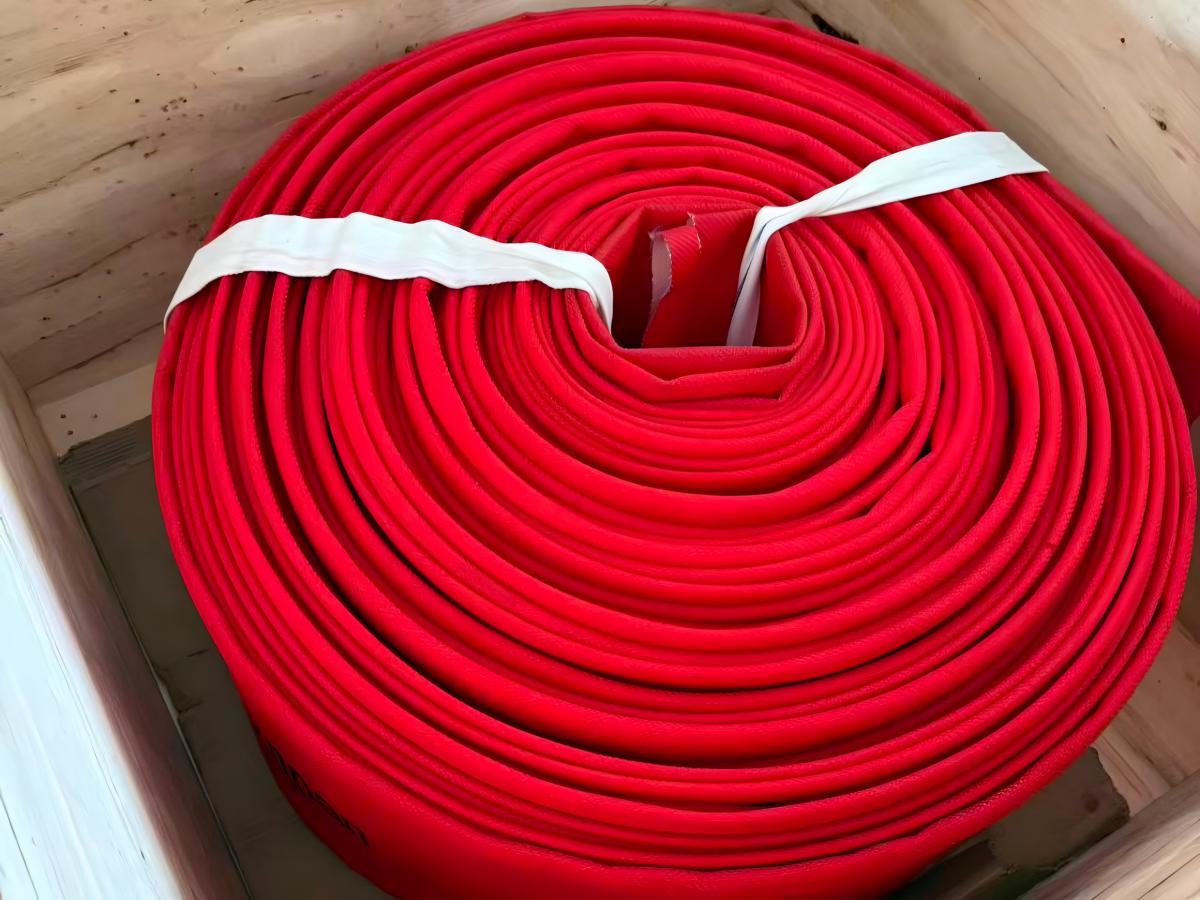
When screening lay flat irrigation hose factories in China, an experienced buyer will typically focus on four dimensions: certifications, production system, R&D capability and export service.
Key criteria used in this article include:
- Factory certifications and compliance
- Valid ISO 9001 (and, where relevant, ISO 14001) quality management systems, traceable in official or accreditation‑body databases. [metafuro]
- Product‑level compliance such as CE, RoHS or REACH for hoses destined for markets with stricter environmental and safety regulations. [verifiedmarketreports]
- R&D and technical expertise
- Ability to design customized PVC and TPU lay flat hose structures (single‑ply, double‑ply, reinforcement types) to meet different working pressures and service conditions. [china-layflat-hose]
- In‑house compounding know‑how for PVC and elastomer blends to balance flexibility, abrasion resistance and UV stability.
- Quality control and process management
- Documented QC procedures for incoming raw materials, in‑process inspection and final pressure testing (e.g., hydrostatic tests, burst pressure sampling). [china-layflat-hose]
- 100% inspection or at least documented sampling plans for visual defects, dimensional tolerance and coupling integrity. [china-layflat-hose]
- Capacity, stability and delivery
- Sufficient annual output (often measured in million meters of hose) to support long‑term contracts, plus stable lead times for repeat orders. [sunmoonpipe]
- Export track record in your target markets and the ability to handle mixed‑size containers or phased deliveries.
- OEM/ODM and communication
- Engineering support for private labels, custom colors, special wall thickness and branding (printing, packaging). [made-in-china]
- Responsive English‑language communication and transparent documentation (PIs, packing lists, test reports), which materially reduces project risk for global buyers. [metafuro]
These criteria form the basis for the following top‑10 list, which focuses on irrigation‑oriented lay flat hose manufacturers with clear export and OEM capability. [made-in-china]
From a procurement standpoint, understanding a few technical fundamentals helps you read between the lines of supplier quotations. Lay flat irrigation hose performance is driven by material grade, reinforcement structure and processing technology.
Key technical aspects include:
- Materials and construction
- PVC lay flat hose: Widely used for agricultural irrigation where cost efficiency is important; typically operates in the 2–8 bar working pressure range and offers good chemical resistance to fertilizers. [chinese.alibaba]
- TPU lay flat hose: Higher tensile strength, abrasion resistance and low‑temperature flexibility, often used in long‑distance water transfer and more demanding applications. [sunmoonpipe]
- Reinforcement: Polyester filament or high‑tenacity fibers are embedded to achieve specified working and burst pressures; aramid reinforcement is used for very high pressure or long‑distance applications. [sunmoonpipe]
- Process standards
- Extrusion and weaving equipment must be synchronized to ensure uniform wall thickness and consistent inner bore, which directly affects pressure rating and flow efficiency. [china-layflat-hose]
- High‑pressure testing is normally carried out batch‑wise; serious factories can provide detailed test reports with pressure curves and sampling frequency.
- Compliance and eco‑requirements
- For EU or certain OEM customers, RoHS and REACH‑related constraints on heavy metals and restricted substances are relevant for hose compounds and pigments. [verifiedmarketreports]
- CE or related conformity declarations are often requested when lay flat hose is integrated into machinery or packaged as part of irrigation systems sold in regulated markets. [verifiedmarketreports]
With this technical context, you can better assess whether a supplier's offer aligns with field requirements (e.g., seasonal irrigation in high‑UV regions vs. long‑term water transfer for mining or construction).
> Note: The order is not purely by size; it reflects a mix of technical focus, export experience and suitability for irrigation‑oriented projects. [sunmoonhose]
Jiangsu Sunmoon Shale Gas High‑Pressure Hose Co., Ltd. is a specialized lay flat hose manufacturer founded in 2011 in Taizhou, Jiangsu, an established polymer and hose production hub. The company focuses on R&D‑driven production of TPU lay flat hose, pipeline repair hose, slurry hose, NBR LDH fire hose and PVC‑based lay flat hoses used in irrigation and water transfer. [sunmoonpipe]
Annual production capacity is around one million meters, which is well suited to global buyers that need stable but not overly rigid capacity commitments. Sunmoon positions itself as a flexible OEM/ODM partner for small and mid‑size brands, offering customized hose structures, colors, branding and packaging with efficient communication and pragmatic lead time arrangements. [sunmoonpipe]
Typical strengths for irrigation buyers include:
- Ability to balance cost and performance with PVC and TPU options within one supplier. [sunmoonpipe]
- Experience in applications like agricultural irrigation, emergency drainage and remote water supply that share technical requirements with irrigation projects. [sunmoonpipe]
- A "do one at a time, and do well" philosophy that emphasizes focused production runs and quality control. [sunmoonpipe]
This makes Sunmoon a practical option for distributors and system integrators who need reliable lay flat irrigation hose but also value responsive engineering support for new product lines.
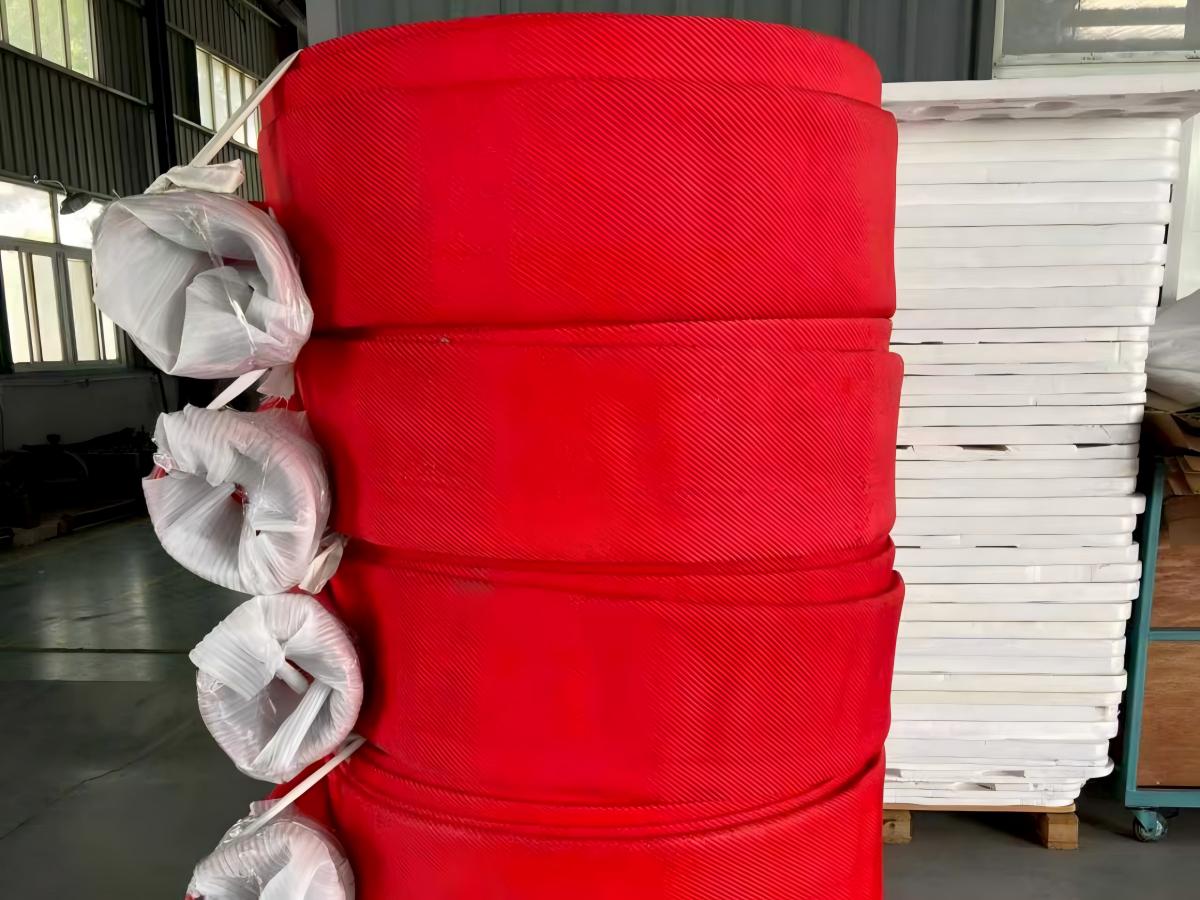
Suzhou SEAPEAK, often branded as SINOHOSE, is a well‑known hose producer with a broad product range that includes PVC lay flat irrigation hose, discharge hose and related fittings. Located in Jiangsu province, the company benefits from proximity to ports and a developed plastics processing ecosystem that supports stable raw material supply and export logistics. [sunmoonhose]
SEAPEAK has accumulated extensive export experience and typically emphasizes a full solution approach, offering hoses, couplings and accessories under OEM brands. For irrigation buyers, the combination of wide size range and matching fittings can simplify supplier consolidation. [sunmoonhose]
Hebei Orient Rubber & Plastic appears in independent industry lists as a key layflat hose producer and exports a significant portion of its output. Based in Hebei, it leverages the region's rubber and plastic industrial base to produce PVC lay flat hose for agriculture, construction and general water discharge. [us.metoree]
The company markets itself on competitive pricing and broad product coverage, and often appears on global B2B platforms targeting irrigation distributors and contractors. For buyers, Hebei Orient is often shortlisted when price sensitivity is high but basic quality assurance is still required. [us.metoree]
The group behind the China‑Layflat‑Hose.com platform focuses on both common PVC and nitrile rubber hoses, as well as higher‑end TPU and aramid‑reinforced flat hoses marketed for agriculture and industrial water transfer. They highlight more than ten years of export experience, 100% inspection before shipment and cooperation with foreign brands to continuously improve product quality. [china-layflat-hose]
For irrigation projects that require longer hose runs, higher working pressures or harsher handling (e.g., frequent relocation with tractors), TPU‑based hoses from this type of supplier can reduce lifetime cost despite a higher initial price. Their process emphasis on QC and international collaboration resonates with buyers needing documented quality systems. [china-layflat-hose]
Platforms such as Made‑in‑China host multiple PVC lay flat hose OEM factories that target agricultural irrigation with 2–8 bar working pressures and common diameters used in drip and sprinkler systems. Examples include Sunmoon's trading profiles and other Jiangsu or Shandong factories that focus on high‑volume, cost‑effective PVC lay flat hose shipments. [chinese.alibaba]
These suppliers often quote flexible MOQs (e.g., 1,000–5,000 meters per size) and tiered lead times, such as 10 days for small trial orders and around 20 days for larger batches. For new irrigation projects or distributors testing a new market, this combination of moderate MOQ and short lead time is attractive, provided that certification and QC verification are handled carefully. [chinese.alibaba]
Beyond branded companies, several mid‑sized factories in Jiangsu and Shandong focus on TPU lay flat hose and nitrile rubber hose for agriculture and oilfield, often supplying larger brands as OEM. These factories typically invest in higher‑end weaving and extrusion lines, and target working pressures beyond standard irrigation hoses while still accepting smaller customized runs. [china-layflat-hose]
For irrigation system integrators who need a mix of standard PVC reels and higher‑pressure TPU lines (for main lines or pump discharge), using a TPU‑focused exporter alongside a PVC OEM can optimize total system cost and performance. [china-layflat-hose]
Global market reports on lay flat hose highlight Chinese manufacturers among the competitive landscape, particularly those active in fire hose, industrial hose and irrigation applications. While many of these companies do not market themselves exclusively as "irrigation" suppliers, their PVC lining and rubber lining capabilities are directly applicable to water transfer and agricultural use. [verifiedmarketreports]
For large procurement projects, shortlisting manufacturers that appear in independent market studies can be a way to identify factories with established scale and existing international compliance routines.
Some Chinese manufacturers produce both irrigation‑oriented lay flat hose and construction‑grade discharge hose for de‑watering, often using similar PVC compounds and reinforcement structures. These companies tend to have robust mechanical performance data (burst pressure, kink resistance) because construction customers frequently demand stricter verification. [us.metoree]
For irrigation buyers who anticipate rough handling or mixed‑use scenarios (e.g., agricultural sites that also run construction projects), sourcing from such hybrid producers can improve durability without a dramatic cost premium.
A subset of factories, many in Jiangsu and Zhejiang, explicitly position themselves as private‑label suppliers rather than brand owners. They often support custom printing, packaging, barcoding and even documentation localization for distributors building their own irrigation hose brands. [made-in-china]
These OEM‑focused factories may not rank highly in public "top 10" lists but are important for buyers who want differentiation in appearance and market positioning while relying on proven technical designs.
Finally, there are specialized Chinese manufacturers that focus on high‑pressure lay flat hose for shale gas, firefighting or long‑distance water supply, which share technical foundations with demanding irrigation applications. Sunmoon itself originates from the shale gas high‑pressure segment and applies this experience to hose designs used in agriculture and emergency water transfer. [china-layflat-hose]
For irrigation projects involving high‑lift pumping, long runs or integration into multi‑purpose water transfer systems, these niche specialists can supply hoses with higher safety margins and longer service life.
The table below illustrates how typical Chinese lay flat hose suppliers differ in capacity, MOQs and certification focus, using representative data from the sources above combined with common market patterns. [made-in-china]
| Supplier type / example | Approx. annual capacity (meters) | Typical MOQ per size (m) | Main certifications / focus |
|---|---|---|---|
| Jiangsu Sunmoon Shale Gas High‑Pressure Hose Co., Ltd. | ≈1,000,000 | 1,000–3,000 | ISO‑style QMS, application‑driven QC, OEM support (sunmoonpipe) |
| Suzhou SEAPEAK (SINOHOSE) | High (multi‑million est.) | 1,000–5,000 | Export‑oriented QC, OEM irrigation systems (sunmoonhose) |
| Hebei Orient Rubber & Plastic | High (multi‑product) | 1,000–5,000 | General ISO/QMS, platform‑verified (us.metoree) |
| China‑Layflat‑Hose.com factory group | Medium–high | 500–3,000 | 100% inspection before shipment, export QC (china-layflat-hose) |
| PVC OEM cluster on Made‑in‑China | Medium | 1,000–5,000 | Platform verification, basic ISO/CE where required (made-in-china) |
For an individual sourcing project, always request up‑to‑date certificates and capacity statements, as these figures can change with new lines and market conditions. [linfordco]
Industrial buyers frequently encounter several recurring problems when sourcing lay flat irrigation hose from overseas:
- Material downgrading
- Using lower‑grade PVC resin or recycled content without disclosure, reducing flexibility, UV resistance and service life.
- Switching reinforcement yarn specifications between batches, which can lead to inconsistent burst pressure.
- Inconsistent pressure ratings
- Declared working pressure not supported by regular burst tests, especially after cost‑down negotiations.
- Lack of traceable batch test records, making root‑cause analysis difficult when failures occur.
- Color and branding inconsistencies
- Shade differences between batches that affect brand image and on‑site identification, especially when multiple suppliers are used.
- Smudged or low‑contrast printing, making it difficult to read pressure or size markings in the field.
- Documentation gaps
- Missing or outdated ISO/CE certificates, or incomplete test reports that cannot be used in tender documentation.
- HS code or product description errors leading to customs delays.
One widely known but less openly discussed practice is the quiet use of "promotion batches" for initial orders. Some factories will produce the first trial batch with higher‑grade materials and tighter QC to pass your lab tests, and then gradually relax QC or change formulations when larger orders follow.
To mitigate this:
- Insist on random, unannounced third‑party sampling from normal production runs after the first order, not just from specially prepared samples. [metafuro]
- Require that the factory submit and freeze a technical specification (resin grade, yarn specification, wall thickness, weight per meter) and link it to the purchase contract.
- Conduct periodic comparative weight‑per‑meter and dimensional checks on incoming shipments; large deviations from the approved spec can indicate cost‑driven material changes.
These practical steps, combined with on‑site or third‑party audits, significantly reduce the risk of quality drift over time. [metafuro]
- Request a copy of the supplier's business license and 18‑digit registration number. [metafuro]
- Use China's National Enterprise Credit Information Publicity System or local Administration for Market Regulation portals to confirm registration status and scope of business. [metafuro]
- Cross‑check consistency between the registered name, bank account name and contract counterpart.
- Ask for scanned copies of ISO 9001/14001 and any relevant product certificates.
- Verify ISO certificates via:
- The issuing certification body's online database (using the certificate number). [linfordco]
- The International Accreditation Forum (IAF) or national accreditation body tools linked from IAF, ensuring the certification body itself is accredited. [linfordco]
- Confirm expiry dates and, if the certificate is mid‑cycle, check that surveillance audits are up to date and the certificate has not been suspended. [linfordco]
- Structure sampling in two stages:
- Lab or field testing of development samples to validate pressure, flexibility and UV performance.
- Pre‑shipment inspection of production batches, with random selection of reels for dimensional checks and, where possible, destructive pressure tests.
- For larger contracts, appoint a third‑party inspection company to witness pressure testing and seal the tested reels.
- Confirm hose packing method (roll length, palletization, wrapping) and ensure it is optimized for your storage and handling conditions.
- Clarify Incoterms, port of loading and expected transit times; China's major ports (Shanghai, Ningbo, Qingdao) provide efficient routes to most markets, but inland truck or barge transfer can add time.
- For PVC lay flat hose, avoid prolonged exposure to direct sunlight in port yards by specifying covered storage or shorter pre‑shipment staging when possible.
- Translate field requirements into technical parameters: working and burst pressure targets, minimum bend radius, expected service life and compatibility with pumps or couplings.
- Ask suppliers to confirm whether pressure ratings apply at 20°C and how they derate at higher temperatures.
- For drip and sprinkler systems, clarify whether hose will be moved frequently or remain semi‑fixed, as this affects the optimal balance of weight and abrasion resistance.
1. How can I reliably check whether a Chinese factory's ISO certificate is still valid?
Use the certificate number to search on the issuing certification body's website and cross‑check accreditation via the IAF or national accreditation body tools, confirming that the certificate is active and not suspended. [linfordco]
2. What is a practical method to detect material downgrading in later batches?
Monitor weight per meter, wall thickness and pressure test results against the approved specification; significant changes in weight or wall thickness without prior notice are a strong warning sign of downgraded materials.
3. How do I balance PVC vs TPU lay flat hose for an irrigation project?
Use PVC for secondary lines and lower‑pressure runs where cost efficiency is key, and specify TPU for main lines, high‑pressure segments or where frequent relocation and abrasion are expected. [verifiedmarketreports]
4. What is the most effective MOQ strategy when testing a new supplier?
Start with a MOQ that covers at least one full container row per key size to make shipping efficient, but split the order into two or three delivery batches to observe consistency over time. [chinese.alibaba]
5. How can I confirm that CE or RoHS claims are credible?
Request test reports issued by recognized laboratories, verify them with the lab where possible and ensure that the test scope matches your exact product model and compound, not just a similar item. [verifiedmarketreports]
- Global lay flat hose market data and forecasts (e.g., 2024–2033 growth projections). [verifiedmarketreports]
- Practical guidance on verifying Chinese manufacturers and their business licenses. [metafuro]
- ISO certificate verification procedures and accreditation guidance. [linfordco]


