

Views: 222 Author: Sunmoon Publish Time: 2026-04-26 Origin: Site


Abrasive slurry (e.g., mine tailings, sand‑water mix, manure with sand, cement slurry) destroys hoses in three main ways: [daehose]
- Internal abrasion from hard particles sliding or impacting the inner wall
- External abrasion when hoses are dragged along soil, rocks or concrete
- Dynamic stress from pressure cycling, kinking, and bending
Field studies in slurry pipelines show that the right material selection can multiply service life by several times, especially when matching abrasion and chemical resistance to the actual slurry composition. Choosing between TPU and NBR is essentially choosing how the hose wall will resist these three modes of damage. [shotonhydraulic]
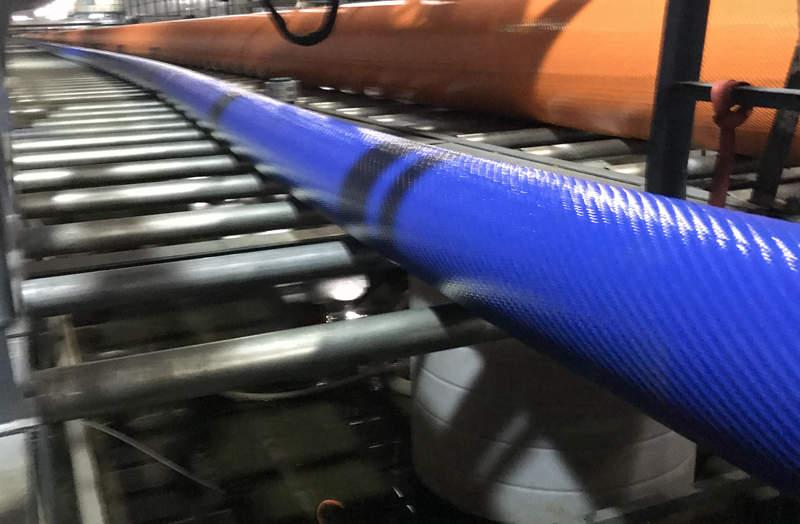
Thermoplastic polyurethane (TPU) is widely recognized for very high abrasion resistance and mechanical strength, especially in layflat hose products extruded through a woven reinforcement. [mandals]
Core advantages of TPU layflat hose for abrasive slurry: [sunmoonhose]
- Very high internal and external abrasion resistance – ideal for sand, gravel, tailings, and repeated drag‑on‑ground use
- High tensile and tear strength – resists punctures and cuts better than many PVC and standard rubber blends
- Excellent flexibility in cold climates – remains flexible at low temperatures, reducing kinking and cracking risk
- Good chemical resistance to oils, greases and many industrial chemicals – especially valuable in oilfield slurries and manure containing chemicals
- Long service life in harsh environments – often lasting several times longer than PVC options under the same abrasive load
For continuous abrasive slurry transfer and umbilical drag hose systems, many modern designs now favor TPU layflat hose because of its wear resistance combined with manageable weight. [ttpumps]
NBR (nitrile rubber) layflat hoses are a mature technology with decades of use in fuel, oil, and slurry applications. They are often extruded through-the-weave in combination with polyester reinforcement, giving high pressure capability and robust chemical performance. [sunhose]
Core advantages of NBR layflat hose for abrasive slurry: [hammerheadhose]
- Excellent oil and fuel resistance – particularly suitable for oily slurries, manure with high fat content, or hydrocarbon‑contaminated water
- Very high pressure capability in heavy‑duty designs – supports high pump pressures and long-distance transfer
- Proven performance in agriculture and industry – widely used as drag hose in intensive slurry spreading and dewatering
- Good abrasion resistance – especially in specialized mining or drag hose grades, though typically lower than high‑performance TPU in standardized tests
Some independent comparisons note that certain premium nitrile hoses can match or exceed TPU in UV and abrasion resistance, depending on the exact compound and construction. That means the specific hose design matters as much as the base polymer. [hammerheadhose]
Below is a generalized comparison of TPU layflat hose vs. NBR layflat hose for abrasive slurry, based on publicly available manufacturer data and field reports. [mandals]
| Aspect | TPU layflat hose | NBR layflat hose |
|---|---|---|
| Internal abrasion resistance | Very high, often best-in-class for layflat hoses in mining, fracking and drag applications. (sunmoonhose) | High, especially in heavy-duty drag hose designs, but typically slightly lower than high‑grade TPU. (hammerheadhose) |
| External abrasion (drag on ground) | Excellent for regular dragging on soil and gravel, with smooth, tough surface. (sunmoonhose) | Excellent in specialized nitrile drag hoses; some brands report equal or better performance vs. TPU in UV and abrasion. (hammerheadhose) |
| Chemical resistance | Very good against oils, greases, hydrocarbons and many industrial chemicals. (sunhose) | Excellent against fuels, oils and many chemicals; often preferred for hydrocarbon‑rich slurries. (sunhose) |
| Flexibility in cold | Excellent; remains flexible and kink‑resistant at low temperatures. (sunhose) | Good; flexible but generally heavier and slightly stiffer at low temperatures. (sunhose) |
| Pressure rating | High; suitable for demanding slurry transfer when engineered for it. (sunmoonhose) | Very high in heavy‑duty nitrile designs; often chosen for extreme pressure drag systems. (hammerheadhose) |
| Weight and handling | Typically lighter than comparable rubber hoses; easier manual handling. (sunhose) | Heavier; more robust feel but higher handling effort and reel torque. (sunhose) |
| UV and weather resistance | Very good; modern TPU compounds have strong UV durability. (sunmoonhose) | Very good to excellent; some nitrile products advertise superior UV endurance vs. TPU. (hammerheadhose) |
| Typical service life in harsh use | Long; often several times PVC, and competitive with or better than many rubber hoses in abrasive drag service. (sunmoonhose) | Long; proven in 24/7 agricultural drag hose and dewatering applications. (ttpumps) |
| Cost (initial) | Generally higher than PVC and many standard rubber hoses. (sunhose) | Medium to high, depending on grade; heavy‑duty mining/agricultural hose can be premium priced. (sunhose) |
Before you decide between TPU and NBR layflat hose, you need to quantify the aggressiveness of your slurry mix. [daehose]
Ask these questions:
1. What is the solids content (%) and hardness?
- Quartz sand, iron ore fines and crushed rock are far more aggressive than organic solids.
2. What is the particle size distribution?
- Coarse particles cause impact wear, fine particles create "sandpaper" sliding wear.
3. What is the flow velocity and turbulence?
- Higher velocities (and elbows or sharp bends) dramatically increase internal abrasion.
4. Is the hose mostly stationary or dragged on the ground?
- Umbilical drag systems demand exceptional external abrasion resistance.
In very high solids, mineral-rich slurries with frequent dragging, TPU layflat hose often provides the best balance of abrasion resistance and weight, making it a strong candidate for main lines and drag hoses. For moderate slurry abrasiveness with high hydrocarbon or chemical content, NBR layflat hose remains an excellent and sometimes superior option. [sunhose]
In mining dewatering and tailings transport, operators face a combination of abrasive solids, long hose runs and constant relocation. [jafirehose]
- TPU layflat hoses are increasingly used as long-distance slurry and water transfer lines in mining, thanks to their high abrasion resistance, flexibility and light weight. [jafirehose]
- NBR layflat hoses (heavy-duty drag hoses) are often used in areas with extreme pressure or where oil and chemical resistance is critical, such as near pumps or in fuel-contaminated zones. [hammerheadhose]
Many mines now adopt a hybrid layout: TPU hoses on the long drag sections where weight and drag abrasion dominate, and NBR hoses near pumps or where additional chemical resistance and pressure headroom are required. [sunmoonhose]
In agricultural slurry systems, hoses must handle manure, digestate, sand-laden liquids, and agricultural chemicals. [ttpumps]
- Leading suppliers offer both nitrile rubber drag hoses and TPU drag hoses for slurry spreading. Nitrile (NBR) hoses are marketed as robust drag hoses for constant intensive use with high abrasion and chemical resistance. [ttpumps]
- TPU hoses in these systems emphasize maximum wear resistance, high tensile strength and long-term use in umbilical drag lines. [mandals]
For farms with very long umbilical slurry lines and frequent dragging, TPU layflat hose often helps reduce tractor load, fuel consumption and handling time because of its lower weight. For farms dealing with high oil or chemical content (e.g., digestate with industrial by-products), NBR may still be the safer base material. [sunhose]
In dredging and construction, abrasive sand‑water mixes and cementitious slurries are common. [qdeastop]
- TPU layflat hose is valued for drag-on-ground capability and resistance to sand abrasion, especially in temporary lines that are frequently moved. [papagenogroup]
- NBR layflat hose is used where pressure surges and chemical exposure are more severe, or as a rugged connection hose between metal pipelines and pumps. [sunhose]
In fracking and oilfield water management, industry standards such as API RP 15WT emphasize safe layflat operations, including selecting hoses that can maintain integrity under pressure, movement and environmental exposure. Both TPU and NBR hoses are used here, depending on fluid composition and operator preference. [api]

As a manufacturer focused on TPU layflat hose and NBR layflat hose, Sunmoon typically guides customers through a decision matrix that weighs abrasion, chemistry, climate and cost.
We usually recommend TPU layflat hose when: [sunmoonhose]
- Slurry is highly abrasive (sand, tailings, mineral fines)
- Hoses will be dragged regularly across rough ground
- Systems are mobile, with frequent deployment and retrieval
- Weight and handling impact labor and equipment costs
- The slurry has moderate hydrocarbon/chemical levels within TPU's compatibility window
We usually recommend NBR layflat hose when: [hammerheadhose]
- Slurry or fluid has significant oil, fuel or aggressive chemical content
- Operating pressures are very high, near the upper limits of standard layflat designs
- The hose will be used as a high‑pressure drag hose or pump connection
- The customer has legacy systems already built around nitrile hoses and fittings
For borderline cases, we often specify different hose types in different sections of the same system (for example, TPU on the long drag line and NBR on the high-pressure manifold), maximizing performance and cost‑effectiveness. [sunmoonhose]
Use this 5‑step checklist to decide whether TPU or NBR layflat hose is better for your abrasive slurry line:
1. Define your slurry
- Solids type and hardness
- Solids percentage
- pH, oil content, chemicals
2. Map your system
- Required pressure rating (including peaks)
- Lengths, elevation changes, and pump layout
- Sections where hoses are dragged vs. fixed
3. Check climate and environment
- Lowest operating temperature
- UV exposure and outdoor storage time
4. Rank priorities
- Abrasion life vs. chemical resistance
- Weight and ease of handling vs. maximum robustness
- Upfront budget vs. lifecycle cost
5. Match with hose type
- Choose TPU layflat hose where abrasion + handling are top priorities
- Choose NBR layflat hose where chemical resistance + extreme pressure are top priorities
Sunmoon's engineering team can assist with custom wall thickness, reinforcement, and diameter to fine‑tune performance for your exact slurry and duty cycle. [gii]
As a specialized Chinese manufacturer of TPU layflat hoses and NBR layflat hoses, Sunmoon offers customization that directly impacts abrasive slurry performance: [gii]
- Material tailoring
- TPU grades optimized for abrasion and low‑temperature flexibility
- NBR grades tuned for oil, fuel or chemical resistance
- Reinforcement and pressure
- Different polyester weave densities for pressure and tensile strength
- Options for higher safety factors in critical applications
- Dimensions and fittings
- Customized diameters and wall thicknesses
- Compatible couplings and end fittings for quick deployment
- Color and branding
- High-visibility colors for safety
- Custom branding and length markings
This customization ensures that TPU vs. NBR is not just a catalog choice, but a deliberate engineering decision aligned with your slurry characteristics and operating environment. [gii]
For purely abrasive slurry with limited hydrocarbons, especially where hoses are dragged or frequently moved, TPU layflat hose is often the better choice due to its superior abrasion resistance, flexibility and lower weight. [mandals]
For abrasive slurry with significant oil, fuel or chemical content under very high pressures, NBR layflat hose may be the safer and more robust solution, particularly in critical sections near pumps and manifolds. [sunhose]
In many real projects, the best system uses both: TPU where abrasion and mobility dominate, NBR where chemistry and pressure are the main risks. [daehose]
If you're evaluating a project and are unsure which way to go, you can share your slurry analysis, pressure requirements and layout, and the Sunmoon engineering team can provide a tailored TPU or NBR layflat hose proposal to match.
1. Is TPU always more abrasion‑resistant than NBR in slurry hoses?
Not always, but high‑grade TPU layflat hoses typically offer very high abrasion resistance, especially for internal wear and drag‑on‑ground use. Some premium NBR hoses are formulated for extreme abrasion as well, so comparing actual test data from manufacturers is important. [hammerheadhose]
2. Which hose type is better for slurry with oil or fuel contamination?
For slurries with significant oil, fuel or hydrocarbon contamination, NBR layflat hose usually offers the broader and more proven chemical resistance, making it a safer choice in many cases. TPU also has good hydrocarbon resistance in many grades, but compatibility should be verified against the exact fluid. [ttpumps]
3. How does hose weight impact slurry operations?
Lighter hoses, such as many TPU layflat designs, reduce manual handling effort, reel torque and fuel consumption when moving hoses over long distances. Heavier NBR hoses may provide a more robust feel, but they also increase handling costs over time. [mandals]
4. Can I mix TPU and NBR hoses in the same slurry line?
Yes. Many operators deploy TPU hoses on the long, mobile sections and NBR hoses near pumps or manifolds where pressure and chemical exposure are highest. The key is to match diameters and pressure ratings and follow relevant operational standards, such as API RP 15WT in oilfield water applications. [api]
5. How should I size and specify a layflat hose for abrasive slurry?
Start from required flow rate and allowable pressure loss, then match diameter and pressure rating to your pump curve and safety factor. Consider abrasion level, chemical composition, climate and handling method to decide between TPU and NBR. A manufacturer like Sunmoon can help optimize material, wall thickness and reinforcement for your specific slurry. [shotonhydraulic]
1. Sunhose – "PVC vs. Rubber vs. TPU Layflat Hoses: Key Differences."
<https://www.sunhose.com/layflat-hoses-decoded-why-pvc-rubber-and-tpu-cater-to-different-needs/> [sunhose]
2. Sunmoon Hose – "Types of Flexible Hose Materials: The 2026 Expert Guide (With TPU Layflat Hoses)."
<https://www.sunmoonhose.com/types-of-flexible-hose-materials-the-2026-expert-guide-with-tpu-layflat-hoses.html> [sunmoonhose]
3. TT Pumps – "Selecting the Best Slurry Transfer Hose for Agricultural Applications."
<https://www.ttpumps.com/knowledge-hub/selecting-the-best-slurry-transfer-hose-for-agricultural-applications> [ttpumps]
4. Mandals – Agriculture Catalog (TPU layflat hose overview).
<https://mandals.com/wp-content/uploads/2023/11/Mandals-Agriculture-catalog-10.11.23-compressed.pdf> [mandals]
5. Hammerhead Hose – "TPU vs Rubber: How They Compare."
<http://www.hammerheadhose.com/wp-content/uploads/2014/08/TPU-vs-Rubber-How-they-compare.pdf> [hammerheadhose]
6. Daehose – "Comparing Slurry Pipe Materials: Which Is Best for Your Application?"
<https://daehose.com/slurry-pipe/> [daehose]
7. API – "Recommended Practice 15WT: Operations for Layflat Hose in Oilfield Water Applications."
<https://www.api.org/products-and-services/standards/important-standards-announcements/recommendedpractice15wt> [api]
8. Jinluo Hose – "Is TPU Lay Flat Hose the Optimal Choice for Your Fluid Transfer?"
<https://www.jinluohose.com/news/industry-news/is-tpu-lay-flat-hose-the-optimal-choice-for-your.html> [jinluohose]
9. JA Fire Hose – "TPU Lay Flat Hose vs Nitrile Rubber for Mining Dewatering."
<https://www.jafirehose.com/news/industry-news/tpu-lay-flat-hose-vs-nitrile-rubber-mining-abrasion.html> [jafirehose]
10. Shoton Hydraulic – "Slurry Hose Explained: Types, Uses, Materials and How to Choose."
<https://shotonhydraulic.com/es/slurry-hose-durable-abrasion-resistant-hoses-for-mining-dredging-industrial-use/3/> [shotonhydraulic]


