

Views: 210 Author: Sunmoon Hose Manufacturing Publish Time: 2026-07-11 Origin: Site


Content Menu
● Introduction: Why This Comparison Matters
● What Is TPU Well Riser Hose?
● Side‑by‑Side Technical Comparison
>> Performance and Design Factors
● Installation, Deployment, and Retrieval
>> TPU Well Riser Hose in the Field
>> Rigid Well Casing in the Field
● Hydraulic Efficiency and Flow Behavior
● Durability, Risk, and Maintenance
>> TPU Hose Durability and Risk Profile
>> Rigid Casing Durability and Risk Profile
● Cost and Lifecycle Economics
● Real‑World Application Scenarios
>> When TPU Well Riser Hose Excels
>> When Rigid Well Casing Is the Baseline
● Expert Considerations for Selecting Between TPU Riser and Rigid Casing
● How a Specialized TPU Layflat Hose Manufacturer Adds Value
● Practical Recommendation: When to Prefer TPU Well Riser Hose vs. Rigid Casing
● Conclusion: Making a Grounded, Data‑Driven Choice
● FAQ
TPU well riser hose and rigid well casing can both support groundwater extraction, but they behave very differently in real projects and should be chosen based on geology, depth, flow rates, and lifecycle cost rather than habit or tradition. [sunhose]

In many deep‑well and groundwater projects, engineers still default to rigid casing systems, even when flexible TPU well riser hoses can deliver faster deployment, lighter infrastructure, and lower whole‑life cost. From my experience supporting industrial water transfer and energy projects, the most successful systems match the well structure to the actual operating profile instead of copying the last project's design. [cnslfire]
In this guide, we will look closely at TPU well riser hose and rigid well casing for groundwater extraction, using practical criteria that matter to operators, drilling contractors, and project owners. The goal is to give you a structured way to decide when each option makes sense instead of treating one as a universal standard. [asoehose]
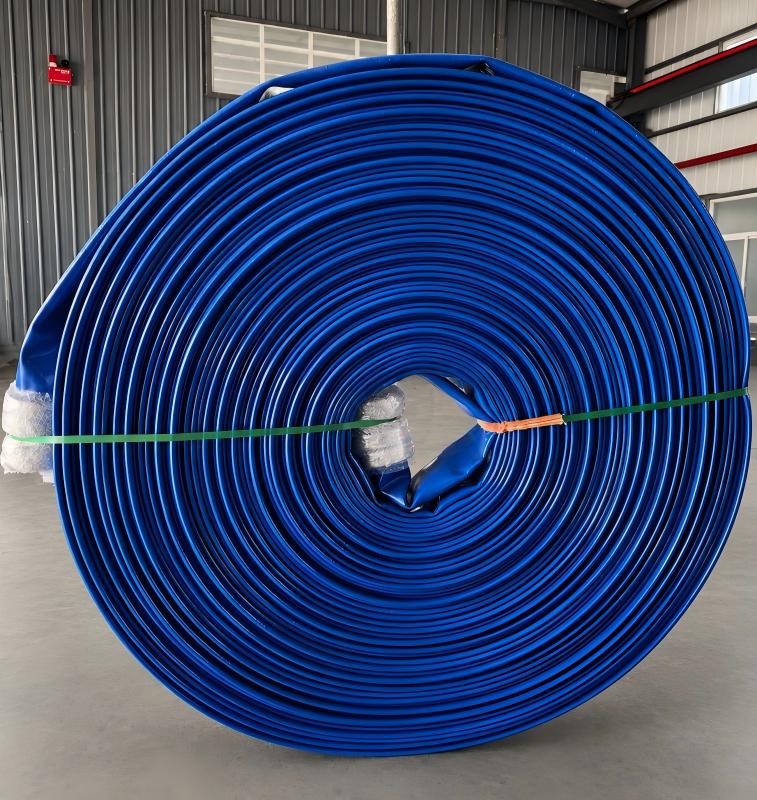
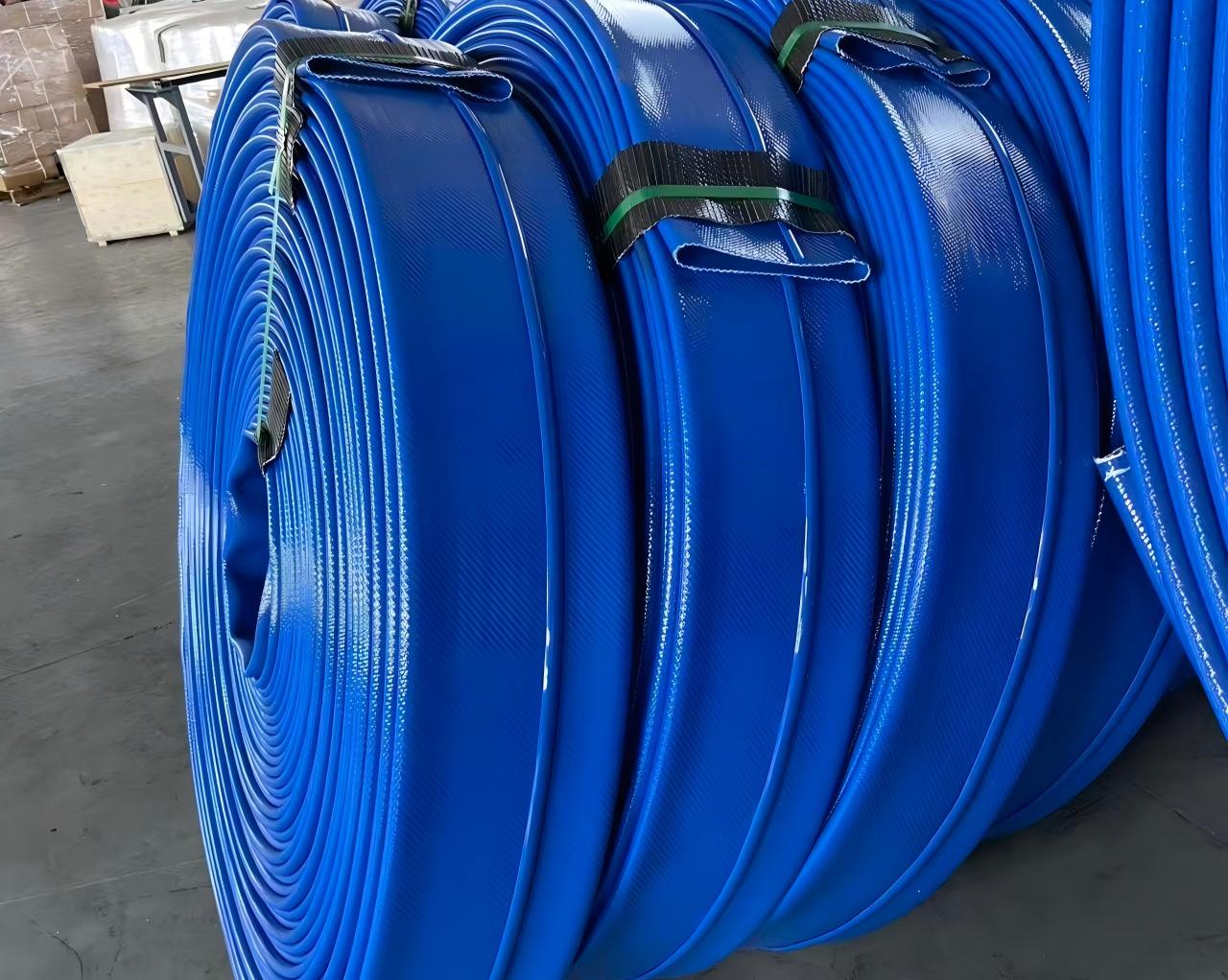
A TPU well riser hose is a flexible, high‑pressure layflat hose made from thermoplastic polyurethane, usually reinforced with high‑tenacity polyester or polyamide yarns. The hose is extruded in a "through‑the‑weave" process so the TPU fully encapsulates the reinforcement, creating a homogeneous, delamination‑resistant wall structure. [cnslfire]
Key technical characteristics include:
- High working pressure for lifting groundwater from deep wells
- Excellent abrasion and cut resistance for deployment in harsh conditions
- Wide temperature range, often around −50 °C to 80 °C, suitable for cold climates and hot environments [hoseinc]
- Strong resistance to hydrocarbons, many chemicals, and contaminated water streams [hoseinc]
Because the hose is layflat and lightweight, it can be reeled, transported, and deployed with much smaller crews and lighter equipment than equivalent rigid pipe strings. [sunhose]
Rigid well casing is a permanent tubular structure installed in the borehole to stabilize formations, isolate aquifers, and protect the well over its operating life. It is typically made from steel, stainless steel, or PVC/HDPE, depending on depth, pressure, and corrosion conditions. [link.springer]
Typical functions include:
- Stabilizing the borehole walls and preventing collapse
- Isolating zones to prevent cross‑contamination between aquifers
- Providing a secure path for pump and riser installation
- Allowing cementing and zonal isolation operations in some applications [cargohandbook]
Rigid casing is not just a "pipe" for water; it is part of the structural skeleton of the well. Even when a TPU riser hose is used for water lifting, a structural casing may still be present in deep or unstable formations. [link.springer]
| Factor | TPU well riser hose | Rigid well casing |
|---|---|---|
| Primary role | Flexible riser for water lifting and discharge (sunhose) | Structural stabilization and containment of the wellbore (link.springer) |
| Material | Thermoplastic polyurethane with textile reinforcement (cnslfire) | Steel, stainless, PVC, or HDPE tubing (link.springer) |
| Pressure handling | High working pressure with safety margins for deep‑well pumping (cnslfire) | High collapse and burst strength, especially in steel grades (link.springer) |
| Temperature range | Approx. −40/−50 °C to 70–80 °C depending on grade (cnslfire) | Depends on material; steel tolerates very wide range, plastics more limited (link.springer) |
| Chemical resistance | Very good to water, many chemicals, hydrocarbons, and slurries (cnslfire) | Steel sensitive to corrosion; PVC/HDPE better in corrosive water (link.springer) |
| Installation style | Reel‑based, rapid deployment, minimal joints (cnslfire) | Segmental, jointed string, hoist‑based installation (link.springer) |
| Typical service life | Long service life with correct handling and protection from sharp edges (cnslfire) | Long, but can be limited by corrosion, scaling, or mechanical damage (link.springer) |
This comparison highlights that TPU riser hoses and rigid casings are not one‑to‑one substitutes; often they work together, with casing providing structure and the TPU hose acting as the dynamic water transfer line. [asoehose]
From a project delivery perspective, installation time and site logistics are where TPU well riser hoses are most disruptive.
In deep‑well groundwater or dewatering applications, contractors can spool a TPU hose directly from a reel into the well, connect the submersible pump, and be ready to operate with very few mechanical joints. The layflat profile means it packs tightly on reels, cutting transport volume and simplifying mobilization to remote sites. [cnslfire]
Practical advantages include:
- Faster deployment compared with stringing multiple rigid pipe sections
- Smaller crews and lighter lifting equipment
- Reduced risk of leakage at mechanical joints
- Easier retrieval for inspection, pump servicing, or relocation [sunhose]
For temporary or semi‑permanent wells—such as mine dewatering, construction dewatering, or pilot groundwater projects—this kind of reversibility is a major operational benefit. [ly-plastic]
Rigid casing installation usually requires a rig or hoisting system to run pipe segments and centralizers into the borehole, often with cementing or grouting stages to secure the casing. This is slower but creates a stable, long‑term well structure that can protect the aquifer and support repeated pump replacements over decades. [cargohandbook]
Key characteristics:
- Higher initial installation time and heavier equipment
- Complex retrieval if casing must be removed or replaced
- Excellent long‑term stability when properly designed and installed [link.springer]
This makes rigid casing a natural choice in high‑value production wells, deep municipal supplies, and critical infrastructure where long lifecycle and regulatory requirements dominate.
Hydraulic behavior affects pump sizing, energy consumption, and long‑term operating cost.
- TPU riser hoses usually have a smooth internal surface, which can reduce friction losses and support high‑flow groundwater extraction over long vertical runs. [hoseinc]
- The flexible wall can accommodate minor deformation without creating sharp restrictions, but must still be sized correctly to avoid excessive elongation or flattening under load. [cnslfire]
- Rigid casing provides a dimensionally stable pathway, which simplifies hydraulic calculations but can accumulate scale, corrosion, or biological fouling that increase friction over time, especially in steel systems. [cargohandbook]
In practice, many operators pair a rigid structural casing with a TPU riser hose as the internal pump column, combining structural stability with efficient, low‑friction water lifting. [asoehose]
From a risk‑management point of view, durability and failure modes matter as much as the initial design.
Modern TPU compounds are engineered for abrasion resistance, tear strength, and UV stability, making them suitable for harsh field conditions and repeated handling. When a hose is dragged over rough ground or guided through steel casing edges, it resists wear better than many PVC or rubber alternatives. [papagenogroup]
However, TPU riser hoses are still vulnerable to:
- Sharp edges or poorly finished casing mouths
- Improper clamping, which can create stress concentrations
- Over‑bending near fittings or reels [sunhose]
Routine inspection and correct handling procedures dramatically extend service life, particularly in mobile or frequently redeployed systems. [cnslfire]
Rigid steel casings can deliver decades of service in suitable water chemistries, but they introduce corrosion risk, especially in saline or aggressive groundwater. PVC and HDPE casings avoid corrosion but may be limited by temperature, mechanical strength, and UV exposure at surface sections. [link.springer]
Common failure modes include:
- External corrosion and pitting in steel
- Collapse under extreme external pressure if not properly specified
- Joint failures or leaks if threads and seals are not correctly installed [cargohandbook]
Because rigid casing is structural, failures are complex and expensive to remedy compared with swapping out a hose or pump assembly. [link.springer]
When evaluating options, many project teams focus on unit price rather than total installed and operating cost.
- TPU well riser hoses typically have a higher material cost than low‑grade PVC pipes, but their installation can be significantly faster, saving rig time, labor, and mobilization cost. [asoehose]
- Lightweight reels and smaller crews can deliver measurable savings in remote locations or multi‑well dewatering projects where equipment moves frequently. [sunhose]
- Rigid casing requires a larger upfront investment in drilling and installation, but spreads that cost over a long operating life and may be mandatory under local regulations for permanent groundwater abstraction wells. [cargohandbook]
In mobile operations—such as mining or construction dewatering—many operators find that the reduction in installation time and ease of redeployment with TPU hoses outweighs the higher per‑meter hose price. In contrast, for a municipal production well expected to run for decades, a robust rigid casing system often remains the economic baseline. [ly-plastic]
Across industrial water transfer, certain patterns consistently favor flexible TPU risers:
- Temporary or semi‑permanent dewatering wells in mining, tunneling, and large construction projects [ly-plastic]
- Remote locations where heavy rigs, cranes, and large crews are difficult or expensive to mobilize [cnslfire]
- Projects requiring frequent pump retrieval, maintenance, or relocation of the entire pumping system [asoehose]
In these scenarios, the agility of TPU hoses becomes a strategic advantage: contractors can install, operate, relocate, and recover assets quickly, keeping capital and labor tied up for fewer days on each site. [sunhose]
Rigid casing tends to be preferred when:
- The well must comply with strict structural and regulatory standards over decades
- Geology is complex and requires zonal isolation and cemented casing strings
- The project is a long‑term municipal, agricultural, or industrial production well rather than a temporary dewatering point [link.springer]
In these contexts, a TPU riser hose may still be used inside the casing as a pump column, but it does not replace the casing's structural function. [asoehose]
From an industry practitioner's standpoint, selection should follow a structured evaluation rather than a single parameter.
1. Clarify the primary function. Decide whether you are choosing a structural well barrier, a flexible riser for water lifting, or both. Confusing these roles leads to mis‑specification.
2. Define service life expectations. Short‑term or mobile projects can justify flexible systems that optimize deployment speed and retrieval, while long‑term infrastructure should prioritize structural robustness.
3. Review groundwater chemistry and temperature. Corrosive water or large temperature swings can push you towards TPU risers and corrosion‑resistant casings or liners. [cnslfire]
4. Quantify deployment frequency. If pumps and risers will be moved or serviced often, favor configurations that can be pulled and redeployed quickly.
5. Calculate total cost of ownership. Include installation, retrieval, maintenance, and downtime—not only materials—when comparing options. [cargohandbook]
Using this framework, many operators arrive at hybrid designs: a correctly engineered rigid casing for structural integrity, combined with a TPU well riser hose as the internal pump column to improve handling, hydraulic efficiency, and serviceability. [sunhose]
A dedicated TPU layflat hose manufacturer with a large automated production base and a specialized engineering team can support groundwater projects beyond simply supplying hoses. By combining material expertise, field feedback, and integrated accessories, they can help operators fine‑tune systems around the realities of each well. [china-layflat-hose]
Typical value‑adding services include:
- Application‑specific hose design for deep‑well risers, including tailored wall thickness, pressure ratings, and reinforcement density
- Integrated couplings, hose protection sleeves, and reel systems engineered for high‑cycle deployment and retrieval [asoehose]
- Technical support for pump selection, hose sizing, and interface design with existing rigid casing and wellhead hardware [cnslfire]
This kind of partnership is particularly important in cross‑sector applications, where technologies from oil and gas, mining, and agriculture converge in groundwater extraction and large‑scale water transfer projects. [ly-plastic]
To help decision‑makers, the table below summarizes typical preferences, assuming equivalent engineering quality on both sides.
| Project condition | Prefer TPU well riser hose | Prefer rigid well casing |
|---|---|---|
| Project duration | Short to medium term, mobile or phased projects | Long‑term, fixed groundwater production |
| Site access | Difficult access, limited heavy equipment | Good access, permanent infrastructure |
| Pump maintenance frequency | Frequent retrieval and inspection | Infrequent retrieval, stable conditions |
| Hydrochemistry | Corrosive or variable, need for corrosion‑resistant materials | Stable, well‑characterized water chemistry |
| Regulatory environment | Flexible for temporary wells and dewatering | Strict structural and isolation requirements |
In many deep‑well systems, combining both technologies—rigid casing for structure, TPU hose as riser—delivers the most balanced outcome in terms of performance, risk, and lifecycle economics. [link.springer]
Choosing between a TPU well riser hose and rigid well casing for groundwater extraction is not about replacing one with the other in every situation; it is about aligning each technology with the role it serves best. Flexible TPU riser hoses excel in dynamic, mobile, or service‑intensive environments, while rigid casing remains fundamental wherever the well itself must remain structurally secure for decades. [cargohandbook]
For your next project, the most effective step you can take is to map out depth, geology, water chemistry, project duration, and service strategy, then define which parts of the system need structural rigidity and which can benefit from flexible, high‑performance TPU risers. [link.springer]
1. Can TPU well riser hoses be used in very deep wells?
Yes, TPU well riser hoses are available in high‑pressure designs suitable for deep‑well groundwater extraction when properly sized and matched with the pump and well conditions. [sunhose]
2. Do TPU hoses replace rigid casing completely?
In most engineered wells, TPU riser hoses complement rather than replace rigid casing, which still provides borehole stability and zonal isolation. [cargohandbook]
3. How often should TPU well riser hoses be inspected?
Inspection intervals depend on operating hours and conditions, but it is good practice to inspect hoses during each major pump retrieval or at defined maintenance intervals in abrasive or high‑load applications. [cnslfire]
4. Are TPU well riser hoses suitable for contaminated groundwater?
Many TPU compounds are compatible with hydrocarbons, industrial wastewater, and other contaminated liquids, but each project should be checked against the manufacturer's chemical resistance data. [hoseinc]
5. What is the main advantage of TPU riser hoses over steel riser pipes?
The main advantage is operational agility: faster installation and retrieval, lower handling weight, and fewer mechanical joints, which can substantially reduce downtime and labor in mobile or frequently serviced wells. [asoehose]
1. [What applications are best suited for TPU lay‑flat hoses?]
2. [Fiber Reinforced TPU Flat Hose]
3. [10 inch TPU hose – structure, applications, advantages]
4. [TPU Layflat Hose Manufacturer & Supplier – Abrasion Resistant]
5. [TPU Layflat Hose – applications and temperature range]
6. [Differences between PVC Layflat Hose and TPU Layflat Hose]
7. [Oil Well Casing – general description and functions]
8. [Multi‑criteria material selection for casing pipe in shale gas operations]
9. [Company profile – Jiangsu Sunmoon Shale Gas High Pressure Hose Co., Ltd.]
10. [Types of Flexible Hose Materials: The 2026 Expert Guide (With TPU Layflat Hoses)]
11. [Welline TPU Lay Flat Hose for groundwater extraction]
12. [Delivering 8,000 Meters of High‑Performance TPU Layflat Hose for Large‑Scale Water Transfer]


