

Views: 222 Author: Sunmoon Publish Time: 2026-06-20 Origin: Site


Content Menu
● Understanding Seismic Risk in Modern Mining Infrastructure
>> How Seismic Activity Damages Conventional Pipelines
>> Why Flexible Systems Behave Differently
● Key Seismic‑Relevant Properties of TPU Layflat Hoses
>> High Tensile Strength and Controlled Elongation
>> Abrasion and Cut Resistance Under Rock Movement
>> Jointless Long Runs Reduce Leak Points
● Case Insight: High‑Pressure TPU Hose in Mine Rescue Dewatering
● Engineering Comparison – TPU Layflat Hose vs. Rigid Pipelines in Seismic Mining Zones
>> Structural and Seismic Behavior
>> Operational Safety and Maintenance
● Sunmoon's Expertise in Mining‑Grade TPU Layflat Hoses
>> Engineering‑Driven Design for Harsh Geology
>> Global Mining Projects and Field Feedback
● Practical Design Guidelines for Seismic‑Resilient TPU Hose Systems
>> 1. Route Planning Around Geotechnical Risk Zones
>> 2. Anchoring, Support, and Slack Management
>> 3. Coupling Strategy and Redundancy
● Emergency Response: How TPU Hoses Improve Post‑Quake Recovery
>> Rapid Deployment in Mine Rescue and Dewatering
>> Temporary to Permanent: Designing for Dual Use
● Buyer's Checklist for TPU Layflat Hoses in Seismically Active Mines
● How Sunmoon Customizes TPU Layflat Hoses for Your Seismic Risk Profile
>> Application‑Specific Design Parameters
>> From Concept to Commissioning Support
● Conclusion – Build a Seismic‑Resilient Hose Strategy Now
● FAQ
In seismically active mining belts, fluid transfer infrastructure is often the hidden weak link in the safety chain. Underground and surface pipelines must withstand not only high pressure and abrasion but also ground movement, rock bursts, and repeated micro‑seismic events. Traditional rigid steel or HDPE pipelines tend to crack at joints, shift under ground deformation, and require intensive inspection to avoid catastrophic leaks. By contrast, flexible TPU layflat hoses behave more like a reinforced "belt" than a brittle "tube," absorbing movement and reducing stress concentration during seismic events. [sunmoonhose]
As an engineering‑focused TPU hose manufacturer working with mining clients across Latin America, Asia, and government emergency projects, Sunmoon has seen the same pattern repeat: when the geology becomes more complex, rigid pipelines become a liability, and high‑pressure TPU layflat hose systems start to outperform them in uptime, safety, and lifecycle cost. [sunmoonhose]
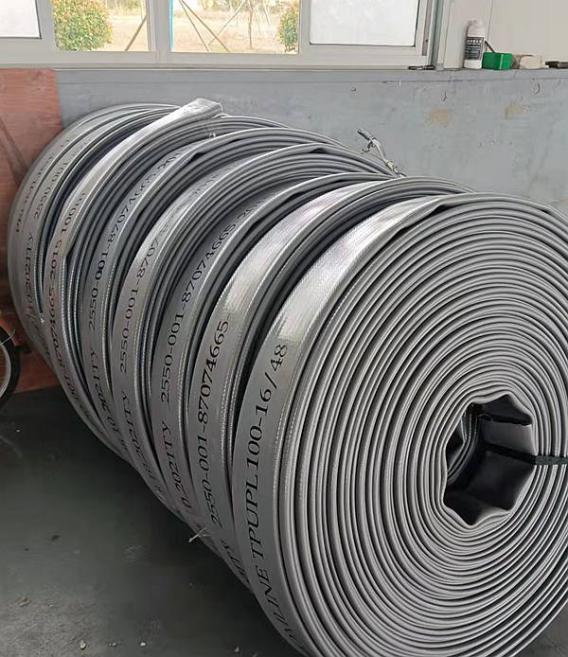
Mining projects in faulted or mountainous regions face combined risks from earthquakes, induced seismicity, and rock mass movement caused by excavation. These forces often manifest as: [sunmoonhose]
- Differential ground settlement along pipeline routes
- Sudden joint misalignment due to fault slip
- Rock fall or roof collapse in underground headings
- Vibration and fatigue around pump stations and valves
Rigid steel or HDPE pipelines are vulnerable because stress concentrates at joints, fittings, and welded sections. Even a small angular displacement at one point can generate high local stress, resulting in crack initiation, gasket failure, or flange leaks. In many mines, the most serious incidents are not due to a single large quake, but to cumulative damage from repeated micro‑movement that goes undetected until a leak or burst occurs. [sunmoonhose]
Flexible hose systems distribute movement along their length instead of forcing it into a few rigid joints. TPU layflat hoses, when properly anchored and routed, can follow ground deformation with controlled elongation and bending, reducing peak stress at any single point. This behavior is particularly important in: [sunmoonhose]
- Underground decline dewatering lines
- Temporary mine rescue and emergency drainage systems
- Long‑distance surface transfer over variable terrain
In these scenarios, the ability of the hose to deflect, stretch slightly, and recover becomes a core safety feature, not just a convenience. [sunmoonhose]
Sunmoon's TPU layflat hoses use a circular‑woven polyester reinforcement fully embedded in the polyurethane cover, forming a single homogeneous structure without glue. This through‑the‑weave construction delivers: [sunmoonpipe]
- High axial tensile strength to resist pull loads during ground movement
- Low, predictable elongation to maintain hydraulic performance
- Uniform stress distribution along the hose wall
In seismic events, this combination allows the hose to carry load without local overstress, decreasing the risk of sudden rupture. [sunmoonhose]
In mines, hose systems are exposed to sharp rock, debris, and rough ground surfaces. TPU's excellent abrasion and cut resistance means that even if the hose is dragged, flexed, or pressed against broken rock during a tremor or rock fall, it is far less likely to suffer through‑wall damage than thinner plastic pipes or poorly protected rubber hose. Sunmoon's mining‑grade hoses are specifically engineered for: [sunmoonhose]
- Long drag runs over rough haul roads
- Frequent reel‑in/out cycles in changing headings
- Contact with sharp edges in confined spaces
This mechanical robustness directly translates into fewer leak points during and after seismic disturbances. [sunmoonhose]
One of the largest seismic risks in any pipeline system is the number of joints and connections. Each coupling or weld is a potential failure point when the ground shifts. TPU layflat hoses can be supplied in long continuous lengths, often hundreds of meters, dramatically reducing the number of joints compared with modular piping. Fewer joints mean: [sunmoonpipe]
- Lower probability of gasket or flange failure during an event
- Reduced misalignment risk
- Faster integrity checks after a tremor
From a risk engineering perspective, every eliminated joint is one less potential leak under seismic stress. [sunmoonhose]
Sunmoon recently supported a mine rescue dewatering project where water inrush threatened underground access and personnel safety. The site was located in a region with complex tectonics and frequent small earthquakes, making conventional rigid pipelines problematic. The client needed a solution that could be deployed rapidly, withstand high pressure, and remain stable even if the ground shifted. [sunmoonhose]
By installing a high‑pressure TPU layflat hose system, the mine achieved a significant reduction in emergency response time compared with traditional rigid pipelines. Long runs of 6‑inch and larger‑diameter hose minimized joints inside the heading, and the flexible construction accommodated minor ground movement without losing pressure integrity. In follow‑up reviews, the client highlighted not only the hydraulic performance, but also the confidence operators felt working around a system that could "move with the rock" instead of fighting it. [sunmoonpipe]
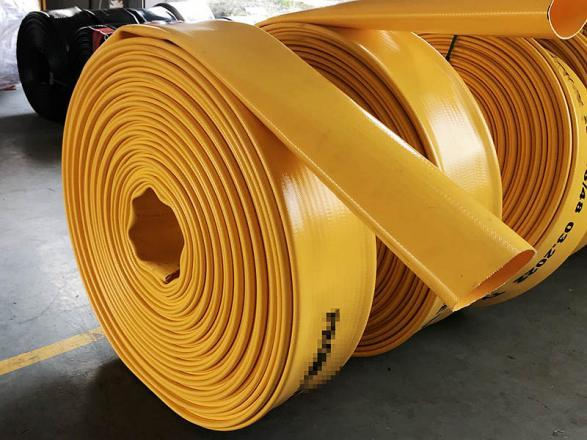
| Aspect | TPU layflat hose | Rigid steel / HDPE pipeline |
|---|---|---|
| Response to ground movement | Flexes and follows deformation, distributing stress along length (sunmoonhose) | Concentrates stress at joints and supports, higher risk of cracks (sunmoonhose) |
| Joint density | Long continuous runs, minimal couplings (sunmoonhose) | Frequent flanges, welds, or fused joints |
| Installation in irregular tunnels | Simple to route around corners and elevation changes (sunmoonhose) | Requires complex fittings and careful alignment |
| Post‑event inspection | Quick visual and pressure testing over continuous hose (sunmoonhose) | Time‑consuming joint‑by‑joint checks |
Beyond seismic resistance, TPU hoses bring practical safety benefits for mining operators. Key examples include:
- Reduced handling risk thanks to lower weight compared with steel pipe
- Faster repair or replacement during emergency operations
- Simpler storage and redeployment for seasonal or temporary headings
In real projects, these factors reduce downtime after seismic events and make it easier to restore safe water management. [sunmoonhose]
Founded in 2011, Sunmoon operates eight automated lines on a 35,000 m² site and focuses on engineering‑grade TPU layflat hoses rather than commodity products. The company's through‑the‑weave technology and proprietary extrusion know‑how enable: [sunmoonhose]
- Stable wall thickness and dimension control
- Strong adhesion between TPU cover and reinforcement
- Consistent high working pressure capability
For mining projects in seismically active regions, this manufacturing discipline is critical to ensuring hoses behave predictably under combined pressure, movement, and abrasion loads. [sunmoonhose]
Sunmoon hoses are used in demanding mining projects, including 16‑inch high‑pressure TPU systems for major operations in Chile and emergency dewatering lines for mine rescue scenarios. Clients consistently highlight the hoses' performance in harsh terrain, long drag runs, and challenging logistics, all of which often overlap with seismically complex regions. Positive customer testimonials emphasize reliability, customization, and responsive technical support—factors that align directly with the E‑E‑A‑T expectation of real‑world experience and proven expertise. [sunmoonhose]
To maximize seismic safety, engineers should integrate hose routing into geotechnical and seismic models from the early design phase. Recommended practices include: [sunmoonhose]
1. Avoiding known fault traces and unstable slopes where possible
2. Minimizing crossing points with major underground excavations
3. Providing flexible slack zones where ground settlement is expected
4. Keeping critical couplings away from high‑risk rock fall areas
In many mines, a modest rerouting of a layflat hose line can dramatically reduce exposure to ground deformation without adding significant installation cost. [sunmoonhose]
Even flexible hoses need thoughtful support in seismically active zones. Engineers should: [sunmoonhose]
- Use engineered anchor points to prevent dangerous whipping under pressure
- Allow controlled slack in segments where ground movement may occur
- Avoid over‑tensioning the hose, which can reduce its ability to absorb movement
- Combine hose saddles and guides with protective sleeves at contact points
The goal is to let the hose move in a controlled way rather than restraining it so tightly that it becomes functionally rigid. [sunmoonhose]
While TPU hoses reduce the total number of joints, couplings remain critical points for seismic design. Best practices include: [sunmoonhose]
- Selecting high‑quality couplings rated for both pressure and dynamic loads
- Using safety chains or backup restraints on critical connections
- Locating key couplings in accessible areas for rapid post‑event inspection
- Implementing double‑isolation (valve plus blank) at high‑risk interfaces
By treating couplings as engineered components rather than accessories, mines can further enhance seismic resilience. [sunmoonhose]
After a seismic event, the ability to quickly restore or reconfigure water management is essential for safe re‑entry and continued production. TPU layflat hoses are ideal for emergency deployment because they can be reeled out rapidly, laid across uneven ground, and connected using standardized fittings. Mines can pre‑stage hose reels and modular manifolds at strategic locations, enabling: [sunmoonhose]
- Fast bypass of damaged pipeline sections
- Temporary high‑capacity dewatering in flooded headings
- Flexible re‑routing around collapsed or unstable ground
Sunmoon's emergency dewatering case shows how these features directly translate into shorter response times and safer working conditions after disruptive events. [sunmoonhose]
In many operations, "temporary" emergency installations remain in place far longer than planned. TPU layflat hoses bridge this gap because the same product can serve as:
- A temporary emergency bypass line immediately after a seismic incident
- A semi‑permanent dewatering or process water transfer system once the situation stabilizes
By choosing mining‑grade hoses with adequate pressure rating and abrasion resistance up front, operators avoid the cost and risk of frequent change‑outs. [sunmoonhose]
When sourcing TPU layflat hoses for geologically active zones, mining engineers and procurement teams should evaluate suppliers against a clear checklist. Key points include:
- Engineering focus: Does the manufacturer specialize in high‑pressure, mining‑grade TPU hoses rather than generic plastic products? [sunmoonhose]
- Manufacturing control: Are wall thickness, reinforcement, and adhesion tightly controlled with documented quality procedures? [sunmoonhose]
- Track record in mining: Are there real reference projects in seismically complex regions, such as Latin American copper belts or deep‑level underground mines? [sunmoonhose]
- Customization capability: Can the supplier tailor diameter, pressure class, color coding, length, and coupling systems to match specific mine layouts and risk profiles? [sunmoonhose]
- Technical support: Is there access to application engineers who understand routing, anchoring, and seismic risk considerations in hose system design? [sunmoonhose]
Sunmoon positions itself precisely in this niche, combining specialized TPU hose manufacturing with OEM/ODM depth and project‑level engineering support for global mining clients. [sunmoonhose]
Every mine has a unique combination of geology, seismicity, and process requirements. Sunmoon works with operators and EPC partners to specify:
- Nominal diameter and pressure rating for each circuit
- Hose construction (e.g., heavier covers for extreme abrasion)
- Length per roll and coupling configuration to match shaft, ramp, or surface routing
- Color coding and marking for quick identification in complex networks
This application‑driven customization helps ensure that hose systems are not only hydraulically efficient, but also aligned with local seismic and geotechnical realities. [sunmoonhose]
For critical mining and emergency projects, Sunmoon's role often goes beyond product supply. The team can support: [sunmoonhose]
- Preliminary hose system sizing and layout recommendations
- Coordination with logistics partners to deliver long‑length hose to remote or land‑locked sites
- On‑site or remote guidance during installation and pressure testing
This integrated approach is particularly valuable in geologically active regions, where design assumptions must be validated against real‑world conditions during commissioning. [sunmoonhose]
In geologically active mining zones, seismic resistance is not just a structural engineering issue—it is a fluid management issue as well. Flexible TPU layflat hoses, especially when engineered and customized for mining, offer a safer and more resilient alternative to rigid pipelines by reducing stress concentration, minimizing joints, and enabling rapid emergency deployment. [sunmoonhose]
If you are planning a new mine, upgrading dewatering lines, or revisiting your seismic risk strategy, now is the right time to evaluate TPU hose‑based solutions. Share your current layouts, pressure requirements, and seismic constraints with Sunmoon's engineering team to receive a tailored TPU layflat hose proposal that improves safety margins, operational flexibility, and long‑term cost performance in your mining operation. [sunmoonhose]
Q1: Are TPU layflat hoses suitable for permanent installations in seismic mining zones?
Yes. Mining‑grade TPU layflat hoses with appropriate pressure ratings and abrasion‑resistant covers can function as long‑term infrastructure, not just temporary lines, especially when installed with proper support and routing. [sunmoonhose]
Q2: How do TPU hoses perform under repeated micro‑seismic events?
Their flexible, reinforced construction distributes strain along the hose instead of concentrating it at a few rigid joints, making them well suited to environments with frequent minor ground movements. [sunmoonhose]
Q3: Can TPU layflat hoses handle high‑pressure deep mine dewatering?
High‑pressure TPU hoses are designed for demanding applications such as deep‑well riser lines and mine rescue dewatering, combining high working pressure with excellent tensile strength and adhesion between layers. [sunmoonpipe]
Q4: What customization options does Sunmoon offer for mining projects?
Sunmoon can customize diameter, pressure class, length, cover thickness, color, couplings, and marking to align with specific mine layouts, equipment interfaces, and seismic risk considerations. [sunmoonhose]
Q5: How fast can TPU hose systems be deployed after a seismic event?
Pre‑staged reels and modular manifolds allow rapid rollout and connection, often much faster than assembling or repairing rigid pipelines in damaged headings or unstable ground conditions. [sunmoonhose]
1. Sunmoon Hose Manufacturing – Your Reliable Customized Layflat Hose Manufacturer in China. https://www.sunmoonhose.com
2. Sunmoon Hose Manufacturing – High‑Pressure TPU Layflat Hose in Mine Rescue Dewatering (case share). https://www.sunmoonhose.com
3. Sunmoon Hose Manufacturing – Rapid Development for TPU Layflat Hoses for Government Emergency Water Projects. https://www.sunmoonhose.com/rapid-development-for-tpu-layflat-hoses-for-government-emergency-water-projects.html
4. Sunmoon Hose Manufacturing – What Impacts the Lifespan of Industrial Hoses (and Why TPU Layflat Hose Lasts Longer). https://www.sunmoonhose.com/what-impacts-the-lifespan-of-industrial-hoses-and-why-tpu-layflat-hose-lasts-longer.html
5. Sunmoon – 6 inch / 12 inch High‑Pressure TPU Layflat Mine Rescue Emergency Drainage Hose (product description). https://www.sunmoonpipe.com


