

Views: 222 Author: Sunmoon Publish Time: 2026-05-01 Origin: Site


When you leave a hose in the sun for months, ultraviolet (UV) radiation is usually what kills it first, not pressure or flow. [sinohose]
PVC and many rubber hoses chalk, fade, harden, and crack as UV breaks polymer chains in the material. [m.gfdplastic]
TPU (thermoplastic polyurethane) flat hoses are engineered with stronger UV stability and better overall weatherability, so they maintain flexibility and mechanical strength much longer under continuous sunlight. [sunmoonhose]
From real field deployments, TPU layflat hoses typically deliver 3–7 years of UV resistance and 4–10 years of practical service life, outperforming conventional PVC layflat and many rubber hose designs in outdoor applications. [sunhose]
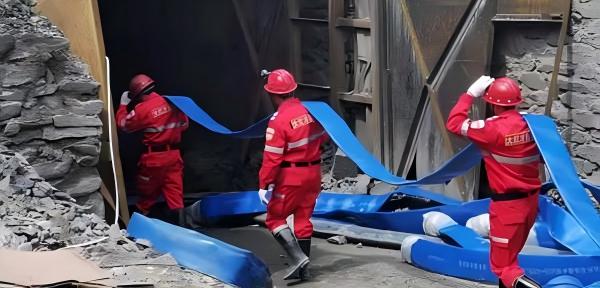
From a materials engineering perspective, TPU combines a segmented polymer structure with stabilizers that slow UV‑driven degradation. [sunghose]
Key UV‑related advantages of TPU layflat hoses:
- UV‑stabilized formulations: Additives absorb or dissipate UV energy before it can break polymer chains. [sunghose]
- Dense, abrasion‑resistant surface: A tougher outer skin resists micro‑cracks where UV, oxygen, and moisture accelerate aging. [sunmoonhose]
- Elasticity maintained over a wide temperature range: TPU stays flexible from sub‑zero conditions up to about 90–100 °C in typical hose grades, so UV‑induced micro‑damage is less likely to turn into brittle cracking. [sunhose]
- Good overall weatherability: TPU layflat hoses are explicitly designed to handle long‑term outdoor exposure while preserving flexibility and surface integrity. [sunmoonhose]
As a hose engineer, what I see in the lab is that TPU samples exposed to accelerated weathering (UV + heat + moisture) retain far higher elongation and tensile strength than comparable PVC compounds. That translates directly into fewer leaks, bursts, and replacements in the field. [sunhose]
Below is a condensed comparison based on industry data and typical commercial layflat hoses. [m.gfdplastic]
Sunlight and UV performance of common layflat hose materials
| Property / Material | PVC Layflat Hose | Rubber Layflat Hose | TPU Layflat Hose |
|---|---|---|---|
| Typical UV resistance in field use | Approx. 6–12 months under strong sun before noticeable chalking and hardening (m.gfdplastic) | About 2–5 years with moderate surface cracking over time (sunhose) | Around 3–7 years of strong UV performance, with surface integrity generally maintained (sunmoonhose) |
| Typical overall lifespan (outdoor use) | ~2–3 years (sunmoonhose) | ~5–8 years (sunhose) | ~4–10 years, depending on application and handling (sunmoonhose) |
| Surface behavior under UV | Fades, becomes chalky, stiff, prone to kinks and cracks (m.gfdplastic) | Better than PVC but can oxidize and crack with ozone and UV (sunhose) | Maintains flexibility and surface integrity, less chalking, fewer cracks (sunmoonhose) |
| Weight and handling | Light but becomes stiff in cold, more kinks (sunhose) | Heavier, more difficult to deploy and retrieve (sunhose) | Ultra‑lightweight and flexible, easy to roll, unroll, and move (sunmoonhose) |
| Best fit when UV exposure is high | Only for short‑term or low‑intensity exposure (m.gfdplastic) | Acceptable; used where pressure/temperature are also critical (sunhose) | Best choice for repeated or long‑term sunlight and outdoor use (sunmoonhose) |
For project owners, the implication is simple: if your hose will live in the sun, TPU offers the most favorable balance between UV resistance, weight, and lifecycle cost. [sunghose]
In shale gas fields, Sunmoon's high‑pressure TPU layflat hoses are deployed on long‑distance water transfer lines that remain continuously exposed to sunlight. Engineers running these projects choose TPU because: [sunmoonhose]
- Hoses are laid for kilometers across open, treeless ground. [sunmoonhose]
- Operating cycles include frequent pressurization and depressurization. [sunmoonhose]
- Quick deployment and retrieval are essential during fracturing campaigns. [sunmoonhose]
In this environment, PVC hoses degrade too quickly under UV and pressure, and heavy rubber hoses slow down logistics, while TPU layflat hoses maintain flexibility, UV resistance, and pressure integrity. [sunmoonhose]
Farmers who leave irrigation lines in the field for entire growing seasons face the same problem: sun‑baked hoses that crack just when they are needed most. TPU's UV resistance and high abrasion strength give a clear advantage: [sinohose]
- Direct exposure to sunlight throughout spring and summer. [sinohose]
- Occasional dragging of hoses across soil and gravel. [m.gfdplastic]
- Repeated winding and unwinding on hose reels. [sinohose]
TPU layflat hoses handle these cycles better, staying flexible and less prone to leakage even after multiple seasons in the field. [sinohose]
In emergency water supply projects, hoses must be rapidly deployed and sometimes left in place for months. Sunmoon has supported government projects where 2‑inch high‑pressure TPU layflat hoses passed stringent tests for pressure and abrasion while remaining suitable for outdoor exposure. UV resistance is critical, because there is often no option for shading or burying the line. [sunmoonhose]
From a maintenance engineer's point of view, UV damage shows up differently in PVC, rubber, and TPU hoses:
- PVC flat hoses
- Early signs: color fading, chalky surface, stiff feel. [m.gfdplastic]
- Later: flattening that does not recover, cracks at bends, pinhole leaks. [sunhose]
- Cause: PVC plasticizers migrate out and polymer chains break under UV. [m.gfdplastic]
- Rubber layflat hoses
- Early signs: surface checking and ozone cracking, especially near fittings. [sunhose]
- Later: deeper cracks and weeping along the hose wall. [sunhose]
- Cause: oxidation and ozone/UV attack on rubber chains over time. [sunhose]
- TPU layflat hoses
- Early signs: much slower surface dulling, typically no immediate embrittlement. [sunghose]
- Later: if severely over‑exposed or poorly stored, gradual reduction in gloss and minor stiffness, but generally without the severe cracking seen in PVC. [sinohose]
- Cause: TPU's stabilized structure and additives resist chain scission; degradation is slower and more predictable. [sunmoonhose]
This difference is why project owners often see TPU hoses still performing after multiple seasons where earlier PVC lines already failed.
Even though TPU layflat hoses are UV‑resistant, basic care significantly extends their service life. [sinohose]
Practical steps from field experience:
1. Store away from direct sun when not in use
- Keep coils in a dry, cool, shaded area or covered. [sinohose]
- Prolonged idle exposure to harsh sunlight will eventually degrade even UV‑stabilized TPU. [sinohose]
2. Store flat or on reels in natural coils
- Avoid sharp bends or forced kinks when rolling up the hose. [sinohose]
- Proper storage prevents stress points that UV can turn into cracks. [sinohose]
3. Respect pressure and temperature limits
- Each TPU layflat hose has specified pressure and temperature ratings; over‑pressurizing or overheating accelerates damage. [sunmoonhose]
- For high‑pressure or hot‑fluid applications, confirm compatibility with the data sheet. [sunmoonhose]
4. Inspect high‑stress zones regularly
- Check near couplings, sharp corners, and areas with mechanical abrasion. [m.gfdplastic]
- Replace or repair sections before minor UV wear becomes a safety issue. [sunmoonhose]
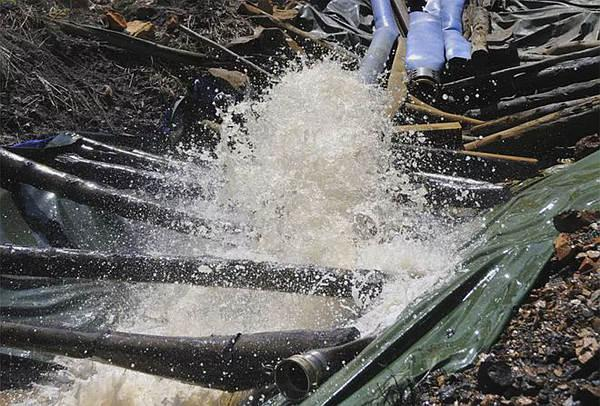
From a manufacturer's standpoint, Sunmoon's TPU layflat hoses are deliberately designed around long‑term outdoor and UV‑intensive use:
- High‑abrasion TPU cover with UV stabilization for long‑term field deployment in mining, shale gas, municipal, and agricultural projects. [sunmoonhose]
- Lightweight flat‑when‑empty construction, simplifying deployment and retrieval even on large‑scale projects. [alibaba]
- High‑pressure capability verified through performance validation, including burst and abrasion tests on 2‑inch and larger hoses. [sunmoonhose]
- Customizable dimensions and configurations so that hose wall thickness, reinforcement, and fittings match actual UV, pressure, and chemical conditions on site. [alibaba]
As Sunmoon has increased its participation in emergency and shale gas water projects, field feedback confirms what lab data already indicated: compared with conventional layflat hoses, Sunmoon's TPU flat hoses show markedly lower failure rates after extended sunlight exposure. [sunmoonhose]
From a user‑experience perspective, you can simplify hose selection for sun‑exposed projects by following this decision flow:
1. Define your exposure profile
- Will hoses lie in open sun for days, months, or years?
- Is shading, burying, or temporary covering possible?
2. Map your operating window
- Working pressure and surge risk. [sinohose]
- Fluid type (water, slurry, chemicals) and temperature range. [sunhose]
3. Shortlist materials
- Use PVC only if UV exposure is limited and budget is tight. [m.gfdplastic]
- Consider rubber where very high pressure or temperature dominates and hose weight is acceptable. [sunhose]
- Choose TPU as the default for long‑term outdoor, high‑UV, mobile, or temporary pipeline projects. [sunghose]
4. Optimize with customization
- Work with Sunmoon to adjust wall thickness, reinforcement, and fittings for your environment and duty cycle. [alibaba]
- Specify expected UV intensity and deployment duration so material and stabilizer packages can be tuned. [sunghose]
5. Plan for lifespan, not just purchase price
- Compare total cost of ownership: number of seasons or campaigns per hose versus upfront cost. [sunmoonhose]
- In many cases, TPU's longer UV‑driven lifespan makes it more economical than frequently replacing cheaper PVC hoses. [sunmoonhose]
Typical scenarios where TPU's sunlight performance gives a clear advantage:
- Oil & gas water transfer lines over bare ground on drilling pads. [sunmoonhose]
- Surface mining and dewatering lines exposed on benches and haul roads. [m.gfdplastic]
- Large‑scale agricultural irrigation for pivot, lateral move, and mainline feeding. [sinohose]
- Municipal bypass pumping during sewer or waterline repairs, where hoses stay on the street for months. [sunghose]
- Emergency water supply and flood control projects deployed rapidly with limited ability to provide shade. [sunmoonhose]
If your operation relies on hoses that will live in the sun, the material choice is not a minor detail—it directly affects safety, downtime, and lifecycle cost. TPU layflat hoses offer superior UV resistance, better long‑term flexibility, and more predictable performance under sunlight than typical PVC and many rubber options. [sunghose]
Sunmoon combines specialization in TPU layflat hoses with custom design, stringent testing, and global project experience, so you can match hose construction precisely to your UV, pressure, and temperature conditions. [alibaba]
Talk to Sunmoon's technical team to review your current hose setup, quantify your UV exposure, and design a TPU layflat solution that lasts longer in sunlight while reducing your total cost per operating hour. [sunmoonhose]
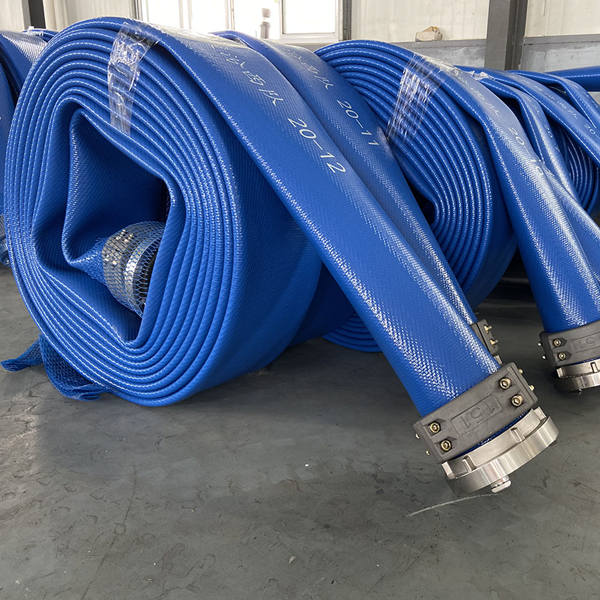
1. Can TPU layflat hoses really stay outdoors for years?
Yes. TPU hoses are designed to resist UV damage, and when left outdoors for months or even years, they do not become brittle or crack as quickly as many other materials, provided they are used within their rated pressure and temperature limits. [sunghose]
2. Are TPU hoses completely immune to UV damage?
No material is fully immune to UV. Even UV‑resistant TPU will gradually age if left in intense sunlight without any protection, which is why shaded storage and proper handling are still recommended. [sinohose]
3. How much longer does TPU last in sunlight compared with PVC?
Industry data show TPU layflat hoses can deliver around 3–7 years of UV resistance and 4–10 years of service life, while PVC hoses may show serious UV‑related degradation within 6–12 months and often need replacement after 2–3 years in harsh outdoor conditions. [m.gfdplastic]
4. Does better UV resistance mean TPU hoses are heavier or harder to handle?
Quite the opposite. TPU layflat hoses are typically ultra‑lightweight, kink‑resistant, and easy to roll and unroll, which is one reason they are preferred for long‑distance water transfer and emergency deployments. [sunmoonhose]
5. What industries benefit most from UV‑resistant TPU flat hoses?
Sectors that run hoses in full sun—such as oil and gas water transfer, mining, agriculture, municipal bypass pumping, and emergency water projects—see the greatest benefit from TPU's UV resistance and overall durability. [sunmoonhose]
1. Seapeak. "Key Features of TPU Layflat Hose."
https://www.sinohose.com/key-features-of-tpu-layflat-hose.html [sinohose]
2. Sunmoon Hose. "What Impacts the Lifespan of Industrial Hoses (and Why TPU Layflat Hose Lasts Longer)."
https://www.sunmoonhose.com/what-impacts-the-lifespan-of-industrial-hoses-and-why-tpu-layflat-hose-lasts-longer.html [sunmoonhose]
3. Sunmoon Hose. "Rapid Development for TPU Layflat Hoses for Government Emergency Water Projects."
https://www.sunmoonhose.com/rapid-development-for-tpu-layflat-hoses-for-government-emergency-water-projects.html [sunmoonhose]
4. Alibaba. "SUNMOON High Abrasion Resistance 10 inch TPU Layflat Hose – Product Listing."
https://www.alibaba.com/product-detail/SUNMOON-Reasonable-Design-High-Abrasion-Resistance_1600703371474.html [alibaba]
5. GFD Pipes & Fittings. "Fiber Reinforced TPU Flat Hose – Advantages."
http://m.gfdplastic.com/pd.jsp?mid=18&pid=393 [m.gfdplastic]
6. Sunghose. "Can a TPU Hose Be Used Outdoors for a Long Time?"
https://www.sunghose.com/blog/can-a-tpu-hose-be-used-outdoors-for-a-long-time-836454.html [sunghose]
7. Sunmoon Hose. "How Sunmoon's High‑Pressure TPU Layflat Hose Transforms Shale Gas Water Supply Operations."
https://www.sunmoonhose.com/how-sunmoon-s-high-pressure-tpu-layflat-hose-transforms-shale-gas-water-supply-operations.html [sunmoonhose]
8. Sunhose. "PVC vs. Rubber vs. TPU Layflat Hoses – Key Differences."
https://www.sunhose.com/layflat-hoses-decoded-why-pvc-rubber-and-tpu-cater-to-different-needs/ [sunhose]
9. Seapeak. "Precautions When Using a TPU Layflat Hose."
https://www.sinohose.com/precautions-when-using-a-tpu-layflat-hose.html [sinohose]


